
Fixing Crochet Tension in Just a Few Minutes


If your stitches look uneven, your edges wave, or your project keeps changing size, you’re not alone—crochet tension is one of the most common frustrations (even for experienced crocheters).
The good news: you don’t need “perfect hands” to improve it. You just need a few small adjustments that make your tension feel more natural and repeatable.
In this quick tutorial, you’ll see practical ways to get more consistent stitches without overthinking every loop.
It’s especially helpful if you’re a beginner, returning to crochet after a break, or switching yarn/hook sizes and everything suddenly feels “off.”
Refill Your Creative Cup
Feeling stuck or out of ideas? Let us bring the spark back to your hook. Our weekly emails deliver patterns, tips, and inspiration to keep your creativity blooming.
😍 Bring Your Crochet Mojo Back – Sign Up Now! Click on the image 👆🏼
Crochet tension basics (and why it changes mid-project)

Crochet tension is simply how tightly you hold the yarn and how you form each stitch.
When your tension is inconsistent, you might notice tight stitches that are hard to insert your hook into, or loose stitches that look sloppy and gappy—sometimes both in the same row.
A few things can make your tension change from minute to minute: how you’re sitting, how you’re gripping the hook, how the yarn feeds through your fingers, and even whether you’re rushing.
The goal isn’t to crochet “tight” or “loose”—it’s to crochet consistently, so your fabric looks even and your sizing stays predictable.
One of the fastest ways to improve is to simplify your setup: focus on a comfortable yarn path, a relaxed grip, and a repeatable motion. That’s exactly what this video walks through, step by step.
A quick crochet tension reset you can do in minutes
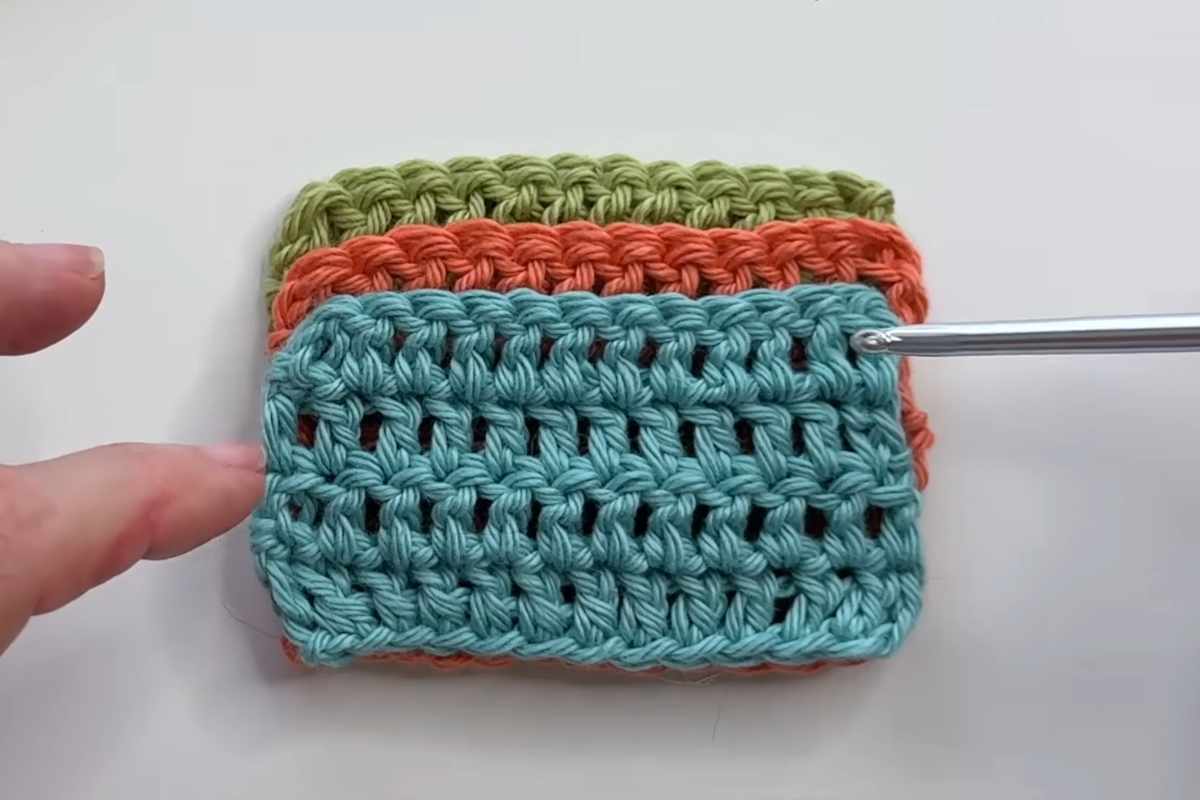
If you feel your hands tensing up, pause and do a mini reset. In the video, you’ll see simple adjustments that can help right away—like changing how the yarn flows through your fingers, how your hook hand moves, and how you “pull up” each loop so stitches match from one to the next.
Pay attention to the small cues: Are you squeezing the hook? Are you tugging the yarn after every stitch? Are your shoulders creeping upward? These tiny habits often create the “too tight” problem.
On the flip side, if your loops vary in size, you may need a more consistent yarn feed or a steadier hook motion to avoid “too loose” stitches.
Once you find a setup that feels smooth, try it for a few rows before judging. Tension settles when your movement becomes repetitive.
Images and patterns courtesy of Play Hooky with Me
Enjoy The Video Tutorial

Source: Play Hooky with Me
If you try this tension reset, give yourself a few minutes of practice on a small swatch—you’ll usually feel the difference quickly. And remember: improving tension isn’t about being perfect, it’s about building a comfortable rhythm you can repeat.
Happy crocheting!
— Maggie
More crochet projects for you