
- Urbaki Crochet - Free Crochet Pattern Website
- Crochet Patterns
- Clothing and Accessories
- Scarves and Gloves
- Triangle Shawl Using the Puff Stitch with Fingering Yarn
Triangle Shawl Using the Puff Stitch with Fingering Yarn

Maggie Johnson
31/08/2024 · Updated on: 19/10/2026

If you love shawls that feel light, drape beautifully, and look more intricate than they actually are, this project is for you. The Serendipity Asymmetrical Shawl is a modern take on a triangle shawl—perfect for layering year-round. In the video, you’ll see how puff stitch creates that soft, dimensional texture while still keeping the fabric airy with fingering yarn.
Whether you’re new to crocheting shawls or just want a relaxing stitch pattern with a pretty finish, this tutorial walks you through the process in a clear, follow-along way.
Puff stitch + fingering yarn: why this shawl drapes so well

An asymmetrical triangle shawl grows in a way that feels intuitive once you get a few repeats in. Instead of aiming for a perfectly even triangle, the shaping gives you that effortless “wrap and go” look—great for styling around the shoulders or scarf-style.
In the tutorial, you’ll see how the puff stitch adds texture without making the shawl bulky. Using fingering yarn helps keep the finished piece lightweight, with a softer flow that’s ideal for transitional weather. If you’ve ever worried that textured stitches might feel stiff, this is a really nice example of texture + drape working together.
As you crochet along, pay attention to how consistent your puffs look. Even tension is the secret to getting that polished, rhythmic texture across the shawl.
How to crochet the Serendipity asymmetrical puff stitch shawl (video)

Source: Pattern Princess
Tips for neat puff stitches on a triangle shawl
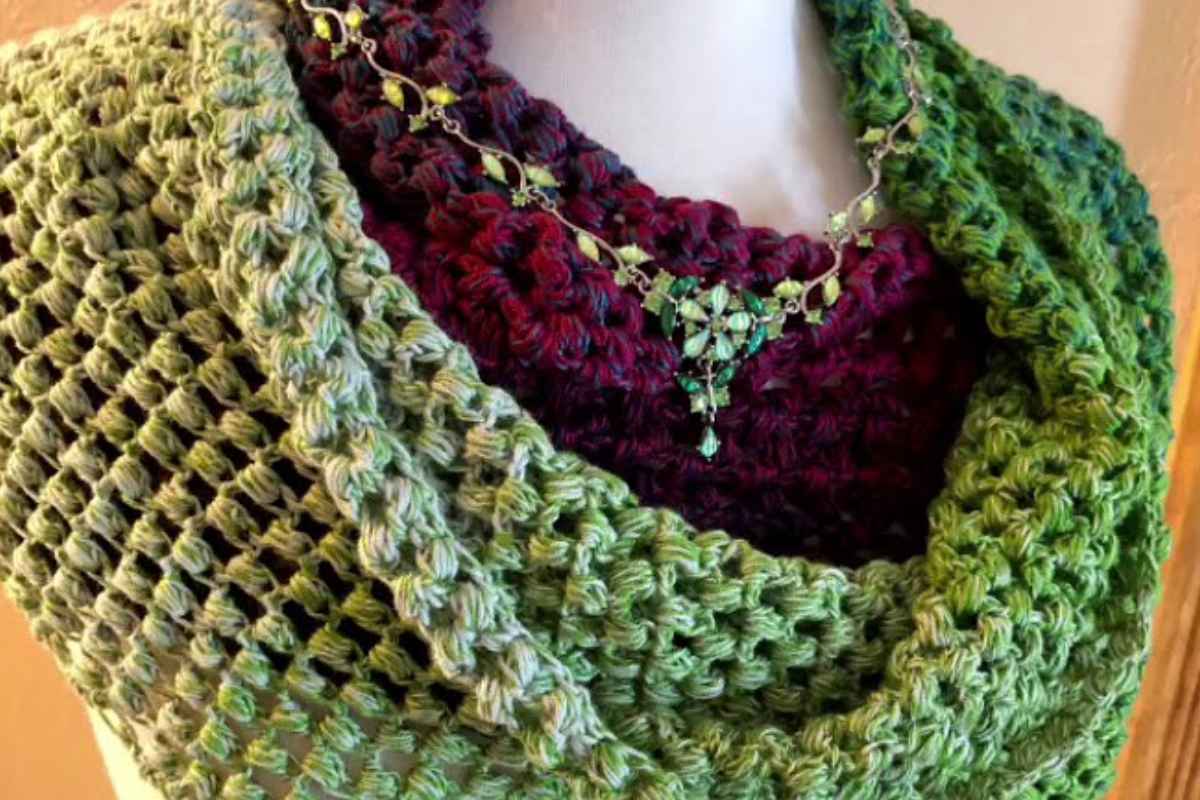
Images and pattern courtesy of Pattern Princess
Puff stitches can be super satisfying, but they’re also the spot where tension tends to change—especially when you’re switching between taller loops and the stitch that locks the puff in place.
A few things to watch for as you follow the video:
- Keep your loops an even height so your puff stitches look uniform.
- Don’t over-tighten after finishing a puff—tightening too much can shrink the stitch and reduce drape.
- If your edges start to wave, it usually means your tension is changing as the shawl grows. A quick pause to relax your grip can help a lot.
Once you get into the rhythm, this is the kind of shawl that’s easy to pick up for a few rows at a time—and the texture makes it feel like you’re making fast progress.
Happy crocheting, and I hope you love how this shawl turns out!
— Maggie
Maggie Johnson
Maggie Johnson is a crochet enthusiast who has been crafting with yarn for over a decade. While she's not a professional, Maggie finds joy in exploring new patterns, experimenting with colors, and creating handmade gifts for friends and family. On this blog, she shares her passion for crochet, offering tips, tutorials, and inspiration for fellow hobbyists, whether you're a beginner or have been stitching for years. Maggie believes in the beauty of handmade creations and the calming power of crochet.
More crochet projects for you