
Growing Orchids From Seed: Why Clean Air Matters More Than the Recipe

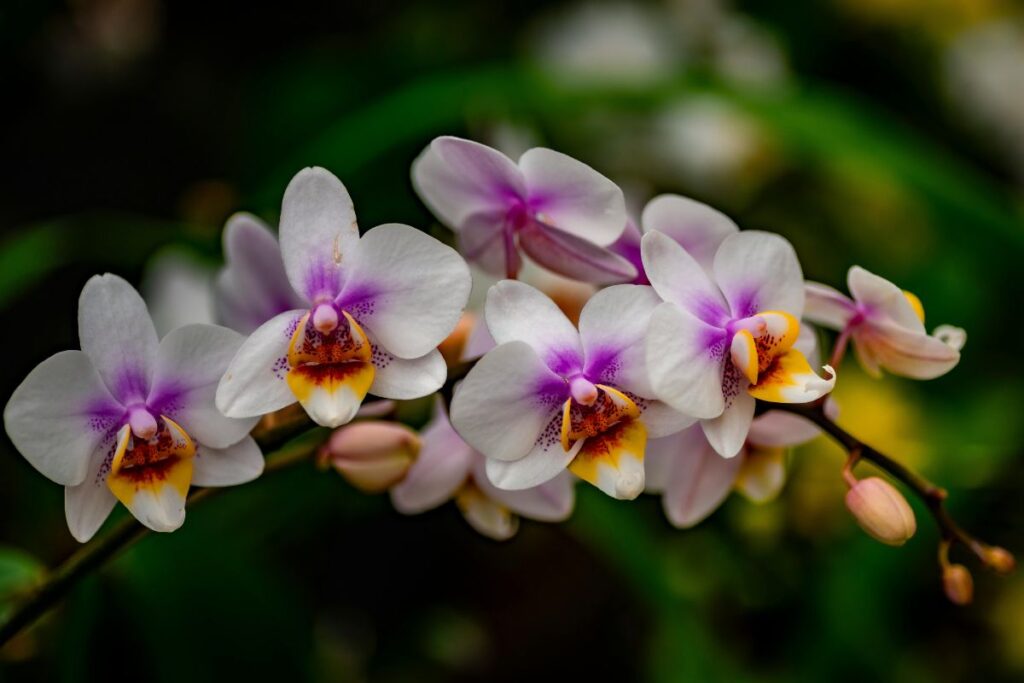
A ripe orchid seed pod splits open and releases thousands of seeds, each one so small it looks like dust. That size is the whole problem. Orchid seeds carry almost no food of their own, so in the wild they only germinate when the right fungus moves in and feeds them. Most of them never meet it.
In 1922 the American botanist Lewis Knudson found a way around the fungus. He germinated orchid seeds on an artificial medium of sugar and nutrients set with agar, under sterile conditions. A culture medium named after him is still used by orchid growers around the world, and his method is the reason hobbyists can now raise orchids from seed in a spare room.
Why a flask of agar attracts mold
The catch is that a sweet, nutrient-rich gel suits almost everything else too. A single mold spore that drifts onto the agar while the flask is open will usually grow far faster than the orchid seed and can cover the surface long before any seedlings appear.
Commercial plant labs face the same problem when they clone plants by tissue culture, and their routine is a good guide. The plant material is surface-sterilized in chemical solutions, usually alcohol and sodium or calcium hypochlorite, and the work is done in HEPA-filtered air from a laminar flow cabinet.
At home, the sterilizing part is manageable. Many growers prepare their flasks of medium in a pressure cooker, wipe tools and surfaces with alcohol, and give the seed a short soak in a dilute bleach solution before sowing. The harder part is the air in the room.
From a plastic tote to a flow hood
Most beginners start with a still air box: a clear plastic storage tote turned upside down, with two holes cut in the side for the arms. The point is to stop air from moving, so that spores floating in the room settle instead of drifting onto an open flask. It costs very little and works well enough for a few flasks at a time.
Growers who sow often, or who move on to replating seedlings and cloning plants, usually start wanting a flow hood. A laminar flow cabinet pulls room air through a HEPA filter and pushes it out across the work surface in a smooth, steady stream. The air around the open flask is then filtered air moving away from it, rather than room air settling onto it. Mushroom growers use the same equipment when they handle cultures and spawn, which are just as easy to contaminate.
In a laboratory, this job is done by a laminar flow bench, and manufacturers such as TopAir Systems build them in horizontal and vertical versions, in polypropylene or metal. A horizontal model blows filtered air straight out toward the person working, while a vertical one sends it down onto the work surface. Hobby flow hoods are usually home-built or small benchtop units, but they work on the same principle: a HEPA filter, a fan strong enough to push air through it, and a work area in front of it.
The safety point hobby guides tend to skip
A laminar flow bench protects what is on the bench, not the person using it. The air leaves the front of the cabinet and moves toward you, carrying whatever it passed over on the way. That is fine for orchid seed and sterile agar. It is the wrong tool for anything harmful, which is why labs that work with pathogens use biological safety cabinets instead.
Some flow cabinets come with a germicidal UV lamp. It is meant to run for a while before work and be switched off during it, because stray UV light can damage skin and eyes.
Where to start
For a first attempt, a still air box, a pressure cooker and careful hands are enough to get most growers their first green protocorms, the tiny round bodies that orchid seedlings start as. Some flasks will still be lost to mold, and that is part of the hobby. If losses become routine, or if you find yourself opening dozens of flasks a month, that is the point where a flow hood starts to earn its place on the bench.
More Gardening Tips 👇🏼👇🏼