
Cyclamen Care Indoors: 9 Tips to Keep It Blooming All Winter

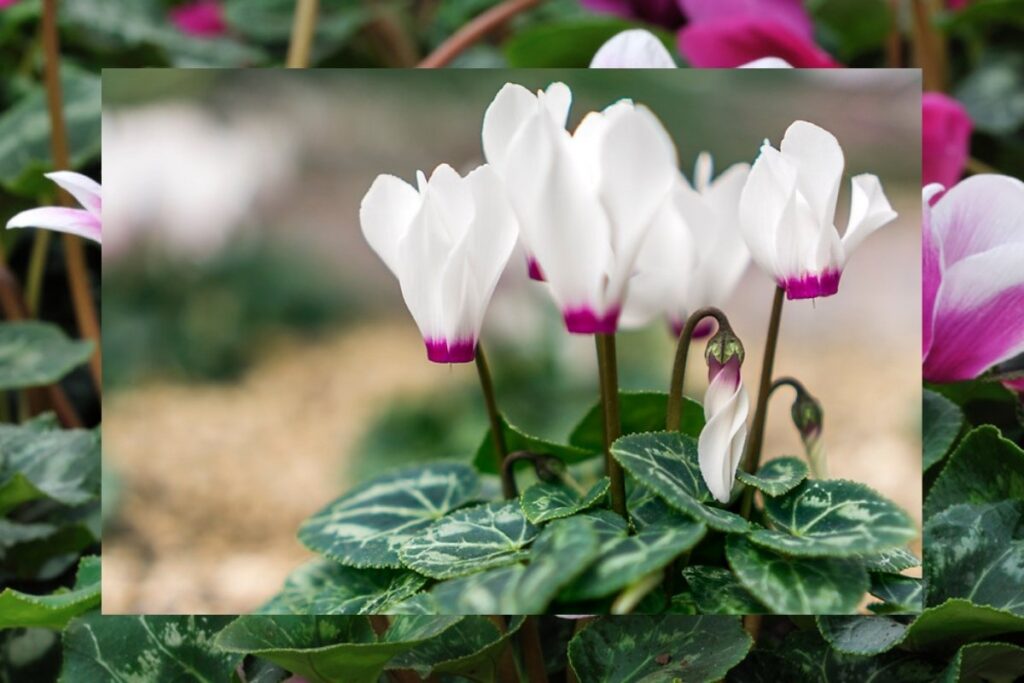
Florist's cyclamen (Cyclamen persicum) shows up in stores just as the days get short, with swept-back flowers in pink, red, white and purple floating above silver-marbled leaves. It's one of the best flowering houseplants for winter, but plenty of plants collapse within a few weeks of coming home. The good news: almost every early death comes down to the same two problems, too much heat and too much water.
Here's how to keep a cyclamen blooming through the cold months, and what to do if you want it to flower again next year.
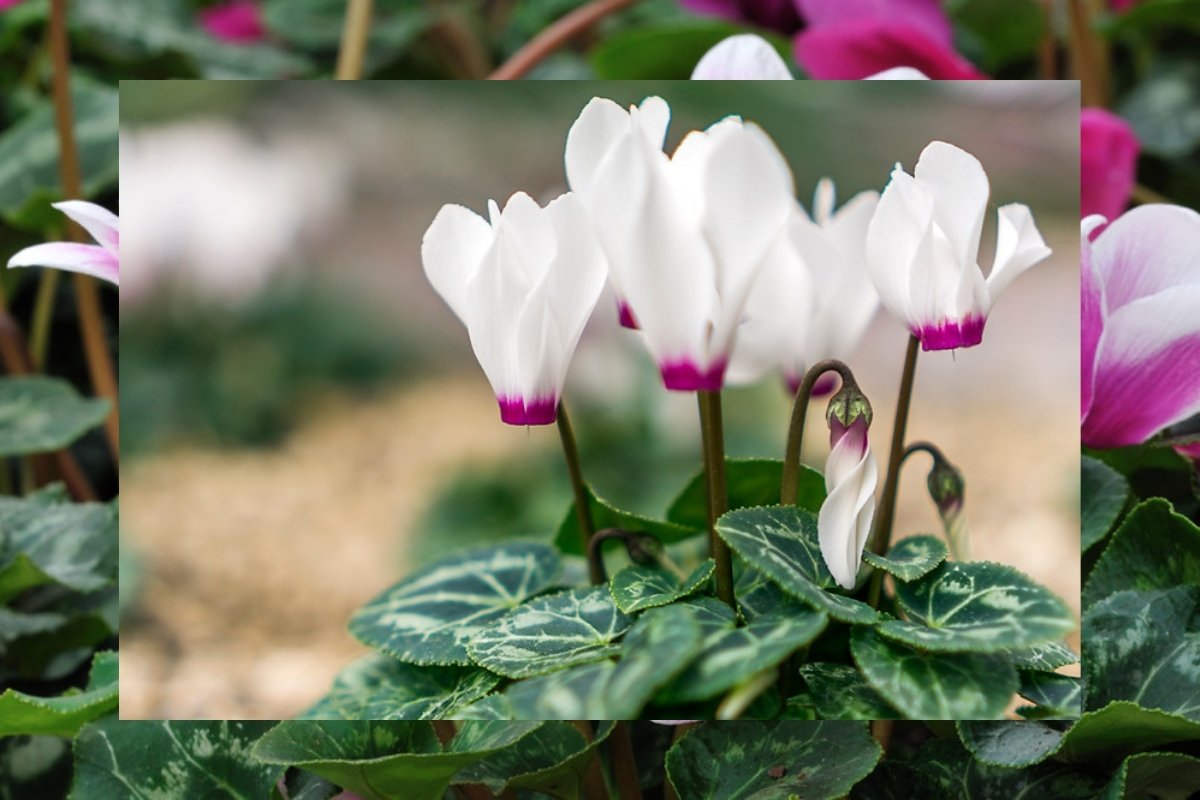
Cyclamen care at a glance
- Temperature: cool, roughly 50-65°F (10-18°C), with cooler nights around 50°F
- Light: bright, indirect light; an east-facing window works well
- Water: when the surface of the soil feels dry, ideally from below
- Feeding: a diluted fertilizer for flowering houseplants about every two weeks while it grows and blooms
- Bloom time: winter into early spring, often for up to three months
- Pets: toxic to dogs, cats and horses, especially the tuber
1. Choose a plant that's just starting to bloom
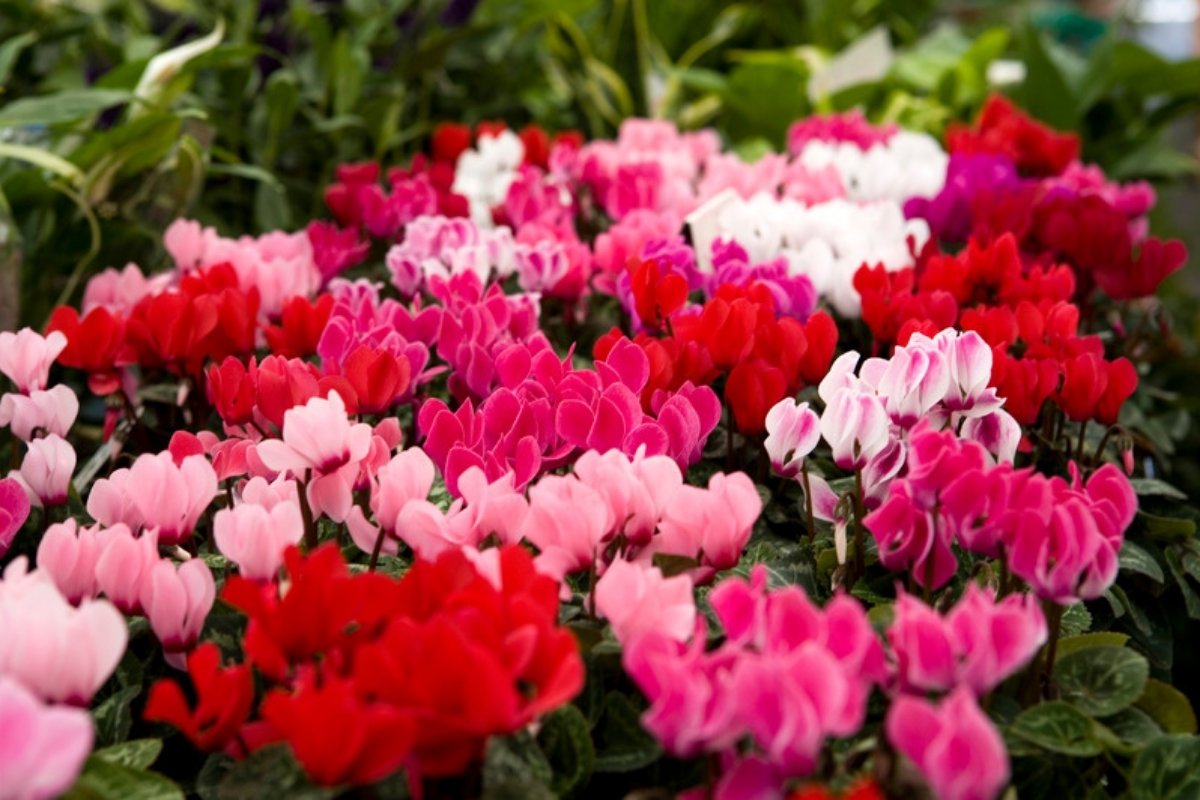

A long flowering season starts at the store. Cyclamen are sold mainly in winter and spring, with big displays around Christmas and Valentine's Day. Iowa State University Extension recommends picking a plant with dark green leaves that has only just started to flower.
Lift a few leaves and look underneath. You want to see plenty of unopened buds tucked in at the base. A plant that's already covered in open flowers looks great on the shelf, but it has less left to give once you get it home.
Skip plants with yellowing leaves, a soft or mushy center, or gray fuzz on the stems. Those are signs of stress or rot that rarely improve.
2. Keep it cool (this matters most)
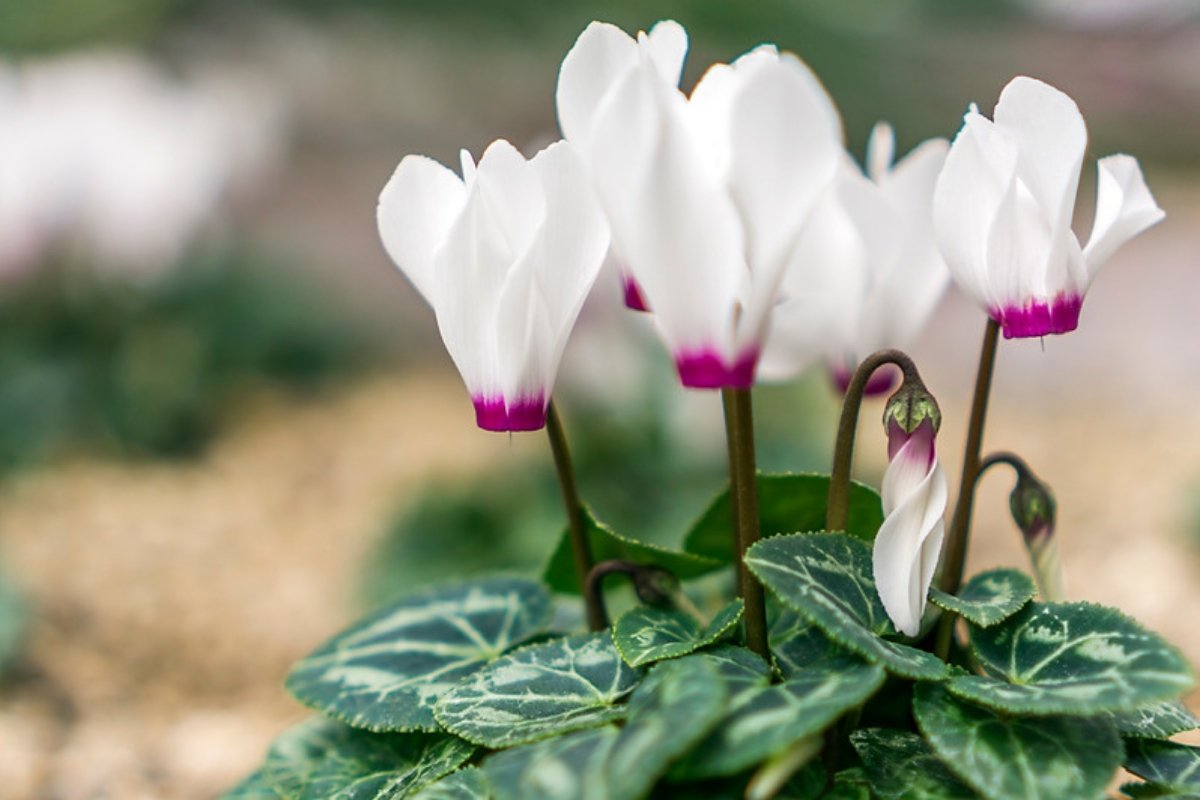
Cyclamen grows wild in the Mediterranean region, where it flowers through cool, damp winters and rests through hot, dry summers. Indoors, it still wants cool air. The University of Wisconsin Extension suggests daytime temperatures of 60-65°F and nights around 50°F. Cool conditions make each flower last longer and stretch out the whole blooming season.
A warm living room is the main reason cyclamen fail. According to BBC Gardeners' World, a room that's too warm makes the leaves turn yellow, the flowers fade quickly and the plant go dormant early. Keep it away from radiators, heating vents, fireplaces and the top of the TV. A cool bedroom, an unheated porch that stays frost-free, or a bright windowsill in a cooler room are all good spots.
Just don't let it freeze. Florist's cyclamen is tender and won't tolerate frost, so bring it in if it's been sitting on a porch and a cold night is coming.
3. Give it bright, indirect light
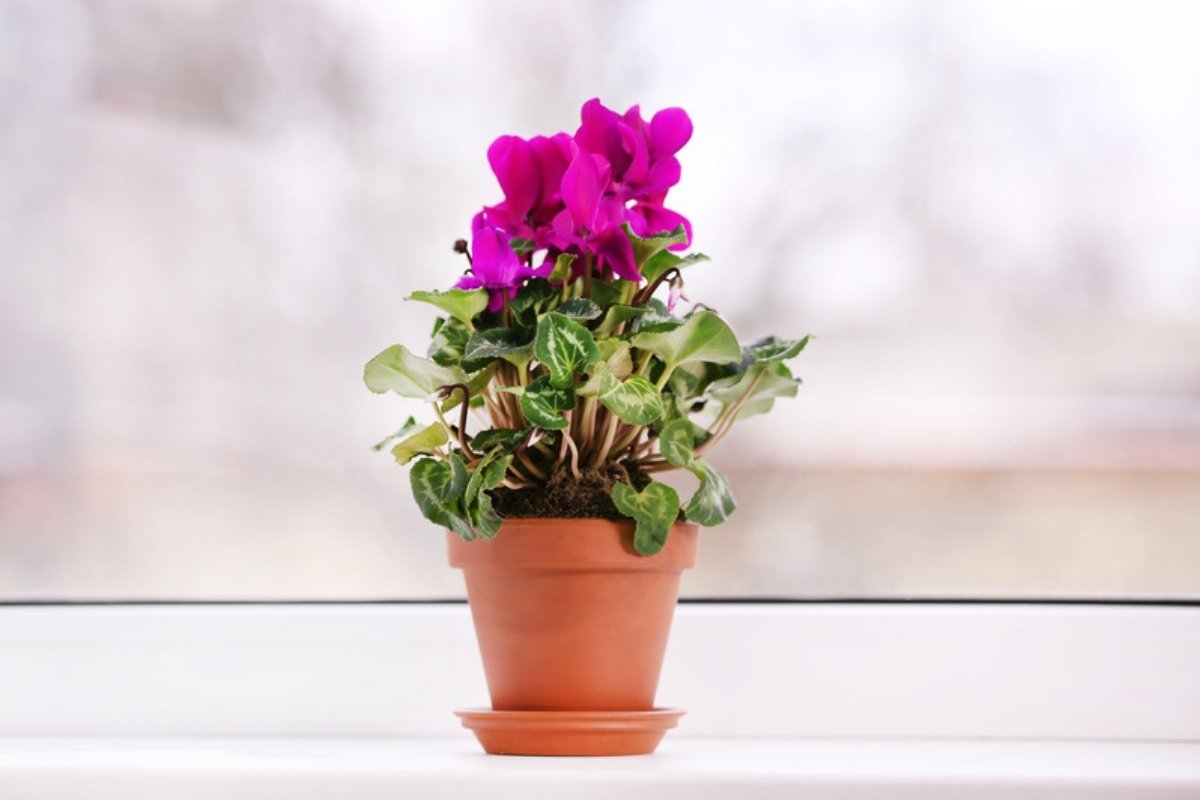
Cyclamen likes plenty of light, but not hot midday sun through glass. An east-facing window is often ideal. The New York Botanical Garden notes that a few hours of direct sun early in the day is fine.
In northern winters, when the sun is low and weak, a south-facing window can work too, as long as the spot doesn't heat up. If the stems get long and floppy and lean hard toward the glass, the plant needs more light.
4. Water from the bottom
The tuber sits right at the soil surface, and water pooling on top of it can lead to crown rot. That's why most experts recommend bottom watering. Check the soil every day or two. When the surface feels dry, set the pot in a saucer or bowl of water for about 10-15 minutes so the soil can soak it up, then let any extra drain away.
If you water from the top, pour around the edge of the pot and keep water off the crown and the leaves. Iowa State suggests using room-temperature water rather than cold water straight from the tap.
Overwatering is one of the most common ways cyclamen die. The soil should feel moist, never soggy, and the pot should never sit in standing water for hours. Let it get nearly dry between waterings.
5. Raise the humidity a little
Winter air indoors is dry, and cyclamen prefers more humidity while it's in flower. An easy fix is a pebble tray: fill a shallow tray with gravel, add water to just below the top of the stones, and set the pot on top. The pot stays out of the water while the evaporating moisture keeps the air around the leaves more humid.
Keep the plant out of warm drafts, which dry it out quickly. Skip misting: wet leaves in cool, still air can encourage mold.
6. Feed lightly while it's blooming
A cyclamen that's actively growing and flowering benefits from a light feeding. The University of Wisconsin recommends a low-nitrogen fertilizer or a houseplant food for flowering plants every two weeks during active growth. Mix it at the strength on the label or weaker.
More isn't better here. Too much fertilizer pushes soft, leafy growth that's more prone to disease and produces fewer flowers. Stop feeding once the plant starts to fade in spring.
7. Deadhead the right way
Removing spent flowers keeps the plant tidy and stops it putting energy into seed. Rather than snipping off just the flower, remove the whole stem so no stub is left behind. Hold the faded flower stem near the base, twist it and give it a sharp tug. It should come away cleanly from the tuber.
Do the same with any yellow leaves. Taking them off quickly helps air move around the crown, which keeps rot and mold away.
8. Know what yellow leaves and pests are telling you
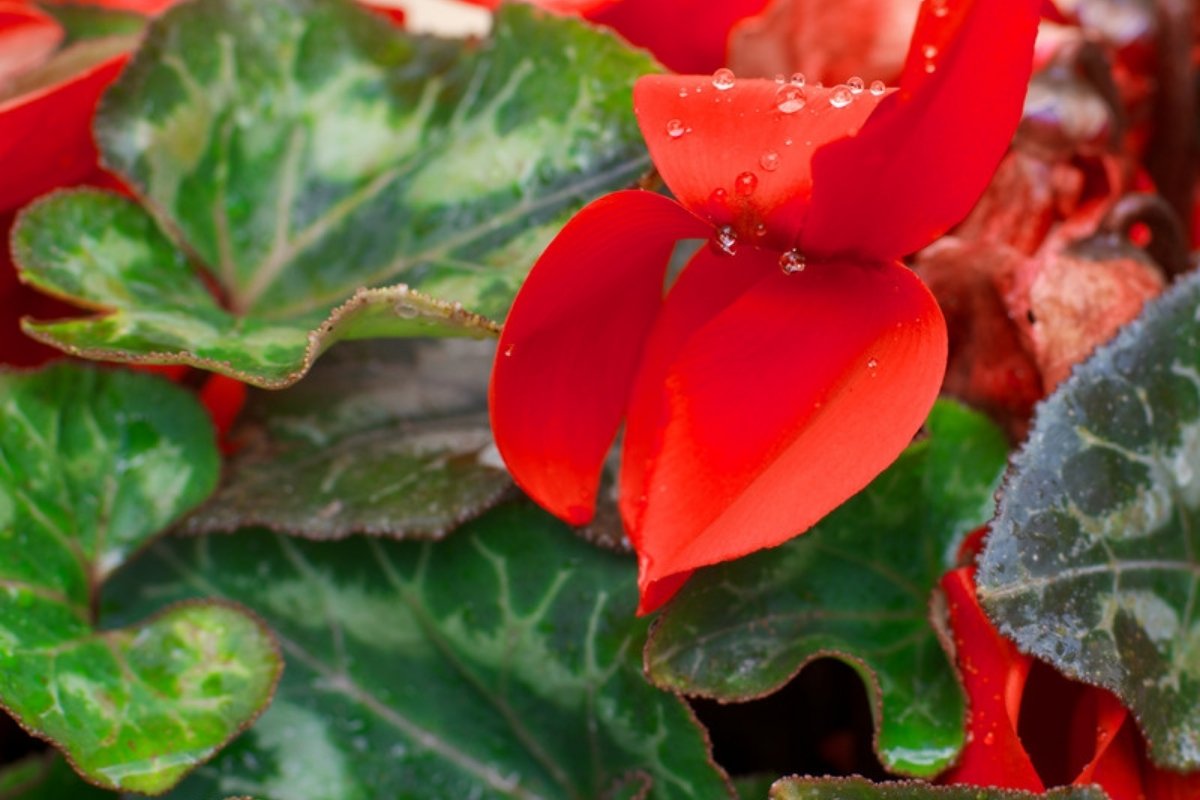
Yellow leaves in fall or winter usually mean one of three things: the room is too warm, the watering is off (too much or too little), or the plant is getting too much sun. Check those first. Yellowing in late spring is different. That's the plant heading into its natural summer rest.
A plant that suddenly collapses with a brown, mushy center usually has crown rot from too much water. Gray, fuzzy mold on flowers and stems points to gray mold (Botrytis), which spreads in cool, damp, still air. Remove the affected parts and let the plant dry out more between waterings.
Cyclamen can also pick up aphids, mealybugs, spider mites and thrips. Insecticidal soap or a pesticide labeled for houseplants handles most of them. Cyclamen mite is the exception. If new leaves come out curled, stunted and distorted, the University of Wisconsin advises throwing the plant away, because the mite is very hard to control.
9. Let it rest after flowering to get it to bloom again
Many people treat cyclamen as a seasonal plant and compost it once the flowers finish. If you'd like to keep yours, it can rebloom, but it needs a summer rest first.
In late spring the leaves start to yellow. Cut back on watering gradually, stop feeding and remove the leaves as they die off. Then keep the pot somewhere cool and shaded. Iowa State suggests a rest of about 6-8 weeks at 45-50°F, and the University of Wisconsin says dormancy usually lasts two to three months. During this time the soil should stay almost dry, never wet.
In mid to late summer, move the plant somewhere a little warmer and start watering again. Repot it in fresh, well-drained potting mix if needed, keeping the top of the tuber slightly above the soil line. Once new leaves appear, go back to regular watering and light feeding, and give it bright light. With luck, new flower buds will form in fall or winter.
Frequently asked questions
Is cyclamen toxic to cats and dogs?
Yes. The ASPCA lists cyclamen as toxic to dogs, cats and horses. It can cause drooling, vomiting and diarrhea, and the tuber is the most dangerous part. Eating a large amount of tuber can lead to heart rhythm problems and seizures. Keep the plant out of reach of pets that chew plants, and call your vet if you think one has eaten any.
How long does a cyclamen bloom indoors?
In a cool, bright spot, a healthy plant can keep flowering for up to three months, usually from winter into early spring. In a warm room, the show can be over in a few weeks.
Can I plant my florist's cyclamen outside?
It can spend the summer outdoors in a shady spot while it's resting, as long as the soil doesn't stay wet. But it isn't frost hardy, so bring it back inside before the first frost.
More gardening ideas
- How to Grow Paperwhites Indoors for Holiday Blooms
- Top 6 Traditional Christmas Flowers & Plants
- Why Do Poinsettias Die So Quickly? Discover The Truth
- The Best Houseplants for Holiday Decorating!
Keep it cool, water it from below and give it good light, and a single cyclamen can brighten a windowsill from the holidays until spring.
More Gardening Tips 👇🏼👇🏼