
Reblooming Tips for Phalaenopsis Orchids


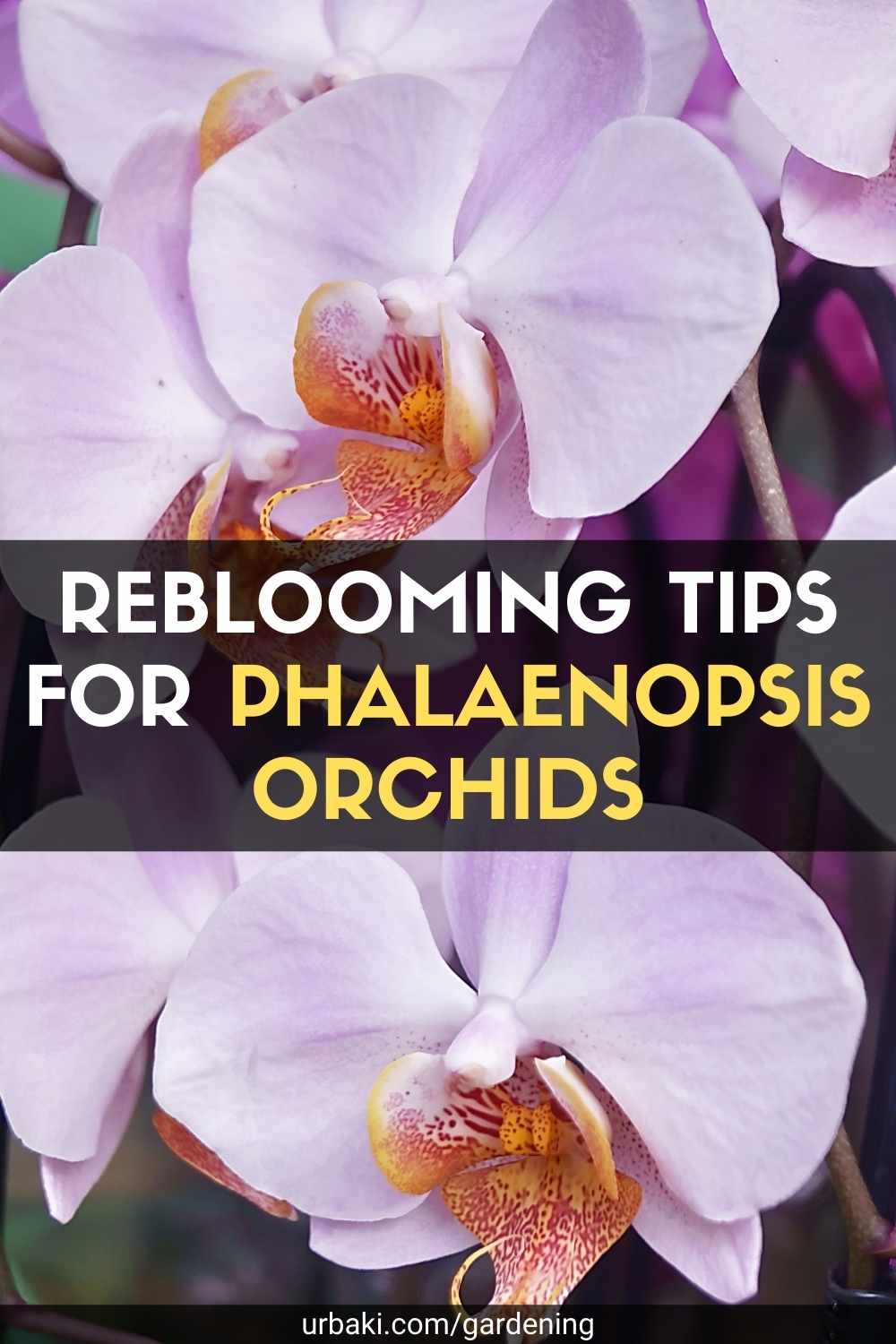
Phalaenopsis orchids are the most popular orchids in the world in terms of sales. In recent years, one of the great stories of the horticultural world has been the rapid drop in prices and the huge increase in the availability of phalaenopsis orchids.
Today, you can find them by the dozen on display tables across the country, sometimes priced as low as $ 9.99 each and in a wide variety of colors.
According to some sources, the orchid has already surpassed the poinsettia as America's most popular potted plant.
All of this is possible thanks to advances in the cultivation and production of orchids, especially abroad.
Growers in Taiwan and the Netherlands have perfected orchid cloning on an industrial scale, making it possible to produce hundreds of thousands of beautiful identical plants.

Some considerations
When the plant has finished flowering and the ear begins to brown, cut the ear close to the base of the plant and move it to its permanent location.
Keep in mind that orchids don't like to be moved very much, so ideally you should be able to find a location that the plant likes on the first try. In general, phalaenopsis prefers:
- Filtered, bright light, but not direct sunlight.
- Humidity
- Heat, with a minimum of cold drafts
Blooming your Phalaenopsis orchid
The good news is that phalaenopsis is among the easiest orchids to grow as long as you follow a few basic rules.
This is important because, like many flowers, phalaenopsis only blooms once a year, so once your plant has finished blooming, you'll need to keep it alive and healthy until the next blooming season.
Once you have your plant in place, begin routine care. Like many epiphytic orchids, phalaenopsis are generally grown in a thick mixture of pine bark, charcoal, and sphagnum moss. This mix is designed to drain very quickly and allow the orchid roots to get enough air.
Because of this, you will probably need to water your orchids two to three times a week, depending on the humidity and temperature.
When watering your orchid, it's a good idea to water the roots, but don't allow the water to pool between the leaves.
After watering, empty the tray and allow the plant to dry completely between waterings. Contrary to what many people think, orchids do not like continuously humid environments.
Fertilization tips
If you want to bloom, fertilization is important. You can use a quarter-strength liquid fertilizer, or you can do what many professional orchid growers do: use a nylon sock to create a small ball of controlled-release fertilizer and place it in the pot, or just sprinkle a little of controlled-release fertilizer for grains in pots.
Orchids don't feed a lot, so don't overfeed your plant, but they do benefit greatly from fertilizer.
Lastly, get ready for flowering. Phalaenopsis orchids bloom with temperature. It takes a few cool nights to stimulate a flower's peak.
For many people, this means plants will bloom in the fall when the temperature in the house can drop as low as 10 degrees overnight.
Alternatively, you can take your plant outside for a few nights when temperatures drop to 60 or more than 50 degrees. Hopefully, this will make a flower spike appear.
Once the peak arises, the hardest part is done! Keep taking good care of the plant and it will reward you with another blooming season.
We hope you enjoy watching this video about how to make Phalaenopsis Orchids rebloom:
Source: MissOrchidGirl
Did you find this post Useful or Inspiring? Save THIS PIN to your GARDENING Board on Pinterest! 
Once again, thank you for visiting our website!
We hope you've enjoyed exploring the content we've created for you.
Give yourself the chance to learn, get inspired, and have even more fun, keep browsing...
More Gardening Tips 👇🏼👇🏼