
How to Set Up a Tent Simple and Fast Way

New to camping or just rusty after a long winter? This is your friendly, field-tested walkthrough on how to set up a tent without stress.
We’ll cover scouting the site, staking strategy, poles and rainfly order, and the little habits that turn a basic tent set up into a comfortable, weatherproof home. Use this as your dependable reference before every trip.
Pick The Right Spot Before You Unroll Anything
Find the Perfect Decor for Your Patio and Garden!

- Thoughtful Christmas Gifts: Comes in a beautifully designed...
- Automatic Solar Operation: Charges efficiently with 6-8...
- Versatile Home & Garden Decoration: Suitable for garden...


- FUNNY FROG FIGURINES - This adorable frog will leap right...
- SAFE SOLAR POWERED LIGHT - Brighten up an entryway or...
- DURABLE OUTDOOR LAWN DECOR - This chic Lawn Frog Ornaments...

- Irresistible Goose Charm: Vibrant floral accents and a...
- All-Weather Durable: Crafted from premium waterproof resin,...
- Solar-Powered Glow (No Fuss): Flip the porch goose’s...
Smart camping tent set up starts with location. Look for gently elevated ground so rain runs away from your shelter, not toward it.
Avoid low bowls and obvious water paths. A patch of short grass, firm soil, or soft forest duff is ideal—comfortable underfoot and stake-friendly.
Check wind and shade. Point the door away from prevailing gusts for calmer nights and fewer drafts.
Morning shade from a tree or ridgeline keeps condensation and heat under control, which is a foundational step in the Best Tent Camping Setup.
Finally, scan for hazards: dead branches overhead, ant mounds, thorny plants, and rocks under the footprint. Two minutes of scouting saves hours of discomfort later.
Lay The Base: Footprint, Orientation, And Stakes

A footprint or groundsheet protects your floor from abrasion and adds a slim moisture barrier. If it’s larger than your tent, tuck edges inward so rain doesn’t collect and pool beneath you.
Align the footprint so the longer side matches the tent’s ridge—it speeds up the next steps of how to set up a tent step by step.
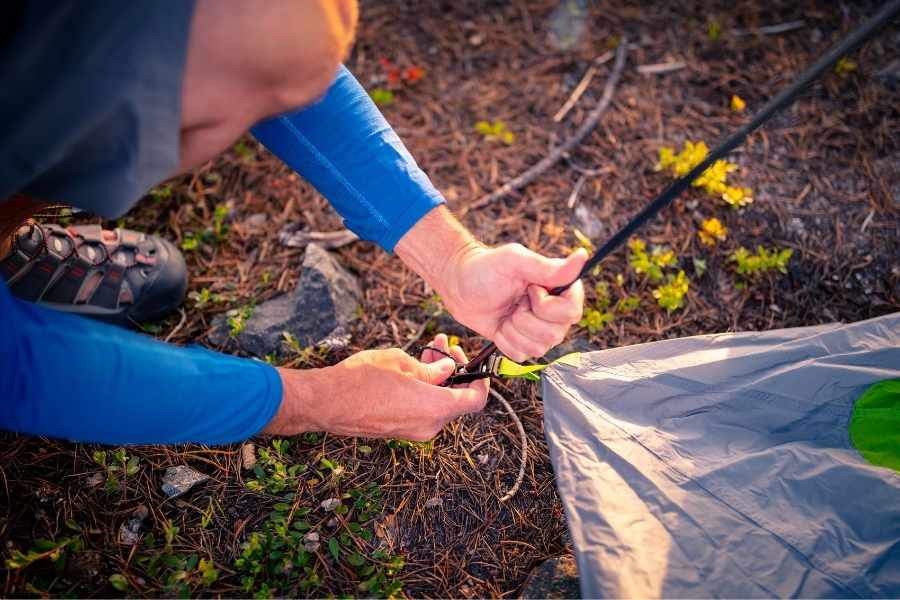
Lightly stake the four corners at a 45° angle away from the tent, leaving a little give. This “soft stake” keeps the footprint square while still allowing micro-adjustments as you clip the body and raise the poles.
Windy day? Add two extra stakes downwind right now. Early anchoring is one of those simple Camping Tips And Tricks that prevents wrestling matches with flapping fabric.
Build The Structure: Poles, Body, And Clips
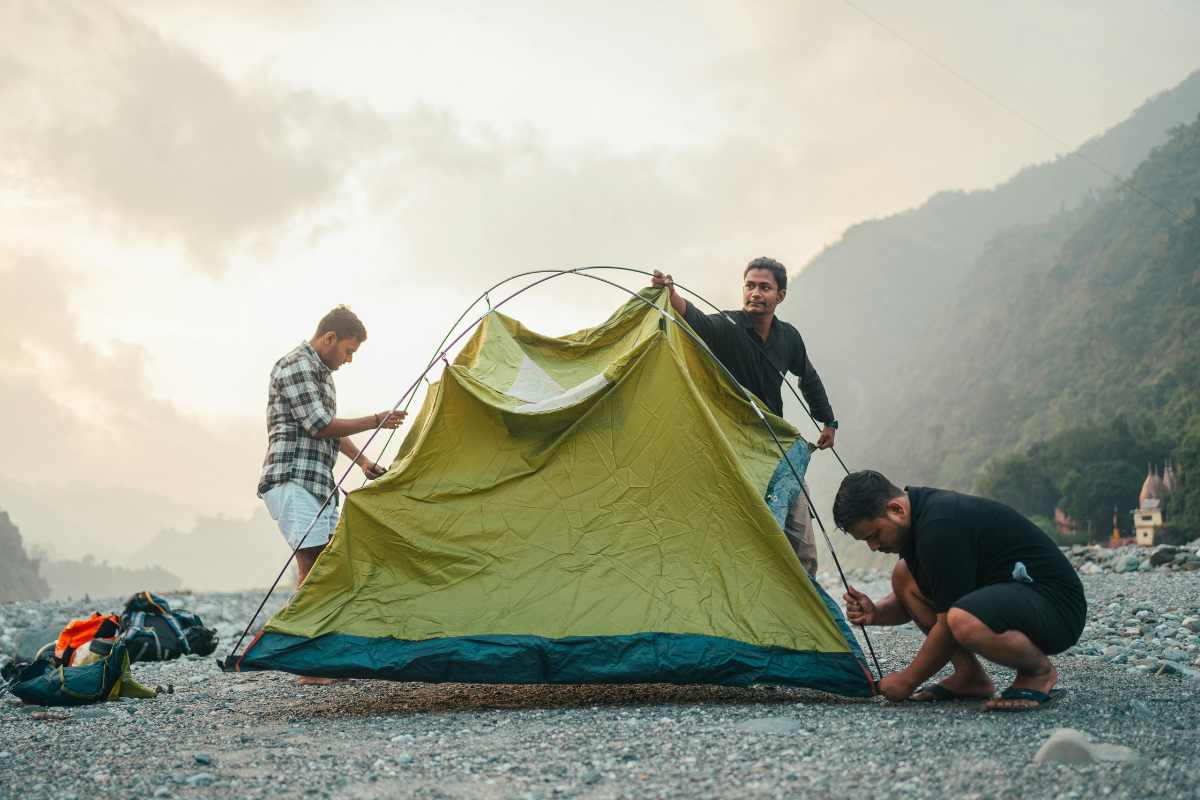
Assemble poles fully and check each ferrule connection. Slide them through sleeves or snap them into the hub per the tent’s design.
With two people, stand on opposite corners; with one, work diagonally, raising the first arch and then the second. Keep tension even so nothing binds.
Clip the canopy to the poles from the center outward. This balances load and helps the tent “find” its proper geometry.
Once clipped, re-seat each stake to snug up corners. A tidy rectangle now will make the rainfly pitch like a dream later—one hallmark of a smooth tent camping set up.
Check zippers for smooth travel before adding the fly. If a slider catches, a tiny dab of zipper lubricant now avoids mid-storm frustration.
Weatherproof The Pitch: Rainfly And Guy Lines
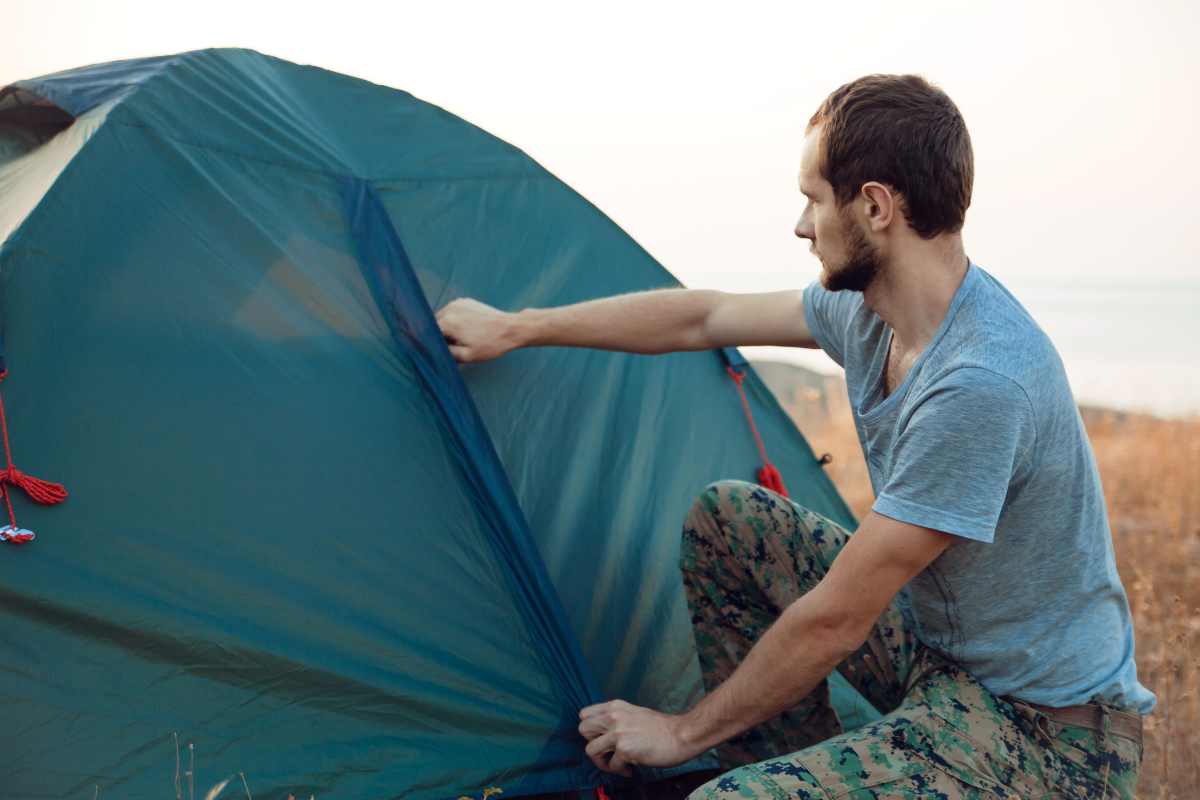
Drape the rainfly and match the color-coded corners to the tent body. Attach buckles or hooks, then tension all four sides evenly so the fly floats above the mesh without touching.
A finger’s width of air gap improves ventilation and reduces condensation, a subtle upgrade to any camping tent set up.
Stake vestibules so doors open cleanly and water sheds away from the entry. Angle guy lines at roughly 45° from each anchor point and keep them symmetrical; this stabilizes the frame and tightens the fly’s panels for quieter nights.
Finish with a “drum test”: tap a fly panel. If it ripples, add a half-turn on the tensioners. Crisp panels shed wind and rain better—crucial for the Best Tent Camping Setup in unpredictable weather.
Dial In Comfort: Inside Layout And Venting

Keep heavier gear at the foot end to avoid bumping the headwall. Use interior pockets for headlamps and small items, and hang a micro lantern from the apex loop for even light.
A compact doormat or scrap of footprint in the vestibule keeps grit out, extending the life of zippers and fabric.
Ventilation is comfort. Crack opposing fly vents and leave a small gap at the top of a door when conditions allow. Cross-breeze controls condensation without chilling you. Mastering these tiny tweaks is part of knowing how to set up a tent like a pro.
If the forecast is calm and dry, you can run “fast fly” or mesh-only modes on some models for stargazing—just remember dew can form before dawn.
Solo vs. Team: Two Efficient Workflows
Solo setup: Stake the windward corners first, build the first pole arch with your back to the wind, then clip center-out. Attach the fly starting from the same windward side so it doesn’t billow. This sequence makes a one-person tent set up manageable even in breezes.
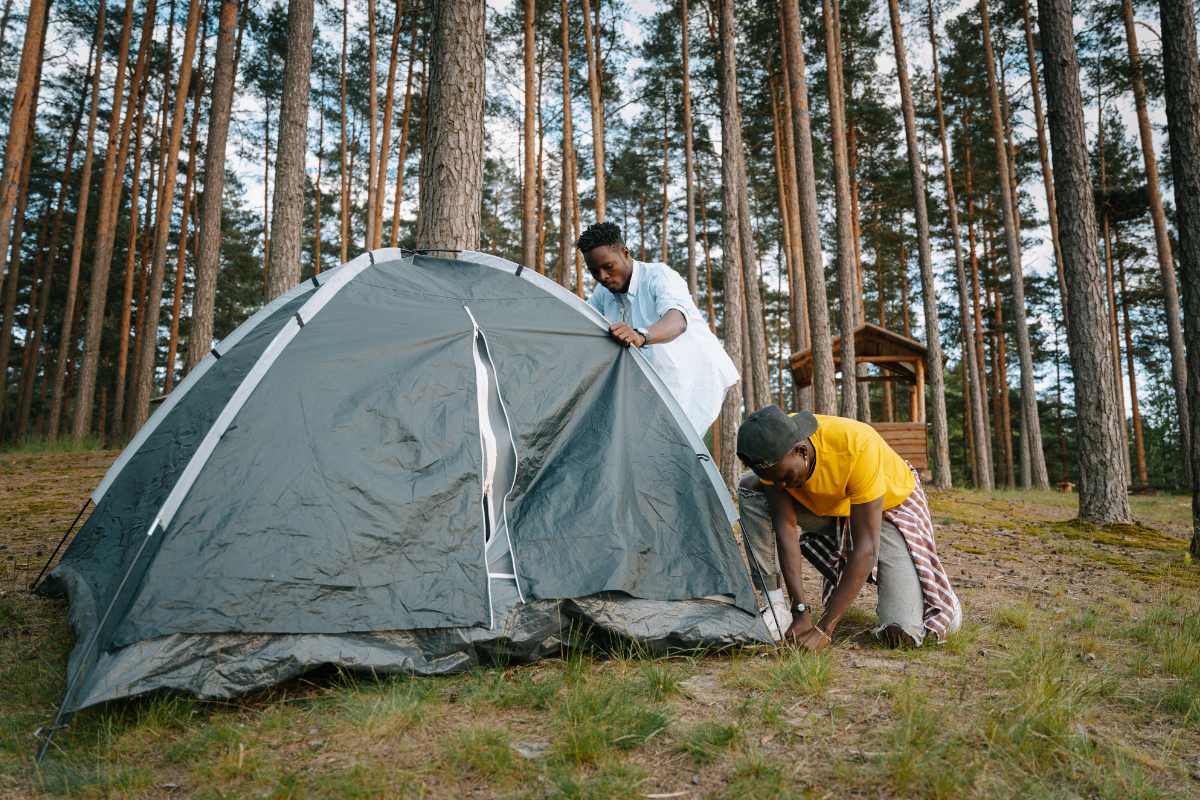
Two-person setup: Divide roles—one manages poles and geometry, the other stakes and tensions. Call out “tension,” “clip,” and “check zipper” so you don’t work against each other. Coordinated communication is one of those underrated Camping Tips And Tricks that speeds camp life.
Common Mistakes And Easy Fixes
Pooling under the floor: Groundsheet sticking out? Tuck edges under. If rain is imminent, add a tiny trench only if allowed and repair afterward—Leave No Trace comes first.
Saggy fly at 2 a.m.: Nylon relaxes when damp. Use line-locs to retension before bed. A quick walk-around takes 30 seconds and saves you from a clammy wake-up.
Stake pull-outs on sandy soil: Use longer stakes, bury them horizontally as deadmen, or anchor with filled stuff sacks. Adapting anchors to soil type is part of mastering how to set up a tent step by step in varied terrain.
Pack-Down That Protects Your Gear
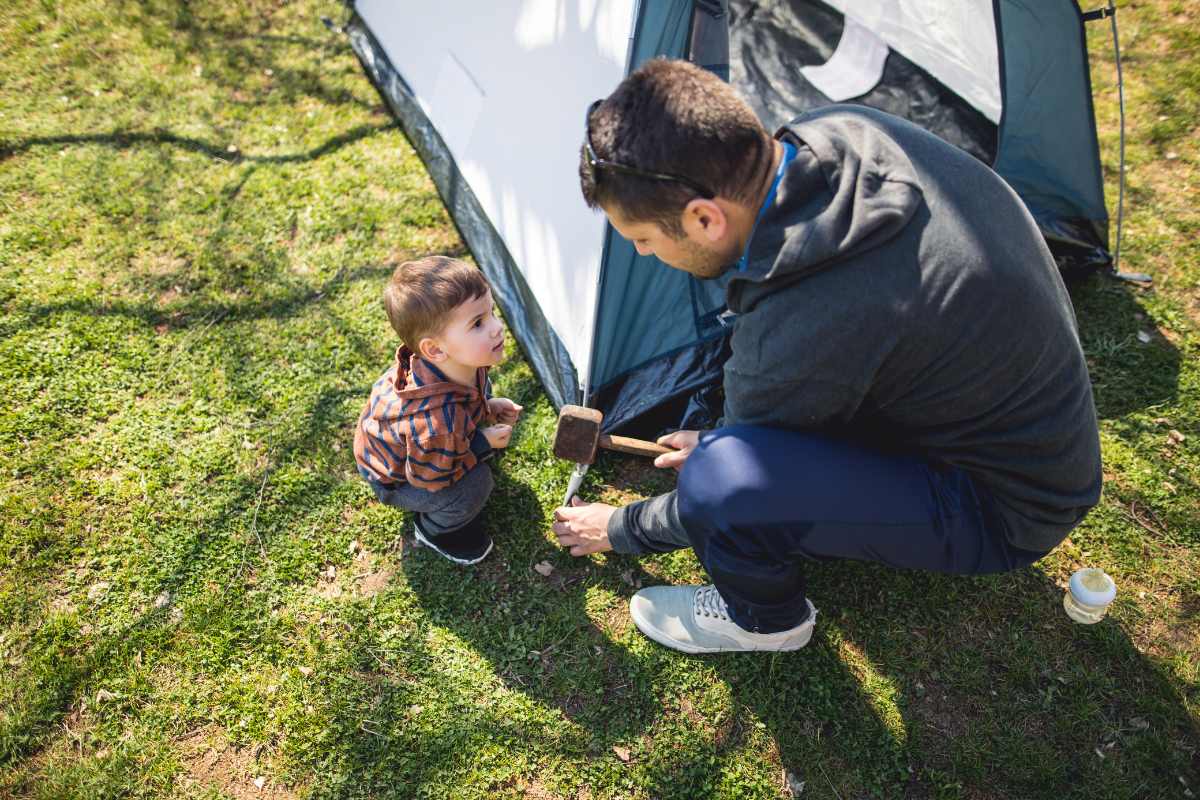
Shake the fly and body to shed dust and dew. Roll, don’t stuff, if your tent uses lightweight coatings prone to creasing; otherwise, a loose stuff keeps fabric from forming permanent fold lines.
Dry fully at home before long-term storage to prevent mildew and hydrolysis.
Store poles partially assembled to reduce shock-cord stress, and keep stakes in a separate pouch so muddy tips don’t migrate grit into the tent bag.
Thoughtful pack-down is the last step of a complete how to set up a tent routine—future you will thank you on the next trip.
Putting It All Together
Great camps come from simple habits: choose higher ground, square the base, pitch the body cleanly, tension the fly evenly, and vent for comfort.
Whether you’re dialing a minimalist bivy or a spacious family dome, these fundamentals make any tent camping set up fast, sturdy, and restful.
Ready to practice? Set a timer in your yard and rehearse twice. Familiar muscle memory turns a windy trailhead into just another easy, confident tent set up.
Explore more Camping Tips And Tricks on Urbaki and keep leveling up your camp craft from site selection to camp kitchen.
Enjoy Watching this Video

Source: REI
More Home Tips 👇🏼👇🏼