
How to Keep a Real Christmas Tree Fresh: 7 Simple Steps


A real tree fills the house with a scent and a look that no artificial tree can match. It is also a living plant that starts losing moisture the moment it is cut, and a dry tree drops needles all over the floor and becomes a fire risk. The good news: keeping it green through the holidays mostly comes down to a few simple habits.
Here are seven steps based on advice from university extension services, tree growers and fire safety experts, from choosing the tree to knowing when it's time to take it down.

1. Pick a Fresh Tree
Freshness starts at the farm or the tree lot. Look for a tree with even color all the way around and glossy green needles. Brown patches or dull, dry-looking needles usually mean the tree was cut a while ago or has already lost a lot of moisture.

Before you commit, try a few quick checks recommended by Purdue University's forestry extension. Bend a needle between your fingers: fir needles should snap, while pine needles should bend. Run your hand along a branch from the inside out, or gently bounce the tree on its cut end. A few interior needles falling off is normal, but if many outer needles drop, choose a different tree. Finally, crush a few needles in your hand. A fresh tree smells strong; little scent is a warning sign.
Take a tape measure with you, too. Many homes have eight- or nine-foot ceilings, and the stand and tree topper both add height. Trimming a lot off the bottom to make a tall tree fit can leave an awkward bare trunk.

2. Make a Fresh Cut Before It Goes in the Stand
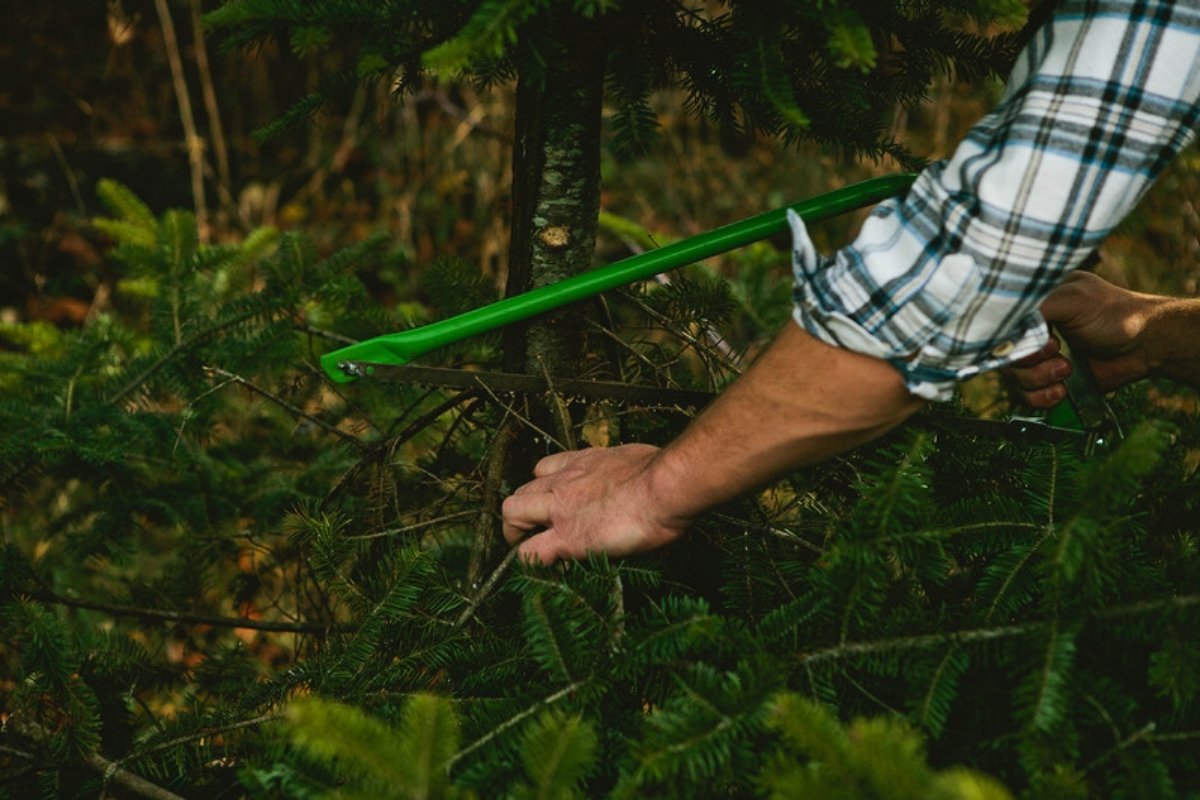
Once a tree is cut, sap starts to seal the end of the trunk, and a sealed trunk can't take up water well. That's why even a tree that was cut on the farm needs a new cut before it goes into the stand. The University of Illinois Extension calls this final flat cut essential, even for a tree bought from a lot.
Take about 1/2 to 1 inch off the bottom with a straight cut across the trunk. Many tree lots will do this for you when you buy. University of Florida IFAS Extension recommends getting the tree into water within 15 to 30 minutes of that cut. If you aren't ready to set it up right away, stand the freshly cut trunk in a bucket of water so it can start drinking.
Remove the netting once the tree is inside. The branches need time to relax and settle, and it's easier to see which side should face the room.
3. Use a Stand That Holds Enough Water
A stand that is too small is one of the most common reasons a tree dries out early. The Real Christmas Tree Board recommends a stand that provides about 1 quart of water per inch of trunk diameter. UF/IFAS also suggests a stand that holds at least 2 quarts after the tree is in place.
Measure the trunk across the cut end before you buy a stand. A 4-inch trunk, for example, calls for a stand that holds about a gallon. A larger reservoir means fewer refills and less chance of the water running out overnight.
Put a waterproof mat or a sheet of plastic under the stand and tree skirt to protect your floor from spills. If you have pets or young children, secure the tree to a wall or a heavy piece of furniture so it can't be knocked over.
4. Check the Water Every Day
A fresh tree is very thirsty. According to UF/IFAS, tree trunks generally absorb about 1 quart of water per inch of diameter per day, so a 4-inch trunk may drink up to a gallon a day in the first few days. Check the level twice a day for the first 48 hours, then at least once a day for as long as the tree is up.
The most important rule: never let the water drop below the base of the trunk. If the cut end is exposed, it can seal over again and the tree will stop drinking, even after you refill the stand. Picking a set time each day, like when you make your morning coffee, makes it easier to remember.
Plain, clean water is all the tree needs. Extension experts say sugar, aspirin, bleach and commercial tree preservatives aren't necessary.
5. Keep It Away From Heat and Direct Sun
Heat dries needles faster than anything else. The National Fire Protection Association (NFPA) recommends keeping a tree at least 3 feet from heat sources such as fireplaces, radiators, candles, heat vents and lights. UF/IFAS suggests 3 to 5 feet from fireplaces, vents, radiators and direct sunlight.
A cooler room helps as well. UF/IFAS suggests keeping the room between about 60 and 72°F to slow drying. If a heat register sits close to the tree, you can partly close it while the tree is up. Avoid placing the tree in front of a sunny south-facing window, where strong light speeds up fading and drying.
When you plan the spot, also think about traffic. A corner away from doorways keeps the tree from being bumped and makes it easier to reach the stand for refills.
6. Choose Cool LED Lights and Turn Them Off at Night
LED lights stay much cooler than old incandescent strings, which is better for the needles and for safety. Before you hang them, check every strand and replace any with worn or broken cords or loose bulb connections.
The NFPA recommends connecting no more than three strands of mini string lights together. Turn the lights off when you go to bed or leave the house. A simple plug-in timer can do this for you every night, so you don't have to remember.

7. Watch for Signs It's Drying Out
Even with good care, a cut tree won't last forever. Every few days, take a minute to look it over. The warning signs are heavy needle drop, brittle branches that snap instead of bend, and a stand where the water level stays the same for several days because the tree has stopped drinking.
If you notice these signs, take the lights off and plan to take the tree down. Dry trees are a fire hazard, so it's better to retire it a little early than to keep it up through New Year's when it's past its best.
Common Mistakes to Avoid
- Skipping the fresh cut. A trunk that has sealed over can't drink, no matter how much water is in the stand.
- Letting the stand run dry. Even one exposed day can cause the cut end to seal again.
- Buying the stand last. Measure the trunk first and choose a stand with room for enough water.
- Adding home remedies to the water. Sugar, aspirin and bleach don't help; plain water works best.
- Placing the tree next to a vent or fireplace. Heat is the fastest way to dry out the needles.
- Leaving it up too long. Take the tree down promptly after the holidays, before it becomes dry and brittle.
Frequently Asked Questions
Should I add sugar or aspirin to the tree water?
No. Extension experts recommend plain, clean water and say additives like sugar, aspirin, bleach and commercial preservatives aren't needed. What matters most is a fresh cut and a stand that never runs dry.
How much water does a Christmas tree drink?
As a rule of thumb, about 1 quart per inch of trunk diameter per day, and the most in the first few days after it is set up. A tree with a 4-inch trunk can take up to a gallon a day at first, which is why checking twice a day early on is a good idea.
What should I do with the tree after the holidays?
Many towns collect trees for recycling or chipping, so check with your local waste service. You can also set the tree outside as winter shelter for birds or cut the branches and lay them over perennial beds as winter mulch. Never burn a Christmas tree in your fireplace.
More Home Ideas
- Top 3 Christmas Trees to Brighten Your Holidays
- DIY Christmas Ornaments: 25 Easy Favorites
- Christmas Entryway Decor: 5 Ideas for a Warm Holiday Welcome
- Pre-Holiday Cleaning: 7 Spots to Clean Before Guests Arrive
Give your tree a fresh cut, a big drink and a cool spot, and it will look its best all season. Happy decorating!
More Home Tips 👇🏼👇🏼