
Reading the Night: Campcraft Skills for Low-Light and No-Moon Conditions
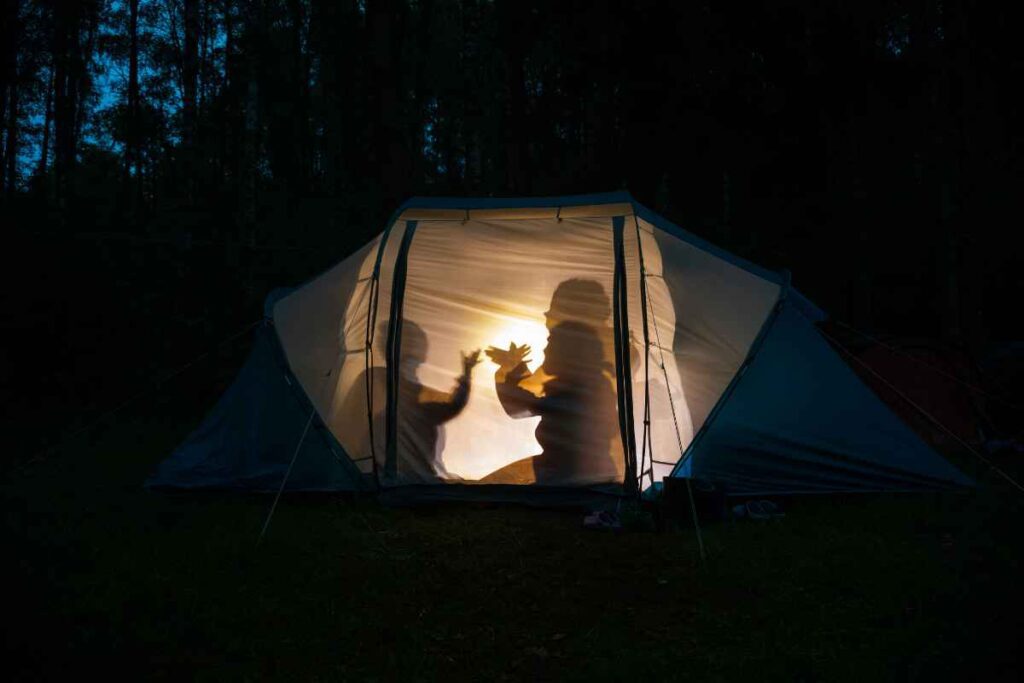
When we talk about camping at night, most of us picture a soft moon, glowing embers, and a cozy headlamp nearby. But camping in low-light or no-moon conditions is a completely different experience.
Everything changes. Trails disappear. Depth is hard to judge. Even familiar gear feels hard to find. The good news is that you can learn to work with darkness instead of fighting it.
With the right campcraft skills, you’ll feel calm, quiet, and in control — even when the sky is fully black and you can barely see your own hand.
This guide will walk you through night vision basics, quiet navigation, safe camp setup, and how to manage light without ruining your eyes.
Whether you’re backpacking, car camping, or doing an overnight hunt, these skills help you stay safe, efficient, and respectful of wildlife.
Protecting Your Natural Night Vision
Your eyes are already built for low light. You just have to let them work.
Night vision is the ability to see using tiny bits of available light — starlight, distant glow on clouds, the outline of tree lines. But here’s the catch: it takes time to fully adjust.
Your eyes need around 20–30 minutes in the dark to reach their best low-light sensitivity. If you blast them with white light during that time, you reset the clock.

Light discipline
Light discipline means controlling any artificial light you produce. This matters for safety, stealth, and comfort.
- Use red light, not white light. A headlamp with a red mode is one of the most valuable tools you can carry. Red light preserves your night vision, while white or blue light destroys it instantly.
- Aim your light down. Don’t point your beam at faces, reflective gear, tents, or eyes. Blinding someone in camp at night is a real hazard, not just an annoyance.
- Use the lowest brightness that lets you do the task. You don’t need “high beam” to check your map or find your cook kit.
- Cup your light with your hand. You can dim any light source by partially covering it with your palm and letting some spill out between your fingers. This creates a soft glow instead of a hard beam.
Let your peripheral vision work
In deep darkness, you actually see shapes and movement better by not looking directly at them. Your peripheral vision is more sensitive at night.
If you’re trying to spot the trail, don’t stare straight at the ground — scan slightly to the side. It feels strange at first, then starts to feel natural.
Navigating Without a Moon
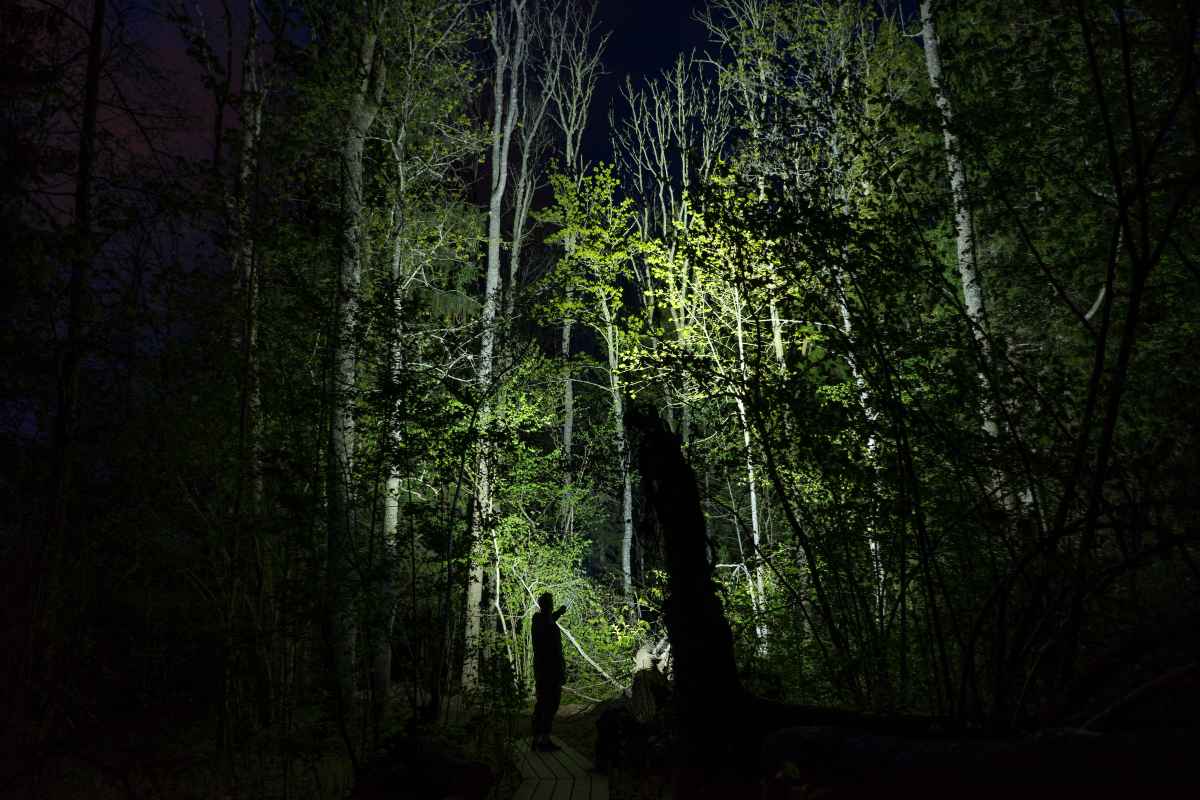
Walking in darkness is where most people feel tense. That’s normal. But the goal isn’t to move fast. The goal is to move quietly, safely, and deliberately.
Use your feet like sensors
Your feet can read terrain faster than your eyes can.
- Take short, deliberate steps, keeping your weight slightly back. This lets you “test” the ground ahead before you fully commit.
- Slide your toe or the outside edge of your boot forward first. If you feel a sudden drop, roots, water, or unstable rock, stop and adjust before you put weight down.
- Keep your knees soft. Locked knees make you stiff and louder.
This style of movement also reduces noise, which matters if you are in wildlife-heavy areas or if you’re traveling with a group and want to communicate quietly.
Slow your head, not just your body
When you’re nervous, you tend to snap your head quickly from side to side. That hurts you at night. Fast head movements blur what little visual information you have. Instead, move your head slowly and give your eyes time to gather detail.
Read silhouettes, not textures
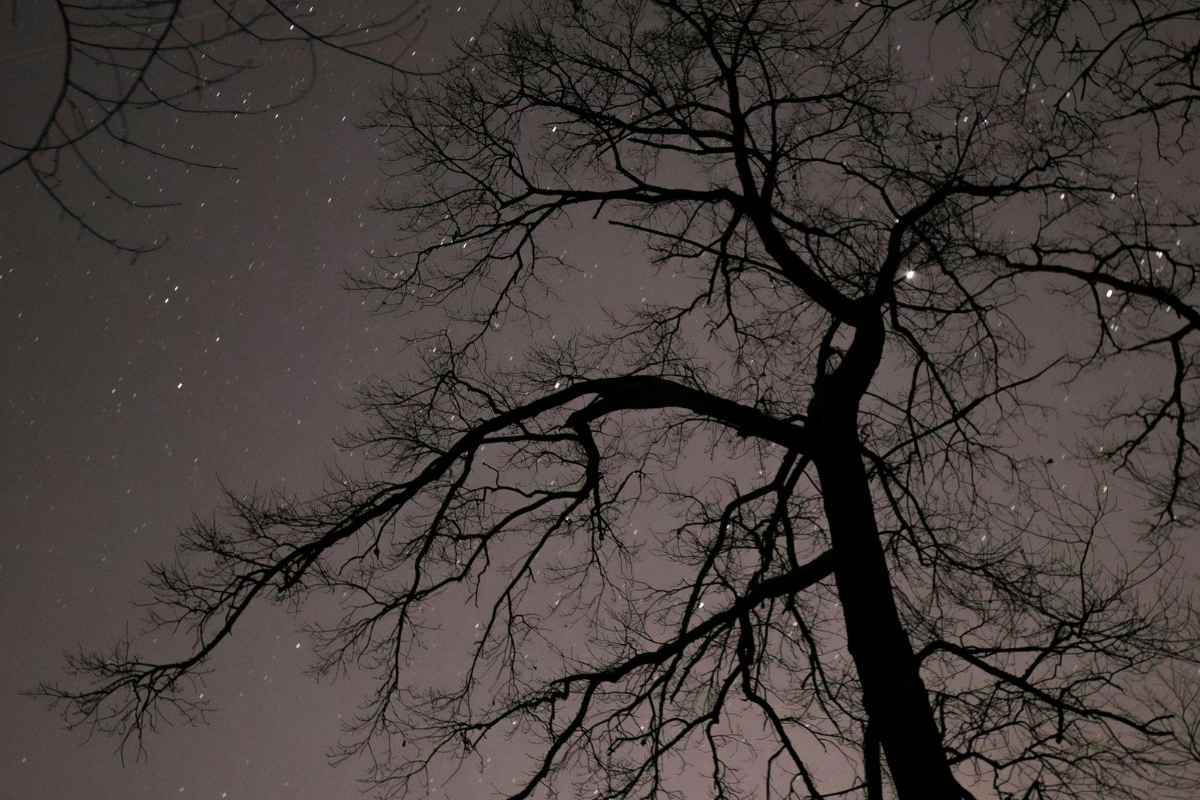
In full daylight, you read the trail by looking for dirt, rocks, leaves. At night, you read the trail by looking for contrast. The trail might appear as a slightly lighter band between darker tree trunks.
Open space looks “softer,” while thickets, branches, and logs look like blocks of solid black.
If you lose the trail:
- Stop.
- Turn off (or dim) your light.
- Let your eyes reset for 10–15 seconds.
- Look up, not down. Often you’ll see the natural “tunnel” of the trail ahead as a faint gap between trees.
Panic makes you lost. Pausing gets you un-lost.
Marking and Organizing Camp Before It Gets Dark
If you know you’re going to be in no-moon conditions, your best defense is smart prep during the last light of day.
Build a “night-safe campsite”
A night-safe campsite is a campsite that you can navigate in complete darkness without tripping, spilling, or yelling.
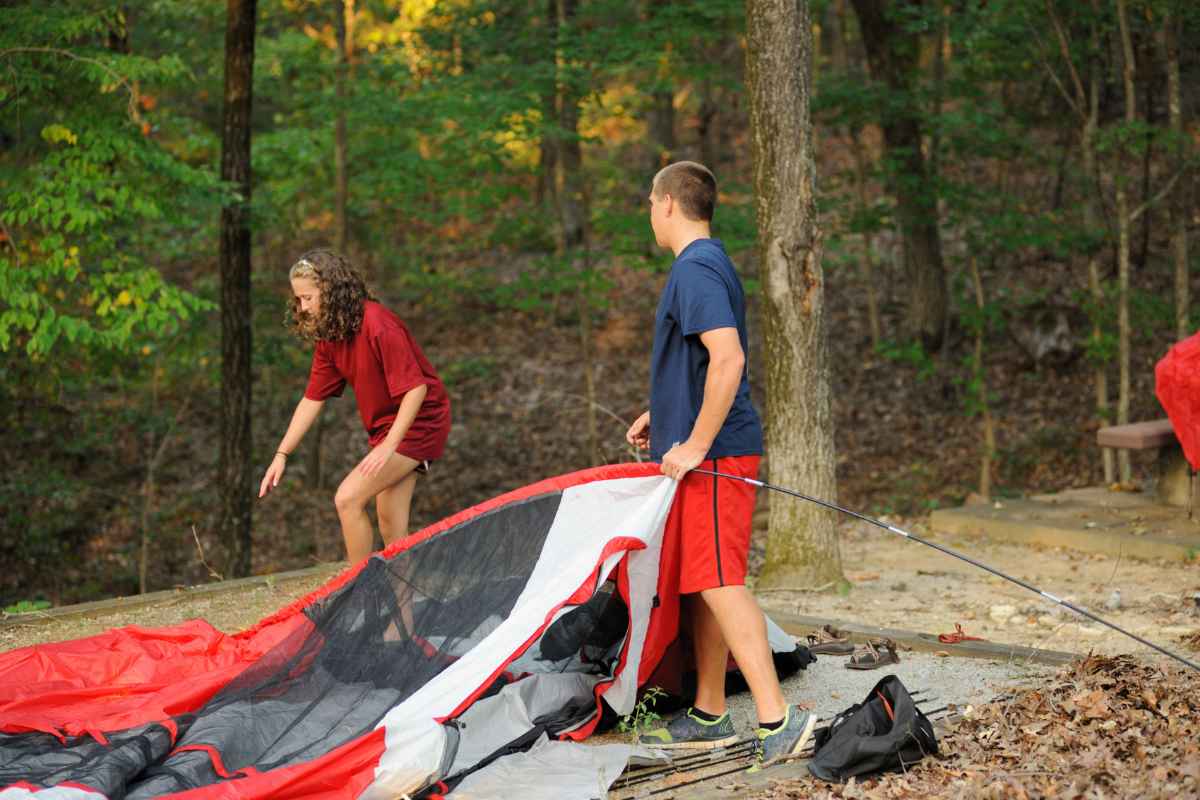
Here’s how to set it up:
- Clear your walkways. Kick sticks, pinecones, and roots out of the main paths you’ll walk: tent → cooking area → bathroom spot. At night, tiny tripping hazards become real risks.
- Stage critical items in predictable pockets. Headlamp in the same pocket. Knife in the same pocket. Lighter in the same pocket. Muscle memory matters more than vision after sunset.
- Put water where you can reach it from inside your shelter. You do not want to wander around thirsty at 2 a.m. with no light.
- Keep camp tidy. In total darkness, “I’ll just set this here for now” becomes 30 minutes of searching. Neat camp = calm night.
Subtle markers
You don’t want bright reflective tape everywhere, but minimal marking can prevent nighttime confusion.
- A tiny reflective cord tab or piece of glow cord on the tent zipper helps you find the entrance without lighting up the whole tent.
- A dim marker (like a low glow stick wrapped in a bandana to diffuse it) near guy lines reduces the chance of someone clotheslining themselves.
- If you’re in a group, agree on where the bathroom area is and mark it quietly. Nothing ruins group morale faster than mystery footsteps outside your tent at 3 a.m.
Sound, Smell, and Memory: Non-Visual Mapping
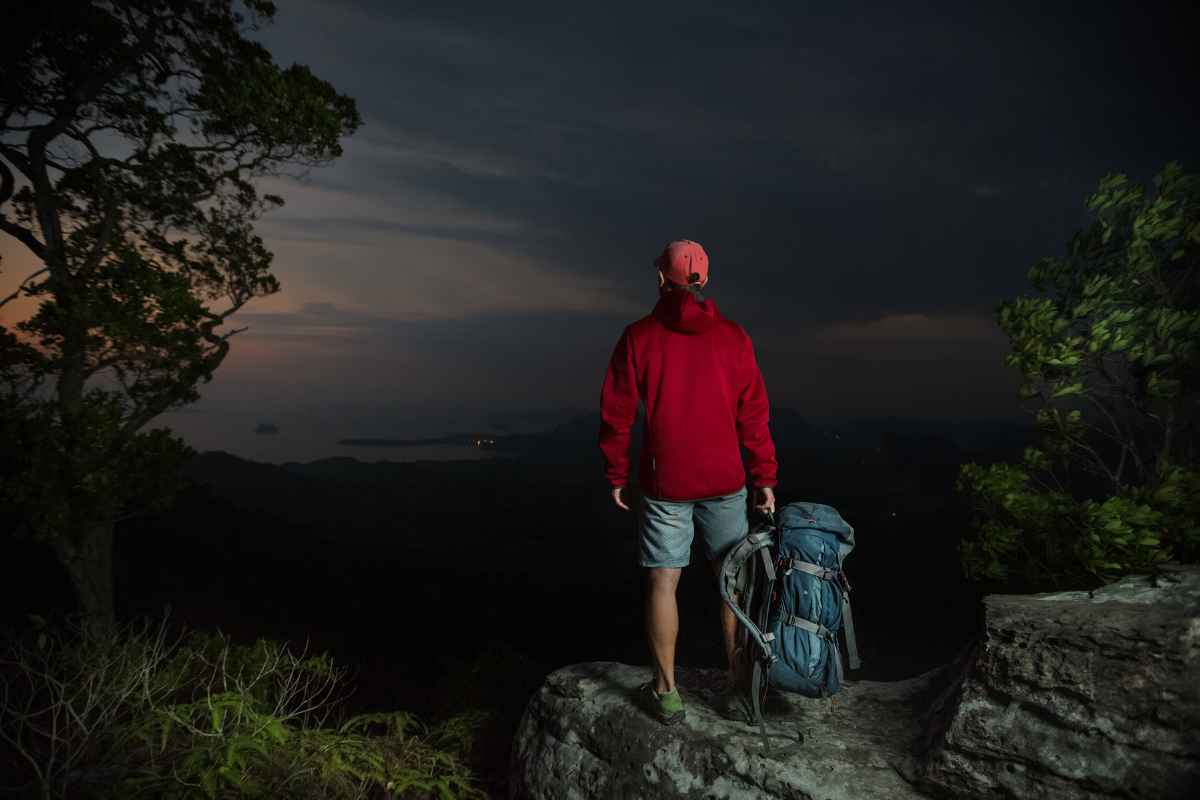
In deep night, vision stops being your main sense. You start navigating using sound, smell, temperature, and repetition.
Use ambient sound as orientation
Water is one of the best natural anchors in darkness. A creek, a waterfall, or even steady wind through a specific stand of trees gives you a direction reference.
If you leave camp to grab something, pay attention to what you hear, not just what you see. On your way back, aim for that same sound.
The same goes for man-made sounds: distant highway hum, a generator, a flag line tapping against a pole. They all form mental “lighthouses.”
Notice changes in air
Cooler air can signal low ground or water. Warmer, drier air can mean you’re stepping out of a shaded pocket and toward more open space. Temperature shifts help you understand terrain when your eyes can’t.
Rehearse key paths
Before full dark, walk the most important short routes a few times: tent to cook area, tent to bear hang, tent to bathroom spot. Do it until it feels automatic. You are literally teaching your body the way home for later.
This is one of the most underrated campcraft habits. In stressful darkness, familiarity feels like confidence.
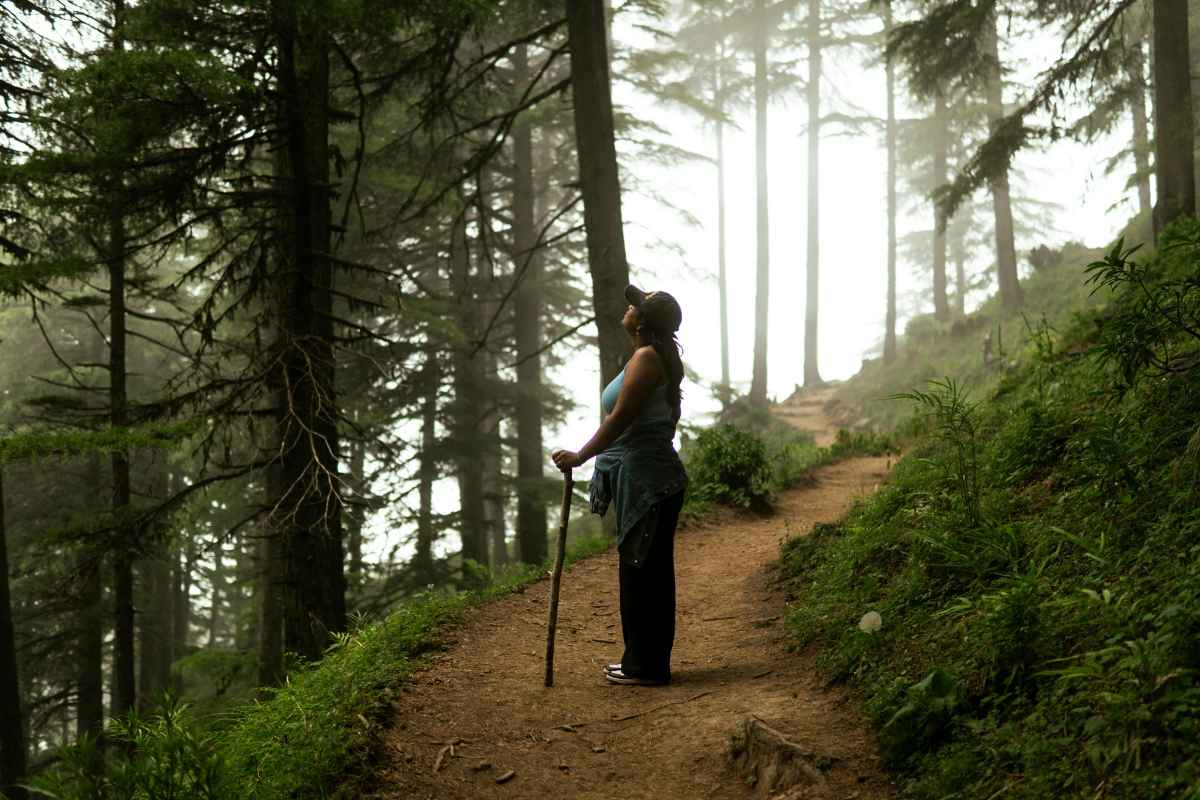
Managing Fire and Light at Night
Fire is comforting, but in deep darkness it can also be distracting. A bright flame can wreck your night vision the same way a bright flashlight can. Then, when you step away from the fire ring, you’re effectively blind.
Sit with your back to the fire
If you’re seated at a campfire, sit so the light is behind you instead of in front of you. This keeps your forward vision dimmer and more adapted to the night beyond the circle of light.
You’ll see approaching movement sooner, and your eyes won’t have to constantly readjust when you stand up.
Respect wildfire safety, even in the dark
It’s easy to get sloppy with a fire when you’re tired. Don’t. Low light makes it harder to see spreading embers, dry leaf litter, or a log that rolled out of the fire ring.
Before you turn in, drown and stir until the ash is cool to the touch. A nighttime fire accident in remote conditions is not something you want to manage.
Staying Calm When You Can’t See
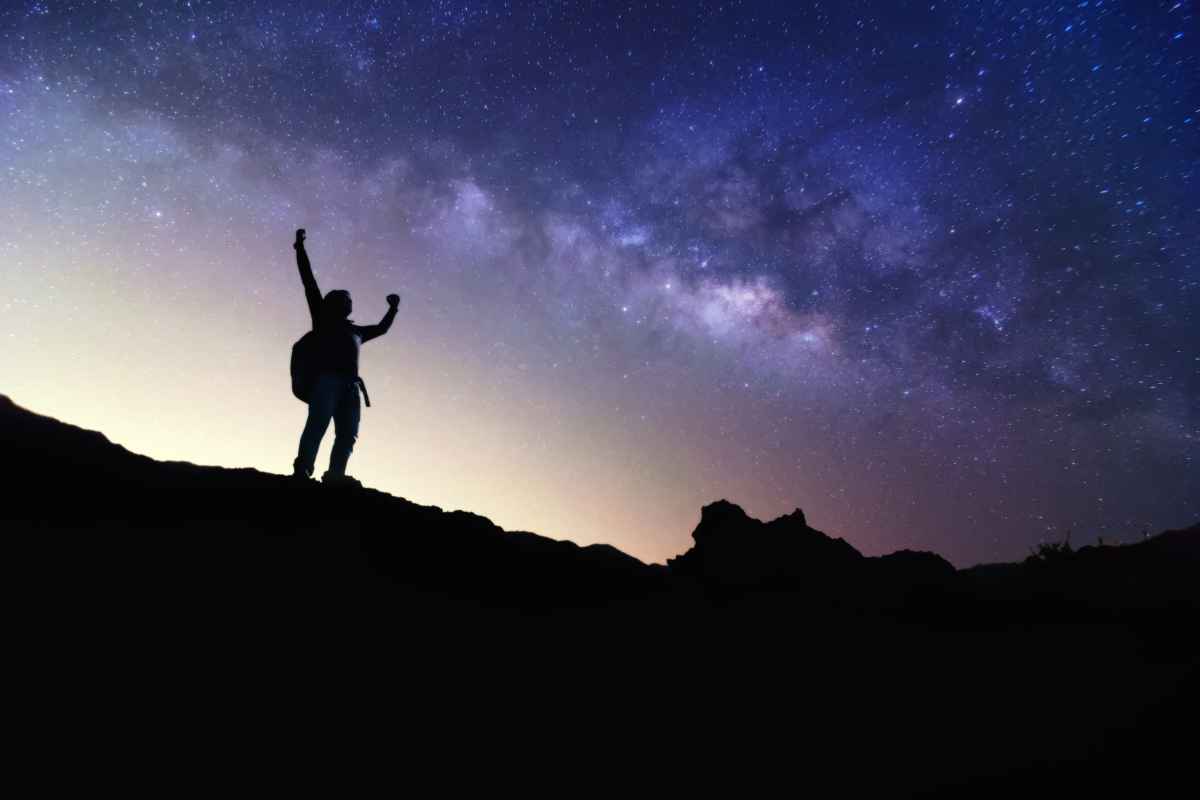
It’s natural to feel a spike of adrenaline in full darkness. Your brain is wired to treat “unseen” as “possible danger.” That’s not paranoia — that’s survival instinct. The key is to control your response so you can think clearly.
Here are simple strategies:
- Pause and breathe before you move. Stillness lets you hear better. It also lowers your heart rate, so you don’t waste energy.
- Name familiar sounds. “That’s wind in fabric.” “That’s a branch settling.” “That’s water hitting rock.” Labeling sounds turns “unknown threat” into “known thing.”
- Respect wildlife without assuming attack. Many animals are most active at night. Most of the time, noise near camp is just curious movement, not aggression. Stay aware, not panicked.
Confidence in the dark doesn’t mean ignoring instincts. It means listening to them with a level head.
Practice in Safe Conditions First
Like any outdoor skill, low-light campcraft gets easier with practice. You don’t need to start in the middle of a remote forest on a moonless night. You can train almost everything in your backyard or a local campsite.
Try this:
- Sit outside with just red light for 20 minutes and notice how much more you start to see.
- Walk a short path slowly with minimal light, focusing on foot placement and listening.
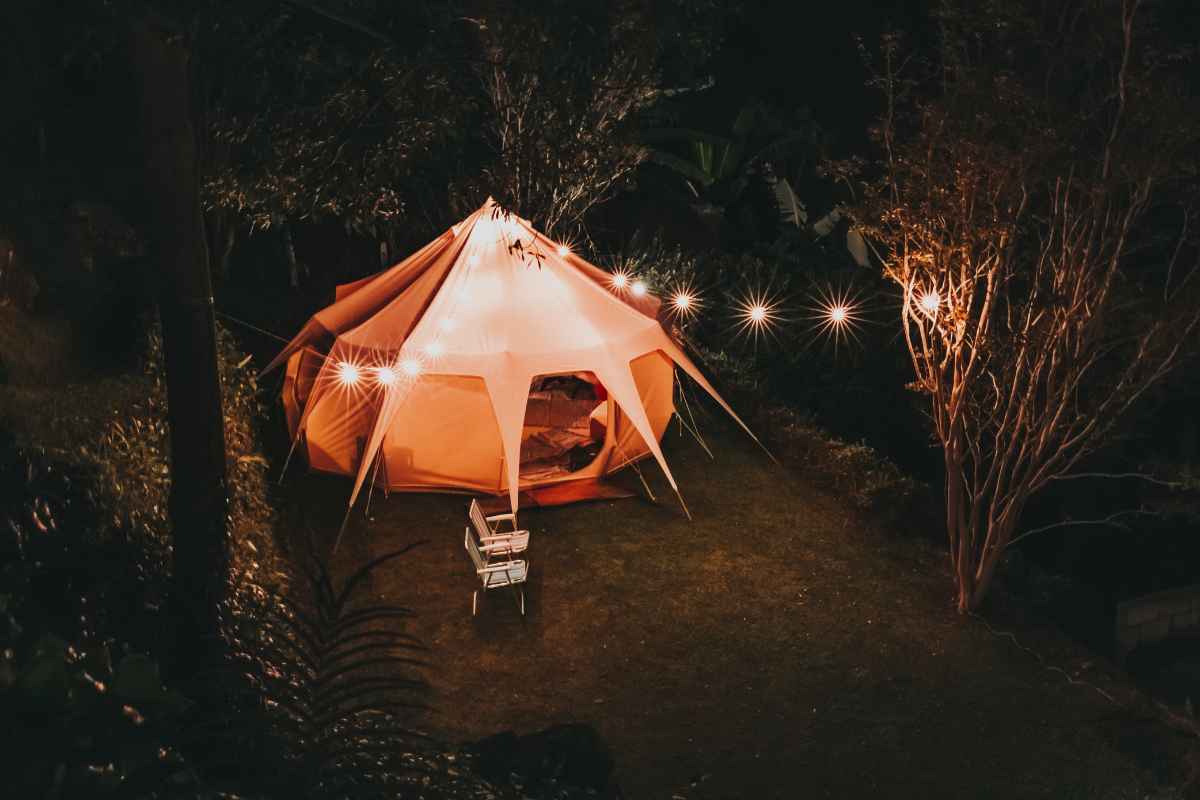
- Set up a “night-safe campsite” arrangement and test if you can find your core gear in total darkness.
When you practice before you actually need the skill, you replace fear with familiarity.
Owning the Darkness
The first time you camp without moonlight, it can feel like the world shrinks to the size of your reach. But with time, you realize something else: the night is not empty — it’s full of information, just not all of it is visual.
You start to notice quiet breezes sliding through branches, shifting ground under your boots, the faint line of trail against the treeline. You begin to move with intention instead of tension.
In the end, the real campcraft skill is learning to slow down. Slow light, slow steps, slow breathing, slow thinking. When you stop fighting the dark and start reading it, you’re not stumbling through the night anymore. You’re traveling in it with confidence.
Did you find this post useful or inspiring? Save THIS PIN for later in your Outdoor Board on Pinterest! 😊
Explore these outdoor tips too