
How to Half Double Crochet: Slow Step-by-Step Tutorial for Absolute Beginners

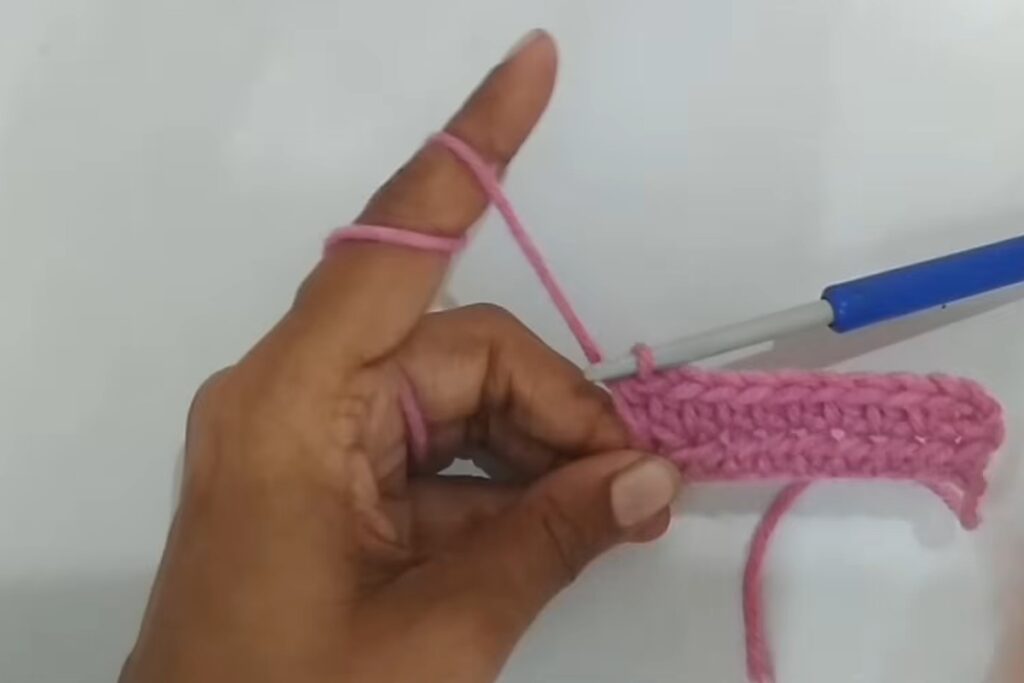
The half double crochet sits right in the middle of the basic stitch family. It is taller than a single crochet, shorter than a double crochet, and it works up into a fabric that is soft, a little textured and quicker to build than rows of single crochet. Once you can make it comfortably, a long list of hats, blankets, scarves and simple garments opens up.
This beginner lesson from Hopeful Turns is part of her Crochet for Beginners series, and it is filmed on purpose at a very slow pace. Before getting to the stitch itself, she goes back over the slip knot and how to hold the yarn and hook, so you can start here even if you have only just picked up a hook for the first time.
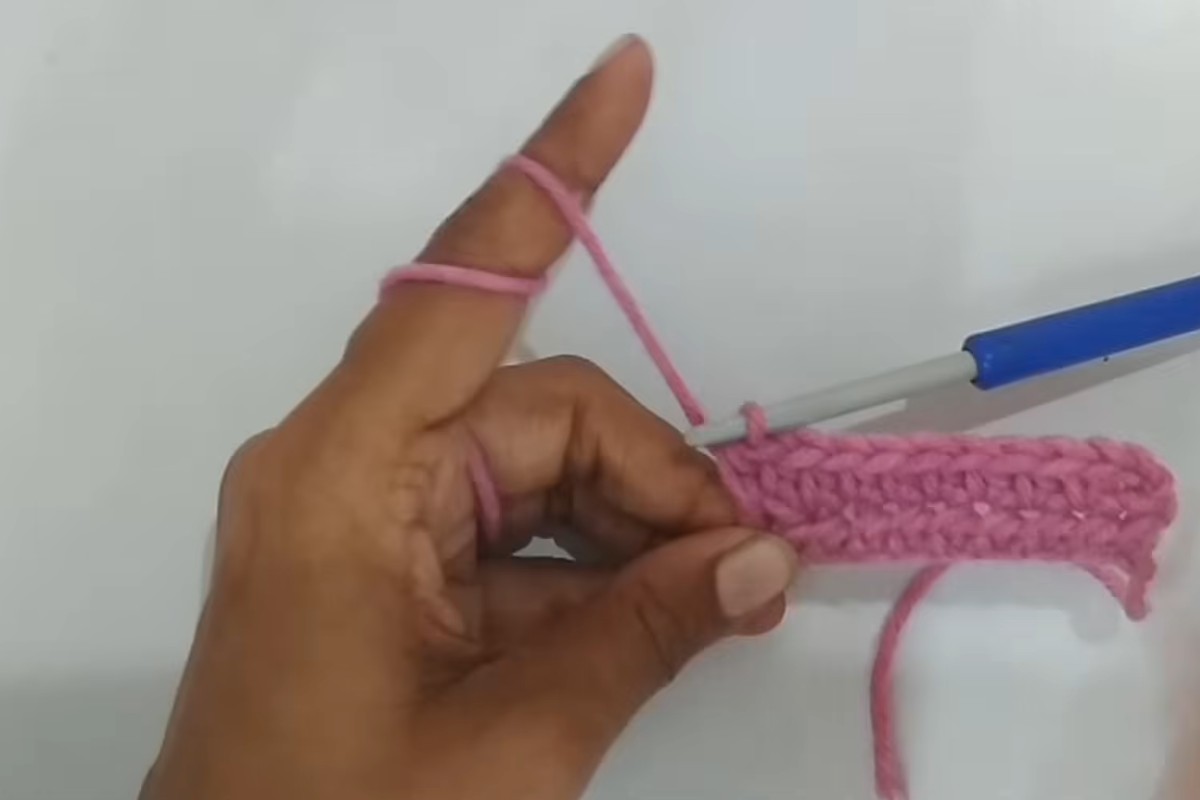
Images and patterns courtesy of Hopeful Turns
Half Double Crochet at a Glance
- Designer: Hopeful Turns
- Skill level: Absolute beginner (Lesson 6 of the Crochet for Beginners series)
- Terminology: US terms. The US half double crochet (hdc) is the same stitch as the UK half treble crochet (htr)
- What the video covers: slip knot, holding the yarn and hook, the half double crochet stitch, turning and working several rows
- Video length: about 16 minutes
What You'll Need
- A ball of smooth, light-colored yarn (the video uses a pink yarn, which makes each loop easy to see)
- A crochet hook that suits your yarn (check the label on the ball for the recommended size)
- A pair of scissors
For a first practice piece, a plain worsted weight yarn in a pale color is a good choice. Dark, fuzzy or textured yarns hide the stitches and make it harder to see where the hook should go.
How the Lesson Is Organized
The video is split into short chapters, so it is easy to jump back to the part you want to practice again.
1. Introduction (0:00)
A quick look at what you will learn and a note on terminology. The whole channel follows US terms, so if you learned crochet with UK patterns, keep in mind that this stitch is your half treble.
2. Slip Knot (1:00)
Every project starts here. The slip knot puts the first loop on your hook and anchors the yarn. If this step still feels awkward, Hopeful Turns has a separate, more detailed video on the slip knot and the chain stitch in the same series.
3. Holding the Yarn (3:00)
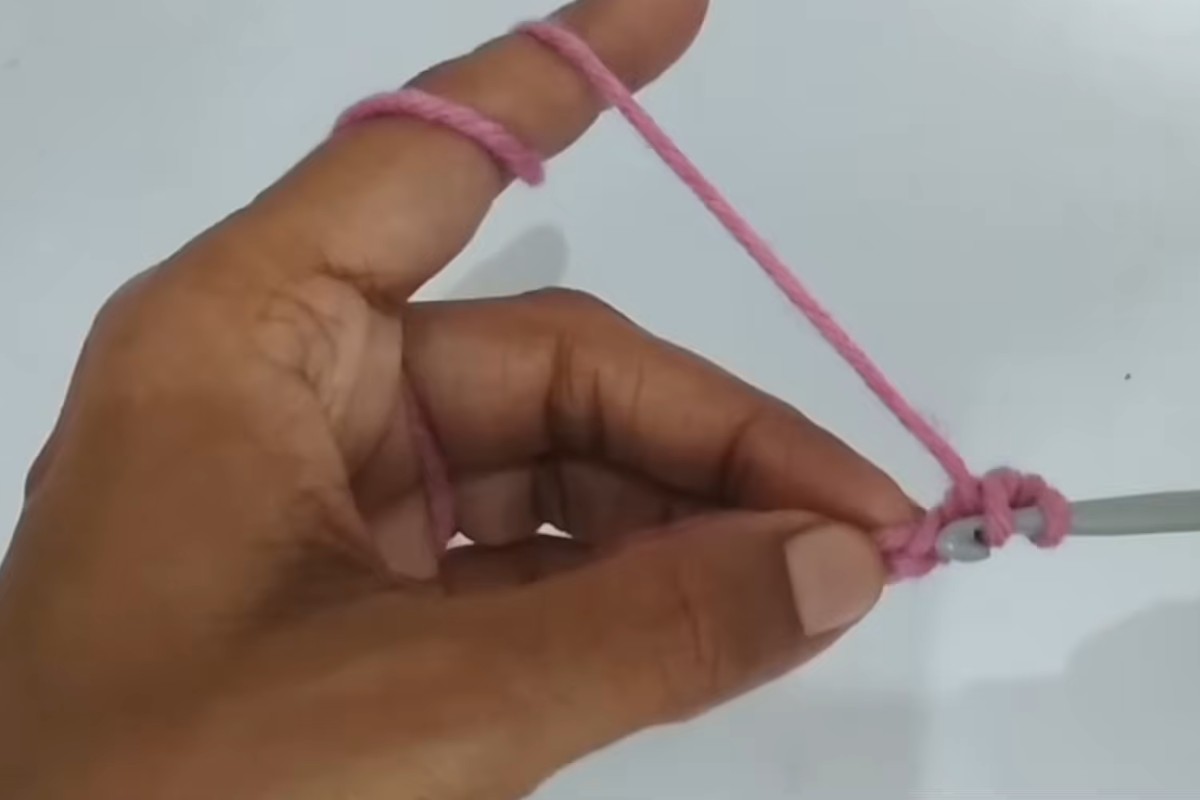
She shows how to wrap the working yarn over the fingers of your non-hook hand to form a "V" that controls the tension. Even tension is what makes your stitches look the same size, so it is worth practicing this before moving on.
4. Yarn Over (4:00)
The yarn over is the move that gives the half double crochet its extra height. You wrap the yarn around the hook from back to front before you insert it into the stitch.
5. Making the Half Double Crochet (5:00 to 13:00)
This is the heart of the lesson. In short, you yarn over, insert the hook into the stitch, yarn over again and pull up a loop, so you have three loops on the hook. Then you yarn over one last time and pull through all three loops at once. The video walks through the first stitch, the second stitch, completing the row and the last stitch, which is the one beginners most often miss.
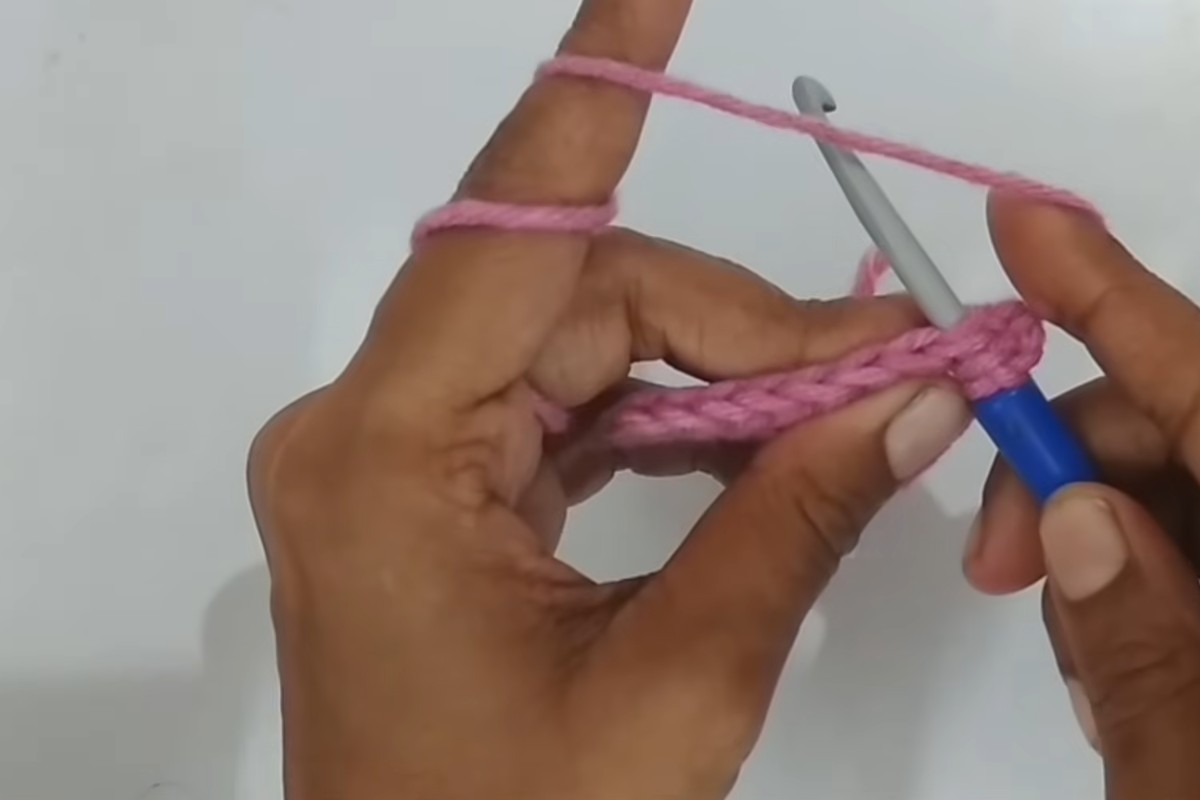
6. Building More Rows (13:00 to 15:00)
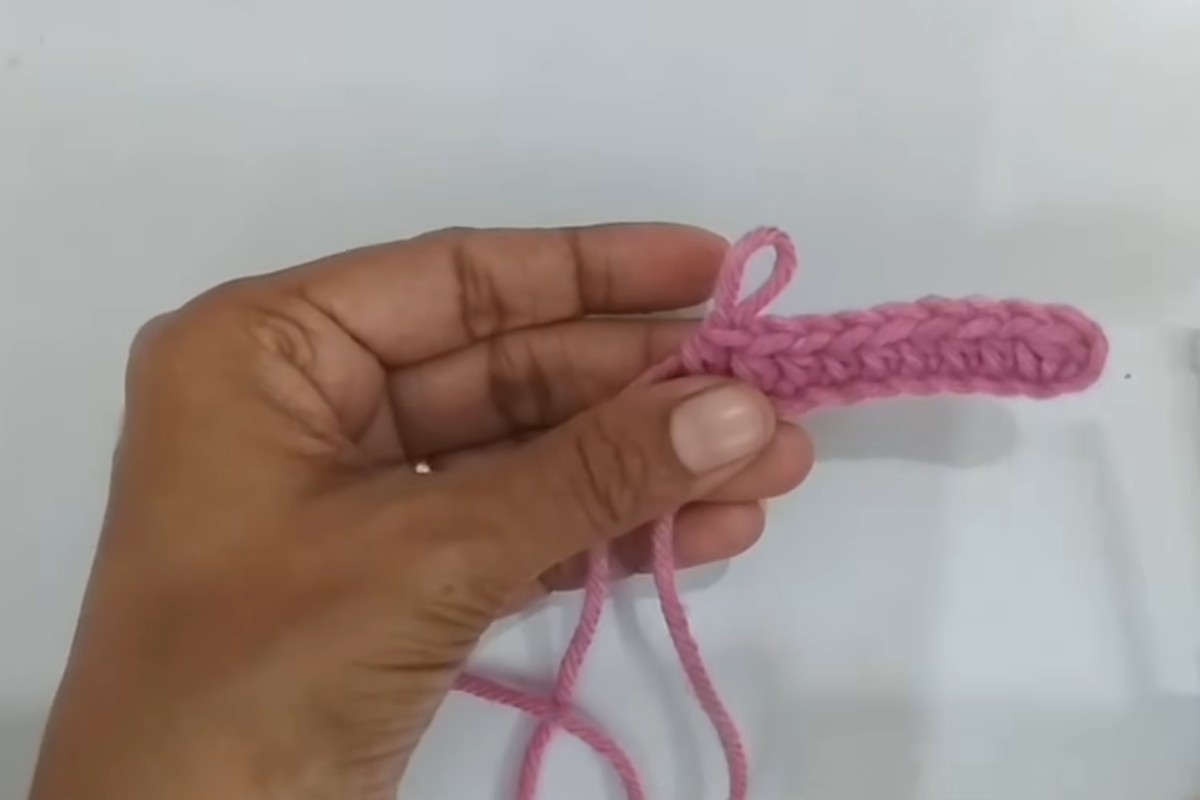
After the first row, you turn the work and keep going. Working rows 3 and 4, and then rows 5 to 9, gives you a small swatch and lots of repetition, which is exactly what your hands need to learn the motion.
7. Summary (15:00)
A short recap of the steps so you can practice on your own.
Tips for Neat Half Double Crochet
- Count your loops. Before the final pull-through you should have exactly three loops on the hook. If you have two or four, look back at the last yarn over.
- Pull up the loop to the right height. When you draw up the loop through the stitch, bring it up to the height of the hook shaft. Loops that are too tight make the final pull-through a struggle.
- Find the last stitch. Rows that slowly get narrower usually mean the last stitch was skipped. Count your stitches at the end of every row while you are learning.
- Relax your hands. A tight grip on the yarn leads to stiff fabric. Let the yarn slide through your fingers with a light, steady tension.
- Practice on a swatch first. A small square of ten or so rows is plenty. Once the stitches look even, you are ready for a real project.
Where to Use the Half Double Crochet
Because it is quick and makes a fabric that is neither too stiff nor too loose, the half double crochet is popular for beanies, ear warmers, cowls, baby blankets and dishcloths. It is also the starting point for many textured stitches, such as working only in the back or third loop to create ribbing.
Enjoy the Video Tutorial
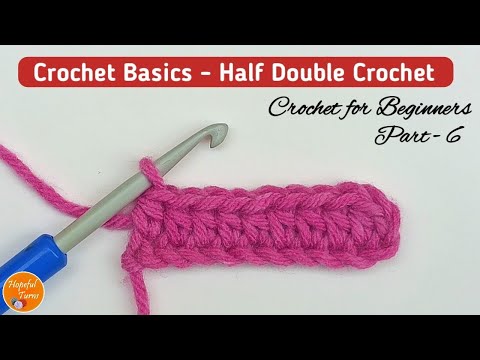
Source: Hopeful Turns
Frequently Asked Questions
What is the difference between half double crochet and double crochet?
Both start with a yarn over, but in a half double crochet you pull through all three loops at once at the end. In a double crochet you pull through two loops at a time, twice, which makes a taller stitch.
Is half double crochet the same as half treble crochet?
Yes. It is the same stitch with a different name. US patterns call it half double crochet (hdc), and UK patterns call it half treble crochet (htr).
Do I need to know the chain stitch first?
It helps. You will need a starting chain for your first row. The video reviews the slip knot and how to hold the yarn, and the same beginner series has separate lessons on the chain stitch if you need more practice.
More from Hopeful Turns
- Crochet Cat Keychain: Easy No-Sew Amigurumi Cat
- Crochet Christmas Tree Ornaments
- Crochet Lily of the Valley Bell Flower
- Mini Flower Bouquet Crochet Keychain
More crochet projects for you