
What Is Financial Inclusion?

Basic financial services make it easy to pay for daily necessities, financing goals, and running a business. But more than two billion adults around the world lack access to essential financial tools.1 Financial inclusion strategies aim to change that, and technology enables large-scale impact.
Next, we will discuss what financial inclusion is, how it works, and the different types of financial inclusion.
What is financial inclusion?
Financial inclusion is a movement to ensure that individuals and businesses have access to affordable and effective financial services. Services range from basic transaction accounts like checking accounts to additional services like credit and insurance.
PayPal CEO Dan Schulman describes three essential aspects of modern financial inclusion:
Universal access to digital financial systems
Safe and secure transactions that allow consumers and businesses to operate with confidence.
Economic participation for everyone in the economy (making and accepting payments, obtaining loans, saving for future goals, helping the community and more)
Financial inclusion is essential to facilitate daily life and allows families and companies to plan short-term and long-term goals.

How does financial inclusion work?
Simply put, financial inclusion helps people gain convenient and affordable access to basic financial services. These individuals belong to groups that have been "economically excluded." These groups often live in low-income areas and / or developing countries. More than half of them are women.
It can be easier to understand financial inclusion by looking at the problems that financial inclusion solves.
Without high-quality financial services, individuals and businesses face significant challenges.
Lack of bank account - Without a bank account or transaction account, people often turn to "alternative financial services."
These services may have higher fees than regulated institutions and generally do not offer the same consumer protection (deposit insurance and protection against fraud and error, for example).
Living without a bank account requires a lot of work to raise funds and pay bills in person. Plus, accounts provide a safe place to save for the future. With technology, consumers can bank, pay and receive from anywhere at a very low cost.
These accounts are considered a "gateway" to other financial services, thus their importance is emphasized.
Limited access to credit: If you have a high credit score, borrowing is easy. But some people have low or bad credit, and some nations don't use credit scores. Without easy access to loans, borrowers rely on informal lenders, who can charge high (or predatory) fees and charges.
The informal economy: in many parts of the world, especially in rural areas, money prevails. Businesses are unlikely to accept plastic or electronic payments, and storing money (rather than depositing it in a bank account) is risky.
Companies struggle to create assets for expansion and may have a limited selection of business partners: vendors who accept cash and customers who pay cash.
Some groups are going to great lengths to bring financial inclusion to as many people and businesses as possible. The G20 pledged in 2017 to advance the cause of financial inclusion around the world.
In 2018, the World Bank, in collaboration with the International Finance Corporation, launched "UFA2020," which is short for Universal Financial Access 2020. The initiative aimed to enable 1 billion people to access a business account.
Another group, the Foundation for International Community Assistance (FINCA), helps facilitate financial inclusion through its global microfinance program.
They provide financial services to many segments of the population that have been financially excluded. Its impact has helped tens of millions since its founding in 1984.
We hope you enjoy watching this video about What Is Financial Inclusion?
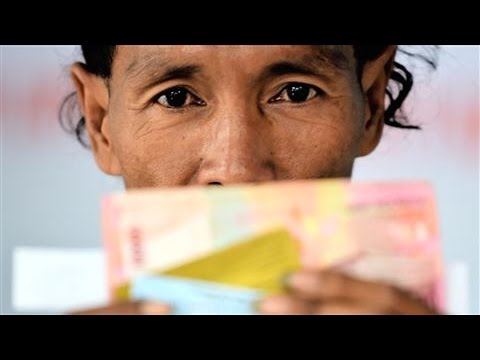
Source: Wall Street Journal
Did you find this post useful or inspiring? Save THIS PIN to your Finances Board on Pinterest!

Ok, That is all for now…
If you enjoyed this article please, Share and Like it. Thanks.
See you in the next post, Have a Wonderful Day!
You may also like 👇🏼👇🏼