
5 Link-Smart Tips For Vertical Gardening


Vertical gardening isn’t just a trend—it’s a smart way to grow more in less space while keeping your plants within easy reach.
If you’re working with a balcony, a slim patio, or a tight side yard, vertical planting can turn bare walls and fences into productive, beautiful green features.
In this curated guide, you’ll find five link-smart tips that help you choose structures, plan layouts, and pick crops for compact spaces—without drowning in complicated instructions.
We reference the original creator’s video for credit and further learning, while our highlights focus on why each idea works, how to adapt it to your needs, and where it makes the biggest impact in a small garden design.
Expect practical inspiration, from vertical herb gardens on balconies to vertical vegetable gardens that keep salads coming all season.
1) Choose The Right Structure For Space And Roots
 Start with the structure. Vertical garden planters come in many forms—stacked pots, pocket systems, trellised frames, and modular towers.
A good rule: match plant root depth to the container’s volume, and match growth habit to the support. For trailing strawberries or thyme, shallow pockets suffice; for tomatoes, beans, and cucumbers, a rigid frame or trellis prevents collapse and encourages airflow.
When you’re exploring vertical garden design, look for sturdy materials (powder-coated steel, rot-resistant wood) and stable anchoring that won’t wiggle in wind.
A vertical pallet garden can be excellent if you sand and seal it, add landscape fabric to hold soil, and fasten it securely.
If you’re working against a boundary, a vertical garden wall outdoors doubles as a privacy screen and a lush backdrop for entertaining.
Designers often mix systems: a slim ladder rack for lettuce, a tall obelisk for vining peas, and wall pockets for a vertical herb garden.
This layered approach creates visual rhythm while maximizing yield—perfect for small garden design where every square inch counts.
2) Plan Water, Sun, And Maintenance Up Front
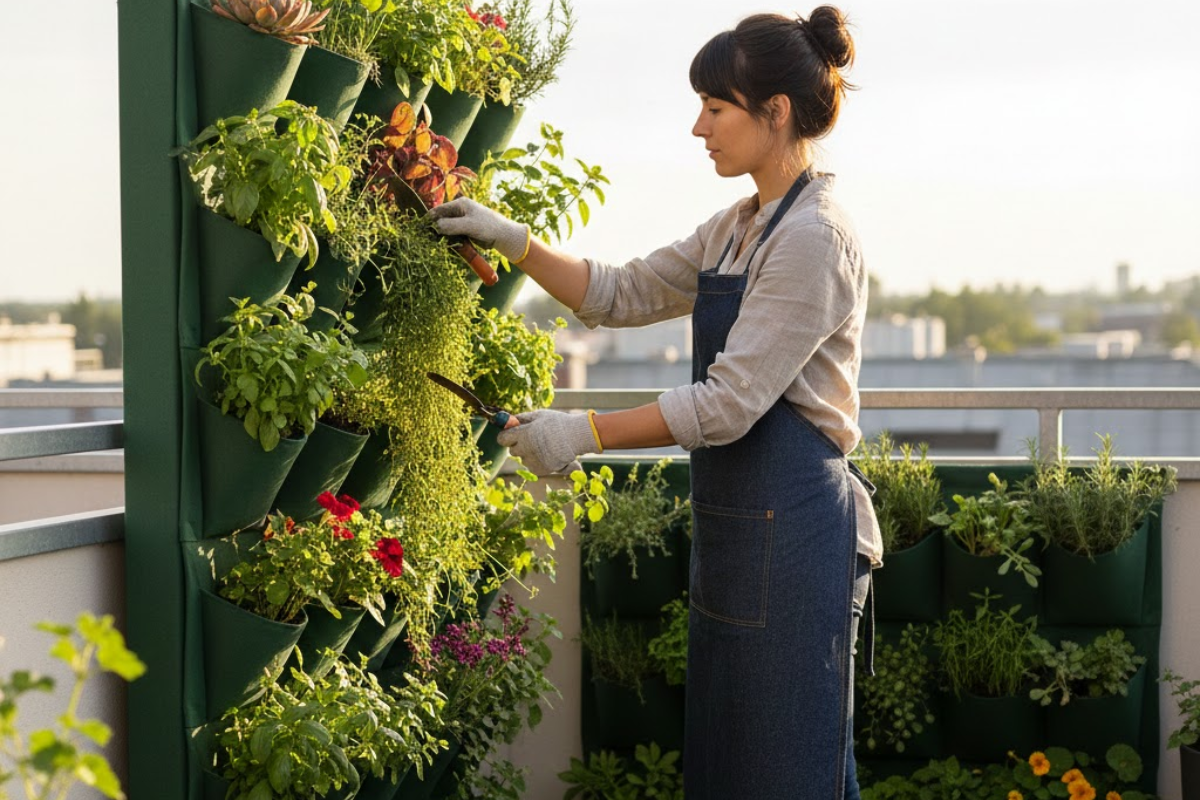 Great vertical planting thrives on consistency. Irrigation is the stumbling block for many beginners: tall stacks dry out faster at the top.
Consider a simple drip line with pressure-compensating emitters or a refillable reservoir planter.
If you prefer hand-watering, group thirstier crops higher where you can see and reach them daily. Keep shade-tolerant greens lower and sun-hungry fruiting plants where they’ll get 6–8 hours.
Ventilation matters, too. Trellised layouts help foliage dry quickly after rain, reducing mildew on cucumbers and powdery spots on squash.
In very hot climates, afternoon shade prevents stress—especially on wall-mounted pockets. Routine checks (yellowing leaves, dry edges, pests) are easier when your vertical vegetable garden design is arranged in tidy columns and rows you can scan at a glance.
As you refine your system, note how materials weather. Wood warms roots but needs sealing; metal frames are durable but heat up in direct sun.
These choices influence long-term maintenance and plant health in vertical vegetable gardens and mixed plantings.
3) Match Crops To Height And Habit
 Think in tiers. Leafy greens (lettuce, spinach, arugula) love shallow pockets and cooler lower zones. Herbs—basil, parsley, cilantro, thyme—thrive in pockets near eye level, ideal for a convenient vertical herb garden on balcony.
Vining crops (peas, pole beans, cucumbers) want climbable frames, while compact tomatoes (determinates) suit larger planters with cages.
For families, veggie garden ideas that invite kids to harvest are winners: cherry tomatoes up high to keep pets away, strawberries cascading from mid-tiers, and snippable herbs near the kitchen door for spontaneous meals.
If you dream of berries and dwarf fruit, a vertical fruit and vegetable garden can pair columnar apples or espaliered figs with under-plantings of alpine strawberries.
When brainstorming vegetables garden ideas, rotate quick crops (radishes, baby greens) through the sunniest pockets and tuck slow growers (peppers, eggplants) into deeper containers. This keeps your system productive from spring to fall.
4) Build A DIY System That’s Safe, Solid, And Stylish
 A DIY vertical garden doesn’t have to be complicated. Start with a ladder-style frame or wall-mounted French cleats to hang planters securely.
Pre-drill pilot holes, use corrosion-resistant screws, and verify wall anchors match your surface (masonry, wood stud, or metal). Safety first: wet soil is heavy, so over-engineer brackets and supports.
To craft a DIY vertical garden wall, map the grid on painter’s tape, then hang the first row perfectly level—everything else follows. Mix textures: galvanized planters beside cedar boxes, woven pockets next to sleek resin pots.
This blend gives your vertical garden wall outdoors a curated feel, especially when you repeat colors or materials in threes for cohesion.
If you love repurposing, a sanded pallet becomes a handsome vertical pallet garden. Line the back and sides with landscape fabric, add a breathable potting mix, and allow the pallet to lie flat for a couple of weeks while roots set.
Then stand it up and enjoy a living panel of herbs and lettuce.
5) Keep Soil Light, Feeding Balanced, And Harvests Flowing
 Success in vertical gardening ideas often hinges on the growing medium. Use a peat-free, well-aerated potting mix with perlite or pumice; avoid garden soil that compacts and starves roots of oxygen.
Refresh pockets between plantings, and top-dress larger containers with compost.
Because vertical planters are watered more often, nutrients leach faster. Feed lightly but regularly with an organic liquid fertilizer, and supplement fruiting crops with extra potassium during bloom and set.
Snip herbs frequently—especially in outdoor vertical herb garden setups—to keep flavor bright and growth compact.
Finally, observe and adjust. If lettuce tips scorch, shift them to a shadier tier. If cucumbers crowd neighbors, give them a dedicated trellis. This responsive approach turns a simple concept into a resilient, productive vertical vegetable garden design you’ll enjoy all season.
Putting It All Together
 Whether you’re shaping a small garden design for a townhouse patio or greening a slim balcony, these principles stay the same: choose the right structure, plan water and light, match crops to height, build safely, and feed consistently.
Combine a few veggie garden ideas from above, and you’ll have a thriving system that looks intentional and yields generously.
Remember: the tutorial showcased here belongs to its original creator on YouTube. Our role is to highlight the “why” behind the methods so you can adapt them— responsibly—into your own vertical planting projects at home.
More Gardening Tips 👇🏼👇🏼