
How to Make a Natural Evergreen Wreath: The Basics

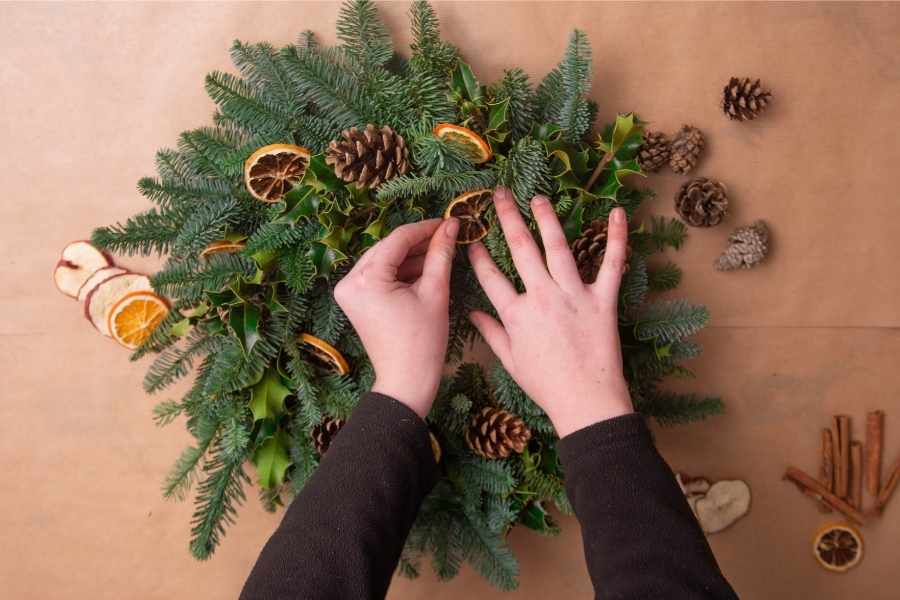
A wreath made from real evergreens smells better and looks richer than any plastic version, and it costs very little if you already have a few conifers or shrubs in the yard. Wreaths have long been used to mark the turning of the seasons, and a natural one fits that idea perfectly: fresh branches, pine cones, dried seed heads and a few berries, all tied onto a simple frame.
They are most often hung at Christmas, but the same technique works in any season. Here are the basics, from choosing greens to keeping the finished wreath fresh.

Choose the Right Evergreens
Good wreath greens include fir, pine, juniper, spruce, false cypress (Chamaecyparis), yew, boxwood and holly. Iowa State University Extension notes that juniper, pine and false cypress have a strong scent, while spruce, fir and yew are only lightly scented, so mix them according to how fragrant you want the wreath to be.
If the wreath will hang indoors, pines and firs hold up best. The New York Botanical Garden recommends balsam fir, Fraser fir, noble fir, white fir, Douglas fir, Scotch pine and white pine for good needle retention, and warns that hemlock and spruce tend to drop their needles in a warm room.
Where to find greens:
- Branches trimmed from the bottom of a cut Christmas tree.
- Light pruning of your own evergreens, taken from spots where the cuts won't show, just before you need them.
- Garden centers, florists and tree lots, which often sell bundles of mixed greens.
Only use fresh material. Fresh greens have pliable needles and a strong fragrance; old cuttings are dry and brittle and will shed quickly.
Condition the Greens Before You Start
The New York Botanical Garden suggests washing the branches in warm water to remove dust, rinsing them in cold water, and removing any damaged foliage. Split the stem ends about 2 to 3 inches to help them take up water, then stand the branches in warm water in a cool place for at least eight hours before you use them.
Gather Your Supplies

- A frame: a box-style wire frame is the easiest. They come in sizes from about 8 to 24 inches; a 15 to 16 inch frame suits most front doors. Straw and crimped wire frames also work, and a bent wire coat hanger makes a small one.
- Paddle wire: 22 or 24-gauge florist wire.
- Pruners and wire cutters.
- Natural decorations (see below) and a wire-edged ribbon if you want a bow.
How to Make a Natural Wreath, Step by Step
- Attach the wire. Wrap the end of the paddle wire firmly around the frame. Keep it on the spool and use one continuous length for the whole wreath. If it breaks, tie the broken end to the frame and start again.
- Cut the greens. Cut the branches into pieces about 4 to 8 inches long.
- Make bundles. Layer three or four pieces into a small bundle. Using one or two pieces of the same evergreen as the base of every bundle, with a different accent on top, keeps the wreath looking consistent. Make one bundle as a reference and match the rest to it so the wreath doesn't end up lopsided.
- Wire the bundles on. Lay a bundle on the frame and wrap the wire 2 or 3 times around its stems, pulling tight so nothing loosens as the greens dry.
- Overlap as you go. Place each new bundle so it covers the cut stems of the previous one, always working in the same direction. Close spacing gives a thick, full wreath; wider spacing gives a flatter look and uses less material.
- Close the circle. Tuck the stems of the last bundle under the foliage of the first one and fasten it. Twist a wire loop at the top for hanging.
Natural Decorations That Work
Add decorations last, wiring each item separately and pushing the wire through to the back of the frame. Use them to cover any thin spots.
- Pine cones: woody pine cones last better than spruce or fir cones, which eventually fall apart.
- Dried flowers and seed heads: hydrangea, purple coneflower heads and ornamental grasses.
- Fruit and berries: crabapples, viburnum berries, holly and American bittersweet. Avoid Oriental bittersweet, an invasive vine.
How to Keep Your Wreath Fresh
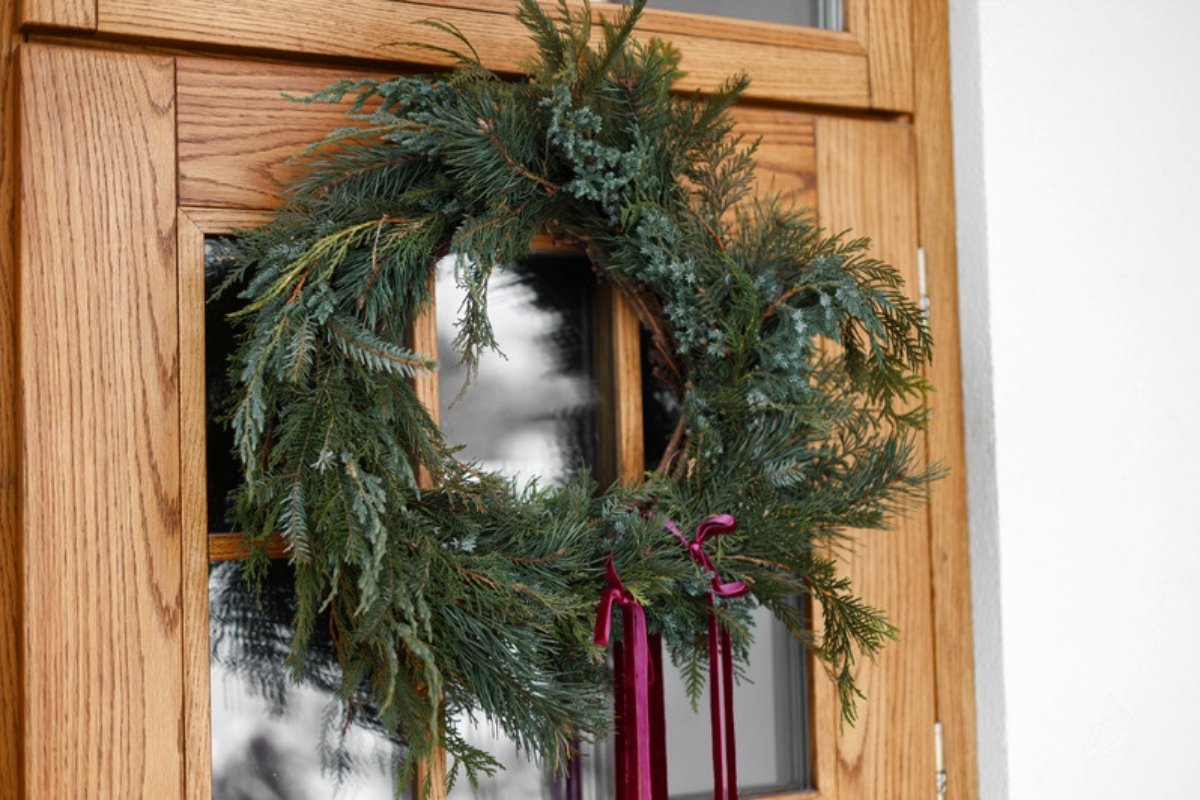
Fresh wreaths like cool, moist conditions. Outdoors, in cold weather, they can stay fresh for several weeks; Nebraska Extension suggests about 3 to 4 weeks. Indoors, warm dry air shortens that to roughly 7 to 10 days.
- Hang it out of strong wind and direct sun.
- Indoors, keep it away from heat vents and drafts, and lower the room temperature if you can.
- Mist the greens regularly; occasional misting has little effect.
- An anti-desiccant spray from a garden center helps seal in moisture. Apply it a few hours before handling the wreath.
- Between special occasions, store an indoor wreath in a plastic bag in a cool garage.
Frequently Asked Questions
Is it safe to use boxwood?
Boxwood looks lovely, but wreaths can carry boxwood blight. Iowa State University Extension advises not hanging boxwood wreaths near boxwood shrubs or pachysandra and not composting them afterward; bag them for the trash instead.
How do I deal with sticky sap?
Rub hand lotion on before you start and wash with pumice soap afterward. When the season is over, compost the greens (except boxwood) and save the frame for next year.
Watch: Wreath Making Basics
This short tutorial shows the whole process from start to finish.

Source: Garden Answer
More Gardening Ideas
- DIY Fall Garden Wreath with Autumn Leaves & Flowers
- How to Create The Perfect Christmas Garden
- The Complete Guide to Drying Flowers
Did you find this post Useful or Inspiring? Save THIS PIN to your GARDENING Board on Pinterest!

More Gardening Tips 👇🏼👇🏼