
How to Plant Bare-Root Fruit Trees: A Step-by-Step Winter Guide

Winter is the season when nurseries sell fruit trees bare-root: dormant young trees lifted from the field with no soil around their roots. They cost less than potted trees, they travel light, and the choice of varieties is usually much wider. The catch is that a bare-root tree has no soil to protect it, so the first few days and the way you plant it matter a lot.
This guide walks through the whole process, from the day the box arrives to the first summer in the ground, using advice from university extension services and the Royal Horticultural Society.
Bare-root fruit trees at a glance
- When they're sold: only while the trees are dormant, in winter and early spring
- When to plant: as soon as possible after they arrive, while still dormant, and never into frozen or waterlogged ground
- Soak before planting: 1 to 2 hours is the usual advice from US extension services; never more than 24 hours
- Hole: wide and shallow, at least two to three times the width of the root spread and no deeper than the roots
- Planting height: root flare level with the soil; graft union a couple of inches above it
- At planting: no fertilizer, and backfill with the soil you dug out
What "bare-root" means, and why it's worth it
A bare-root tree is dug from the nursery field while it's dormant and shaken free of soil before it's shipped. Because there's no heavy pot or root ball, bare-root trees are generally cheaper than container trees, and nurseries can offer a much larger range of varieties and rootstocks in this form. University of California Master Gardeners point out that bare-root fruit trees are easy to find in winter and early spring, and planting them then costs less.
In the UK, the RHS lists October to April as the planting window, and BBC Gardeners' World gives November to March as the time to buy and plant. In colder parts of the US, extension services such as Iowa State recommend planting in early spring, before growth begins.
1. Check the tree the day it arrives
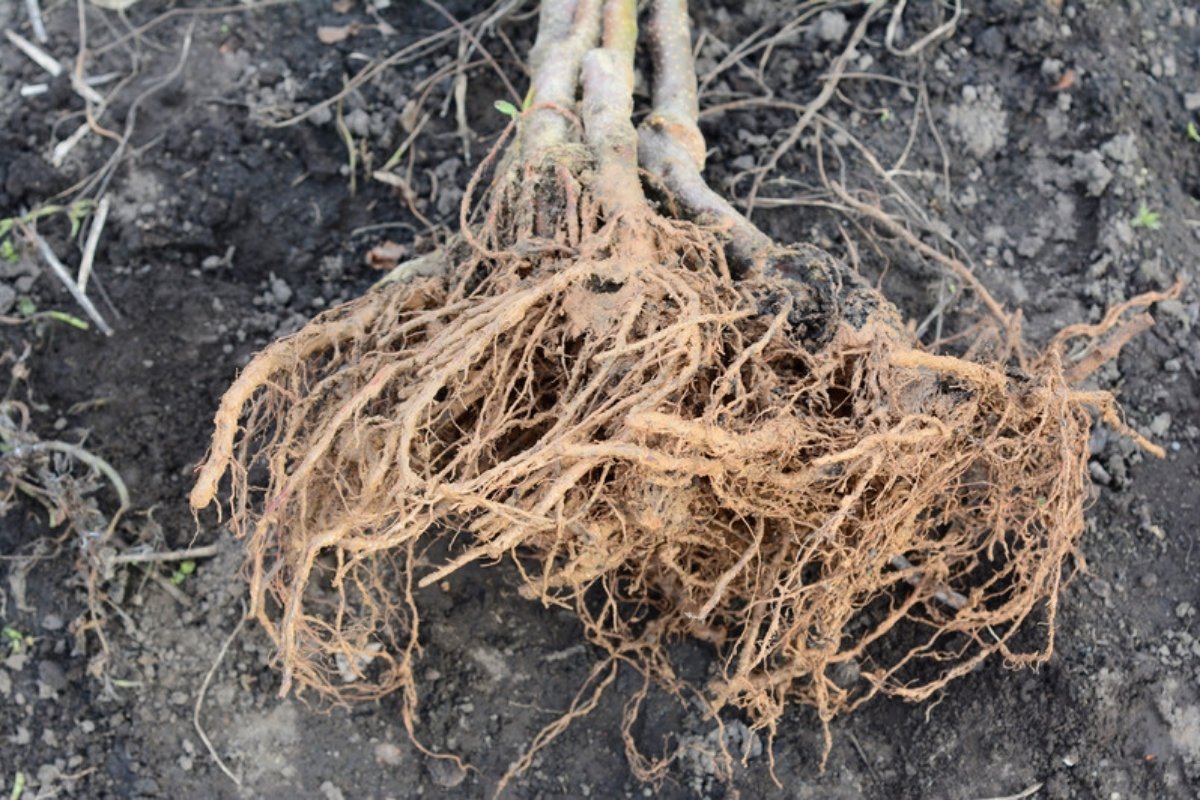
Open the package right away. Iowa State University Extension suggests looking for three things: roots that feel firm and heavy rather than dry and brittle, packing material that is still damp, and buds that are green and firm.
If the roots have dried out or the buds are shriveled, contact the nursery straight away, before you plant.
2. Keep the roots moist if you can't plant yet
No part of a bare-root tree should dry out, and Iowa State stresses that this goes double for the roots. If the ground is frozen, soggy, or you simply need a few days, you have two options.
For a short wait, keep the tree in its packing in a cool place that doesn't freeze, at around 40°F (4°C), such as an unheated garage or root cellar. Iowa State says the packing should feel like a wrung-out sponge, so add a little water if it starts to dry. For a longer wait, "heel in" the tree: lay it in a shallow trench and cover the roots with moist soil or sawdust, as UC Master Gardeners recommend. Either way, keep roots out of the sun and wind while you work.
3. Soak the roots before planting
Just before planting, trim off any roots that are broken, dead or badly twisted, then stand the roots in a bucket of water. Most US extension guides suggest 1 to 2 hours; the RHS suggests about 30 minutes for bare-root trees and shrubs. Stark Bro's, a long-established fruit tree nursery, warns against soaking for more than 24 hours, because it can damage the roots.
4. Dig a wide, shallow hole
Pick a spot in full sun with room for the branches to spread. Then dig a hole that is much wider than it is deep. Iowa State recommends two to two-and-a-half times the width of the root spread; the RHS suggests at least three times the diameter of the root system. The depth should only match the distance from the root flare (where the trunk widens into roots) to the bottom of the roots.
Loosen the sides of the hole, then build a cone-shaped mound of soil in the center. Setting the tree on this mound lets you drape the roots down and outward instead of bending them to fit.
5. Get the planting height right
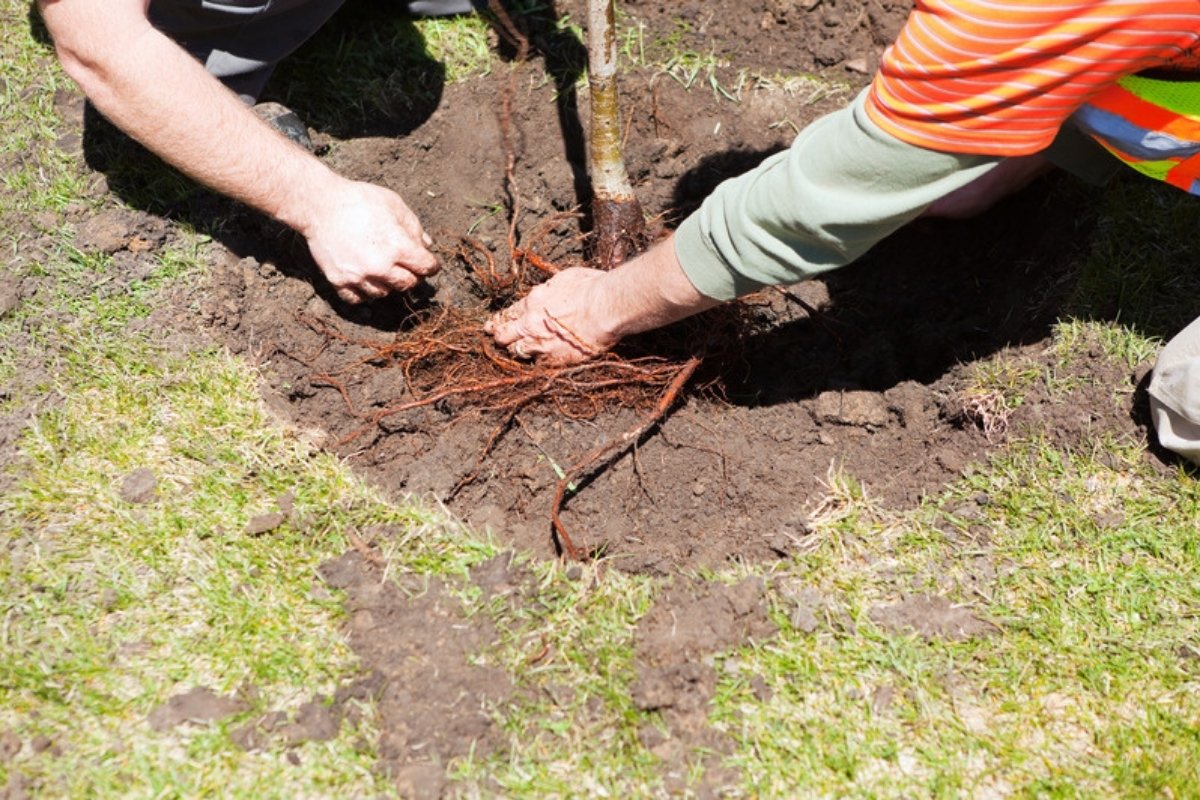
This is the step that matters most. The RHS calls planting too deep "a common cause of tree death." Set the tree on the mound so the root flare sits level with the surrounding soil. Laying a shovel handle across the hole makes it easy to check.
Most fruit trees are grafted, and the graft union shows as a bump or slight bend on the lower trunk. It has to stay above ground: Stark Bro's recommends 2 to 3 inches above the soil. Iowa State notes that the graft union usually sits 1 to 3 inches above the trunk flare, so don't mistake one for the other. In hot, sunny climates, UC Master Gardeners suggest turning the graft union to face north or northeast to reduce sunburn.
6. Backfill with the soil you dug out
Spread the roots evenly over the mound without kinking them, then refill the hole with the original soil, firming it gently by hand as you go to remove air pockets. Iowa State advises against adding compost, sand or other amendments to the backfill, and both the RHS and UC Master Gardeners say no fertilizer is needed at planting time.
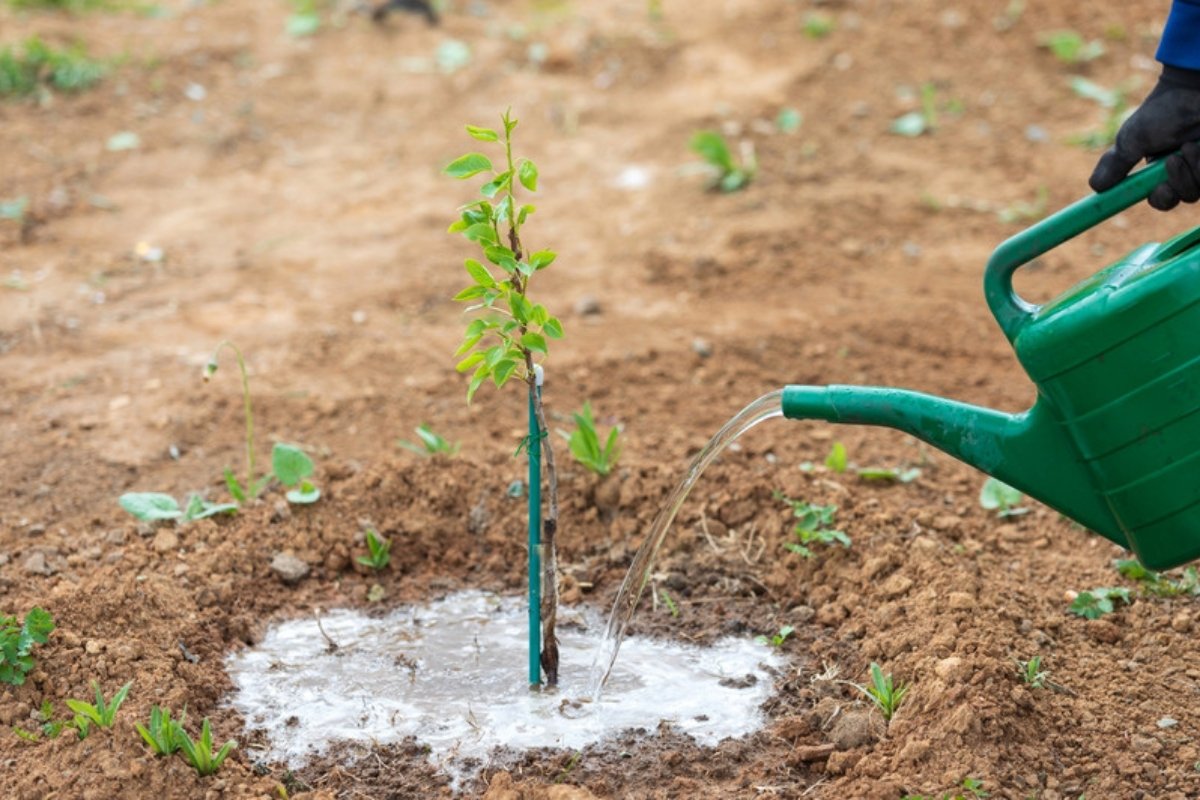
Water when the hole is about three-quarters full to settle the soil around the roots, then finish filling and water again. A low ring of soil around the edge of the root zone helps hold water where the tree needs it.
7. Mulch and stake if needed
Spread a 2 to 3 inch (5 to 8 cm) layer of mulch over the root area, keeping it a few inches away from the trunk to prevent rot. The RHS recommends leaving a mulch-free collar of about 4 inches (10 cm) around the stem and keeping a circle at least 4 feet (1.2 m) across free of grass and weeds for the first three years.
Small trees don't always need a stake, but trees on dwarf rootstocks, top-heavy trees and trees in windy spots do. Iowa State recommends two or three stakes set in undisturbed soil outside the hole, with wide, flexible ties that let the trunk move a little. Take the stakes off once the roots anchor the tree, usually within one or two growing seasons.
8. Prune once at planting
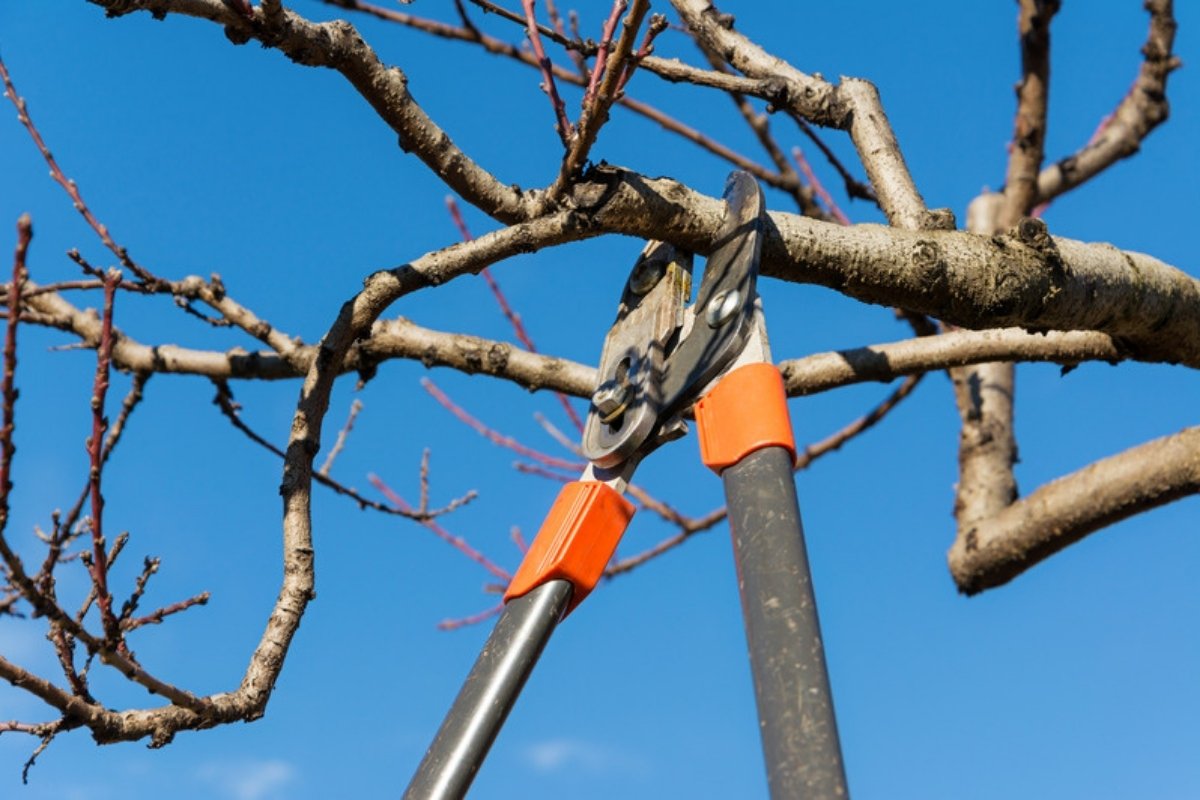
Many bare-root fruit trees arrive as a single unbranched stem, called a whip. UC Master Gardeners recommend heading these back to about knee height at planting, which encourages the tree to branch low. Pruning advice differs by fruit type and training style, so check the label or the nursery's instructions before you cut a feathered (already branched) tree.
9. Water through the first growing season
A new tree has a small root system and depends on you for its first year. Iowa State suggests checking the soil once or twice a week through the first growing season and watering when it's dry around the roots. In dry spells the RHS typically recommends 30 to 50 liters per square meter (4 to 6 watering cans) a week, but dig down beside the roots first, because too much water causes problems too.
If your soil is very poor, the RHS suggests waiting a season before using fertilizer.
Frequently asked questions
When is the best time to plant a bare-root fruit tree?
Any time it's dormant and the ground can be dug. The RHS gives October to April as the window in the UK, while Stark Bro's recommends fall or early spring, when temperatures are mild and the trees are still dormant. In cold-winter areas, early spring before growth starts is the usual choice. Whatever the date, plant as soon as you can after the tree arrives.
Can I add compost to the planting hole?
Advice differs here. Iowa State recommends backfilling with the original soil only,, with no compost, sand or other amendments mixed in. Mulching with compost on top of the soil after planting is a safer way to add organic matter.
How long until a bare-root fruit tree bears fruit?
It varies a lot with the type of fruit, the variety and the rootstock, so check the nursery's description before you buy if a quick harvest matters to you.
More gardening ideas
- Planting Fruit Trees: The Complete Guide
- 3 Fruit Trees to Plant in the Fall for a Delicious Harvest
- How to Plant, Prune, and Irrigate Fruit Trees
- How to Prune a Pear Tree - The Ultimate Beginner's Guide
Plant your bare-root tree carefully this winter, keep it watered through its first summer, and it will reward you with blossoms and fruit for many years.
More Gardening Tips 👇🏼👇🏼