
How to Master the Eskimo Roll in Kayaking
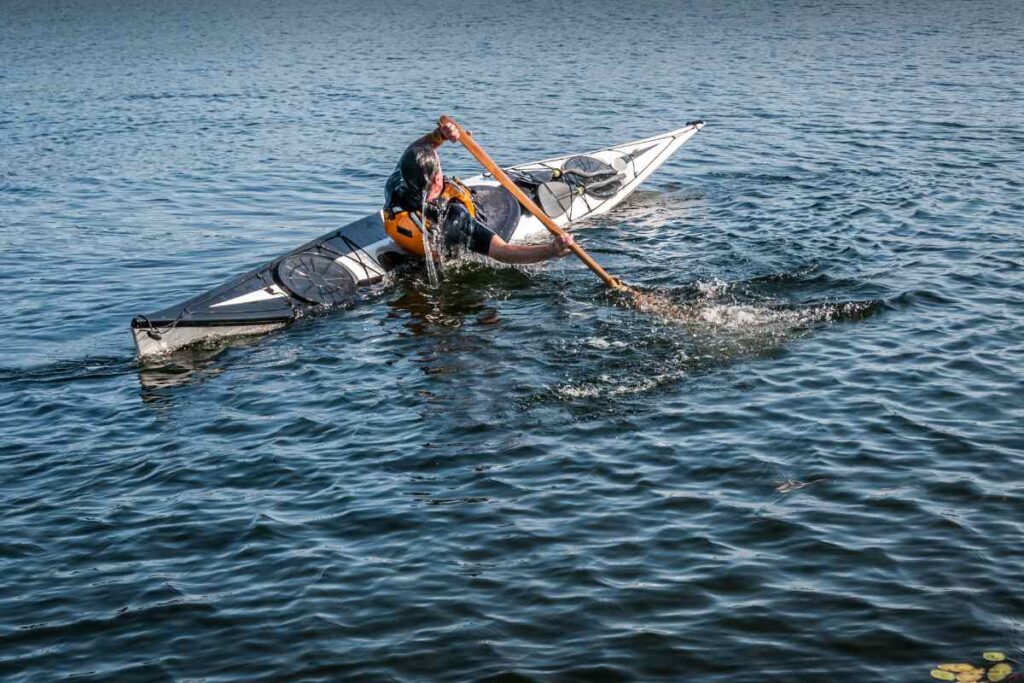
The Eskimo Roll is a critical skill for any kayaker, especially those venturing into whitewater or sea kayaking.
It’s the maneuver that allows you to right your kayak after capsizing, without exiting the boat.
Mastering the Eskimo Roll not only boosts your confidence on the water but also significantly increases your safety.
In this guide, we’ll walk you through the steps to perfect this essential technique, ensuring you can handle whatever the water throws your way.
The Importance of Mastering the Eskimo Roll
Learning the Eskimo Roll is not just about technique; it’s about building muscle memory and confidence.
This skill is essential because it allows you to recover from a capsize without having to exit the kayak.
This means you can continue paddling without losing time, and energy, or exposing yourself to the cold water.
Whether you're navigating a challenging rapid or exploring open seas, knowing how to execute an Eskimo Roll can make a huge difference.
Mental Preparation for the Eskimo Roll
Before diving into the physical steps of the Eskimo Roll, it’s important to prepare mentally.
Staying calm is crucial. The sensation of being upside down underwater can be disorienting and panic-inducing, but remember that you have the skills and time to execute the roll.
Practice holding your breath and staying relaxed underwater in a controlled environment before attempting the roll.
Understanding the Mechanics of the Eskimo Roll
Body Positioning
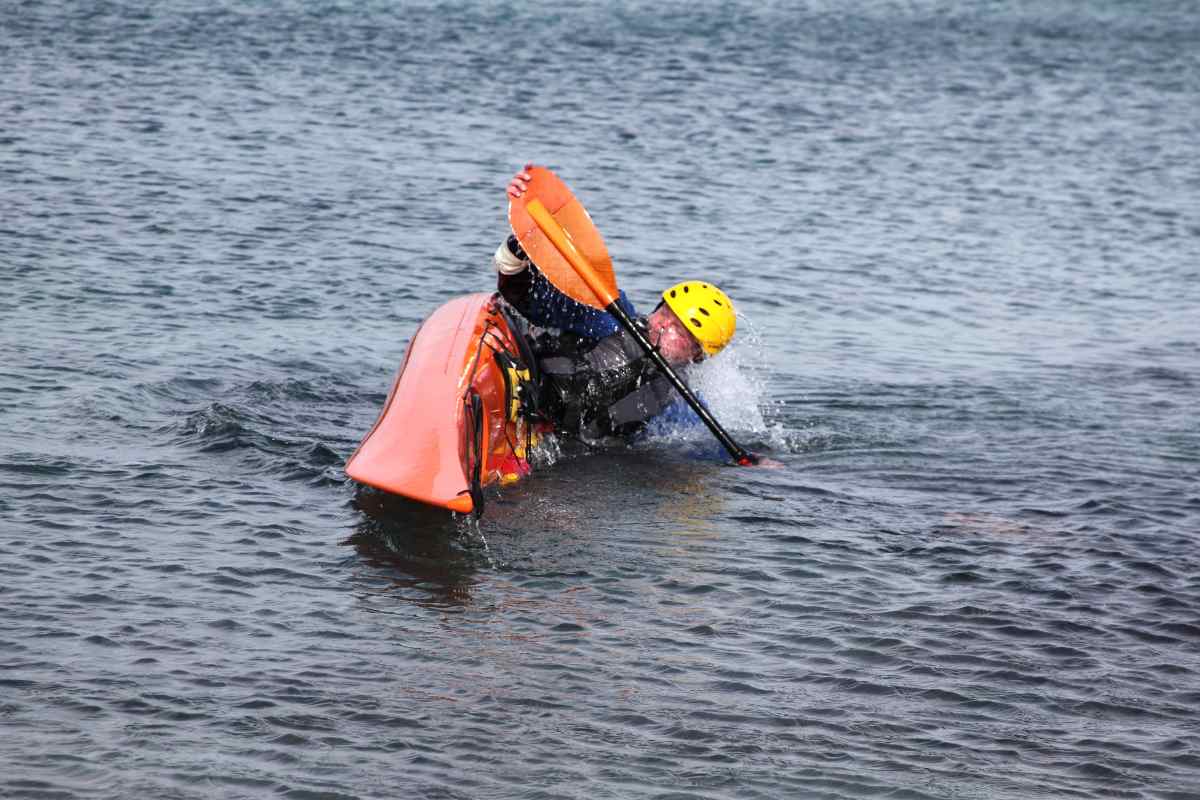
The key to a successful Eskimo Roll lies in your body positioning. When you capsize, your body should be as close to the kayak as possible, almost hugging it.
This reduces your center of gravity and makes it easier to roll back up. Your head should stay close to the surface, and your torso should be twisted towards the water.
The Setup Position
The setup is where the roll begins. Hold your paddle perpendicular to the kayak, with your upper hand at eye level and the lower hand near your hip.
This position is crucial for initiating the roll, so take your time to ensure you’re set up correctly.
The Hip Snap
The hip snap is the driving force behind the Eskimo Roll. With your body twisted in the setup position, use your hips to push the kayak back to the upright position.
The motion should be quick and powerful, and your head should be the last thing to come out of the water.
The Paddle Sweep
As you initiate the hip snap, sweep your paddle outwards in a broad arc. The paddle provides stability and leverage during the roll, helping you to right the kayak.
Make sure to keep your paddle blade angled slightly towards the surface of the water to maximize its effectiveness.
Practicing the Eskimo Roll: Drills and Techniques
Start in Calm Waters
Before attempting an Eskimo Roll in turbulent conditions, practice in calm, controlled environments. A swimming pool or a quiet lake is ideal for beginners.
Start by practicing your setup and hip snap on land, then move into the water.
Use a Spotter
When learning the Eskimo Roll, having a spotter is invaluable. A spotter can guide you through the process, offering support and corrections as needed.
They can also assist in righting your kayak if your roll attempt fails.
Break it Down into Steps
Instead of trying to master the entire roll at once, break it down into smaller, manageable steps.
Practice each component—body positioning, the setup, hip snap, and paddle sweep—individually before combining them.
Visualize the Roll
Visualization is a powerful tool for mastering the Eskimo Roll. Picture yourself executing each step perfectly, from the setup to the hip snap.
Mentally rehearsing the roll can help solidify the muscle memory needed for success.
Common Mistakes and How to Avoid Them
Lifting Your Head Too Soon
One of the most common mistakes in the Eskimo Roll is lifting your head too soon.
Your head should be the last thing to come out of the water. Lifting it prematurely disrupts the roll’s momentum and often leads to failure.
Ineffective Hip Snap
The hip snap is crucial, yet many beginners don’t put enough force behind it.
Focus on making your hip snap quick and powerful. Imagine trying to touch your knee to your chest as you snap.
Poor Paddle Positioning
Another frequent mistake is poor paddle positioning. Keep your paddle perpendicular to the kayak at the setup and ensure the blade angle is correct during the sweep.
A poorly positioned paddle can lead to a weak roll or no roll at all.

Building Confidence with the Eskimo Roll
Practice, Practice, Practice
Repetition is key to mastering the Eskimo Roll. The more you practice, the more confident you’ll become.
Set aside regular practice sessions and gradually increase the difficulty by introducing different water conditions.
Simulate Real-World Scenarios
Once you’re comfortable with the roll in calm water, start simulating real-world scenarios.
Practice in rougher waters or with added stressors, like paddling in cold conditions or wearing extra gear. This will help you develop the confidence to execute the roll when it matters most.
Learn from Experienced Paddlers
Joining a kayaking club or taking a course from experienced paddlers can greatly accelerate your progress.
Learn from those who have mastered the Eskimo Roll and ask for feedback on your technique. Their insights can help you refine your roll and overcome any challenges.
Advanced Techniques and Variations
The Reverse Eskimo Roll
Once you’ve mastered the standard Eskimo Roll, you can challenge yourself further by learning the reverse roll.
This variation involves rolling in the opposite direction, requiring greater coordination and control.
The Hand Roll
For those looking to push their skills even further, the hand roll is an advanced technique where you execute the roll without using a paddle.
This technique requires exceptional body control and a strong hip snap but is a valuable skill for expert kayakers.
Rolling with a Loaded Kayak
Practicing the Eskimo Roll with a loaded kayak is another important step for advanced paddlers.
A fully loaded kayak behaves differently in the water, and rolling it requires greater strength and precision.
Conclusion: Mastering the Eskimo Roll Takes Time
Mastering the Eskimo Roll takes patience, persistence, and a lot of practice.
While it may seem challenging at first, with consistent effort and the right approach, you’ll develop the confidence and skill to execute the roll with ease.
Remember, the key is to stay calm, practice regularly, and continuously refine your technique.
Once you’ve mastered the Eskimo Roll, you’ll be able to tackle any kayaking adventure with greater confidence and peace of mind.
Did you find this post useful or inspiring? Save THIS PIN for later in your Outdoor Board on Pinterest! 😊


Explore these outdoor tips too