
Mount Rainier National Park: The Complete Guide

Of all the stunning wilderness landscapes found in Washington State, Mount Rainier National Park stands out from the crowd.
Spread over nearly 370 square miles, the park is one of the top outdoor destinations in the US, attracting more than two million visitors a year.
Many of these visitors come from all over the world to test their strength, stamina, and skills on the park's title mountain, which is one of the most famous climbs in the world.
When it was declared a national park by President William McKinley in 1899, Mount Rainier became the fifth place to receive this distinction.
Before that, the dense ancient forest that surrounds the mountain had been designated a national forest, encompassing 91,000 acres of unspoiled wilderness.
At the heart of the park is Mount Rainier itself, a 14,410-foot peak towering above all the other mountains in the Cascade Range.
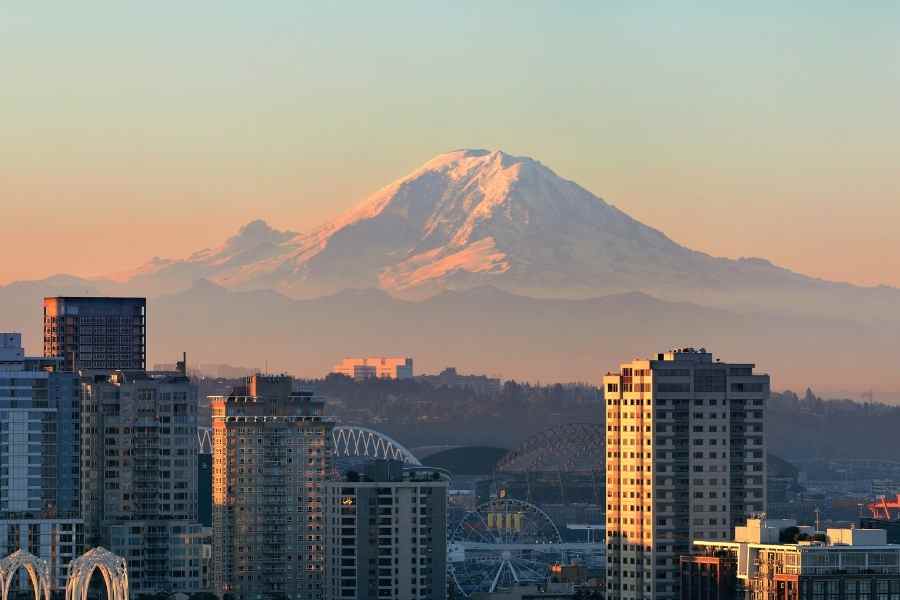
An active stratovolcano, Rainier creates a strong presence that dominates the horizon as far as the city of Seattle, located 80 miles north.
Rainier, the most glacial mountain of the lower 48 states, is the starting point for five individual rivers that feed other outdoor environments throughout the western United States.
A haven for hikers and climbers, Mount Rainier National Park has much to offer active outdoor enthusiasts.
But its picturesque landscapes will please any traveler who appreciates lush forests, dazzling Alpine meadows, spectacular glaciers, and rugged peaks.
Those who make the trip will likely be captivated by all that this place has to offer.
We hope you enjoy watching this video about Top Sights and Tips for Mount Rainier National Park

Source: Journey to All National Parks
Things to do
As with most national parks in the US, there is a lot to see and do at Mount Rainier National Park.
For example, the park's remote roads are ideal for cyclists looking to test their legs.
Anglers will find numerous lakes and ponds to cast their lines, while backpackers can pitch their tents at some of the most beautiful campsites imaginable. And during the winter months, the park's trails are ideal for snowshoeing and cross-country skiing trails.
Of course, one of the most popular activities in the park is climbing Mount Rainier.
The volcano's glacier summit serves as an excellent place for veteran climbers to hone their skills while offering beginners the opportunity to gain the necessary experience.
Many use Rainier as a training ground before scaling higher and more difficult peaks elsewhere, including Alaska, the Andes, and the Himalayas.
Only very experienced climbers should attempt to climb Rainier on their own and a license is always required.
Others must sign up for a guided expedition with a mountaineering operator like RMI or Alpine Ascents.
Plan to spend a minimum of three days on this climb, although some options include additional days of training. For more information on how to climb Mount Rainier, click here.
Better walks and trails
Long-distance and day hikers will find hundreds of miles of trails to explore, all in the shadow of the mountain itself.
Whether you are looking for a short and easy trail or something long and challenging, the park can certainly adapt.
For example, the 7.8-mile Rampart Ridge Trail connects to the iconic Wonderland Trail, giving you a taste of the best hiking the park has to offer.
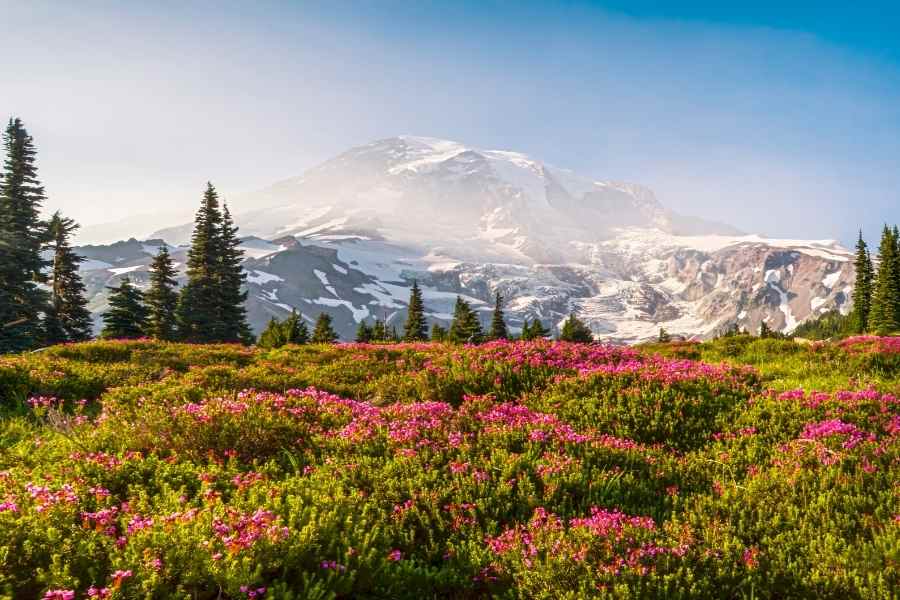
The 11-mile Summerland Trail is beautiful year-round, but especially when the wildflowers are in bloom during the summer, while the stunning Sunrise Rim Trail has 5.7 miles of scenic views and tends to be slightly less traveled than other hikes.
Speaking of the Wonderland Trail, it's 93 miles from one of the most spectacular spots any backpacker could hope to find.
The route completely bypasses Mount Rainier, circumnavigating the entire base of the mountain.
Completing this hike is a rite of passage for many hikers, requiring experience, stamina, and proper planning.
Beginning backpackers are advised to go along with a veteran guide or hiker, rather than trekking the trail alone.
Other options for a long-distance hike include the Northern Loop Trail, which covers more than 40 miles through one of the most remote and little-visited sections of the park.
A section of the Pacific Crest Trail also runs through the park, and hikers can catch a glimpse of the mountain as they head north and south along this famous route.
If you plan to do a hike that requires an overnight stay, you will need a permit for each day.
Where to Eat and Stay
Most visitors to Mount Rainier NP reserve lodging in Seattle or in one of the small communities located outside the park boundaries.
These places offer accommodations to suit all budgets but require a bit of direction and a beginning and an end to the day.
Visitors who wish to stay within the park itself have a few options to choose from, ranging from historic inns to remote campgrounds.
Park lodges include the National Park Inn at Longmire and the Paradise Inn, both with dining rooms serving breakfast, lunch, and dinner.
The National Park Inn is open year-round, while the Paradise Inn has seasonal openings from late May through early October.
Both are popular places to stay, so be sure to make reservations in advance.
Modern campgrounds that can accommodate vehicles, including trailers, are available at Cougar Rock, Ohanapecosh, White River, and Mowich Lake.
Staying at these locations also requires reservations and includes individual and group rates of $ 20 and $ 60, respectively.
The primitive camp in the sertão is free, but as mentioned above it requires a license.
In addition to the cafes located in the park's inns, visitors can also have lunch at Paradise Camp Deli.
Travel options, including snacks and drinks, can be found at Sunrise Day Lodge and Longmire General Store.
However, keep in mind that most of these establishments have seasonal hours and are generally not open year-round.
How to get there
Mount Rainier National Park is well situated between several major metropolitan areas, including Seattle, Tacoma, Yakima, and Portland.
Each of these cities is within 200 miles of the park and has an airport that provides access to the region.
All of these locations offer car rental options as well as autonomous driving to the park.
Access to park entrances varies depending on where you come from.
For example, if you are driving from Seattle to the Nisqually entrance in the southeast section of the park, take I-5 South to SR 512 East to SR 7 South to SR 706 to Elba.
Alternatively, the east entrance can be accessed from I-5 South to I-405 East to SR 167 South. From there take SR 410 East to the White River entrance.
Alternatively, if coming from Portland, follow I-5 North to Hwy 12 East to SR 7 North to SR 706 to the Nisqually entrance.
Or head to White River Entrance by taking I-5 North to SR 512 East to SR 167, exiting at Exit 135 in Tacoma. Then head east on SR 167 to SR 410 directly into the park.
Accessibility
Unsurprisingly, most inland trails and campgrounds do not offer accessibility options for visitors with disabilities.
But the park's facilities out front, which include inns, a visitor center, general stores, and restaurants, are affordable. This includes restrooms, picnic areas, and parks.
A wheelchair-accessible trail is the lower meadows found in Paradise, one of the most popular and scenic spots in the park.
Two ramps, one gravel and the other paved but steep lead travelers into this area, making it a must-see for anyone.
Tips for Your Visit
- The park is busiest between Memorial Day and Labor Day each year.
If your goal is to avoid the biggest crowds, try visiting on a weekday during this time.
Outside of the busy summer travel season, crowds diminish rapidly, decreasing dramatically during the winter.
- Mount Rainier is famous for its stunning wildflowers, which occur every summer.
To witness this impressive natural phenomenon for yourself, plan to visit sometime between mid-July and late August when the Alpine meadows are awash in color.
- Mount Rainier is a massive, towering mountain that can dramatically affect the park's climate at almost any time of the year.
Although conditions are generally stable during the hottest summer months, spring, fall, and especially winter can cause unpredictable weather.
This, in turn, can make access to the park difficult and close roads. Always check the road conditions before heading out to the park.
- A fee of $ 30 per vehicle is charged for entrance to the park, although it is valid for seven days of unlimited entry.
Motorcycles are $ 25 and there is an additional $ 15 fee for walking or biking.
An annual pass to Mount Rainier costs $ 55, which is a good deal for frequent visitors.
- Although Mount Rainier National Park is open year-round, many of the facilities have limited hours of operation or are closed at certain times of the year.
Depending on when you plan to go, it is a good idea to check the park hours.
Did you find this post useful or inspiring? Save THIS PIN to your Travel Board on Pinterest! 😊
Once again, thank you for visiting our website!
We hope you've enjoyed exploring the content we've created for you.
Give yourself the chance to learn, get inspired, and have even more fun, keep browsing...
You may also like 👇🏼👇🏼