
Sydney Opera House: The Complete Guide
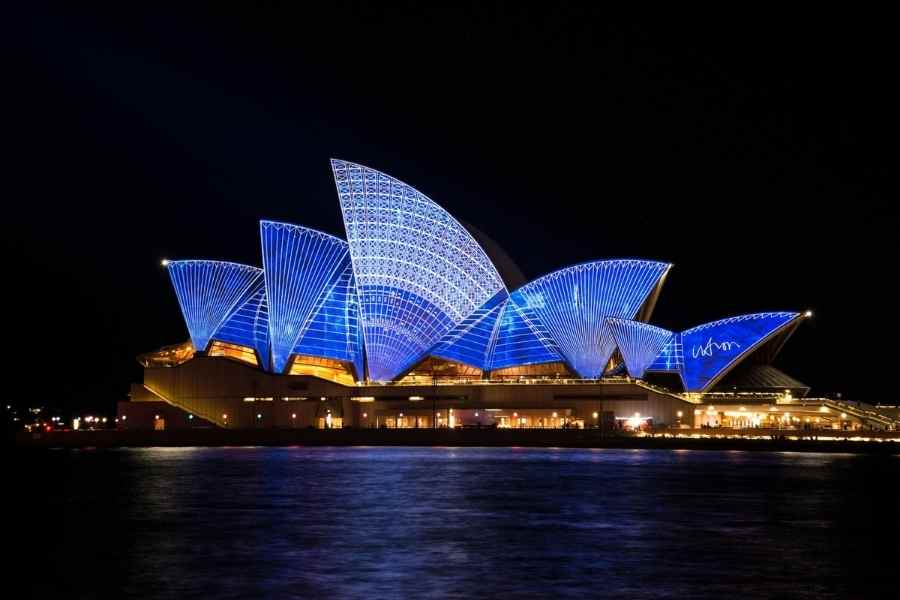
The Sydney Opera House is possibly Australia's best-known landmark, along with its neighbor, the Sydney Harbor Bridge.
The building's spectacular white sails and controversial history make it an essential stop on any visitor's itinerary, in addition to the wide variety of events and performances that take place inside.
Read on for a comprehensive guide to visiting the Sydney Opera House.
History and Architecture
The Sydney Opera House is located on the traditional lands of the Gadigal people of the Eora Nation and is a UNESCO World Heritage Site.
The idea of a world-class performing arts venue in Sydney gained traction in the 1950s when Australia was experiencing an economic boom driven in large part by high levels of migration from post-war Europe.
In 1956, the Prime Minister of New South Wales, Joseph Cahill, opened a competition in search of designs for a National Opera.
The following year, an unconventional expressionist plan by Danish architect Jørn Utzon was announced as the winner.
Construction began in 1959 despite concerns about the high cost of the project and some unresolved architectural details.
It quickly became clear that the construction of the Sydney Opera House would take longer and require much more money than previously planned. (It ended up arriving 14 times over budget and 10 years late.)
However, when the building began to take shape, the people of Sydney were won over by its ambitious scale.
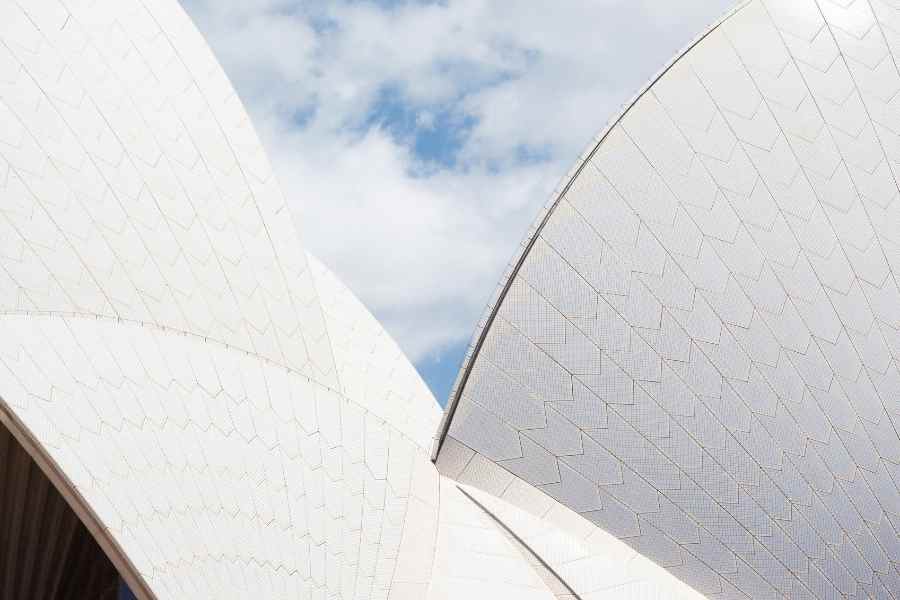
Its distinctive spherical shells, for example, are covered with more than a million specially made-tiles.
After nearly two decades of discussions, planning, and political bickering (including the resignation of Utzon, the original architect, due to budget concerns in 1966), the Sydney Opera House was finally opened in 1973 by Queen Elizabeth II.
The first production was a version of Prokofiev's Australian Opera epic "War and Peace".
Since then, the Opera House has hosted iconic figures such as Sammy Davis, Jr. and Ella Fitzgerald in the late 1970s, Pope John Paul II in 1987, and Nelson Mandela in 1990.
In 2000, the Opera was the headquarters and center of the Olympic Festival of the Arts.
Then in 2009, Sydney's largest cultural festival, Vivid, first designed its now-famous Opera candlelight show.
In 2019, more than 8 million people visited this impressive site, taking tours, attending presentations, and admiring the building itself.
What to Do
Depending on your interests and the length of your visit, there are three main ways to experience the Sydney Opera House.
Regardless of what you choose to do, your visit will likely begin at the Welcome Center in the lower lobby.
If you're short on time, you can view the structure on the red granite steps and then walk down the Western Boardwalk for unbeatable views of the harbor.
For a deeper understanding of the building and its history, take an official tour of the Concert Hall, Joan Sutherland Theater, and smaller theaters.
Along with the standard one-hour tour, personalized experiences are also available for families, foodies, and theater fans.
Tours run daily and must be booked in advance,if you want to secure your place make your booking here.
If you prefer to attend a presentation, you will have a lot to choose from.
The Opera hosts 2,000 shows 363 days a year, from musical theater to dance and contemporary music.
The Australian Chamber Orchestra, Bangarra Dance Theater, Opera Australia, Sydney Theater Company, Bell Shakespeare, Sydney Symphony Orchestra, and Australian Ballet are based here.
How to Visit
You will have no problem locating Opera in the center of Sydney.
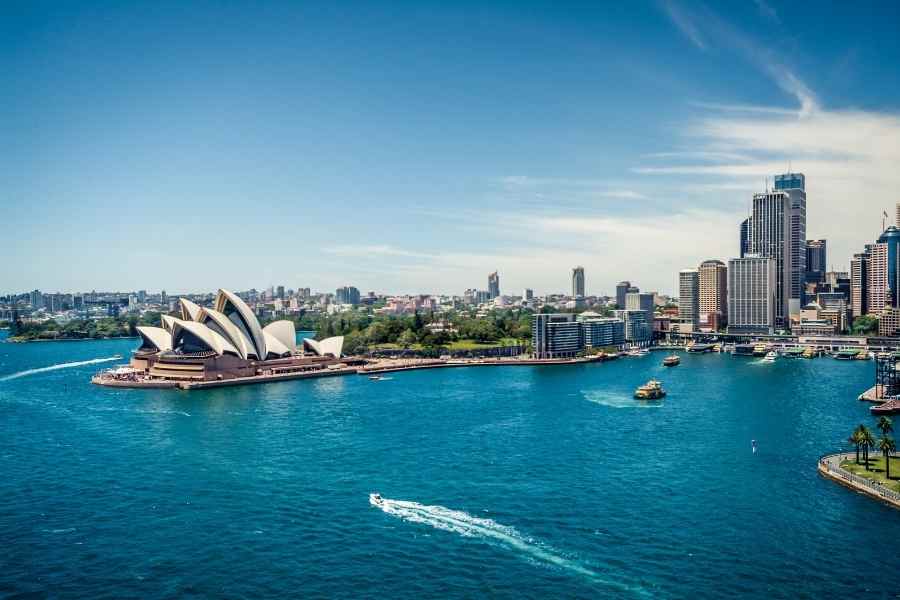
It can be found at Bennelong Point, on the south side of Sydney Harbor, between the Royal Botanic Gardens and Circular Quay.
It is located near many of the main attractions of the city, so it is likely that you will pass through here during your stay.
The Opera is a five-minute walk from Circular Quay, a public transportation hub, and is surrounded by restaurants and bars.
The stylish Bennelong Restaurant serves some of the best modern Australian cuisines in town, while the more casual Portside offers light meals, coffee, and pastries.
Sitting next to each other on the harbor, the Opera Kitchen and Opera Bar are perfect for a glass of wine or pre-theater snacks. (It goes without saying that all of the dining options also offer stunning views of the Harbor Bridge.)
Paid parking is available 24 hours at the Opera, starting at $ 13 an hour.
The car park can be full before popular performances, so we recommend reserving longer or using public transport if possible.
Admission to the Lobby and the Opera Welcome Center is free, but the only way to see further afield is by taking a tour or watching a show.
On weekends and during the summer, you can avoid the crowds at the Opera by arriving early.
Morning tours also have a better chance of seeing all performance spaces before they are closed to visitors for evening shows.
If sunset is your thing, visit at night and watch Bada Gili's free daily light show.
The Welcome Center is open from 8:45 a.m. M. At 5:00 p. M., seven days a week, and tours run every day from 9:00 a.m. to 6:00 p.m. M. At 5:00 p. M.
Things to Do Nearby
For the best views of the Opera House and Harbor Bridge, walk through the Botanical Gardens to the eastern end of the Domain (a 20-minute walk).
Here you will find Mrs. Macquarie's chair, a large sandstone bench exposed by convicts in 1810.
The bench was created for Elizabeth Macquarie, wife of the Governor of New South Wales, but has since become one of the most popular places. to visit photos of the city.
The Opera is located at the eastern end of the Circular Quay entertainment area, lined with restaurants and cafes.
After working up an appetite, stop by Sydney Cove Oyster Bar for fresh seafood or Messina for the most creative ice cream flavors in town.
Circular Quay is also the ferry hub for the city, so you can take a scenic tour of the harbor to Manly or Watson's Bay.
Across from Circular Quay, you'll find the Museum of Contemporary Art, as well as The Rocks, the oldest neighborhood in the city.
Take a weekday tour of The Rocks to see the pubs and boutiques, or visit on the weekend to enjoy the open-air markets under the Harbor Bridge.
For stunning views of the bay, you can even climb the bridge!
We hope you enjoy watching this video about the Sydney Opera House Tour Guide

Source: Pit Spielmann
Did you find this post useful or inspiring? Save THIS PIN to your Travel Board on Pinterest! 😊

Once again, thank you for visiting our website!
We hope you've enjoyed exploring the content we've created for you.
Give yourself the chance to learn, get inspired, and have even more fun, keep browsing...
You may also like 👇🏼👇🏼