
Touring Plymouth, Montserrat, the Pompeii of the Caribbean
For a small island, Montserrat tells a great story. Twenty-five miles southwest of Antigua, the British Island was where Paul McCartney, Elton John, and Stevie Wonder came to record at Sir George Martin's Air Studios and was also the home of the society superstar Arrow, who autographed the red hit. from the '80s. Hot Hot hot.
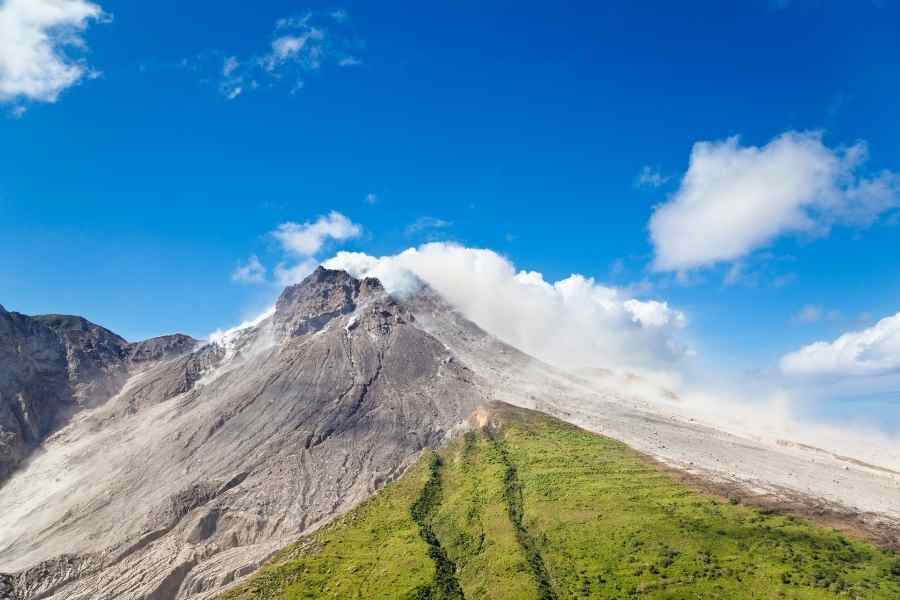
The only country other than Ireland to celebrate St. Patrick's Day as a national holiday, the 21x7-mile stretch of the Caribbean Sea is also where the Soufriere Hills volcano destroyed the capital Plymouth two decades ago.
On July 18, 1995, the volcano, dormant for four centuries, spewed 20 feet of ash onto the southern shoreline, a mere prelude to what was to come.
A series of eruptions eventually caused cascades of hot gas and rocks that buried the once-prosperous city of Plymouth.
The lives of the 12,000 residents of Montserrat changed forever: the population sank as people were faced with the choice of fleeing to the extreme north of the island (which was not affected by the eruption) or moving to the UK on the islands. neighbors of the Caribbean, the United States.
States or Canada. The eruption was felt as far away as Puerto Rico.
Today, the volcano remains a wild card: the last major eruption was in 2010 when the lava dome of "Madame Soufriere" collapsed.
Traveling to the island is safe, but the volcano is still bubbling, bubbling, and infiltrating sulfuric vapors.
We hope you enjoy watching this video about The Pompeii of the Caribbean

Source: Anna Ferma
1. View the Volcano From Afar at the Montserrat Volcano Observatory
Ask Rod Stewart anything about volcanoes and you will hear a lot about what happened in Soufriere Hills.
The volcanologist with the same name as rock and roll is the director of the Montserrat Volcano Observatory, which the locals simply call MVO.
Scottish by birth and islander by choice, Stewart enjoys talking about volcanoes with onlookers who come to see the landscape through the lens of the Observatory's large telescope and purchase a souvenir from the gift shop.
"The biggest myth is that a mermaid lives in the lake, but, curiously, there is no lake in the volcano," he says, pointing from the observation deck to the Soufriere hills.
Funded by the University of the West Indies Center for Seismic Research and the British government, MVO scientists report to the government weekly and broadcast daily volcano updates on local radio.
"Soufriere Hills is one of the most monitored volcanoes in the world," says Stewart with his Scottish-Monserratian accent, "nowhere else can you see a buried city like the one we have here."
2. Tours of the Buried City
Plymouth is in the so-called Exclusion Zone or Zone V; as this area is on the path of the most volcanic activity at present, public access is limited, although small boats can circle the coast.
Tours are conducted by rigorously trained guides who carry walkie-talkies in the event of another eruption. "Our five-year plan includes the development of the buried city as an important tourism product," says Hon. Delmaude Ryan, Deputy Prime Minister of Monserrat.
"This includes markings on buildings that are still on the ground, signs describing what happened, and visitor services such as restrooms."
In another example of learning to live with the volcano instead of cursing fate, Montserrat plans to generate 100% of its geothermal energy by 2020, Ryan says.
3. Walking through Plymouth's "lunar landscape"
From the air, sea, or land, the devastation caused by Madame Soufriere resembles the lunar landscape.
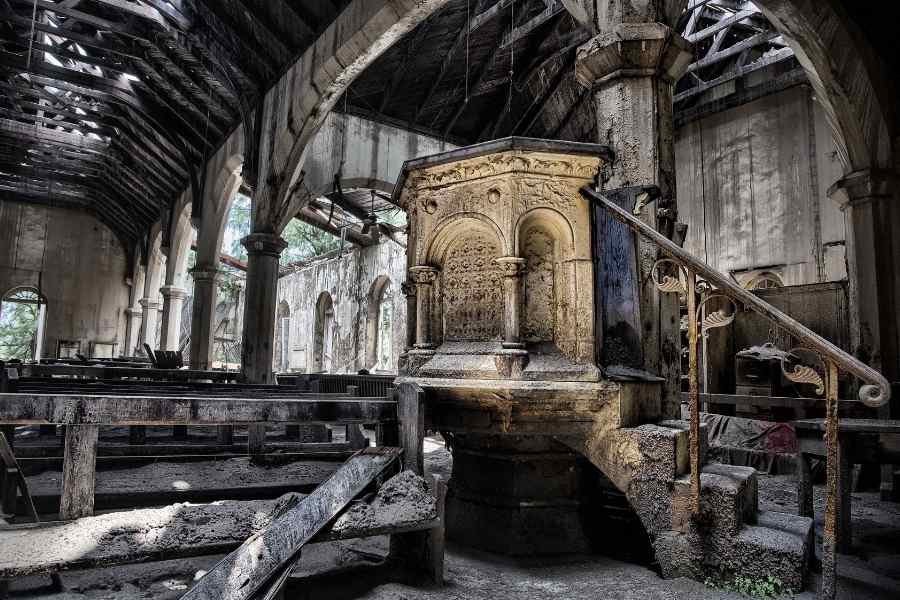
Visiting Plymouth is an unsettling experience - once-majestic Georgian buildings are in various stages of disrepair, most buried 12 meters below the ash and only the tops are visible.
Looking out the window of what was once the Water Company is scary: the tables have not been touched for more than 20 years.
Tour groups walk in silence as guides point to the burned-out structure of what was once the city's Texaco gas station, the Flora Fountain hotel, the police station, the Barclays Bank (the money in the vault is rumored to never be recovered), the Cable and Wireless Office, a supermarket, a church tower peeking through the new greenery, and the High School where all that remains is the door to the principal's office.
In this mysterious ghost town, there are no animals, birds, or cell phone service.
Impressive are the belongings left behind, like the sole of a shoe or an old typewriter; In hillside homes (whose owners are still unable to enter), toys, cribs, clothing, and furniture freeze over time.
Did you find this post useful or inspiring? Save THIS PIN to your Travel Board on Pinterest! 😊
Once again, thank you for visiting our website!
We hope you've enjoyed exploring the content we've created for you.
Give yourself the chance to learn, get inspired, and have even more fun, keep browsing...
You may also like 👇🏼👇🏼