
How to care for Donkey's Tail


Donkey's tail, also known as burro's tail or lamb's tail, is a beloved succulent with its unique fleshy, teardrop-shaped leaves that grow in rows along trailing stems.
Known for its visual appeal and ease of care, this plant is ideal for both indoor and outdoor gardening.
Native Origins and Growth Patterns
Native to Honduras and Mexico, Donkey's tail grows slowly but steadily.
While it may take up to six years to reach its full length of four feet, the average mature length is closer to 24 inches.
With patience, this succulent can become an impressive addition to your home or garden.
Ideal Planting Time and Conditions

Indoors, Donkey’s tail can be planted and propagated year-round, making it a great choice for those who enjoy gardening in any season.
However, if you plan to grow it outdoors, early spring is the best time to plant to ensure optimal growth.
Light Requirements
Donkey’s Tail loves bright, indirect sunlight. While it can tolerate some direct sunlight, too much can burn the leaves, turning them red or brown.
Tips for optimal light:
Place near a south- or east-facing window indoors.
Rotate the plant occasionally for even growth.
If leaves start to stretch or lose color, it may need more light.
Soil and Watering Needs

Like most succulents, Donkey's Tail prefers well-draining soil. A cactus or succulent mix is ideal to prevent waterlogging, which can lead to root rot.
When watering, wait until the soil is completely dry, then water thoroughly.
In winter, reduce watering as the plant’s growth slows, and it requires less moisture.
Signs of overwatering:
Leaves become soft, translucent, or drop easily.
Signs of underwatering:
Leaves shrink, wrinkle, or dry out.
Temperature and Humidity
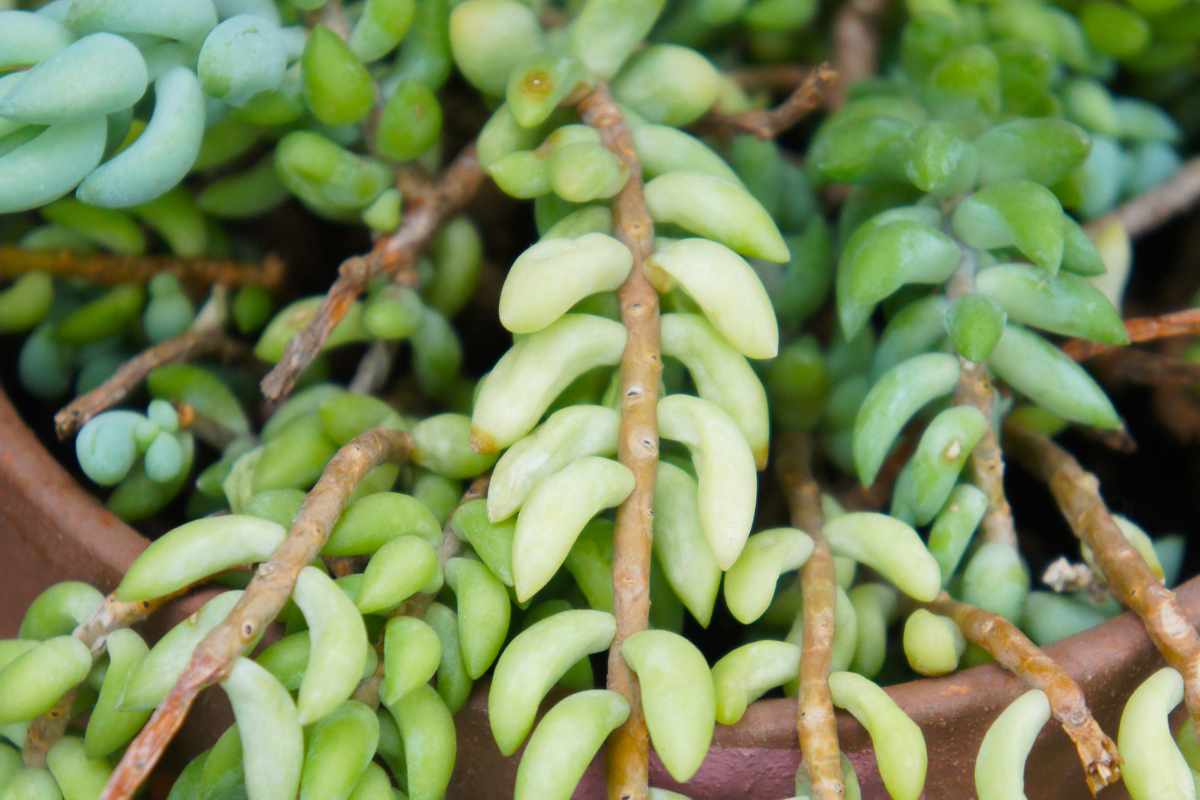
The donkey's tail is quite hardy and can tolerate a range of temperatures.
Indoors, keep it in temperatures between 65°F and 75°F.
If growing outdoors, this plant can handle warmer climates but is best kept out of frost or extreme cold.
Fertilizing
To encourage healthy growth, apply a balanced, low-nitrogen fertilizer diluted to half strength during the growing season (spring and summer).
Avoid over-fertilizing, as Donkey's tail is a light feeder, and too much fertilizer can cause leggy growth.
Propagation Tips

One of the great advantages of a Donkey’s tail is its easy propagation.
Simply place fallen leaves or stem cuttings on the soil, and they’ll root on their own over time.
This makes it a wonderful plant to expand your collection or share with friends.
Handling Donkey's Tail
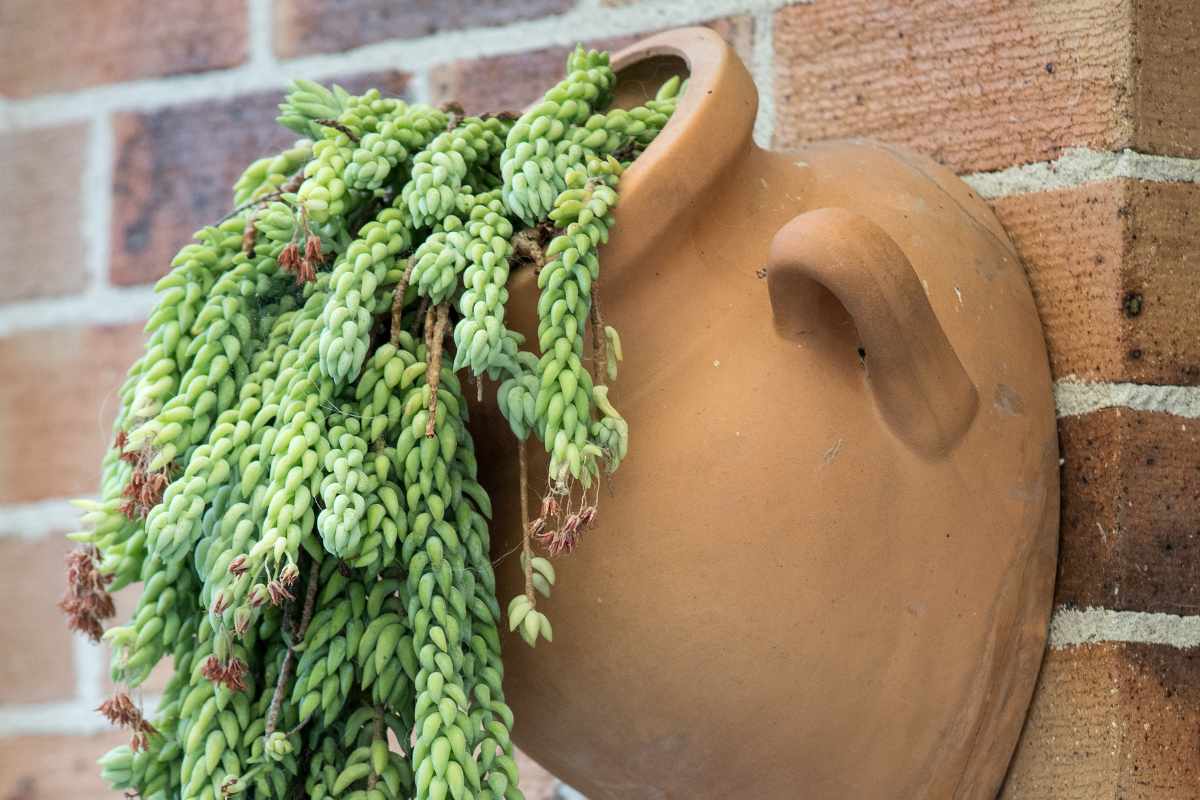
Be careful when handling Donkey’s tail, as the leaves are fragile and can fall off easily.
Avoid frequent movement or repotting unless necessary, and try to place it in a location where it won’t be disturbed.
Add a Unique Touch to Your Space
With its cascading stems and distinctive appearance, Donkey’s Tail brings a unique charm to any indoor or outdoor setting.
Whether grown as a hanging plant or on a ledge, it’s a low-maintenance addition that offers a lush, green aesthetic with minimal effort.
Enjoy The Video Tutorial

Source: Succulents Box
Don’t forget to Subscribe to our Newsletter to receive amazing tips and tricks about Gardening and the FREE Ebook Green Living Strategies!
Did you find this post Useful or Inspiring? Save THIS PIN to your GARDENING Board on Pinterest! 😊

Once again, thank you for visiting our website!
We hope you've enjoyed exploring the content we've created for you.
Give yourself the chance to learn, get inspired, and have even more fun, keep browsing...
More Gardening Tips 👇🏼👇🏼