
How to Grow and Care for Petunias


Petunias are one of our most popular summer bedding plants, blooming throughout the summer until the first severe frosts of fall. Its mass of flowers brings a lot of color to the gardens.
The compact, chunky varieties are perfect for planting in beds and borders, and the recessed types illuminate hanging baskets and run along the edges of containers.
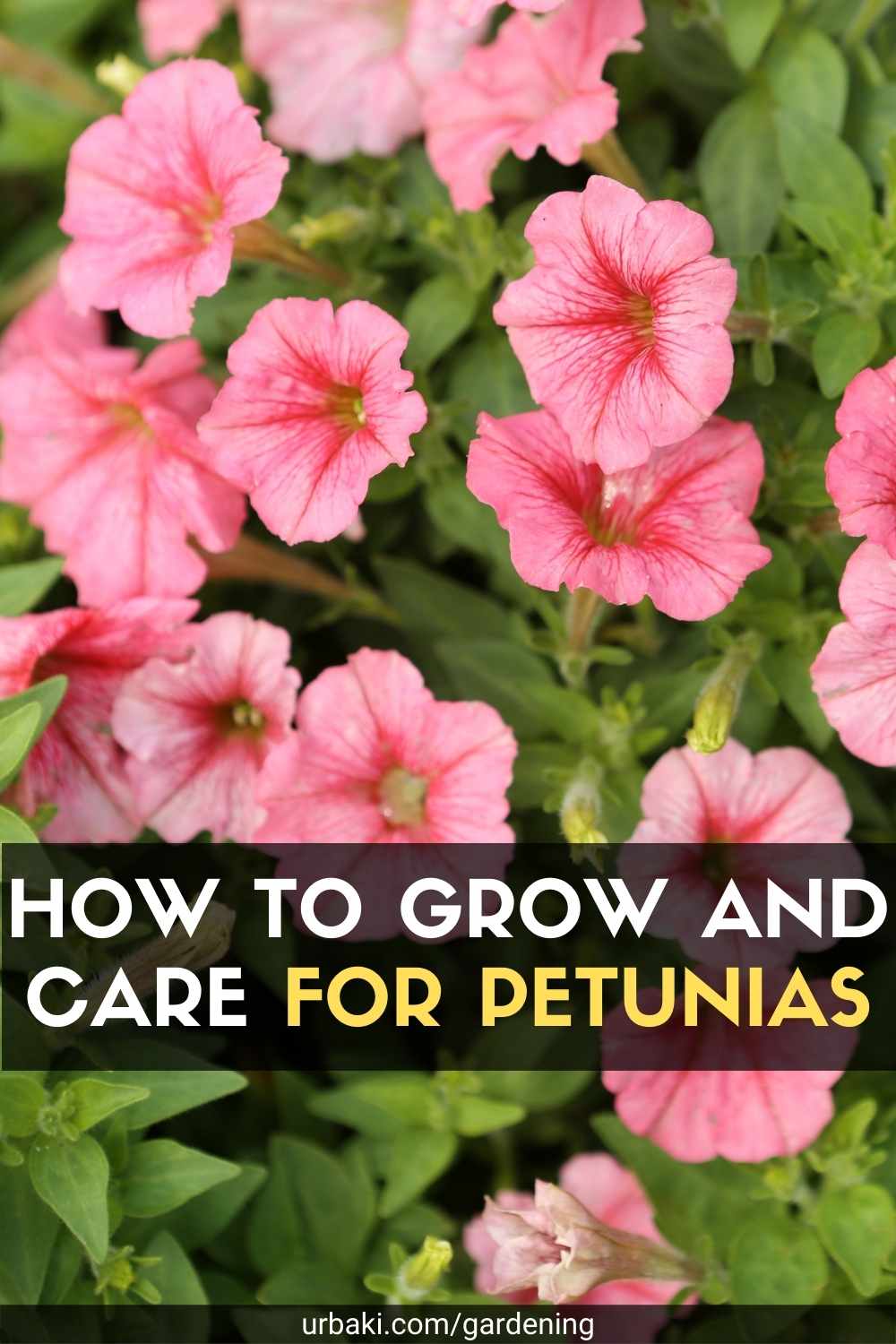
There is a wide variety of petunia flowers: a wide range of colors; single and double flowers; smooth or gathered petals; plain, striped, streaked, or perforated-edged plain colors; and even fragrance.
Petunias are perennials, although most types of bedding are grown as annuals from seed each year. The remaining varieties, such as the Surfinias, are perennials and are grown from cuttings or new plants.
How to grow petunias
Cultivation
Petunias prefer to be grown in full sun, although during hot, sunny summers they tolerate light shade. They grow best in fertile, moist but well-drained soils. Dig up lots of organic matter, such as garden compost, very rotten manure, or another soil improver, especially in sandy soils that are very well-drained to retain moisture.

Planting petunias
Petunias are planted in May / June after the danger of frost has passed.
Dig a good-sized planting hole large enough to easily accommodate the root ball. Add a layer of organic matter, such as compost or planting compost, to the base of the hole and fork.
Place the root clod in the planting hole and adjust the planting depth so that it is planted at the same depth it was originally growing at (except the hardy fuchsia) and the top of the roots are level with the surface ground. Mix more organic matter with the excavated soil and fill in the planting hole.
Apply a general granulated food to the soil and water the well. Mulching 2-3 inches (5-7.5 cm) of very rotten or soil-like garden compost will help keep the soil moist and prevent weeds. If you have a warm greenhouse, you can plant pots and baskets in the spring and grow the plants, ready for outdoors in late May or early June. Then you will have flowers in early summer.
Suggested places to plant and types of gardens: Flower beds and flower beds, patios, containers, urban and patio gardens, cabins, and informal gardens.
How to care for petunias
Keep the soil moist by watering regularly during prolonged dry summer spells. Containerized plants will need regular, possibly daily watering; the goal is to keep the compost evenly moist. But don't overwater, as too much water will cause the plants to have long legs and few flowers.
Feed liquid plant foods regularly throughout the summer to ensure a continuous supply of flowers. A high potassium plant food will encourage more and better blooms over a longer flowering period until the first frosts in fall.
Removing discolored flowers and developing seed pods will prolong the display. Messy plants can be cut down with great force and then fed liquid plant food to produce new shoots and a profusion of flowers.
In autumn, once damaged by frost, it is better to dig up and fertilize the petunias from the bed.
Overwintering petunias
Evergreen and creeping varieties can be hard-cut in the fall, put away to remove dead or damaged plants, and raised with care. Wrap them in pots large enough to carry the root ball and some fresh potting compost on the sides, and overwinter them in a clear, frost-free location, preferably a cold greenhouse or greenhouse.
Propagating petunias
Perennial varieties can be propagated from cuttings collected in March / April from winter plants or in August / early September.
Choose strong, healthy stems that are not blooming. If you can't find suitable growth, forcefully cut a stem or two from the backs of the plants to encourage strong growth.
Take 3-4 inch long stakes, cutting just below a leaf or knot. Remove the leaves from the lower two-thirds of the stem and insert five or six seedlings in pots of sandy compost at the base of the lower leaves. Place the pots in a plastic bag or spreader and place them somewhere with good light, but out of direct sunlight, for rooting.
Seedlings should have rooted in 2 to 3 weeks when they can be individually planted and cultivated.
We hope you enjoy this video about how to keep your petunias looking full and flowering:
Source: PlantzNThings
Did you find this post Useful or Inspiring? Save THIS PIN to your GARDENING Board on Pinterest! 
Once again, thank you for visiting our website!
We hope you've enjoyed exploring the content we've created for you.
Give yourself the chance to learn, get inspired, and have even more fun, keep browsing...
More Gardening Tips 👇🏼👇🏼