
The Difference Between Annnuals and Perennials


Hello, how are you today? Welcome to our blog About Gardening. We hope you are very well and looking forward to a new post or Gardening Tutorial.
Today we want to share with you a special post:
Annual Plants vs. Perennials and How to Use Them
What makes annuals "annuals" and perennials "perennials"? Well, the answer lies in their respective life cycles. "Life cycle" means the amount of time it takes for a plant to grow from seed and eventually end up producing its own seed.
Botanically speaking, annual plants complete their life cycle within one growing season (usually spring to fall):
- You put the seeds of last year's flowers in the ground in spring.
- New annual plants sprout from the seeds.
- With due care, during the summer, they produce flowers.
- Towards the end of the growing season (late summer or early fall), annual flowers produce seeds, signaling to plants that their life cycle is complete. Their reproductive mission accomplished, they will die when the first heavy frosts of autumn arrive.
- But in many cases, if you destroy them during the summer to promote spawning, you can get a lot of value from them as fall flowers in early fall. Deadhead can be said to cause a plant to bloom a little longer than its natural life cycle would require.
The Difference Between Annual Plants and Perennials
Hence the difference between annuals and perennials. Perennials that are grown from seed generally do not produce flowers for the first year (or biennials).
That is, they have a longer life cycle, perennials compensate for having a slower reproduction, blooming for more than a year. In any case, some are short-lived, only three years old, including columbine and lupine.
What Is a Biennial?
A biennial is a flowering plant that requires two growing seasons to complete its life cycle. Normally, in the first year, the plant produces only roots and foliage, and in the second year, it blooms before spreading its seed and dying.
However, if this short-lived perennial spreads (either by seeds or underground rhizomes), you may not even notice the death of the original plant, as its offspring will replace it. Some yearbooks are also self-seeded and can reappear year after year, such as Portulaca grandiflora.
Some perennials in their native lands (for example, in the tropics) are treated as annuals in colder regions (which is how they function there, not being cold hardy). Here, it can be said that function trumps botany.
For example, lantana plants are perennials but are treated as annuals in regions far north of their native lands. These regions are too cold to survive the winter. They are grown in heated greenhouses until flowering, at which point they are sold to the gardening public.
An Easy Way to Remember the Difference
Some people understand this distinction, but still, have trouble keeping the terms correct. If you never remember which is which, use the following trick as a guide:
- The root of both words, "annual" and "perennial" (that is, annual) is the Latin word for "year", annus.
- Annual plants are, therefore, those that only last one year (even in their native climates).
- Perennials have something else: that "per" in their name. The Latin prefix per is added to what comes next. Therefore, perennials, given the right conditions, will live longer compared to annuals. Or think of it this way: they persist longer.
Which One Is the Better Deal for Consumers?
Garden centers tend to sell perennials individually (in pots), while annuals are more commonly sold in packs of six. These annuals are called "bedding plants" because they are used by homeowners and businesses to create instant flower beds filled with colorful flowers.
You'll generally pay more for perennials than forage plants (but annuals sold in hanging baskets, like fuchsia, cost more than forage plants, too).
Annuals can be a great option for a roadside flowerbed, where your goal is to have masses of attractive colors all summer long. The reason is simple:
they bloom for longer periods during the summer than perennials, especially if you render them lifeless (although some perennials bloom more than others).
Perennials cost more not only because they offer more value (due to their longer lifespan), but also because nurseries spend more time and energy growing them.
Remember that perennials do not bloom during the first year of life, so nurseries keep them in stock and care for them for a long time. It may take months or even years before they can sell them to the public.
In the long term, it may be better for consumers to buy perennials. Because? Because you don't need to replace them as often as yearly (assuming you take proper care of them).
How Colorful Annuals Are Used in Landscaping
Some people have been gardening for many years, despite the annuals. This is understandable, as those who pride themselves on their gardening knowledge and skills will always be on the lookout for new things to try. They see most yearbooks as common and banal.
Weird perennials, which novice gardeners have never heard of, are more his style. It's their right, but when beginners hear this kind of talk, they may feel embarrassed to avoid popular plants like impatiens.
The fact is that, common or not, annuals have a place in landscaping. They inject fast and lasting color into the landscape in areas where the dreaded empty spot would otherwise be found.
For example, you might have a spot on your flowerbed that shows great color in spring (thanks to spring bulbs, for example) but looks a bit dull when spring flowers fade. At some point, you may be able to insert a new perennial here that will take the torch (flowering sequence) and provide the floral color in the summer. But in the meantime, annuals may be the solution to cover the gaping hole.

Examples of Annuals
In addition to impatiens, the following annual seedlings are commonly found in garden centers. Most of them are generally sold in packs of six. But there are exceptions. Geraniums, for example, are sold in pots:
- African and French marigolds
- Bachelor buttons
- Blue ageratum
- Calendula
- Celosia
- Coleus
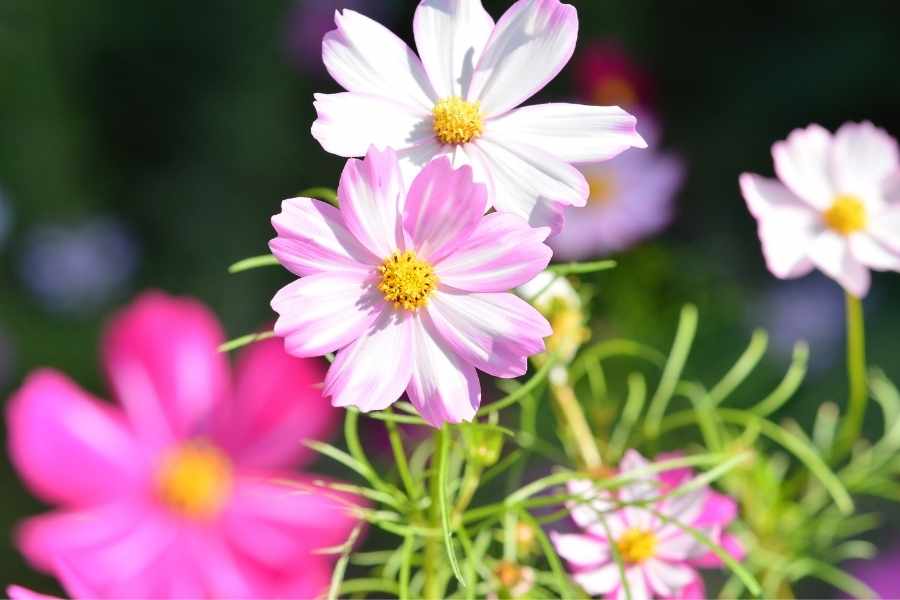
- Cosmos
- Geranium
- Love-lies-bleeding (Amaranthus caudatus)
- Moss rose (Portulaca grandiflora)
- Nasturtium
- Petunias
- Red salvia
- Snapdragons
- Sweet alyssum
- Wax begonias
- Zinnias
Enjoy This Video Tutorial About Understanding Annual, Biannual, and Perennial
Source: MIgardener
Did you find this post Useful or Inspiring? Save THIS PIN to your GARDENING Board on Pinterest! 😊

Once again, thank you for visiting our website!
We hope you've enjoyed exploring the content we've created for you.
Give yourself the chance to learn, get inspired, and have even more fun, keep browsing...
More Gardening Tips 👇🏼👇🏼