
Botswana Travel Guide: Essential Facts and Information

Botswana, one of the most exclusive safari destinations in Africa, is a true haven for wildlife enthusiasts.
Its landscapes are as diverse as they are breathtaking, ranging from the lush wetlands of the Okavango Delta to the dramatic arid expanses of the Kalahari Desert.
This remarkable country is also known for being one of the most stable nations in Africa, with careful governance and a relatively high standard of living.
Location and Geography

Botswana is a landlocked country in southern Africa, sharing borders with Namibia, Zambia, Zimbabwe, and South Africa.
The country is predominantly flat, with some mountainous regions adding variety to its terrain.
Notable geographic features include:
- The Okavango Delta in the northwest, a unique inland delta teeming with wildlife.
- The Mkgadikgadi Pans, a series of salt flats in the north-center.
- The Kalahari Desert, which dominates the central and southwestern regions.
Covering an area of 224,607 square miles (581,730 square kilometers), Botswana is slightly smaller than Texas. Its capital city, Gaborone, is located in the southeast near the South African border.
Population and Languages
As of 2016, Botswana's population was estimated at just over 2.2 million. The Tswana (or Setswana) people make up the largest ethnic group, accounting for 79% of the population.
The official language is English, although only 2.8% of the population speaks it as their mother tongue. Most people, around 77%, speak Setswana, the most widely used native language.
Religion in Botswana is predominantly Christian, practiced by almost 80% of the population, while a minority follows traditional beliefs, such as the Badimo ancestor cult.

Currency
The official currency is the Botswana pula. Use an online converter to check accurate exchange rates before traveling.
Weather and Best Time to Visit
Botswana enjoys a semi-arid climate with warm days and cool nights throughout the year.
- The dry season lasts from May to October and coincides with the southern hemisphere winter. Expect cold nights and mornings during this period.
- The rainy season, from December to March, is also the hottest time of the year.
The best time to visit Botswana is typically during the dry season, when temperatures are mild, mosquito activity is minimal, and wildlife spotting is easier due to reduced foliage. However, the rainy season offers lush landscapes and is especially rewarding for birdwatching or visiting the rejuvenated Kalahari Desert.
Main Attractions
Okavango Delta
Located in the northwest, the Okavango Delta is a UNESCO World Heritage Site and a must-see destination.
Every year, the delta floods, creating a swampy haven for exotic animals and birds. Visitors can explore it on foot or by a traditional canoe, known as a mokoro.
The nearby Moremi Game Reserve is one of Africa's top spots for leopard sightings.
Chobe National Park
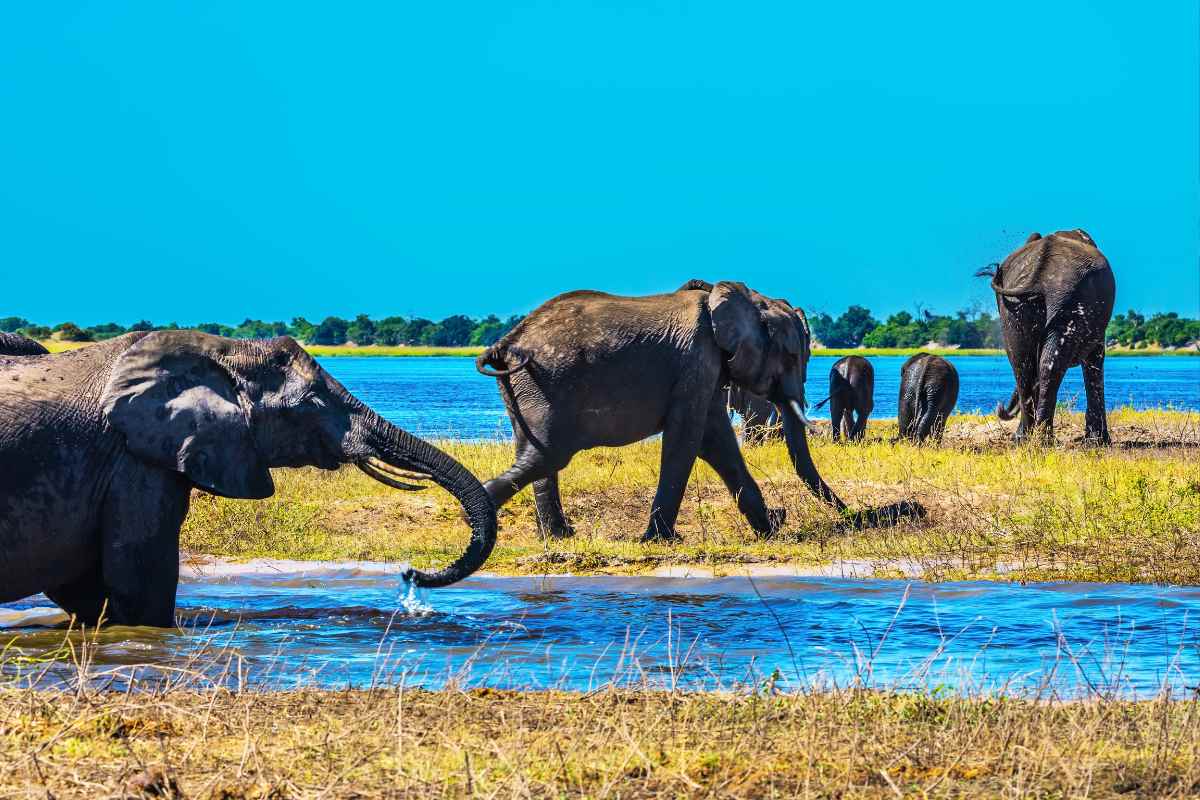
East of the Delta lies Chobe National Park, renowned for its massive elephant population. The Savuti Marsh hosts one of the highest concentrations of animals year-round.
During the dry season, animals gather at the Chobe River, making a water safari particularly rewarding. The park is also famous for its birdlife, including African skimmers and Pel’s fishing owls.

Nxai Pan National Park
Centered around a fossil lake bed, this park showcases unique landscapes with rolling sand dunes and ancient baobab trees.
- In summer, the area floods, offering excellent opportunities for birdwatching and wildlife spotting.
- In winter, the park transforms into a moon-like landscape, with cracked salt marshes stretching into the horizon.
Tsodilo Hills
Situated in the far northwest, Tsodilo Hills is an open-air museum of San Bushman culture, featuring over 4,000 rock paintings.
These ancient artworks provide insights into the lives of the San people, believed to be descendants of the first Homo sapiens. The hills hold great spiritual significance and often depict the sacred eland antelope.
Getting There
Most visitors arrive via Sir Seretse Khama International Airport (GBE) near Gaborone. Land travel is also possible from neighboring countries like Namibia and South Africa.
Citizens of many developed nations do not require a visa for short vacations. For detailed information, visit the official government website.
Medical Requirements
Before traveling to Botswana, ensure that routine vaccinations are up to date. Additionally:
- Hepatitis A and typhoid vaccines are recommended.
- Malaria prophylaxis may be necessary depending on your destination and travel dates.
The CDC website provides detailed health advice for travelers to Botswana.
Did you find this post useful or inspiring? Save THIS PIN to your Travel Board on Pinterest! 😊

Once again, thank you for visiting our website!
We hope you've enjoyed exploring the content we've created for you.
Give yourself the chance to learn, get inspired, and have even more fun, keep browsing...

You may also like 👇🏼👇🏼