
Interesting Facts About the Great Wall of China
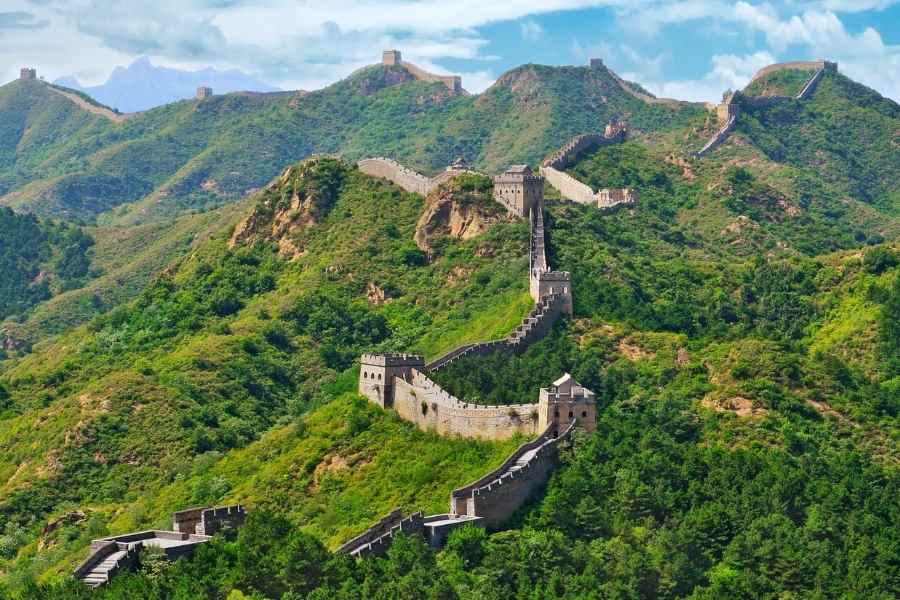
Some of these facts about the Great Wall of China will surprise you.
Myths have been perpetuated for decades about the great structure.
The Great Wall is undoubtedly one of the greatest feats of engineering of all time.
It is the longest man-made object on Earth, one of the top UNESCO World Heritage sites in Asia, and a must for any visit to mainland China.
But unless you're blessed with a better view than an eagle that can rival modern optics, astronauts will confirm: the Great Wall of China isn't really visible from space!
We hope you enjoy watching this video about Amazing Facts About the Great Wall of China
Source: Facts Retriever
Is the Great Wall of China visible from orbit?
In perfect condition, perhaps, but it is doubtful. Despite the ancient myth that the Great Wall of China is the only man-made structure visible from space, astronauts disagree.
It's funny, they get asked a lot about the Great Wall. Astronauts have mistaken other features for the wall, but have so far been unable to see the structure without the help of technology.
While in low orbit, an astronaut managed to take a photo of the Great Wall. When it was enlarged, the Great Wall of China was really visible.
But pointing a powerful camera sensor at the structure and getting lucky doesn't technically mean it was seen with the naked eye.
Although waterways and many man-made objects, including some roads, are visible from low orbit, NASA says entire continents blend together when viewed with the naked eye from space.
Compounding the problem is the natural camouflage of the wall.
The Great Wall was built with local materials of a similar color to the surrounding terrain, making it indistinguishable.
Why did people think that the Great Wall was visible from space?
In 1754, long before space travel was possible, an English clergyman wrote that the wall is so long that it must be visible from the moon. Sir Henry Norman, an English journalist, decided to make the same claim in 1895.
They were both impressed by the wall, but neither knew much about space.
In the following decades, writers propagated the idea that the Great Wall of China should be visible from space.
Eventually, the notion became a common belief and made its way into textbooks.

Is the Great Wall a continuous structure?
Absolutely not. The Great Wall is actually a discontinuous network of walls and segments with spurs and branches.
The sections were built over the centuries; some were connected only by simple embankments and embankments.
Sometimes geological resources were used to undermine the insurmountable task of building such a landmark.
In some places, all that remains are battlements and turrets; the bricks in the wall were loaded and reused a long time ago.
Remember that the Great Wall is not completely linear in shape; it has branches, trenches, shards, and sometimes even redundancy.
The Ming part of the Great Wall can be roughly drawn, however, historians disagree on which of the other segments should count as part of the original structure.
All defensive walls are grouped under one name. The Good: Calling the structure "Many Wall Segments from China" wouldn't mean the same thing.
How long is the Great Wall of China?
As the Great Wall is made up of many segments, many of which have been corroded or destroyed, it is difficult to obtain an accurate measurement. GPS, ground-penetrating radar technology and satellite imagery were used to determine the actual length of the wall.
Another 180 miles of the sandstorm-covered wall was not discovered until 2009!
A survey placed all of the wall pieces together for a total of more than 13,170 miles (21,196 kilometers) in length.
An estimate of the "Ming Wall", the most continuous part of the Great Wall of China, is about 5,500 miles (8,851 kilometers) long.
An estimated 22 percent of the Ming Wall has disappeared.
Is the Great Wall one of the Seven Ancient Wonders of the World?
Despite its age and size, the Great Wall of China was never on the original list of seven wonders. Maybe this is a good thing - the only ancient wonder left that hasn't been destroyed is the Great Pyramid of Giza!
The Great Wall of China was later added to the so-called "New Seven Wonders of the World" by winning a telephone and online poll in 2007.
Did the Great Wall protect China?
Unfortunately, the hard work and monumental effort did not pay off in terms of national defense. The Great Wall was never able to keep invaders from the north away.
It only delayed them a bit. In fact, the nomads of Manchuria regularly carried out attacks on the wall for years.
They eventually controlled parts of China for 250 years.
Despite having failed strategically, the wall served as a highway system to move troops and goods over difficult terrain, and the signal towers provided an important communication network.
Before the telephone and Internet access, the wall was the closest thing to a communication network that existed on earth.
Although the invaders could surround the wall, it provided several observation posts.
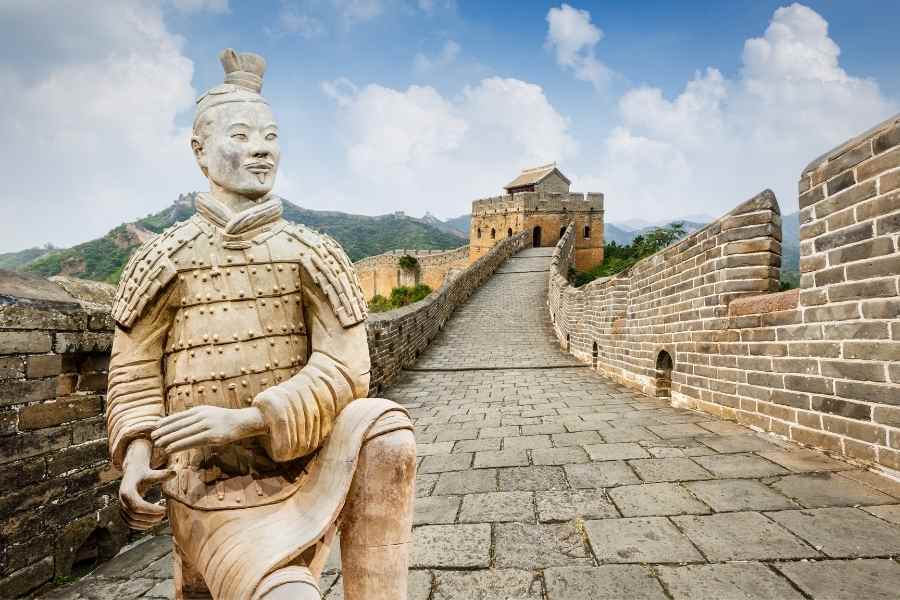
This acted as an early warning system to alert others that horse problems were brewing.
The Great Wall of China was a minor nuisance to invaders throughout China's history, but it provided jobs and redistribution of wealth.
It was often used as a means to prohibit prisoners from working in forced labor camps.
How old is the Great Wall of China?
Construction of the earliest parts of the wall began more than 2,000 years ago, however, what we consider to be the Great Wall of China was built during the Ming dynasty in the 14th century to keep Mongol invaders away.
Did China's enemies destroy the Great Wall?
No. Most damages to sections of the Great Wall came from farmers removing fertile soil to use for planting (much of the wall started out as rammed earth).
The molded bricks and stones were valuable. Many were rescued from sections of the wall and used to build roads!
Residents were encouraged to take materials from the wall during China's Cultural Revolution between 1966 and 1976.
Is it possible to walk on the Great Wall?
Yes. Some adventurous travelers even walked or biked the entire length of the wall. Much of the Great Wall is in ruins, yet tour companies offer camping opportunities in remote stretches of the wall.
Many sections of the wall are permanently closed for restoration work or archaeological studies.
The Chinese government has been criticized for blocking access to segments of the Great Wall, not out of concern for the landmark, but for directing tourists to more popular sections of the wall, such as Badaling, where tacky souvenir stalls compete for space.
Without some restrictions, uncontrolled tourism can destroy old landmarks. Some sections of the wall were defaced with carvings.
Is the Great Wall occupied?
Make no mistake, some parts of the wall are packed with visitors. If you visit any section of the Great Wall near Beijing, in particular Badaling, you will be in the company of hundreds of thousands of visitors, Chinese and foreigners.
You will be asked to pose for group photos, so you can learn how to say hello in Chinese too! Alternatively, you can politely decline.
The wall gets incredibly crowded during major Chinese holidays like National Day and Chinese New Year.
The Mutianyu section of the Great Wall is also a popular place to view the impressive structure.
Other interesting facts about the Great Wall of China
- Mao Zedong is quoted as saying once: "He who has not climbed the Great Wall is not a real man."
- Sentinels along the wall burned dried wolf dung to send smoke signals about enemy movements that were then relayed to the leaders.
Flags were also used to mark other towers' insight.
- The sections of the Great Wall were supposed to contain the remains of the workers who died on the project.
Despite the great loss of life during the construction of the wall, archaeologists have not discovered many human remains.
- Parts of the wall contain bullet holes from the Second Sino-Japanese War (1937-1945).
- The wheelbarrow is one of many Chinese inventions offered to the world over the centuries.
It was used to move materials during the construction of the Great Wall.
- President Nixon's historic visit to China in 1972 included a tour of the Great Wall at Badaling, a popular part of the wall about 50 miles north of Beijing.
- The Badaling section of the Great Wall was used as the end of the cycle route for the 2008 Olympics.
- More than 25,000 watchtowers have been built along the wall throughout history.
- Being sent to work on the wall was an extremely feared sentence and often a punishment for corrupt officials and upper-class criminals who fell out of favor in the courts.
Did you find this post useful or inspiring? Save THIS PIN to your Travel Board on Pinterest! 😊

Once again, thank you for visiting our website!
We hope you've enjoyed exploring the content we've created for you.
Give yourself the chance to learn, get inspired, and have even more fun, keep browsing...
You may also like 👇🏼👇🏼