
3 Front Garden Ideas: Best Low-Maintenance Tips

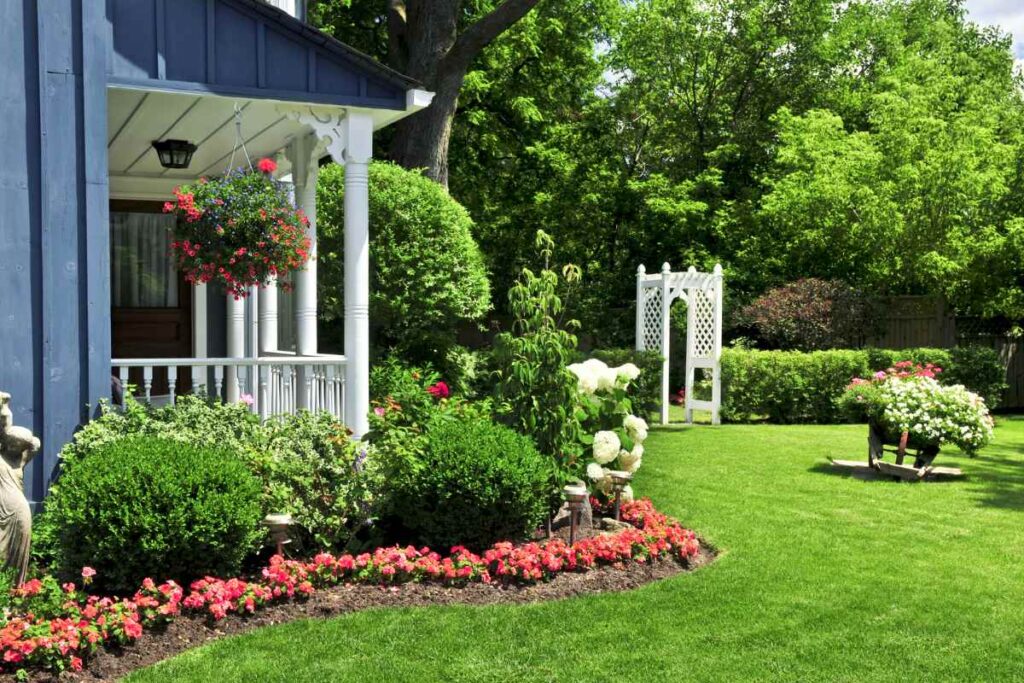
Front Garden Ideas don’t have to be complicated or expensive. If you’re short on time but want instant curb appeal, the right choices up front can save you hours every month while still looking polished.
In this guide, we distill the best low-maintenance strategies into three clear approaches you can act on right away.
You’ll find practical landscaping ideas for front of house that work for small spaces, busy schedules, and different styles—from modern lines to cottage charm.
Whether you’re tackling a garden in front of house from scratch or refreshing a tired entry, these tips focus on smart layout, resilient plants, and materials that look good with minimal fuss.
What Makes a Low-Maintenance Front Garden?
A low-maintenance front garden is designed to reduce repetitive chores without sacrificing style. Think fewer edges to trim, plants that tolerate heat and drought, and materials that won’t need constant repainting or replacing.
Good design groups plants by water needs, uses smart hardscape to cut down on mowing, and prioritizes soil health so your greenery thrives with less input.
Tip 1 — Structure First: Hardscape, Beds, and Simple Lines

Before plants, dial in the bones. Clean, simple geometry shortens maintenance time because there are fewer awkward corners to weed. A narrow path that widens at the doorstep makes the entry feel generous without adding lawn.
Consider a small gravel forecourt framed by steel or concrete edging; gravel suppresses weeds, drains well, and is easy to top up once a year.
Define generous beds so you spend less time edging. For many homes, two broad, symmetrical flower beds in front of house will visually anchor the facade.
Use a continuous edging material—metal, brick on edge, or composite—that stops grass creeping in. Curves are fine, but keep them big and smooth; tiny wiggles mean extra trimming.
This approach is ideal for a terraced house front garden where space is tight and sightlines matter. In long, narrow plots, run a straight path on one side and a planting strip on the other to keep movement clear.
If you also have a strip along the side return, borrow from side garden ideas and repeat the same edging and gravel so maintenance and style stay consistent.
When planning the shapes, think like a pro in front garden landscaping: create one primary bed and one secondary bed, not five tiny islands. Fewer, larger “forms” are easier to weed and mulch.
If you crave variety, vary plant height and texture inside the beds rather than adding more borders to edge.
Tip 2 — Plant Palette With Stamina: Drought-Tough, Compact, Repeat

Plants make the entrance welcoming, but choose workhorses. Favor shrubs and perennials that hold form across seasons and don’t demand frequent pruning.
Repeating the same three to five species creates rhythm and keeps the look cohesive with far less effort than a collector’s garden.
For small spaces, lean into small garden design logic: pick compact cultivars that stay within bounds. A tight evergreen backbone—think dwarf box alternatives, compact holly, or hebe—means you’re not constantly clipping.
Thread in long-blooming perennials or ornamental grasses for movement and light. Mulch thickly (5–7 cm) to smother weeds and conserve moisture.
This mindset shines in small front gardens. If you only have a few square meters, design like a mini-courtyard: one statement shrub flanked by two mounded perennials, all underplanted with a drought-tolerant groundcover. The repetition looks intentional and cuts decisions later.
For a classic welcome, a pair of planters by the door filled with a tough evergreen and seasonal filler provides height with minimal care.
Working with a small front garden design? Keep plant lists short and spacing generous so air flows and foliage dries quickly—healthier plants mean fewer interventions.
Group by watering needs: sun-loving, low-water shrubs together; anything thirstier closer to a hose point. This also simplifies irrigation if you add a single soaker loop.
Tip 3 — Materials and Maintenance Hacks That Actually Save Time
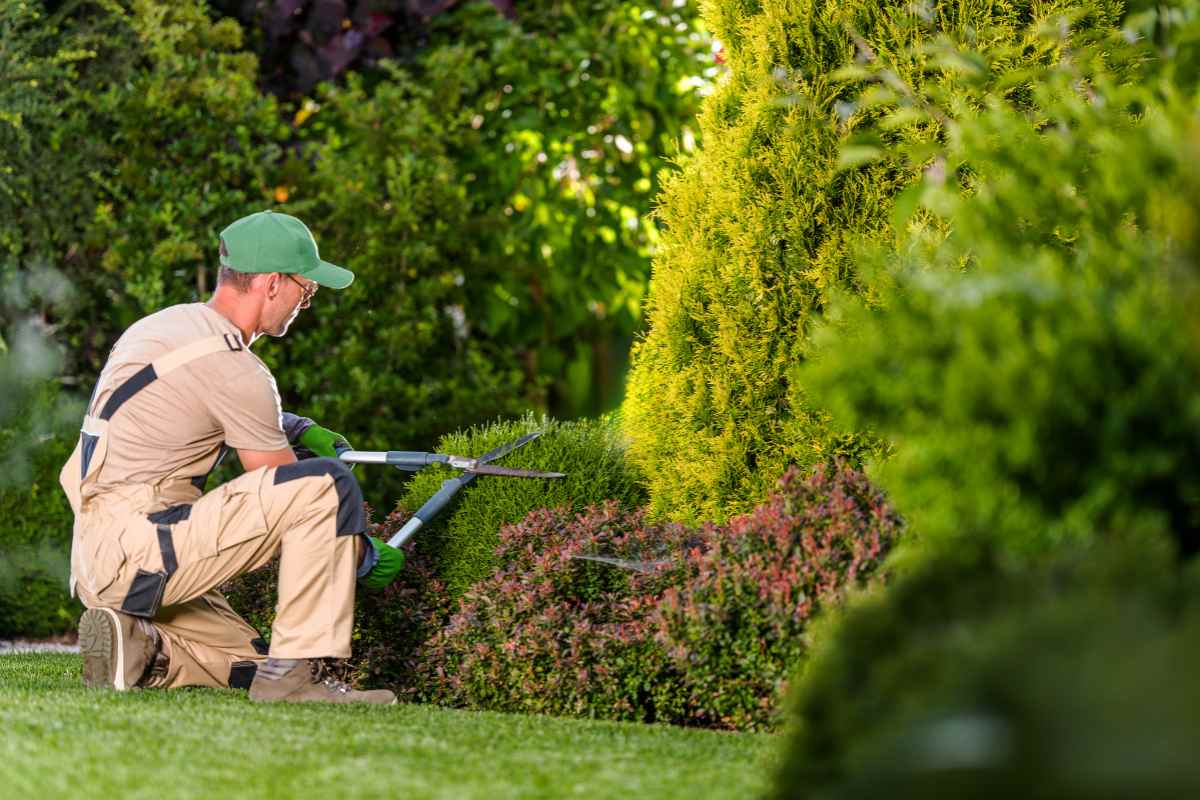
Choose finishes that weather gracefully. Composite edging won’t rot, powder-coated metal resists chipping, and crushed granite pathways settle firm with a quick rake. Where lawn is non-negotiable, shrink it to a simple rectangle you can mow in crisp passes.
Install weed-suppressing fabric only under paths or gravel—not inside planting beds where it can trap roots.
Instead, rely on deep mulch in beds and pre-emergent barriers where appropriate. Set irrigation to deep, infrequent cycles; plants grow more resilient, and you spend less time fiddling with timers.
Lighting is a maintenance win: low-voltage or solar path lights extend evening usability and boost security. Place fixtures outside mulch lines to avoid constant repositioning.
If your facade is busy—stone, shutters, railings—keep the garden palette calm; fewer visual “voices” means less tweaking to make it all harmonize.
Finally, schedule care the lazy-smart way: one spring cleanup to cut back perennials and refresh mulch, one midsummer check to clip strays, and an autumn tidy.
With the right setup, each session is quick. That’s the essence of front garden inspiration for busy homeowners—great looks on a predictable, minimal rhythm.
How These 3 Front Garden Ideas Fit Different Homes
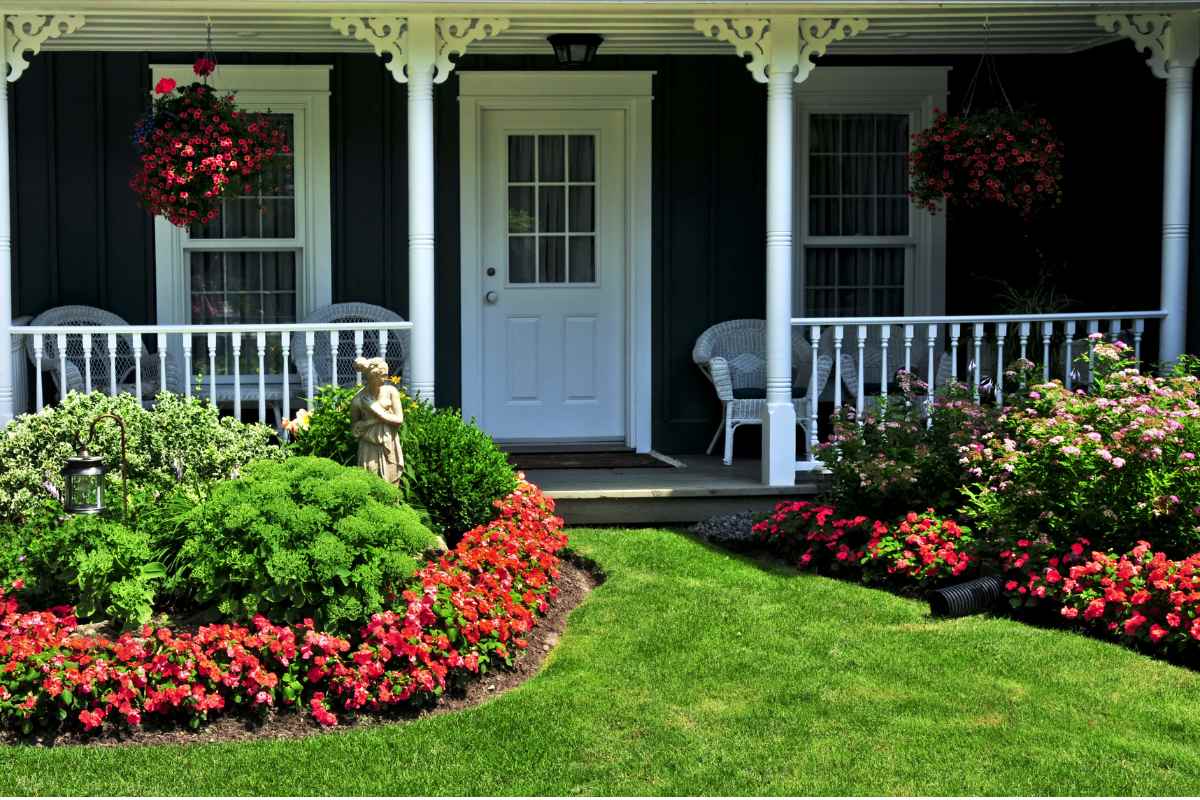
Every facade reads differently. The same three strategies scale up or down depending on architecture and street context. Below are simple adaptations so you can plug the ideas into your own place without adding maintenance.
Modern Minimal: Few Species, Big Texture
Use broad beds, straight steel edging, and a gravel plane. Plant a repeating grid of architectural shrubs with one accent grass drift.
This is a textbook case of landscaping ideas for front of house that look polished year-round with very little clipping. Keep color restrained—greens and silvers—so seasonal flowers feel like a bonus, not a requirement.
Because forms do the heavy lifting, maintenance is mostly a spring shear and a quick top-up of gravel. In a garden in front of house that sees foot traffic, add oversized pavers set into the gravel to protect roots and keep shoes clean after rain.
Cottage Compact: Calm Backbone, Seasonal Pops
Here, a low evergreen hedge holds the line while a limited palette of perennials repeats along the bed. You still get romance—flowers, scent, bees—without chaos.
Keep the palette to three bloom colors so spent flowers are less obvious between deadheads. This pattern is reliable for small front gardens facing busy streets because it reads tidy from a distance.
To nod to tradition without extra work, group roses or long-blooming salvias in blocks rather than sprinkling singles.
When blooms fade, the evergreen backbone carries the entry, proving that front garden landscaping can be charming and low effort.
Urban Terrace: Narrow Plot, Big Welcome
For a terraced house front garden, the path often dominates. Slide it to one side, keep it straight, and balance with a single, deep planting bed.
Repeat two or three compact shrubs along the facade and add one small tree as a focal point if local rules allow. Mirror materials from any side garden ideas—same gravel, same edging—so the whole frontage feels intentional.
When privacy is needed, use a slim trellis with evergreen climbers instead of a hedge. It’s quicker to tidy and creates vertical interest without stealing floor space. Keep pots minimal and large; small pots dry out fast and demand more watering.
Front Garden Ideas, Simplified: A Quick Plan to Copy
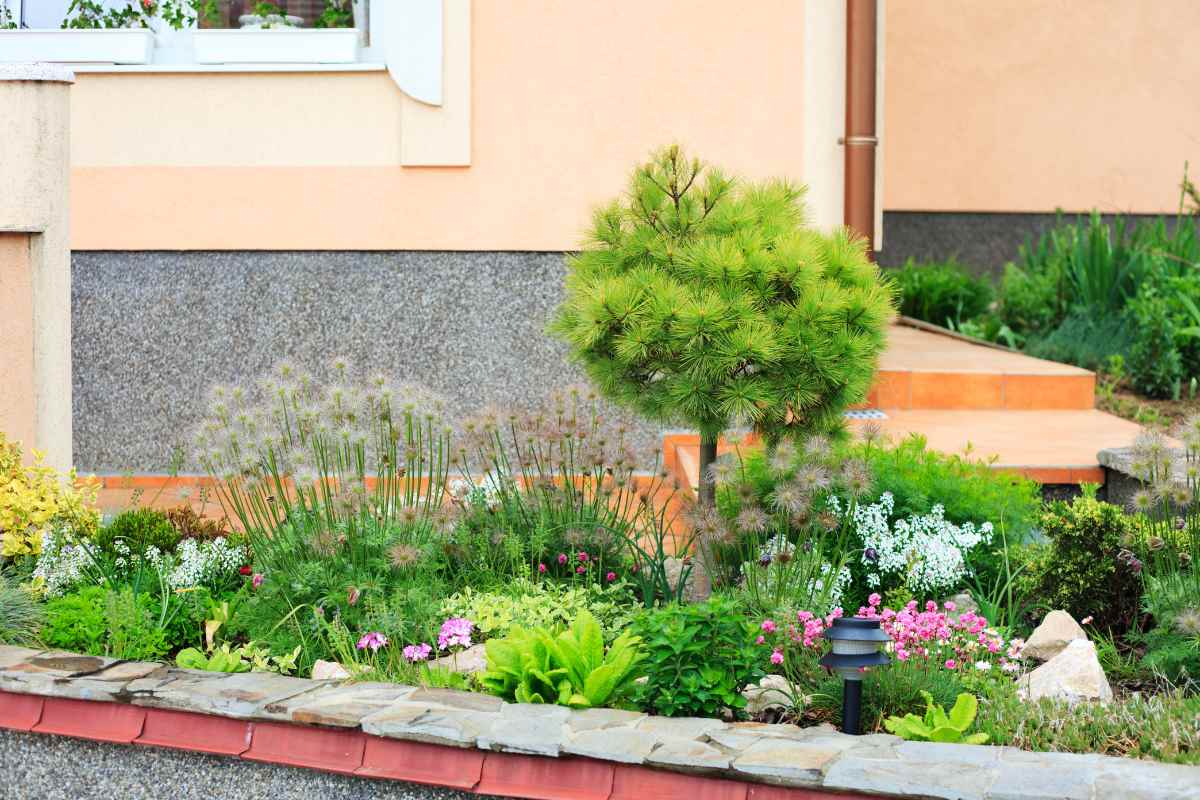
Short on time? Start with this blueprint and adjust to taste. It’s a reliable, low-maintenance layout you can mark out in a weekend and refine over time.
Layout
• One straight path from sidewalk to door (or a direct diagonal if that’s the true desire line).
• Two generous flower beds in front of house edged in steel or brick.
• A compact gravel forecourt near the entry for a clean threshold.
Planting
• Evergreen backbone (2–3 species) repeated in drifts.
• 1–2 long-blooming perennials or ornamental grasses for movement.
• Mulch 5–7 cm to suppress weeds and retain moisture.
Care
• Spring cutback + mulch refresh.
• Midsummer touch-up trim.
• Autumn tidy and path rake.
Why Watch the Video?
The referenced YouTube video showcases real-world makeovers that illustrate these principles in action—clean geometry, resilient plants, and finishes that look good with little effort.
It’s an inspiring visual complement to these ideas. All creative credit belongs to the original YouTube creator featured in the video.
Watch The Full Video
More Gardening Tips 👇🏼👇🏼