
3 Seed Starting Indoors Tips for Stronger Healthy Plants


Starting seeds indoors is one of the easiest ways to get a head start on the season—but it can also be where seedlings get weak, leggy, or stall out.
The good news: you don’t need a complicated setup to grow sturdy, healthy starts. Below are three practical Seed Starting Indoors Tips that make the biggest difference, plus a simple checklist and troubleshooting fixes. This guide is perfect for beginners and anyone who wants better results with less guesswork.
We invite you to read our article Grow a Thriving Garden with Indoor Seed Starting
Tip #1: Give Seedlings Enough Light (and Put It Close)
If you only change one thing in your seed-starting routine, make it this: strong light at the right distance. Most “leggy” seedlings are simply stretching to find brighter light.

How much light do seedlings need indoors?
Aim for 14–16 hours per day of consistent light. A sunny window rarely provides enough intensity for compact growth—especially in late winter or early spring.
Best setup for strong seedlings (simple and effective)
- Use a basic LED grow light (shop lights work too if they’re bright enough).
- Keep the light 2–4 inches (5–10 cm) above the seedlings (follow your light’s guidance).
- Raise the light as seedlings grow so it stays close.
- Use a timer so your schedule stays consistent.
Quick test: If seedlings are leaning hard toward the light or getting tall and thin, your light is either too weak or too far away.
Bonus: Rotate trays if you’re using a window
If you’re relying on natural light, rotate trays daily and expect slower, leggier growth. You’ll often get stronger results from even a budget grow light.
Tip #2: Master Watering and Airflow (Strong Stems Start Here)
Indoor seedlings don’t just need water—they need the right watering pattern to build strong roots and avoid fungus issues.
The goal: even moisture, not soggy soil
- Keep the mix lightly moist during germination.
- After sprouting, let the surface dry slightly between waterings.
- Avoid constant wetness—this is where problems start.
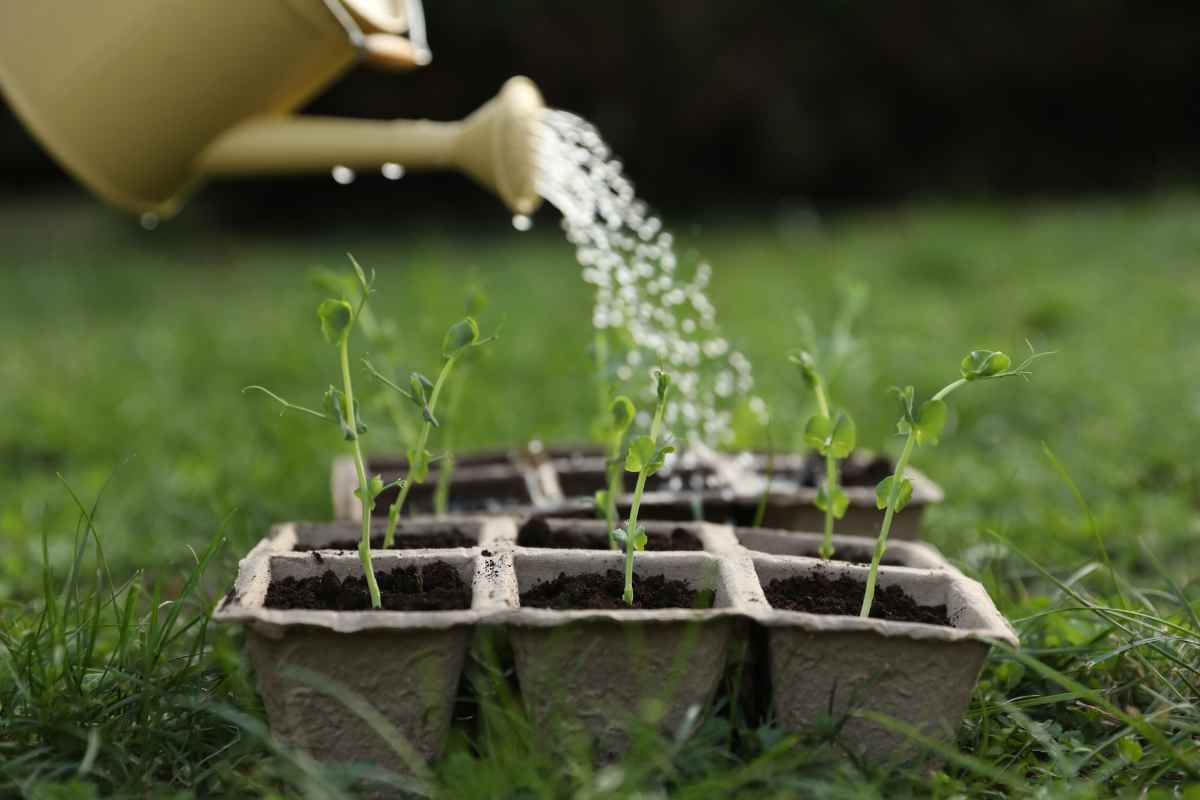
Try bottom watering for healthier roots
Bottom watering encourages roots to grow downward and helps prevent overwatering.
- Place seed trays in a shallow bin.
- Add ½–1 inch (1–2.5 cm) of water.
- Let trays soak for 10–20 minutes.
- Remove and drain well.
Add airflow to prevent damping off
That fuzzy mold and sudden seedling collapse (damping off) thrives in still, wet air.
- Use a small fan on low, aimed nearby (not blasting directly).
- Gently brush your hand over seedlings once or twice a day if you don’t have a fan.
- Keep seedlings spaced so air can move between them.
Pro tip: Airflow also helps seedlings develop thicker stems—like a mini “workout” for plants.
Tip #3: Start at the Right Time (and Pot Up Before They Struggle)
One of the most overlooked Seed Starting Indoors Tips is timing. Starting too early can backfire—seedlings outgrow their cells, get stressed, and never really thrive.
When to start seeds indoors
Use your average last frost date and count backward based on the crop:
- Fast growers (like lettuce): often 4–6 weeks before last frost
- Tomatoes/peppers: commonly 6–10 weeks before last frost
- Flowers vary a lot—check the packet
If you start too early, seedlings may become:
- root-bound
- nutrient-starved
- tall and floppy
- stunted after transplanting

Pot up before plants get root-bound
If roots are circling the bottom or growth slows, it’s time to move up.
- Go from cell trays to 3–4 inch (7.5–10 cm) pots.
- Bury leggy tomato stems deeper when potting up (they’ll root along the stem).
- Use fresh seed-starting mix or a light potting mix.
Feed lightly once true leaves appear
Seed-starting mix has little nutrition. After seedlings have their first set of true leaves, feed gently:
- Use a balanced liquid fertilizer at ¼–½ strength
- Feed every 7–14 days depending on growth
Watch for: pale leaves + slow growth = likely nutrient need (or light too weak).
A Quick Indoor Seed Starting Checklist (Do This Today)
Use this as your fast tune-up:
- Light: 14–16 hours/day on a timer
- Distance: lights 2–4 inches (5–10 cm) above seedlings
- Water: bottom water + drain well
- Air: fan on low daily
- Timing: start based on last frost date and seed packet weeks
- Pot up: before roots circle or growth stalls
- Feed: weak fertilizer after true leaves appear

Common Seed Starting Problems (and How to Fix Them)
Leggy seedlings
Cause: light too weak or too far away
Fix: move lights closer, increase brightness, ensure 14–16 hours/day
Yellow leaves
Cause: overwatering, low nutrients, or low light
Fix: let mix dry slightly, add gentle feeding after true leaves, improve light
Mold on soil surface
Cause: too wet + no airflow
Fix: bottom water, add airflow, scrape off moldy top layer, sprinkle a thin layer of dry mix
Seedlings suddenly collapse at the base (damping off)
Cause: fungal issue from wet conditions
Fix: improve airflow, avoid soggy soil, start with clean trays and fresh mix
Slow or uneven germination
Cause: inconsistent moisture/temperature, old seed, planting depth off
Fix: keep evenly moist, use a humidity dome until sprouting, confirm depth on packet, consider a heat mat for warm-season crops
Final Thoughts
With the right light, smarter watering, and better timing, indoor seed starting becomes so much easier—and your seedlings will be noticeably sturdier. Pick one tip to improve this week (light is usually the biggest win), and you’ll see stronger stems and healthier transplants by planting time.
— Emily
More Gardening Tips 👇🏼👇🏼