
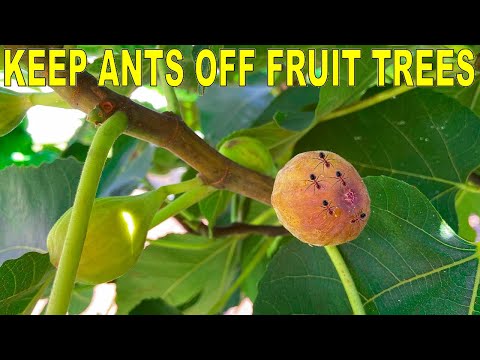
3 Simple Tricks to KEEP ANTS OFF FRUIT TREES


If you’ve ever spotted a line of ants climbing your fruit trees, you’re not alone.
These tiny invaders aren’t just annoying — they can cause real trouble by protecting aphids and scale insects that damage your plants.
Understanding how to keep ants off fruit trees can make a big difference in keeping your orchard healthy and productive.
Why Ants Target Fruit Trees
Ants love fruit trees because they’re full of sugary sap and often home to aphids, which produce honeydew — a sweet liquid ants can’t resist.
Once they find a food source, ants will build trails and colonies nearby, making them hard to eliminate.
The key is to break their cycle: stop the ants, remove their food source, and protect your trees naturally.
1. Create Effective Physical Barriers
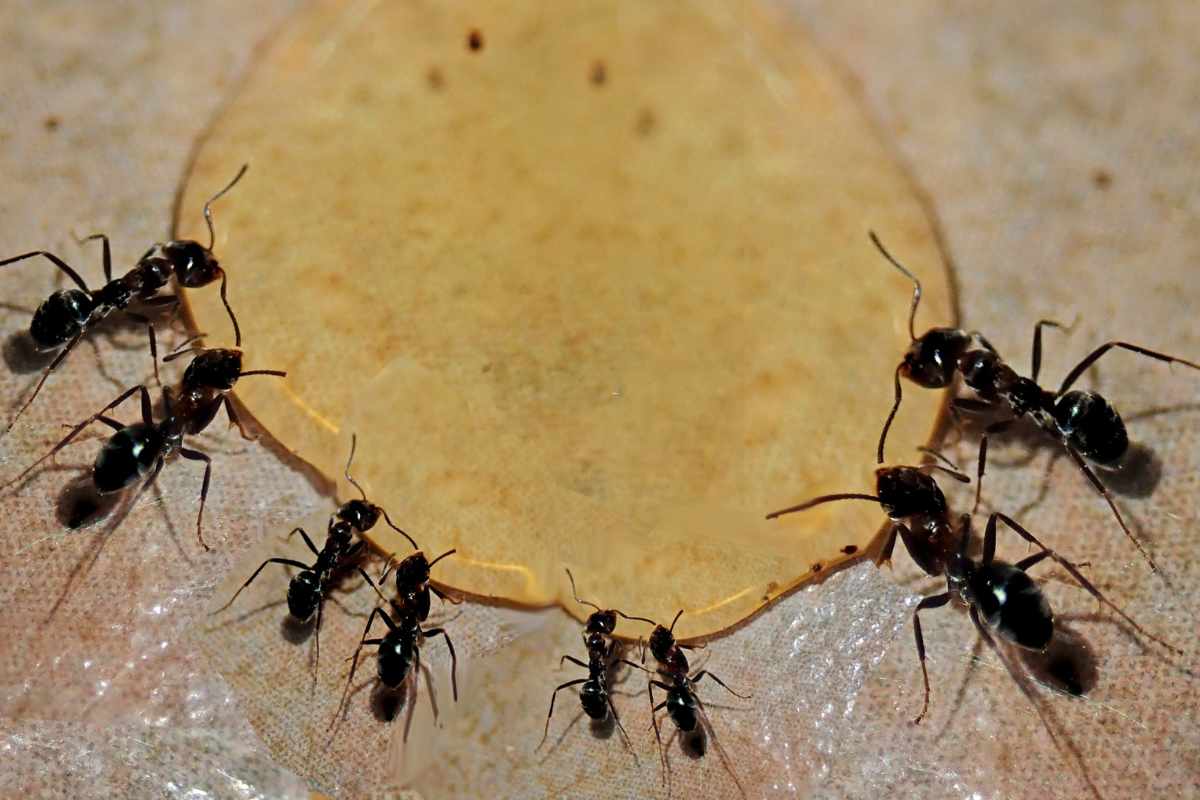
One of the easiest and safest ways to stop ants is by blocking their path.
Use Sticky Barriers
Wrap the tree trunk with a strip of fabric or paper tape, then apply a layer of sticky compound like Tanglefoot. This traps ants trying to climb the trunk.
Pro Tip: Always place the barrier above any low-hanging branches or tall grass, or ants will find a shortcut.
Keep It Clean
Inspect and replace the barrier regularly, especially after rain.
Avoid applying sticky substances directly to the bark — it may damage young or thin-barked trees.
Using a protective layer first (like masking tape or cling film) is safer.
2. Use Natural Ant Deterrents
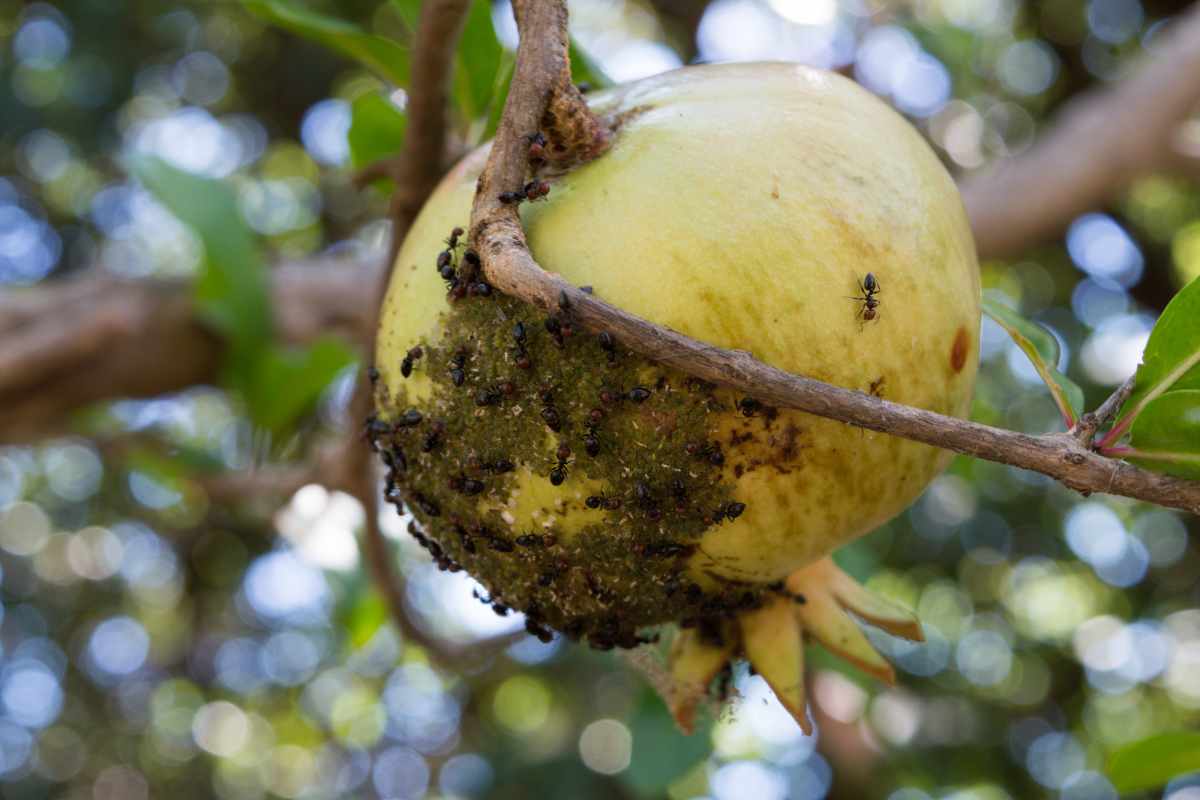
Ants rely on strong scent trails to find their way.
You can confuse and repel them using natural ingredients that are safe for your garden.
Essential Oils
Mix a few drops of peppermint, citrus, or clove oil with water and a little dish soap.
Spray the mixture around the trunk base, branches, and nearby soil. The aroma masks their pheromone trails and drives them away.
Common Kitchen Remedies
Cinnamon powder: Sprinkle a ring around the tree base — ants hate its smell.
Coffee grounds or vinegar: Both disrupt scent trails and can deter ants when used consistently.
Citrus peels: Bury orange or lemon peels around the roots for a mild, eco-friendly deterrent.
Avoid spraying oils or vinegar directly on leaves or flowers to prevent burns or damage.
3. Control Aphids — the Real Reason Ants Stick Around
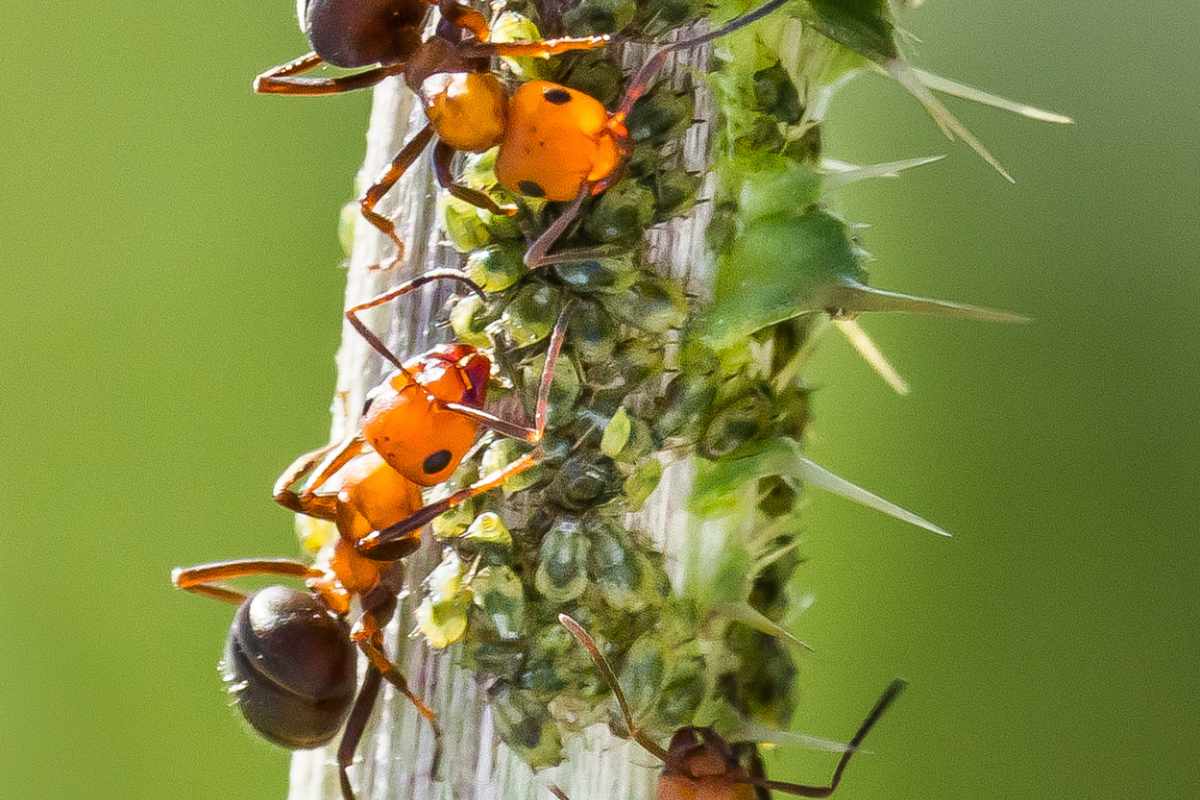
Ants and aphids have a symbiotic relationship: ants protect aphids, and aphids reward them with honeydew.
Breaking this partnership is essential to stop ants for good.
Introduce Beneficial Insects
Ladybugs, lacewings, and hoverflies are natural predators of aphids.
You can attract them by planting dill, fennel, marigolds, or alyssum nearby.
Homemade Aphid Spray
Mix 1 teaspoon of mild liquid soap with 1 liter of water.
Spray it on affected leaves to remove aphids safely. Repeat every few days until they’re gone.
Regular Maintenance
Inspect the undersides of leaves weekly.
If you spot sticky residue or black sooty mold, that’s a sign of aphids — act early before ants move in.
What to Avoid
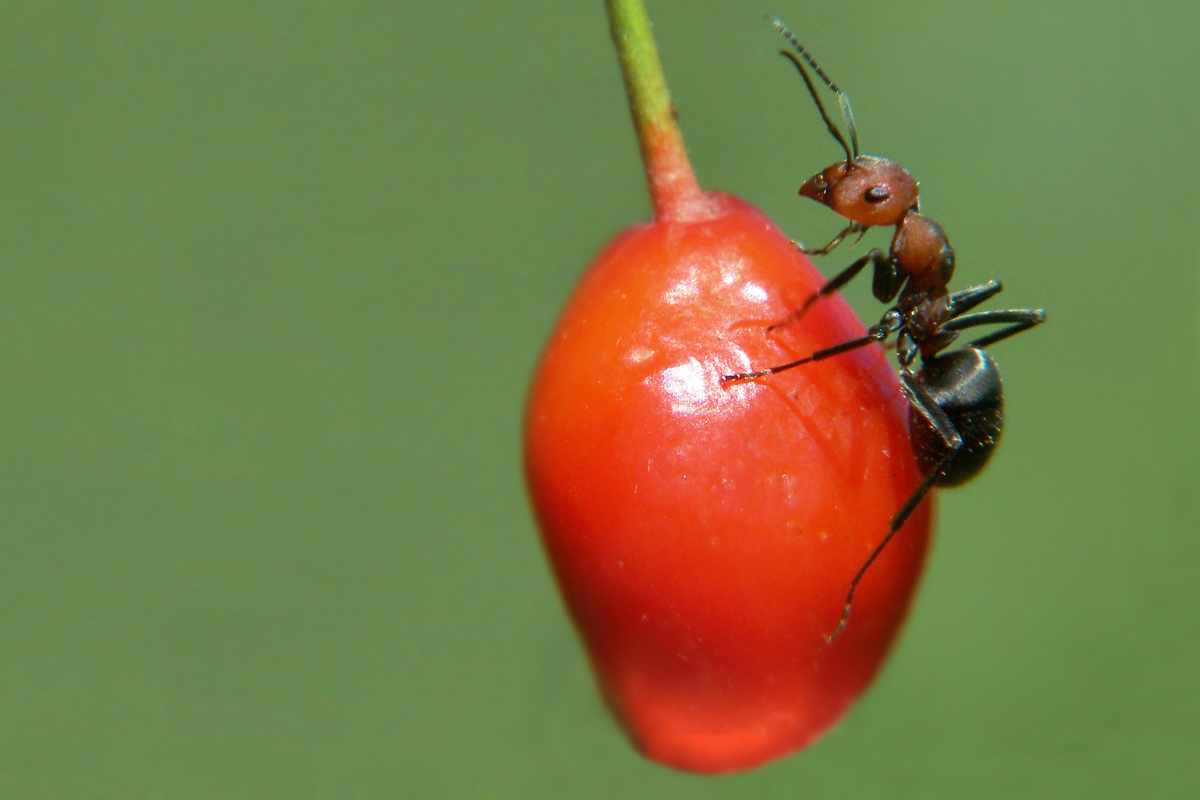
Harsh chemical sprays: They may harm pollinators and beneficial insects.
Neglecting the aphids: Even if you stop ants temporarily, they’ll return unless you address the root cause.
Applying sticky substances directly to bark: Always use a protective layer first.
Keep Ants Off Fruit Trees the Smart Way
Keeping ants off your fruit trees doesn’t require toxic chemicals or expensive products.
With these simple and natural garden tricks, you can protect your harvest while supporting a healthy, eco-friendly backyard.
Stay consistent — regular inspection and maintenance are your best tools against ants and the pests they protect.
Enjoy The Video Tutorial
Source: The Millennial Gardener
Did you find this post Useful or Inspiring? Save THIS PIN to your GARDENING Board on Pinterest! 😊

More Gardening Tips 👇🏼👇🏼