
7 Mediterranean Garden Style Ideas for a Timeless Look


Mediterranean gardens feel effortless—but they’re actually built on a few classic design choices that hold up for decades.
The good news: you don’t need a villa in Italy to get the look. With the right materials, planting style, and color palette, you can create a space that feels warm, relaxed, and intentionally “collected.”
This guide is for anyone who wants a timeless garden that’s beautiful in every season and easier to maintain than a thirsty lawn.
1) Start with a sun-loving, drought-smart layout

Mediterranean-style gardens are designed around heat, light, and dry summers, so the layout prioritizes plants and materials that thrive in those conditions.
- Place the most sun-hungry plants in your brightest spots (especially south- or west-facing areas).
- Group plants with similar water needs to avoid overwatering some and stressing others.
- If you’re replacing lawn, consider gravel, groundcovers, and planted “islands” instead of one big bed.
Tip you can use today: Walk your garden at three times—morning, midday, late afternoon—and note the sun patterns. That quick observation makes plant placement 10x easier.
2) Build the look with warm, natural hardscaping
Hardscape is what makes Mediterranean gardens feel timeless. Think: rustic, sun-baked, and textured—not glossy and new.
Materials that instantly say “Mediterranean”:
- Gravel (light tan, cream, or warm gray)
- Terracotta pots (mix sizes and shapes)
- Natural stone edging or stepping stones
- Brick or clay pavers
- Rendered walls or limewash-style finishes (where appropriate)
If your budget is tight, start small: a gravel seating area or a path lined with stone can change the entire vibe.
3) Choose a Mediterranean color palette that stays classic
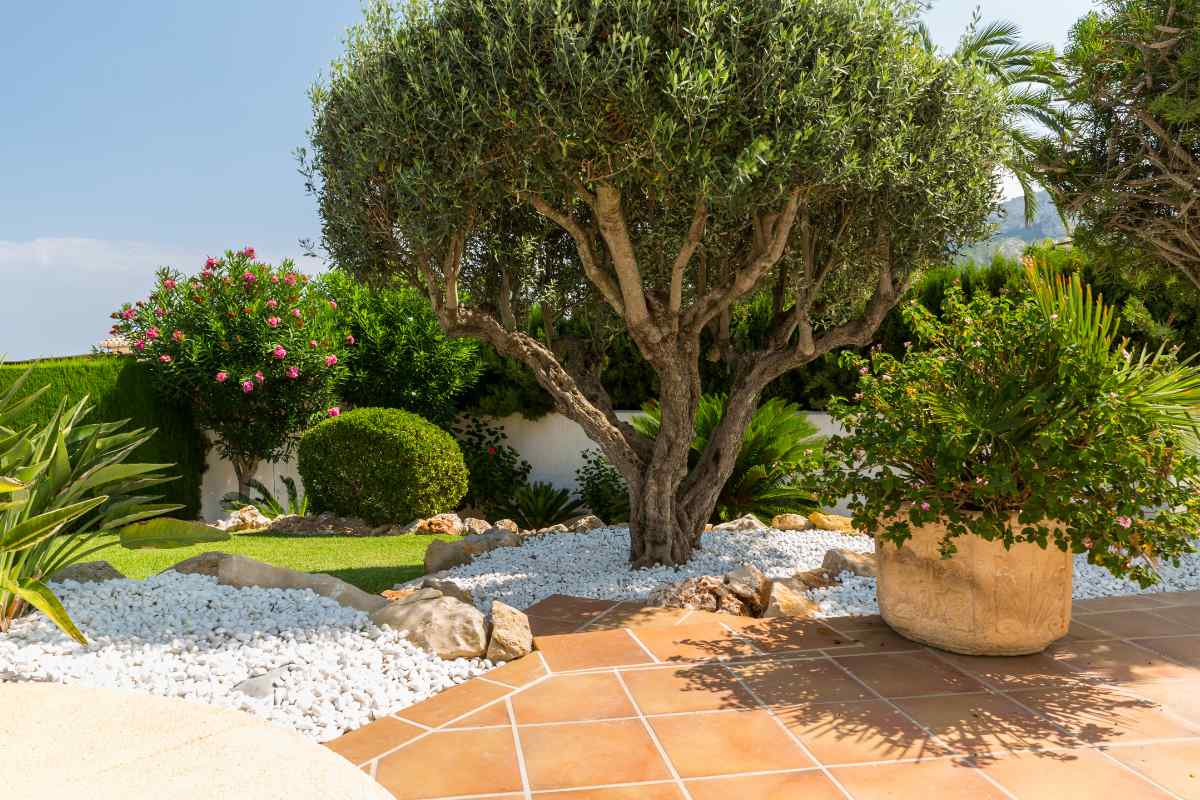
This style works because the colors are simple and repeatable—warm neutrals with a few bold accents.
A timeless palette to copy:
- Base: sand, cream, warm white, stone gray
- Earth accents: terracotta, clay, rust
- Fresh accents: olive green, deep sage
- Pop (sparingly): cobalt/cerulean blue, lemon yellow
Use that pop color in tile, cushions, painted doors/gates, or a few standout pots—not everywhere.
4) Plant in layers: structure first, then softness
Mediterranean gardens don’t rely on endless flowers. They feel mature because they have structure, then fragrance and movement layered on top.
Structural “backbone” plants (choose what suits your climate)
- Evergreen shrubs (boxwood alternatives, rosemary forms, dwarf conifers in cooler zones)
- Small trees for canopy and shade (olive where hardy, bay laurel in pots, citrus in containers, or a hardy substitute)
Softness + fragrance
- Lavender, sage, thyme, oregano (great for edges)
- Salvia, yarrow, gaura, verbena (airy movement)
- Ornamental grasses for a sun-bleached, coastal feel
Design rule: Repeat the same plant at least 3 times in different spots. Repetition is what makes a garden look designed, not random.
5) Add an “outdoor room” moment with shade and seating

Mediterranean gardens are meant to be lived in. Even a small space feels luxurious when you create a simple destination.
Ideas that work in almost any yard:
- A bistro set on gravel with two oversized pots
- A bench tucked into a corner with climbing vines behind it
- A pergola or shade sail for filtered light
- A low wall (or raised bed edge) that doubles as seating
Quick win: Anchor the seating area with a single statement pot (think 18–24 inches / 45–60 cm wide) filled with a structured plant and trailing herbs.
6) Use containers like décor (and mix them on purpose)
Pots are a huge part of Mediterranean style because they add height, texture, and flexibility. They also help if your soil is poor or your winters are cold.
Container styling tips:
- Stick to 1–2 pot materials (terracotta + stone-look is a classic combo).
- Vary height: tall + medium + low in a cluster of three.
- Choose one “hero” plant per pot, then add a simple spiller (like trailing rosemary or thyme).
Container-friendly plant ideas: rosemary, lavender, bay laurel, dwarf citrus, geraniums (Pelargonium), thyme, olive (where suitable).
7) Finish with simple, timeless details

This is where the space starts to feel like a destination.
Mediterranean finishing touches that don’t feel trendy:
- A small fountain or water bowl (even a compact solar option)
- Wall-mounted lantern-style lights (warm bulbs)
- Rustic trellis panels for vines
- Pebble mulch around feature plants
- A narrow border of herbs along a path for scent as you walk by
Less is more: A few well-chosen details feel more timeless than lots of small decorations.
Common Mistakes (and easy fixes)
Even great Mediterranean garden ideas can fall flat if a few key things go wrong. Here are the most common issues—and how to correct them fast.
Mistake 1: Overwatering drought-tolerant plants
Lavender and rosemary hate constantly wet soil.
Fix: Improve drainage with grit/gravel, water deeply but less often, and avoid heavy mulch right at the crown.
Mistake 2: Using too many different materials
Mixing five types of stone/pavers can look busy.
Fix: Pick one main hardscape material and one supporting material, then repeat them.
Mistake 3: Planting without a structure layer
If everything is the same height, the garden can look flat.
Fix: Add one small tree or tall shrub, then fill in with mid-layer plants and low edges.
Mistake 4: Too many colors, not enough repetition
A “rainbow” bed can feel chaotic instead of timeless.
Fix: Limit blooms to 2–3 main colors and repeat the same plants in groups.
A timeless Mediterranean garden isn’t about copying one exact look—it’s about combining warm materials, sun-loving plants, and relaxed living spaces in a way that feels natural.
Start with one change (a gravel corner, a pot cluster, or a simple herb border) and build from there. Little by little, your garden will start to feel calmer, brighter, and more intentional.
— Emily
More Gardening Tips 👇🏼👇🏼