
Planting Ideas for Garden Paths and Walkways


For those embracing permaculture and regenerative gardening, integrating living pathways into your garden is a rewarding step. Unlike traditional concrete or stone paths, using live plants to cover walkways nurtures the soil, supports biodiversity, and enhances the aesthetic and environmental value of your garden.
Beneficial Ground Covers Between Garden Beds
Many gardeners make the mistake of leaving soil bare between beds, leading to moisture loss and degraded soil health. Instead, consider planting beneficial ground covers along your pathways. These living covers protect the soil and can contribute to your garden’s productivity.
One common issue with planting living paths is managing encroachment into your main growing areas. Some gardeners prefer grass as a simple solution, but it does come with maintenance demands. Grass between rows needs regular trimming, and edging may be required to keep it in check. However, options like clover can be highly effective for those seeking a more beneficial ground cover. Clover paths add nitrogen to the soil, creating a resilient pathway that requires minimal upkeep.
A mix of clover, native grasses, and wildflowers can further enrich your pathways. This blend helps limit grass growth, attracts pollinators, and supports a healthier garden ecosystem. Depending on your region and the season, a mix of ground covers can suit both temporary and permanent pathways in food production areas.
Designing for Well-Trodden Paths
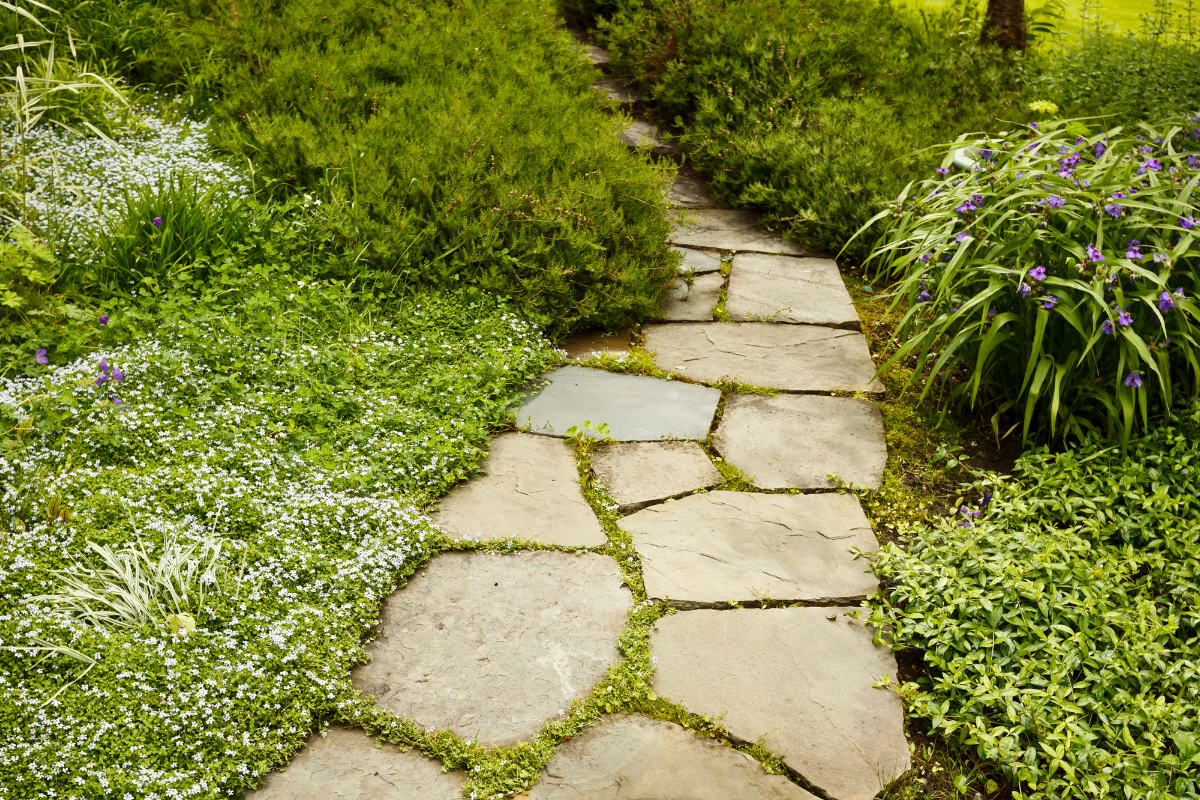
If you have a high-traffic area, creating a pathway that combines paving stones with plant-filled gaps is a great solution. Placing low-growing plants like thyme or alpine varieties between stones offers durability and charm. In sunny areas, thyme thrives and adds a pleasant fragrance, while in shadier spots, mosses or Irish moss can create a lush, green cover that’s easy on the feet.
Living plant paths don't have to be uniform; incorporating wildflowers or native ground covers can add color and interest. For example, in zones 7-11, options like Dichondra work beautifully in sunny areas, while in shaded gravel paths, hardy perennials such as low-growing mints or chamomile can create a durable green cover.
For existing gravel paths, Mediterranean herbs and alpine plants make ideal choices, flourishing in free-draining, rocky soils. This approach transforms pathways into biodiverse corridors, attracting insects and other beneficial wildlife.
Creating Living Paths in Low-Traffic Areas
In sections of the garden with minimal foot traffic, a broader range of plants can be used. Occasional-use paths might not even need paving. Clovers, chamomiles, and other ground covers offer a lush, low-maintenance option for pathways that see less frequent use. These areas can be left to grow freely and only trimmed seasonally, providing a habitat for wildlife and enhancing garden biodiversity.
Living paths that see limited traffic allow for greater plant diversity, which benefits the garden as a whole. Whether you use these paths to access a seasonal vegetable patch or as a decorative addition, they bring vibrancy to the landscape.

Reimagining Pathways as Planting Opportunities
By integrating plants into your pathways, you’re maximizing every inch of your garden. Living paths can act as natural borders, support soil health, and bring life and movement into spaces that might otherwise be bare. With some creativity, even small paths can become lush and green, contributing to a year-round garden that’s brimming with life.
If you think you lack space for more plants, look again. Paths offer exciting new planting possibilities that increase your garden’s beauty, resilience, and ecological value. So next time you’re planning a new walkway or refreshing an old path, consider a living, breathing alternative that will benefit your garden and the environment.
Enjoy The Video Tutorial

Source: Garden Answer
Did you find this post Useful or Inspiring? Save THIS PIN to your GARDENING Board on Pinterest! 😊

Once again, thank you for visiting our website!
We hope you've enjoyed exploring the content we've created for you.
Give yourself the chance to learn, get inspired, and have even more fun, keep browsing...
More Gardening Tips 👇🏼👇🏼