
What To Do About Gypsy Moths

It all started when a Massachusetts businessman imported European gypsy moths in 1869 in the hope of finding an alternative insect for silk production; his effort failed miserably in more ways than one.
Unfortunately, some caterpillars escaped, reproduced and spread. These destructive insects are now found throughout northeast, western Wisconsin, and southern Virginia.
"Gypsy moths can defoliate hundreds of acres and decimate a forest," says entomologist Michael Skvarla, PhD, assistant professor of arthropod identification at Penn State University. "They haven't been a problem for the last 10 or 15 years, but by 2021, we are seeing a significant outbreak."
Population explosions often collapse due to natural predators such as rats or specialized wasps, or two naturally occurring diseases, a virus known as VPN and a fungus. In the meantime, it's definitely not so nice to watch them eat your trees, cover the side of your house, or break up the family picnic.
Also, a large infestation can result in too much caterpillar poop on decks and patios. The good news is that gypsy moth caterpillars do not bite, although if handled, their hair can cause skin irritation and their debris can simply be hosed off.
While it is not possible to eliminate gypsy moths, you can take steps to try to reduce the population and feel a little less anxious that your entire garden is your personal buffet.
Here's what you need to know to help control gypsy moths in your yard.
How do I know if I have a gypsy moth in my backyard?
Fortunately, state and federal programs have reduced the spread over the past 20 years, but they remain a major threat because they have defoliated 75 million acres in the US since 1970.
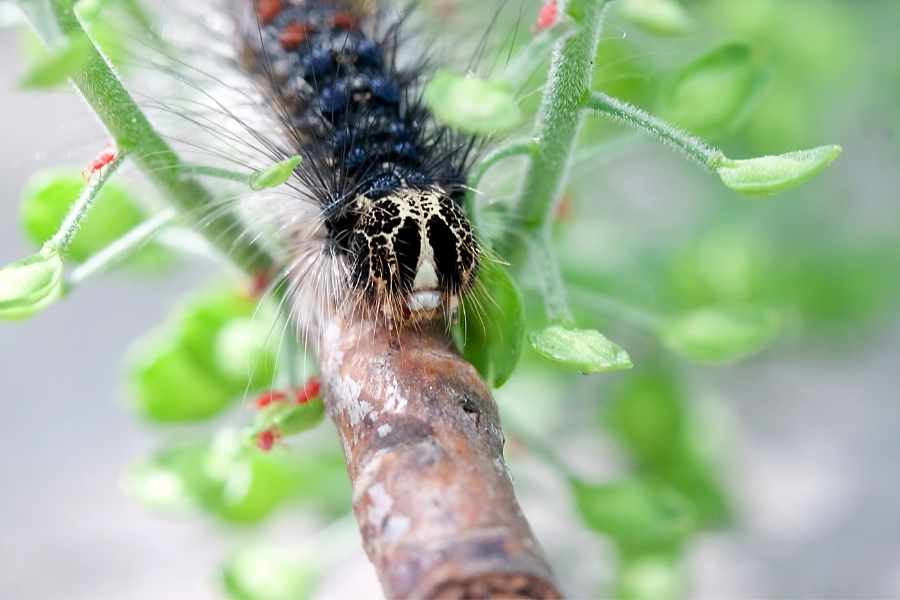
You can see caterpillars, also called larvae, chewing on your trees. and shrubs feed on more than 300 species. Some of their favorites include oak, birch, cedar, and fruit trees, but they even eat conifers if they're hungry enough, Skvarla says.
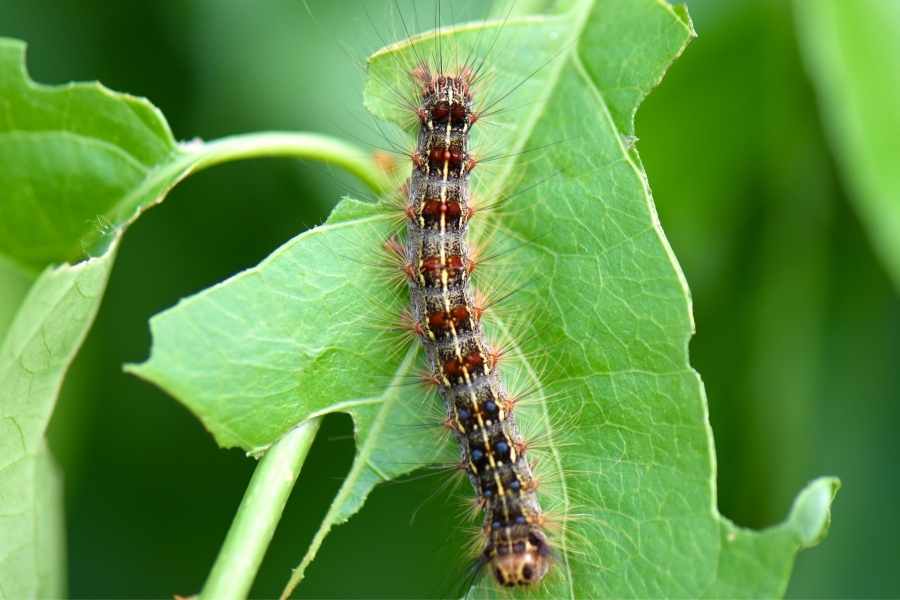
Typically, you will see small ¼ inch to ½ inch long caterpillars hatching in early mid-May; in June they are 1 to 2 centimeters or more long, hairy, with two rows of small bumps on the back.
The first third of the dots are blue, the second 2/3 are red dots. No other caterpillar is like that, says Skvarla.
Will the gypsy moth kill my trees?
It depends. "Most healthy deciduous trees can take 1-3 years to fully defoliate, but if an outbreak continues beyond that, we could see the tree die," says Skvarla.
However, seedlings or new transplants or trees affected by drought may be more vulnerable because they do not have reserved energy reserves or established root systems. Also, conifers do not grow needles again, so they may be at higher risk of dying.
How do I deal with gypsy moth caterpillars?
If you catch them in the baby caterpillar stage when they first hatch in May, you can try spraying them with a natural biological pesticide called Bacillus thuringiensis kurstaki, or BTk.
This is the specific strain that attacks gypsy moths. Unfortunately, since the caterpillars are full-size, this treatment is less effective. Other chemicals are not recommended because they also kill beneficial insects, says Skvarla. If you have a big problem or an expensive tree that worries you, an arborist can help control it.
For adult caterpillars, you can create barrier strips on your trees by wrapping the affected trunks with folded tow; Older caterpillars will find a place to hide during the day so you can remove and destroy them by scraping them in a bucket of soapy water.
For a large number of caterpillars, for example, on your deck or on the side of your house, wash them off with a hose, sweep them up, and soak them in a bucket of soapy water. Or just smash them (effective but confusing).
Go on a mission to find and destroy eggs
In late summer, the moths emerge from their cocoons and mate. Females do not fly, but emit pheromones to attract males. A female then lays hundreds of eggs in a flat, fluffy, two-inch-long egg mass that hatches the following spring.
Egg masses are usually found on tree trunks, but they can also be on any hard object, including campers, boats, and barbecues, so these items should be inspected if you move into an area where gypsy moths haven't yet. have made. infested (check current states here).
In late fall and throughout winter, keep an eye out for these masses.
Enjoy This Video Tutorial About What To Do About Gypsy Moths
Source:Homes for Beginners
Did you find this post Useful or Inspiring? Save THIS PIN to your GARDENING Board on Pinterest! 😊

Once again, thank you for visiting our website!
We hope you've enjoyed exploring the content we've created for you.
Give yourself the chance to learn, get inspired, and have even more fun, keep browsing...
More Gardening Tips 👇🏼👇🏼