
Seed Saving: Easy Tips for Saving Your Garden Favorites

Saving seeds is as old as gardening. There was a time when gardeners considered the seeds of their favorite plants a treasure worth saving year after year. Today, seeds and seedlings are relatively cheap and there are new plants to try every year.
Aside from the political and biotech arguments that are in the news, the main reason to save seeds is that you have a plant that you love and want to grow back.
It could be the perfect bluebell, the tastiest tomato, or a champion squash. You never know when a seed company will stop selling your favorite seed to make way for new varieties. Saving your own seed is the only guarantee.
Here is everything you need to know about saving seeds.
What seeds can be saved?
Self-pollinated, open-pollinated, or heirloom plants are the only varieties that will grow true from seed, meaning the seedlings will look like the parents. These are the seeds that are worth saving.
Seeds that have hybridized will develop into a variety of plants with some characteristics from one or both parents. Many, if not most, of the plants sold now, are hybrids.
Hybridization can create a plant with desirable characteristics and provide some job security for the seed company. Saving seeds is not really an option with hybrids unless you are looking to discover something new. However, you can try to take seedlings.
Also, plants that are pollinated by insects or wind may be cross-pollinated with plants of another variety and, again, will not grow properly. Saving the seeds of these plants requires a little extra care, as explained below.
That being said, there are still many plants that will grow true from seed, and saving and sharing those seeds gave rise to the phenomenon of seed possessors.
Self-pollinated plants are the easiest to maintain and include: beans, chicory, endive, lettuce, pea, tomato. You can also save lots of old flower seeds like chloroma, foxglove, hollyhock, hollyhock, sweet pea, and zinnia.
Saving seeds from cross-pollinating plants
To obtain pure seeds from plants that cross-pollinate with others of your species, you will need to physically separate the different species from each other. This can be done by:
- Plant only a variety of species
- Very remote plant varieties. Different plants require different distances and can be considerable. Peppers require about 150 meters and pumpkin plants 800 meters.
- Varieties of plants bloom at different times.
- Using a physical barrier, such as a string cover or bag. You should cover one variety at a time so that each variety has enough exposure time to be pollinated among its own species.
Methods and time for saving seeds
Always choose the best quality plants, flowers, fruits, and vegetables to store your seeds. Look for disease resistance, vigor, great taste, and productivity. Next year's plants will be as good as this year's seeds. Harvest the seeds:
Method #1: When the seed pods dry on the plant (flowers, beans, broccoli, lettuce ...) keep an eye on the pods when they start to brown.
Most seed pods open and disperse on their own. You can collect the seeds by placing small bags over the seed heads when they appear ready to burst, or by scooping the plant out just before it is completely dry and storing it upside down in a paper bag.
Method #2: When the vegetables are fully ripe (tomatoes, squash, peppers, aubergines ...) The vegetables will have passed the edible stage when the seeds are ready.
For most vegetables, you can simply remove and dry the seeds. Tomatoes require a wet processing method that is explained elsewhere.
Storage of saved seeds
- Make sure the seed is completely dry, or it will rot or get wet during storage.
- Remove as much of the straw as possible.
- Keep it in a paper envelope, labeled with variety and year.
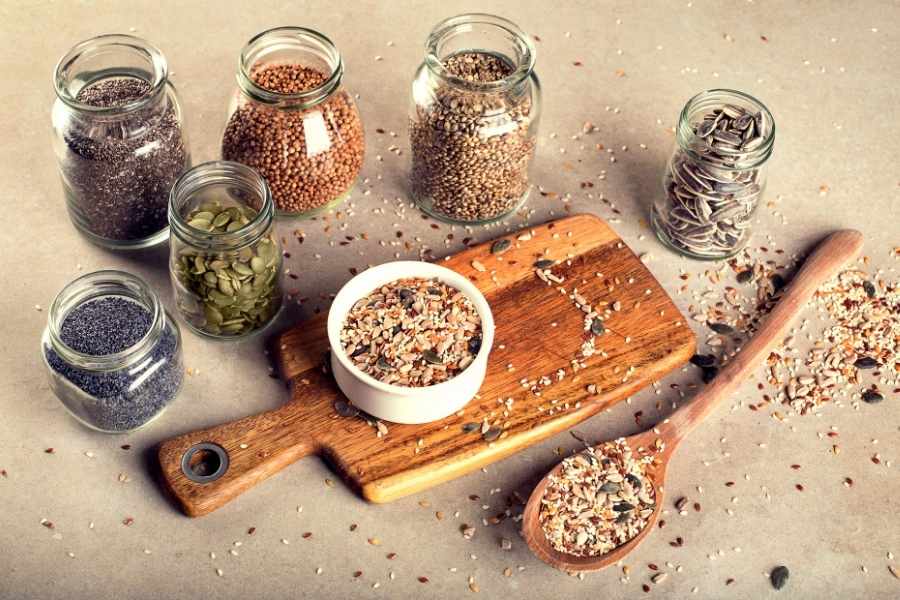
- Place the sachets in an airtight container, such as a mason jar.
- Store in a cool, dark, and dry place.
- The stored seed is best used the following year.
Saving seeds can quickly become a hobby and you'll be in good company. Growing plants from saved seeds from your own garden will, over the years, result in plants uniquely adapted to your garden.
Think about it, seeds are probably the only relic that becomes more valuable with use.
We hope you enjoy this video about how to save seeds of all sorts:
Source: Roots and Refuge Farm
Did you find this post Useful or Inspiring? Save THIS PIN to your GARDENING Board on Pinterest! 

Once again, thank you for visiting our website!
We hope you've enjoyed exploring the content we've created for you.
Give yourself the chance to learn, get inspired, and have even more fun, keep browsing...
More Gardening Tips 👇🏼👇🏼