
Planting Roses in Pots or Containers


Growing roses in pots or containers is a rewarding way to enjoy their timeless beauty, even if you don’t have a large garden.
From balconies and patios to entryways and terraces, container roses can thrive with the right setup and care.
In this guide, we’ll explore everything you need to know — from choosing the perfect pot to seasonal maintenance.
Why Grow Roses in Containers?
Planting roses in pots comes with clear advantages:
Flexibility: Move your roses to follow sunlight or shelter them from extreme weather.
Space-saving: Ideal for patios, balconies, and small gardens.
Control over soil: Perfect if your garden soil is heavy clay or sandy.
Design versatility: Add elegance to outdoor spaces without permanent planting.

How to Choose the Right Pot Size and Material
The pot is the foundation of your rose’s health.
Size:
Patio or miniature roses: pots 23–35 cm (9–14 in) deep.
Compact shrubs or small climbers: 30–45 cm (12–18 in).
Vigorous English or shrub roses: ≥45 × 45 cm (18 × 18 in) or around 60 L (15 gal).
Material:
Terracotta: classic look, but dries quickly.
Plastic or resin: lightweight, retains moisture longer.
Wooden planters: attractive if rot-resistant.
Drainage: Essential. Use multiple holes at the base, cover them with mesh, and elevate the pot slightly with pot feet.
💡 Avoid the common myth of adding gravel at the bottom — it actually hinders drainage. Stick to a uniform soil mix.

Best Soil Mix for Container Roses
Roses thrive in a nutrient-rich, well-draining medium with a pH between 6.0 and 6.5. A reliable mix is:
50–60% premium potting soil
20–30% compost or well-rotted manure
10–20% perlite or fine bark for aeration
Top with 3–5 cm (1–2 in) of mulch to retain moisture and regulate temperature.
Planting Roses Step by Step
Prepare the pot: Ensure drainage holes are clear and cover with mesh.
Add soil: Fill the pot halfway with your mix.
Position the rose:
In mild climates, place the graft union at soil level.
In colder climates, plant it 2–5 cm (1–2 in) below soil level to protect it.
Fill and settle: Add more soil around the roots, pressing gently without compacting.
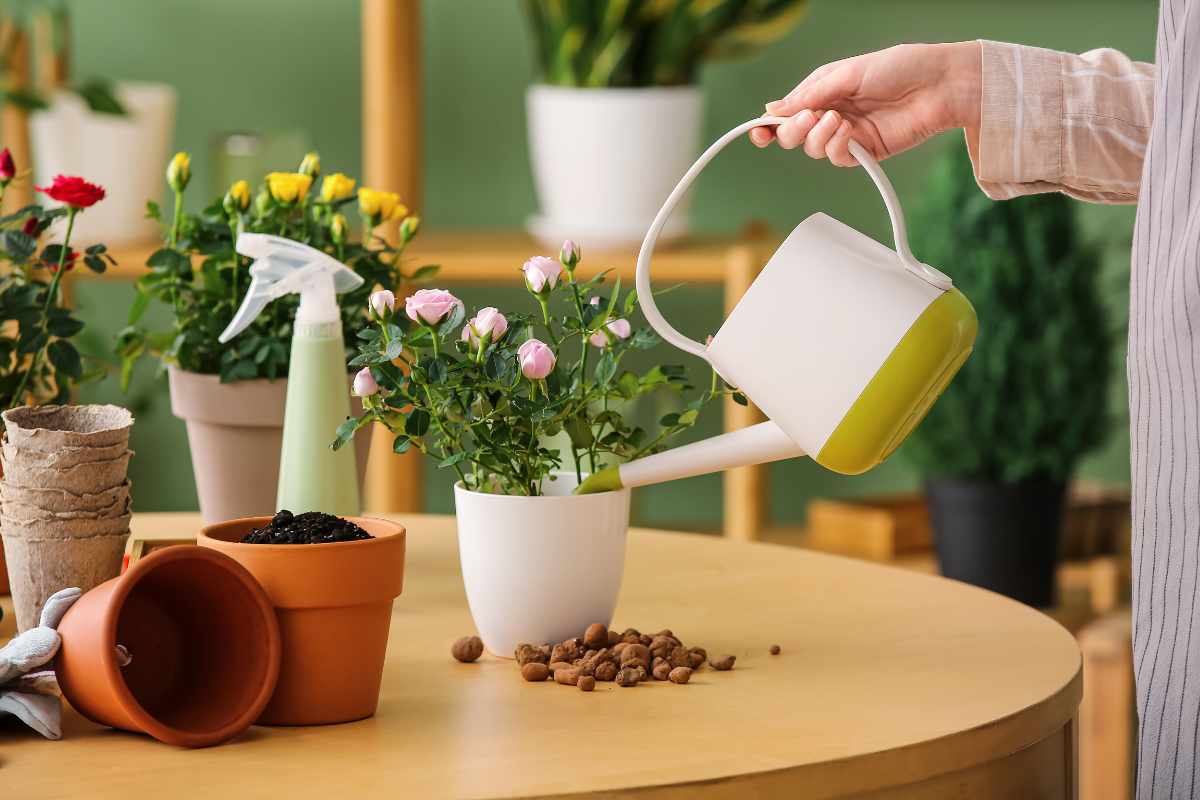
Water thoroughly until excess water drains from the bottom.
Mulch: Apply a protective layer to conserve moisture.

Caring for Roses in Pots
Sunlight
Place in a spot with 6–8 hours of direct sun daily. Afternoon shade is helpful in very hot regions.
Watering
Container roses dry out quickly. Water deeply whenever the top 2–3 cm (1 in) feels dry. In summer, this may be daily. Avoid letting water stagnate in saucers.
Fertilizing
Apply a slow-release rose fertilizer in spring.
Supplement with a liquid feed every 3–4 weeks during the growing season.
Stop fertilizing about 6 weeks before the first frost to prepare the plant for dormancy.
Pruning and Deadheading
Deadhead regularly to encourage repeat blooms.
In early spring, prune to shape and remove weak or damaged stems.
Winter Protection
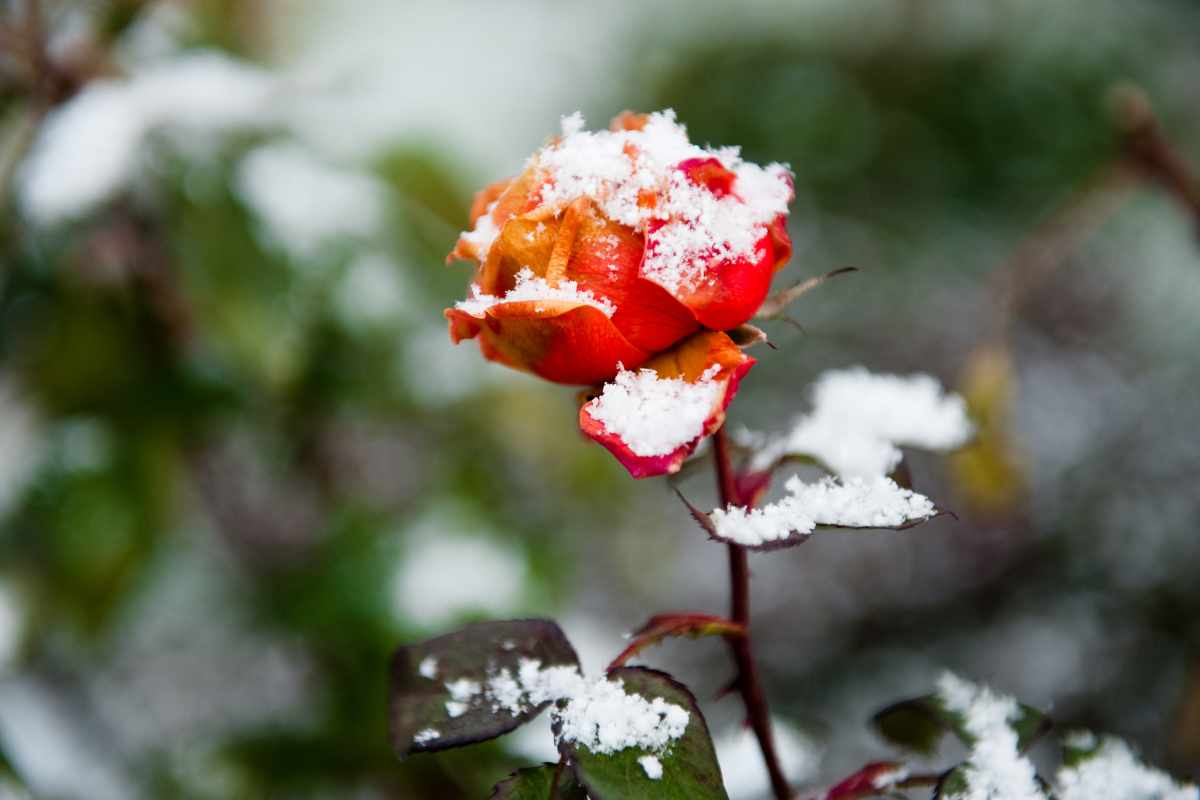
In cold regions:
Wrap pots in burlap or bubble wrap.
Move containers to a sheltered spot (garage, shed, or against a wall).
Keep soil slightly moist, not bone dry.
Recommended Roses for Pots
Not all roses perform equally in containers. Compact and disease-resistant varieties are best.
Some reliable choices include:
| Variety/Series | Growth Habit | Height | Notes |
|---|---|---|---|
| Drift® Roses | Compact shrub | 30–60 cm | Continuous blooms, low maintenance |
| Flower Carpet® | Groundcover | 60–80 cm | Hardy, profuse flowering |
| Sunblaze® | Miniature | 25–40 cm | Great for patios and small pots |
| Easy Elegance® | Shrub | 90–120 cm | Disease-resistant, repeat blooming |
| Oso Easy® | Compact shrub | 60–90 cm | Very low care, colorful blooms |
Common Problems and Solutions
Yellow leaves → Overwatering or nutrient deficiency. Adjust watering and fertilize.
Powdery mildew → Improve air circulation, water at the base, use fungicide if necessary.
Aphids → Spray with water or apply insecticidal soap.
Black spot → Remove infected leaves, improve air flow, use preventive sprays.

Annual Care Calendar
Spring: Refresh topsoil or repot; apply slow-release fertilizer; prune for shape.
Summer: Water frequently, feed every 3–4 weeks, deadhead spent blooms.
Late Summer/Early Fall: Stop fertilizing 6 weeks before frost; reduce watering.
Winter: Protect pots and roots; water lightly during dormancy.
With the right pot, soil mix, and seasonal care, roses in containers can bloom beautifully for years.
Whether you choose compact miniatures or fragrant shrub varieties, this method offers flexibility and elegance for gardeners of all levels.
Enjoy the Video Tutorial

Source: Fraser Valley Rose Farm
Did you find this post useful or inspiring? Save THIS PIN to your Gardening Board on Pinterest!😊

Once again, thank you for visiting our website!
We hope you've enjoyed exploring the content we've created for you.
Give yourself the chance to learn, get inspired, and have even more fun, keep browsing...
More Gardening Tips 👇🏼👇🏼