
Gardenia: Plant Care & Growing Guide

Hello, how are you today? Welcome to our blog About Gardening. We hope you are very well and looking forward to a new post or Gardening Tutorial.
Today we want to share with you a special post:
How to Grow Beautiful Gardenias
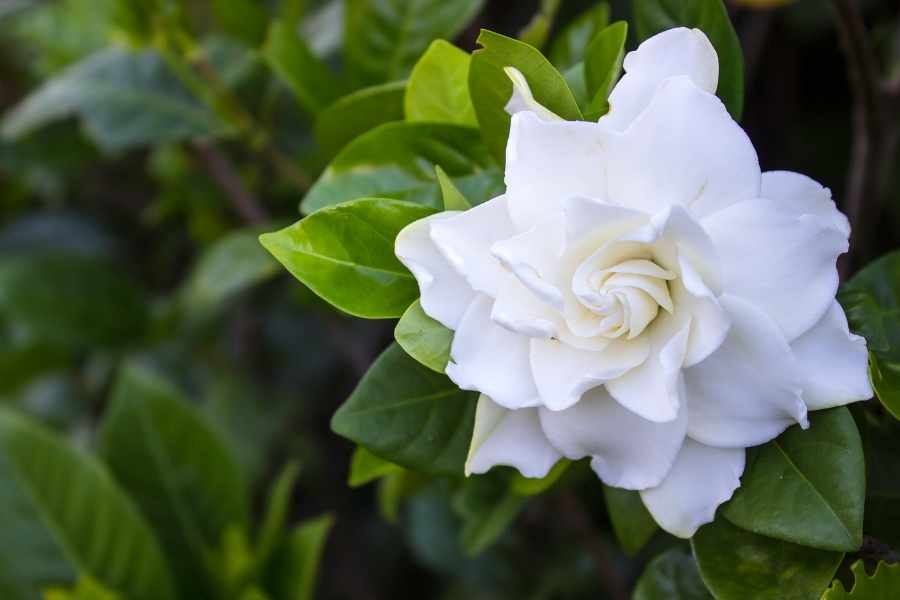
Gardenias (Gardenia jasminoides) are large-leaved tropical perennials that are generally grown as large specimens in indoor pots because of their spectacular fragrant white flowers.
Gardenia is a beloved plant for a very simple reason: few natural scents are so remarkable, evocative, and memorable.
But the truth is, without the allure of the spectacular scent, few gardeners would attempt to grow high-maintenance gardenias, which are vulnerable to many insects and diseases.
They are most commonly found in greenhouses. However, even a few months with gardenia blooming indoors is worth adding to your collection.
In suitable climates, gardenias can be planted in the garden in spring or fall.
They are usually planted from mature specimens in pots that will bloom immediately. If you decide to try growing gardenias from seed, allow two to three years for them to bloom.
| Botanical Name | Gardenia jasminoides |
| Common Name | Gardenia, cape jasmine |
| Plant Type | Flowering broadleaf evergreen |
| Mature Size | 5–6 feet tall, similar spread |
| Sun Exposure | Part shade |
| Soil Type | Rich, well-drained soil; peat-based potting mix for container plants |
| Soil pH | 5.0 to 6.5 (acidic) |
| Bloom Time | Seasonal bloomer |
| Flower Color | White, cream |
| Hardiness Zones | 8 to 11 (USDA); often grown as a houseplant |
| Native Area | China, Japan, Taiwan |
| Toxicity | Non-toxic to humans; mildly toxic to animals |
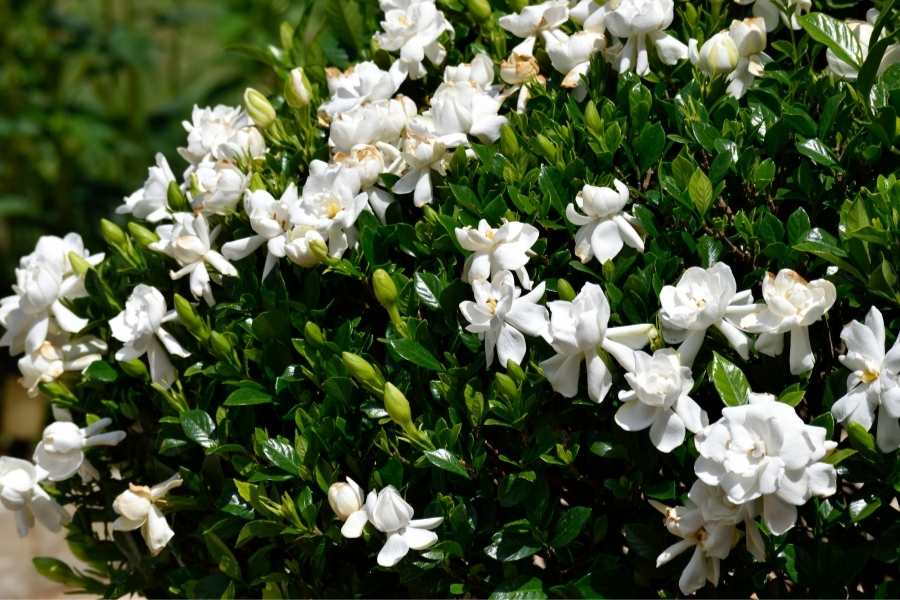
Gardenia Care
Gardenias grow only in USDA zones 8 through 11, along the southern and Pacific coast.
If you live in colder climates, you can take your gardenia plant outdoors during the spring and summer, after the temperature rises above 60 degrees Fahrenheit.
But be careful to bring it indoors every night when the temperature drops below that low and as soon as fall sets in.
When planted in the garden, gardenias prefer rich, acidic soils that drain well. Repairing the planting area with a lot of organic matter is a good idea.
Place gardenias in light to medium shade, where they won't face competition from tree roots.
The soil should be regularly covered with a thick layer of mulch to control weeds, as these plants do not care about cultivation.
A well-cared-for gardenia will be compact with deep green leaves and will bloom from early spring through summer, depending on location, when night temperatures exceed 60 degrees Fahrenheit and day temperatures between 75 and 82 degrees.
When you grow them indoors, it means that you should keep them in a relatively warm environment throughout the day.
Light
Indoors, give gardenias bright light, but avoid direct sunlight, especially during the summer. Outside they prefer a partially shaded spot.
Soil
Gardenias are acid-loving plants, so they prefer soils with a slightly lower pH. Normal peat-based potting mixes meet these criteria.
When planting outdoors, it is best to test the soil pH and correct it if necessary to create ideal conditions for the plant.
A teaspoon of agricultural sulfur mixed in the planting pit can help lower the soil pH.
Water
Keep the soil constantly moist, but reduce watering in the winter.
Drip irrigation is a good method, as it keeps water away from the leaves, which can cause fungal spots on the leaves.
Temperature and humidity
Gardenias require temperatures above 60 degrees Fahrenheit. Avoid cold drafts if the temperature drops. These plants prefer a high level of humidity, above 60 percent.
In climates with cold, dry winter air, indoor plants may require the use of a humidifier or constant mist to maintain adequate humidity.
Fertilizer
For garden plants in warm regions, feed-in mid-March with an acidic fertilizer and then again in late June. Do not feed the gardenias in the fall.
For potted plants, give an acidified fertilizer every three weeks; the type used for azaleas or camellias is a good choice.
Is Gardenia Toxic?
Gardenias have no known toxicity to humans, but pets can show symptoms if parts of the plant are ingested. These plants contain genocides and gardenósidos, substances to which many animals are sensitive.
Symptoms of Poisoning
In dogs, cats, and horses, ingesting gardenia has been shown to cause mild vomiting, diarrhea, or hives.
Gardenia Varieties
This plant has been widely cultivated, so there are many cultivars available. In warmer climates, where the gardenia is grown outdoors, many plants are grafted into a Gardenia thunbergia stock.
Grafted plants tend to be more vigorous, with bigger and better flowers, but they are also less cold-tolerant than the species.
These are some of the recommended cultivars:
- Gardenia jasminoides 'Aimee' is a large shrub (up to 6 feet) with huge 4- to 5-inch white flowers.
- G. jasminoides 'Fortuniana' is another large shrub, known to be one of the most free-blooming. It produces 4-inch blooms from mid-spring through mid-summer.
- G. jasminoides 'Buttons' is a dwarf variety, growing 24 to 30 inches tall with 2-inch flowers.
- G. jasminoides 'Crown Jewel' is another dwarf variety, growing to 3 feet with 3-inch flowers. It is known to be hardy as far north as zone 6.
Pruning
Prune gardenias after the plants have stopped blooming, removing loose branches and spent flowers.
Potting and Repotting Gardenia
When planting in containers, plant gardenias in a good quality peat-based soil mix. It's a good idea to re-plant your gardenia in the spring or every other spring as needed.
If you seem to be stuck with marijuana or are not as healthy as you used to be, but you don't find any bugs or diseases, this is usually a good sign that it needs to be replanted.
Use low-pH soil formulated for rhododendrons or gardenias.
Propagating Gardenia
Gardenias are best propagated by rooted cuttings. In early spring, make a 3- to 4-inch cut from the tip of the stem, making the cut just below the leaf node.
Dip the cut end of the stem in the rooting hormone and plant it in a mixture of potting soil and perlite.
Keep moist until good roots form, then transplant into 3-inch pots to continue growing.
Gardenias can be propagated by seeds, but it is a long process that can take two to three years to produce flowering plants.
The seeds collected from the walnuts should be cleaned and then dried for three to four weeks.
Plant the seeds in a mixture of perlite and peat moss, just covering them with about 1/8 inch of potting soil. Keep the seeds moist and out of sunlight until they sprout, about four to six weeks.
When the seedlings are several inches tall, transplant soil-filled pots to peat-based pots and continue to grow in a well-lit area.
Common Pests/ Diseases
In addition to low temperatures and inconsistent watering, which cause shoots and leaves to drop, the most common problems are insects, mainly mealybugs, aphids, mites, mealybugs, and whiteflies.
A variety of vegetable oils and soaps can treat them but be prepared for your plants to deal with frequent infestations.
Gardenias are also vulnerable to powdery mildew, leaf spot, death, anthracnose, and powdery mildew, some of which can be treated with fungicides.
In many cases, the affected plants will need to be removed and destroyed.
This is a plant best suited for a gardener who likes the challenge of a whimsical plant that offers the reward of heavenly flowers.
Enjoy This Video Tutorial About Gardenia Plant Care
Source: Plantalogy
Did you find this post Useful or Inspiring? Save THIS PIN to your GARDENING Board on Pinterest! 😊

Once again, thank you for visiting our website!
We hope you've enjoyed exploring the content we've created for you.
Give yourself the chance to learn, get inspired, and have even more fun, keep browsing...
More Gardening Tips 👇🏼👇🏼