
Everything You Need to Know About The Dieffenbachia Plant


The Dieffenbachia, also known as dumb cane, is a striking tropical plant famous for its large, variegated leaves and easy-going nature.
It’s a favorite among indoor gardeners because it thrives in low to medium light and instantly brings a lush, tropical vibe to any room.
Whether you’re new to plant care or a seasoned collector, learning how to care for this beauty will help it stay healthy, vibrant, and long-lived.
Understanding the Dieffenbachia Plant
Native to Central and South America, Dieffenbachia belongs to the Araceae family and includes several varieties known for their beautiful leaf patterns in shades of green, white, and yellow.
It’s a fast-growing houseplant that can reach up to 5 feet tall indoors, depending on the species and growing conditions.
However, it’s important to note that Dieffenbachia is toxic if ingested, so it should be kept out of reach of children and pets.
Light Requirements

Ideal Lighting Conditions
Dieffenbachia thrives in bright, indirect light, but it can also adapt to low-light environments.
Too much direct sunlight can scorch its leaves, while too little light may cause leggy growth and faded colors.
If your plant starts stretching toward the light, try rotating it every few weeks to ensure even growth.
Placement Tips
Near a north- or east-facing window is perfect.
Avoid placing it directly under harsh sunlight.
Use sheer curtains to filter light if needed.
Watering the Dieffenbachia

How Often to Water
Water your Dieffenbachia when the top 1–2 inches of soil feel dry. These plants prefer slightly moist soil but don’t like sitting in water.
Overwatering can lead to root rot, one of the most common problems for this plant.
Best Watering Practices
Always use pots with drainage holes.
Water thoroughly until water drains from the bottom.
Empty the saucer after watering to avoid soggy roots.
In winter, reduce watering since the plant’s growth slows down and the soil takes longer to dry.
Temperature and Humidity
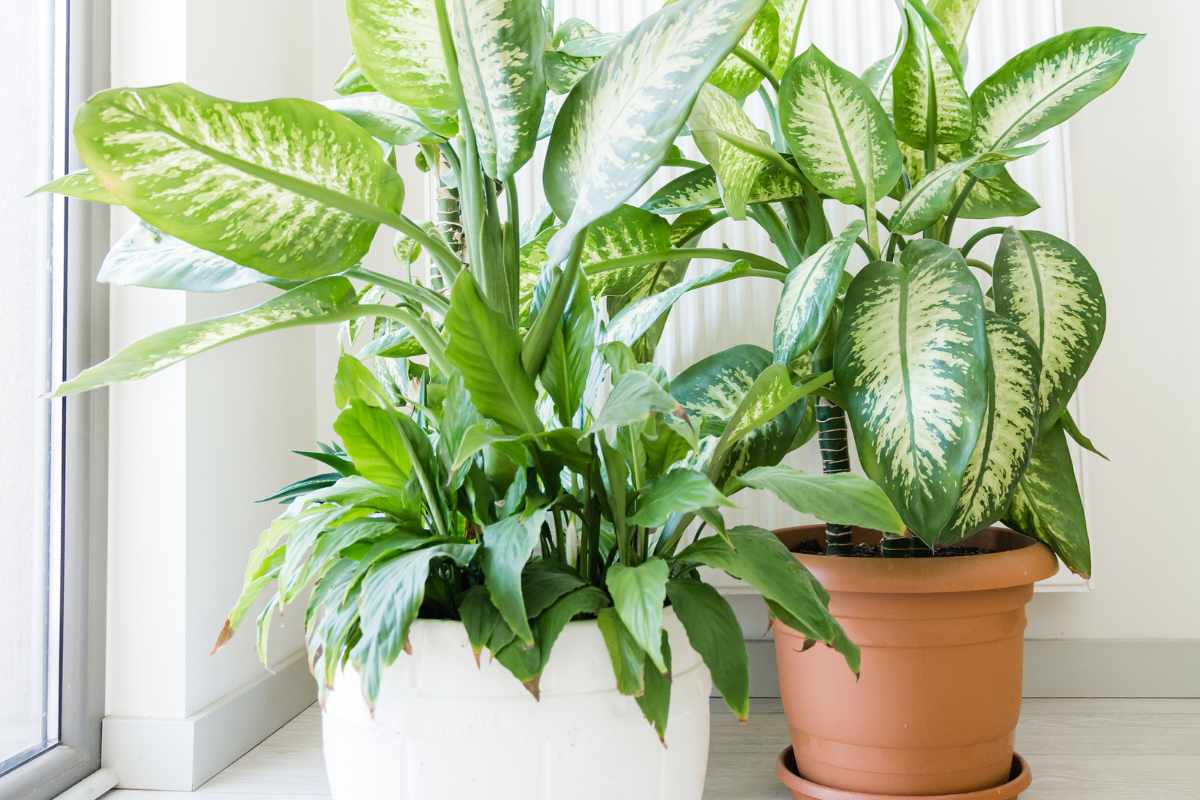
Dieffenbachia loves warm, humid environments, similar to its tropical origins.
Ideal temperature: Between 65°F and 80°F (18°C–27°C)
Avoid: Temperatures below 60°F (15°C) and sudden cold drafts
To maintain humidity:
Mist the leaves regularly
Place the pot on a tray with pebbles and water
Use a humidifier if your indoor air is dry
Fertilizing Your Dieffenbachia
Feed your Dieffenbachia every 4–6 weeks during spring and summer using a balanced liquid houseplant fertilizer diluted to half strength.
Avoid fertilizing in winter when the plant is dormant.
Fertilizing helps maintain leaf color and encourages new growth, especially during the active growing season.
Repotting and Pruning
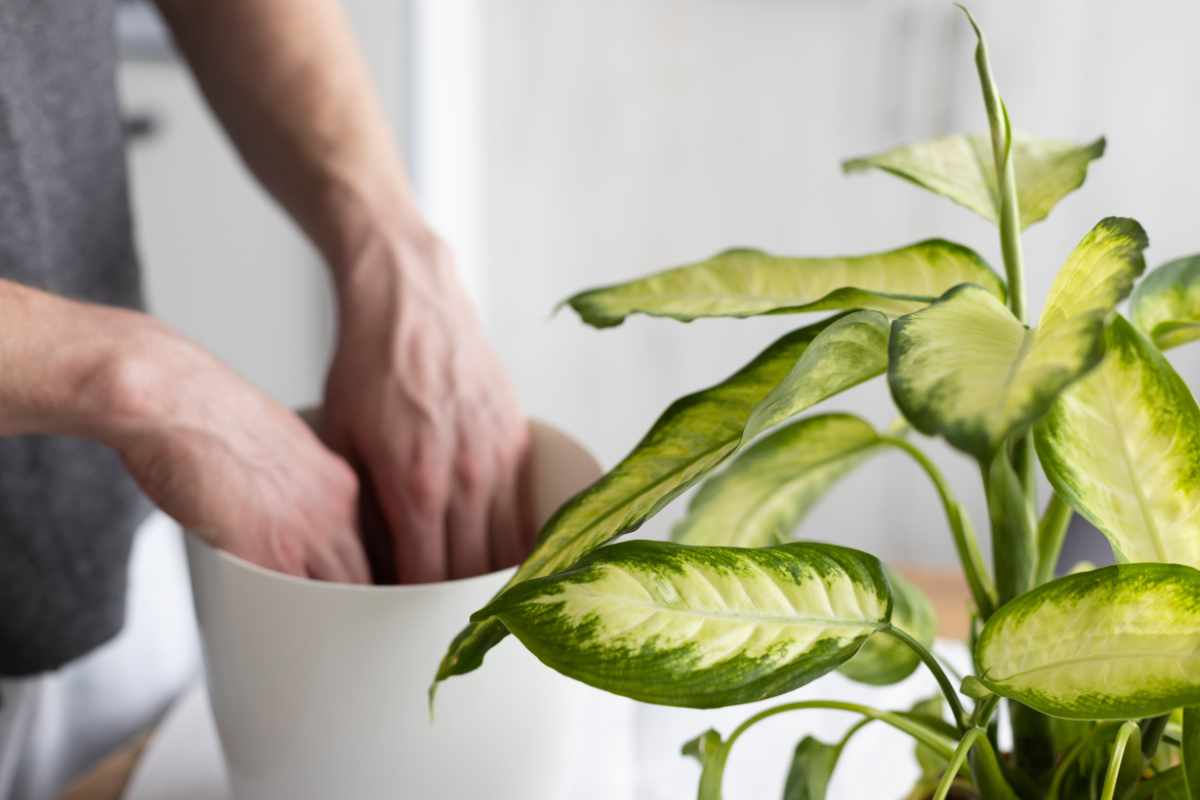
When to Repot
Repot your Dieffenbachia every 1–2 years or when you notice roots growing out of the drainage holes.
Choose a pot one size larger and use a well-draining potting mix (a blend of peat, perlite, and pine bark works well).
Pruning Tips
Prune yellow or damaged leaves to keep the plant looking tidy.
If your Dieffenbachia becomes too tall or leggy, trim the stem above a leaf node — new shoots will grow from the cut point.
Wear gloves when pruning, as the sap can irritate the skin.
Common Problems and How to Fix Them
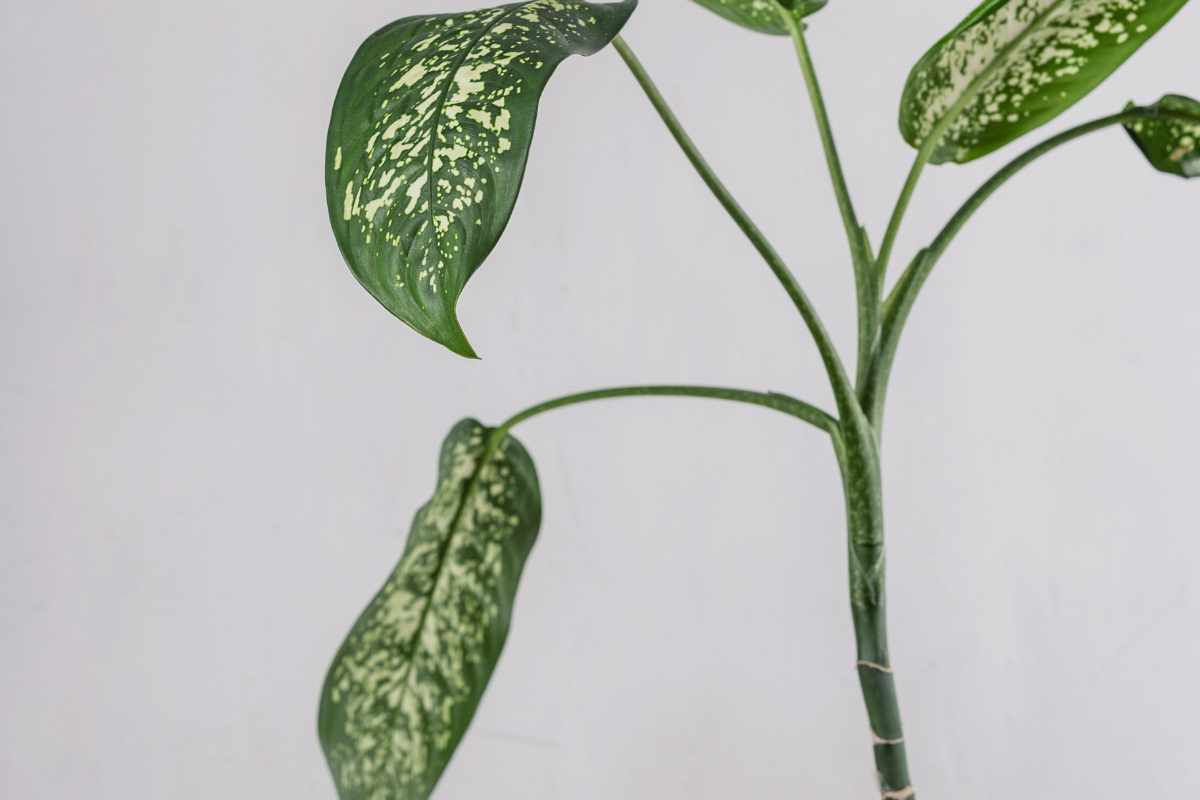
Yellow Leaves
This usually indicates overwatering or poor drainage. Let the soil dry before watering again and check for root rot.
Brown Leaf Tips
Low humidity or underwatering can cause brown edges. Increase humidity or mist the leaves regularly.
Drooping Leaves
It can result from sudden temperature changes or too much direct sunlight. Move the plant to a stable, bright, indirect light location.
Pests
Keep an eye out for spider mites, aphids, or mealybugs. If found, wipe the leaves with a damp cloth and treat with insecticidal soap or neem oil.
Toxicity Warning

All parts of the Dieffenbachia plant contain calcium oxalate crystals, which can cause irritation or swelling if chewed or ingested.
Keep it away from pets and children, and wash your hands after handling the plant.
Propagation Tips

You can easily propagate Dieffenbachia through stem cuttings:
Cut a healthy stem below a node.
Place it in water or moist soil until roots form.
Once rooted, transfer it to a small pot with fresh potting mix.
Propagation works best during spring or summer when the plant is actively growing.
Final Care Summary
To keep your Dieffenbachia happy and thriving:
Provide bright, indirect light
Water moderately and ensure good drainage
Maintain warm temperatures and humidity
Fertilize monthly in the growing season
Keep it out of reach of pets and children
Enjoy This Video Tutorial
Source: Blossom – Plant Care & Growing App
Don’t forget to Subscribe to our Newsletter to receive amazing tips and tricks about Gardening and the FREE Ebook Green Living Strategies!
Did you find this post Useful or Inspiring? Save THIS PIN to your GARDENING Board on Pinterest! 😊

Once again, thank you for visiting our website!
We hope you've enjoyed exploring the content we've created for you.
Give yourself the chance to learn, get inspired, and have even more fun, keep browsing...
More Gardening Tips 👇🏼👇🏼