
How to Care for Your Rattlesnake Plant


The Rattlesnake Plant (Calathea lancifolia) is one of the most striking houseplants you can grow indoors.
Its wavy, patterned leaves in shades of green and purple resemble the skin of a rattlesnake—earning it its common name.
Native to the tropical forests of Brazil, this plant brings a lush, exotic touch to any room.
However, keeping it healthy requires understanding its specific needs for light, humidity, and water.
If you’ve ever struggled with droopy or crispy leaves, don’t worry—this guide covers everything you need to know to help your Rattlesnake Plant thrive.
Understanding the Rattlesnake Plant
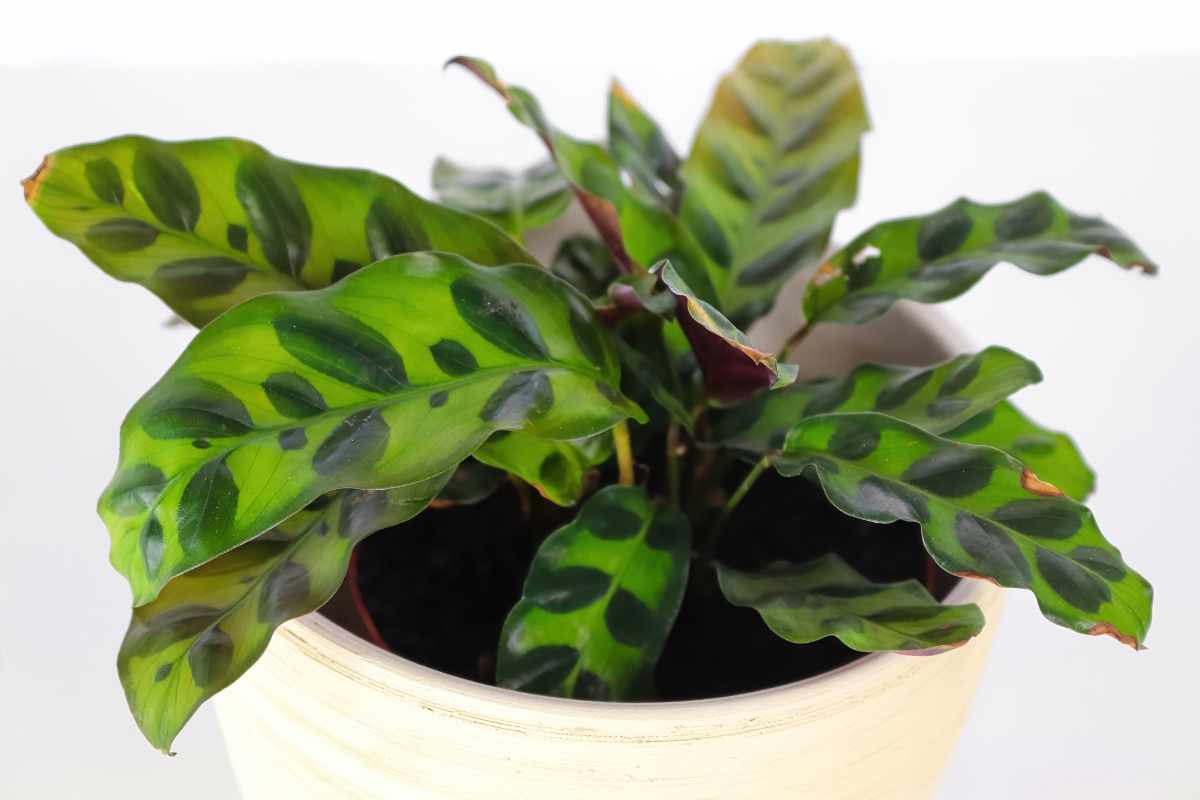
Scientific name: Calathea lancifolia
Common name: Rattlesnake Plant
Native to: Brazil (tropical rainforests)
Type: Perennial evergreen houseplant
Toxicity: Non-toxic to pets and humans
The Rattlesnake Plant is part of the Marantaceae family, often called “prayer plants” because their leaves fold up at night and reopen in the morning.
This movement, combined with its vibrant foliage, makes it a dynamic and captivating addition to your home.
Light Requirements
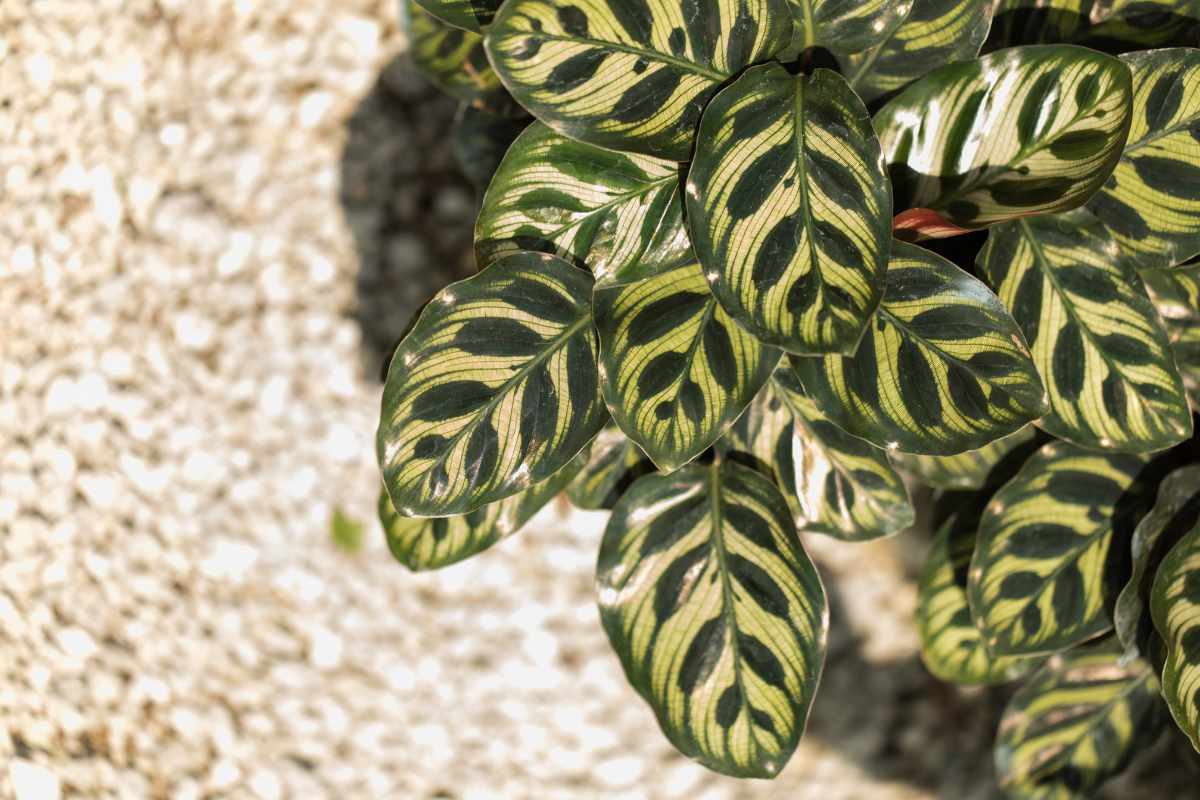
This plant thrives in bright, indirect light.
Direct sunlight can burn or fade its beautiful patterns, while too little light may cause dull leaves and slow growth.
Ideal lighting tips:
Place near an east- or north-facing window with filtered sunlight.
Avoid harsh midday sun; use sheer curtains if needed.
Artificial grow lights can help in darker rooms.
If the plant’s leaves start to lose color or curl, it may be getting too much light—or not enough humidity.
How to Water
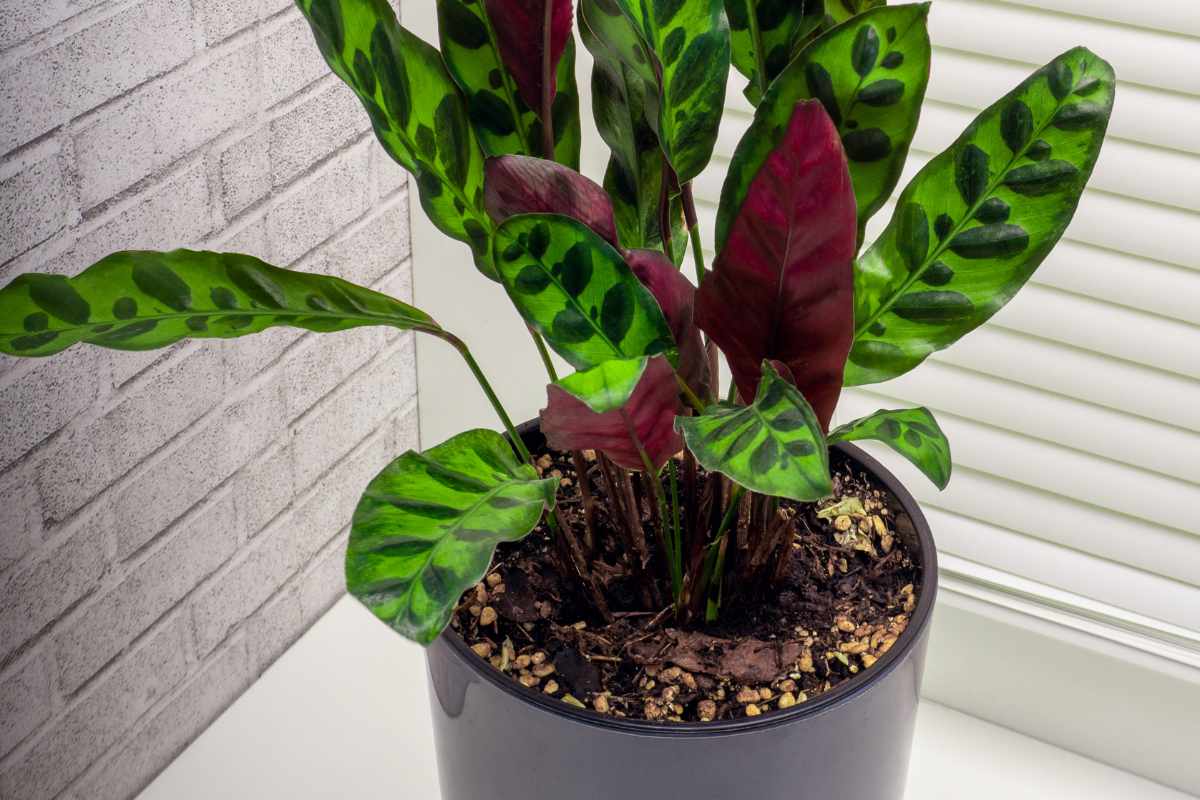
Consistent moisture is key, but soggy soil is a recipe for root rot.
Aim to keep the soil lightly moist, not soaked.
Watering guidelines:
Water when the top 1 inch (2.5 cm) of soil feels dry.
Use filtered, rain, or distilled water—tap water with chlorine or fluoride can damage the leaves.
Empty saucers after watering to prevent standing water.
Pro tip: Let tap water sit for 24 hours before use to allow chemicals to evaporate.
The Right Humidity and Temperature
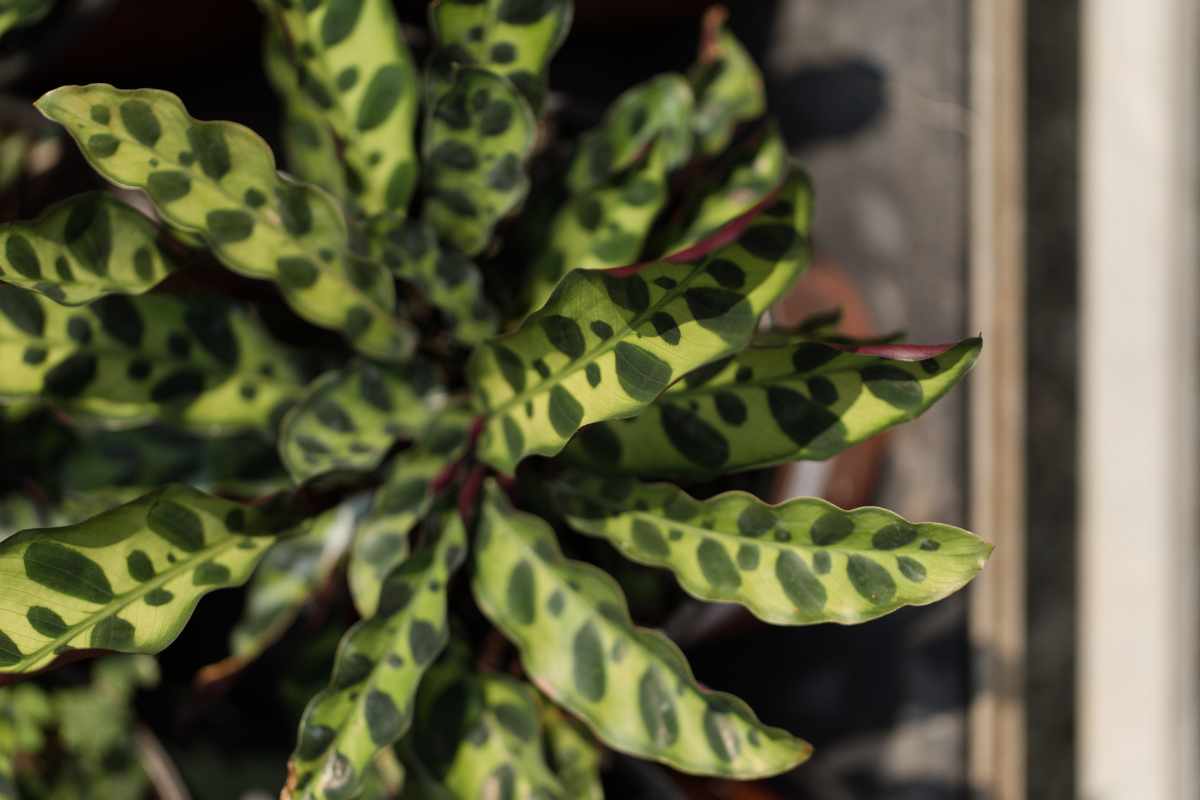
As a tropical native, the Rattlesnake Plant loves high humidity and stable temperatures.
Ideal conditions:
Temperature: 65–80°F (18–27°C)
Humidity: Above 50% (ideally 60–70%)
Avoid cold drafts, heaters, or air conditioners blowing directly on the plant.
To maintain humidity:
Mist the leaves regularly with room-temperature water.
Use a humidifier nearby, especially in winter.
Place the pot on a tray filled with pebbles and water (without touching the base).
Choosing the Best Soil and Pot
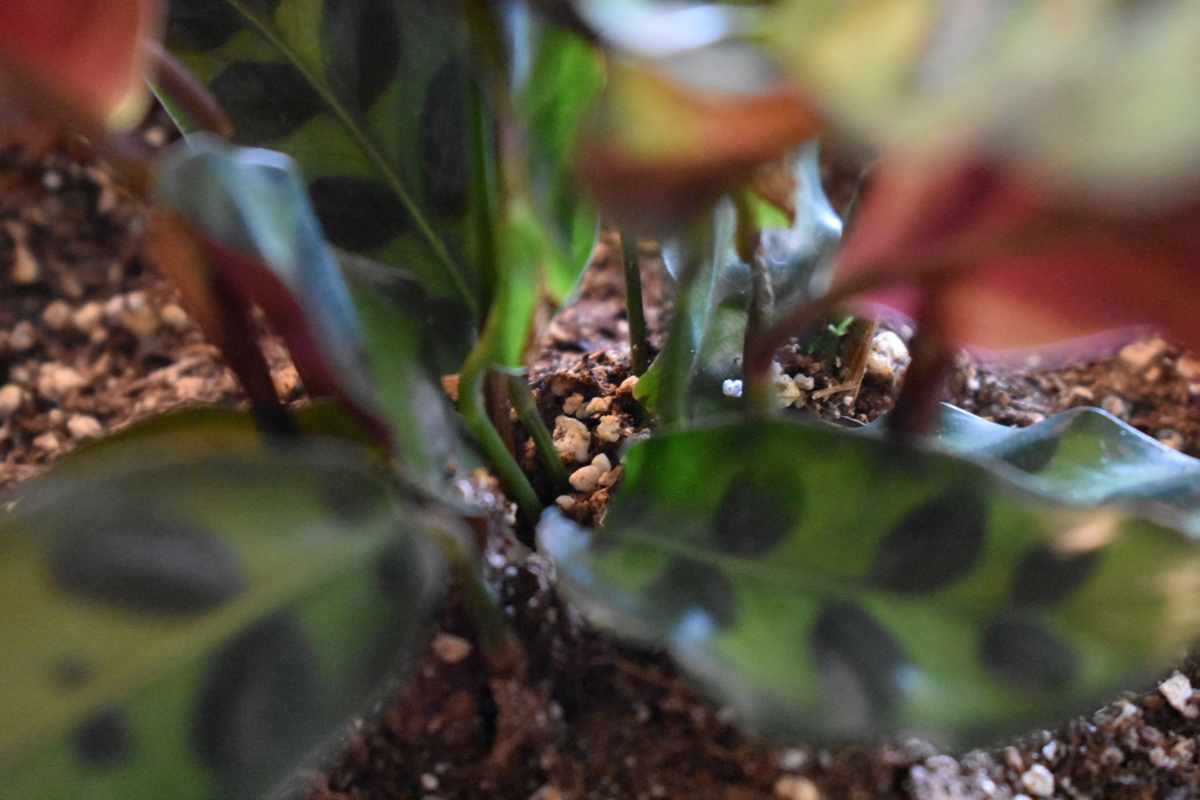
Your Rattlesnake Plant needs a well-draining, nutrient-rich soil that stays moist but never waterlogged.
Recommended mix:
2 parts peat or coco coir
1 part perlite or orchid bark
1 part compost or potting soil
Choose a pot with drainage holes to prevent excess water buildup.
Repotting: Every 1–2 years in spring, when roots start to peek out from the drainage holes.
Fertilizing Your Rattlesnake Plant

Feed your plant monthly during spring and summer using a balanced, diluted liquid fertilizer (half-strength).
Skip feeding in fall and winter when growth naturally slows.
Over-fertilizing can cause salt buildup and leaf burn, so less is more.
Propagation: Growing More Rattlesnake Plants
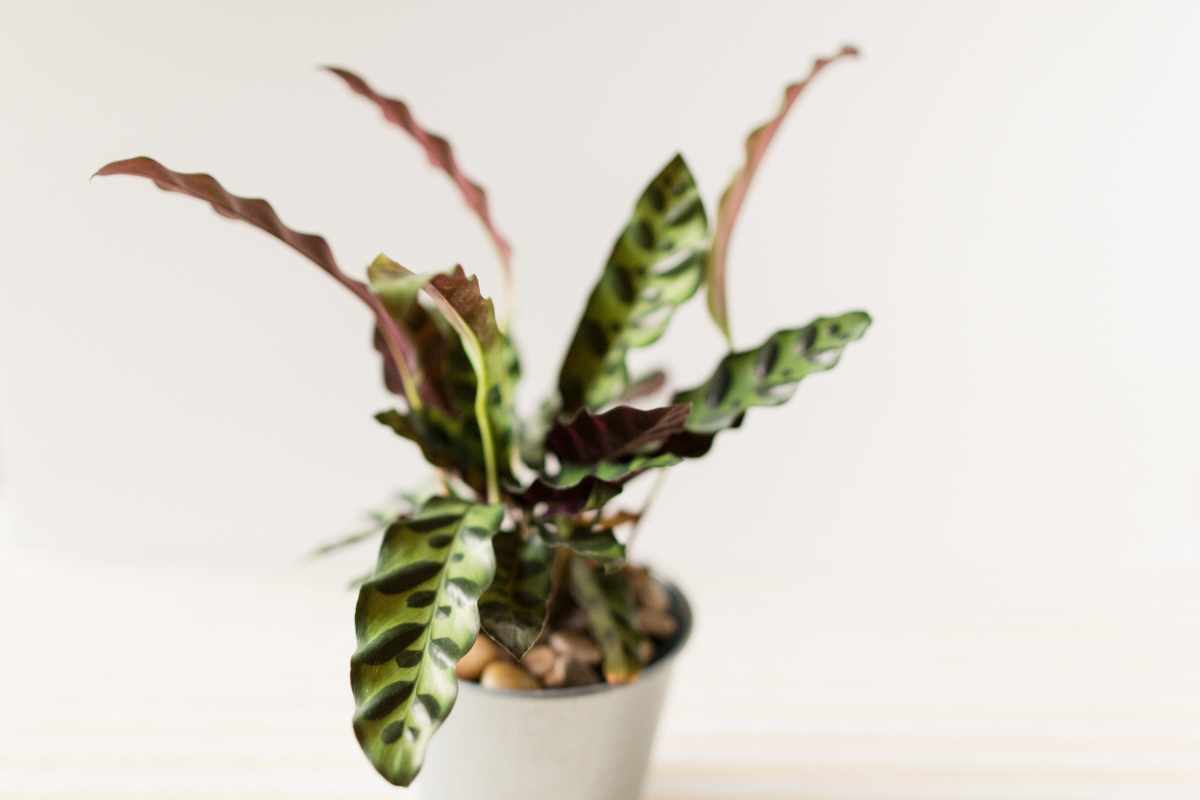
The easiest way to propagate is by division during repotting:
Gently remove the plant from its pot.
Separate a section with healthy roots and at least 3–4 leaves.
Replant in a new pot with fresh soil mix.
Keep it warm and humid until it establishes new growth.
Avoid propagation by cuttings—Calatheas rarely root from leaf or stem cuttings.
Common Problems and How to Fix Them
Even with the best care, your Rattlesnake Plant might show signs of stress. Here’s how to identify and solve them:
| Problem | Likely Cause | Solution |
|---|---|---|
| Brown leaf tips | Low humidity or tap water chemicals | Increase humidity, use filtered water |
| Yellow leaves | Overwatering | Check drainage and let the soil dry slightly |
| Curling leaves | Underwatering or low humidity | Mist often or use a humidifier |
| Leaves losing color | Too much sunlight | Move to a shadier spot |
| Drooping leaves | Cold air or a poor watering routine | Keep the temperature steady, adjust watering |
Regularly wipe the leaves with a damp cloth to remove dust and let the plant “breathe.”
Is the Rattlesnake Plant Pet Friendly?
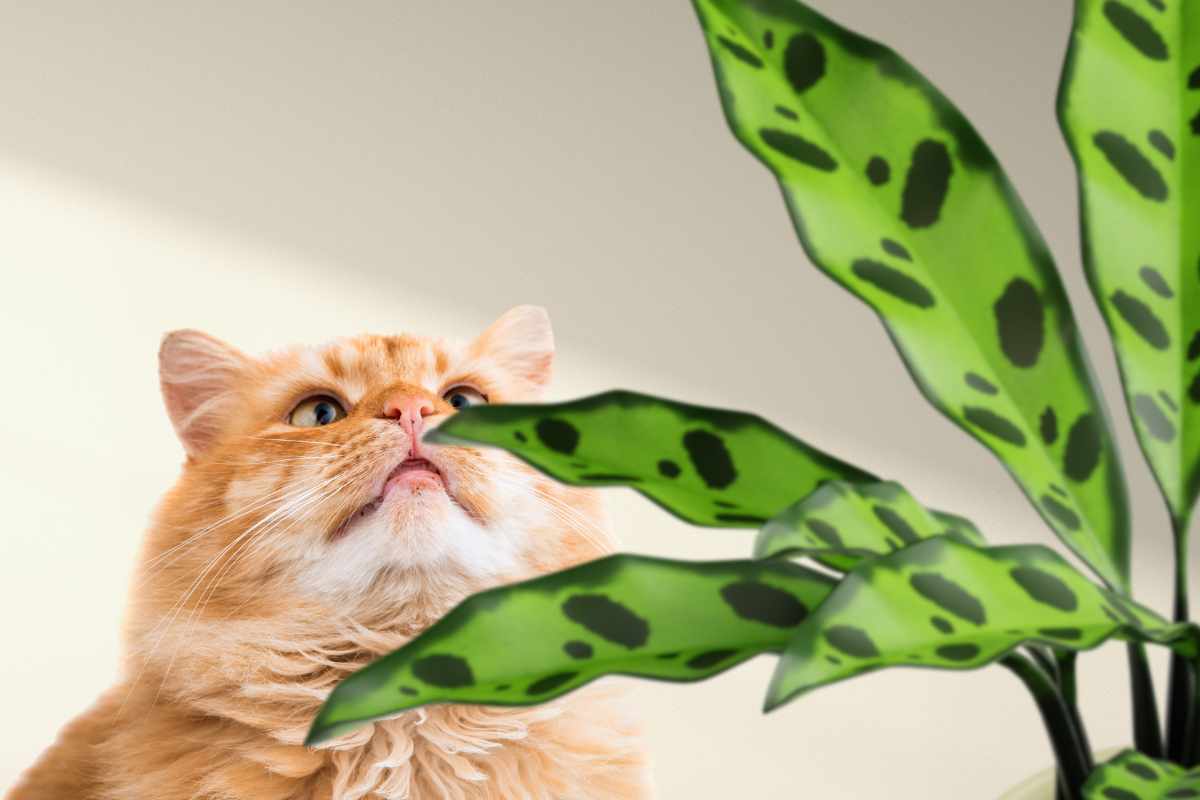
Yes! One of the best features of the Calathea lancifolia is that it’s non-toxic to cats and dogs.
You can safely place it in pet-friendly homes without worry.
Bringing Tropical Beauty Indoors
Caring for your Rattlesnake Plant is all about mimicking its rainforest home—moist air, filtered light, and gentle attention.
Once you find the right balance, this plant rewards you with lush, wavy leaves that dance from day to night.
Whether it’s a centerpiece on your desk or a highlight in your plant corner, the Rattlesnake Plant adds color, texture, and life to your indoor jungle.
Enjoy This Video Tutorial

Source: Apartment Therapy
Don’t forget to Subscribe to our Newsletter to receive amazing tips and tricks about Gardening and the FREE Ebook Green Living Strategies!
Did you find this post Useful or Inspiring? Save THIS PIN to your GARDENING Board on Pinterest! 😊

Once again, thank you for visiting our website!
We hope you've enjoyed exploring the content we've created for you.
Give yourself the chance to learn, get inspired, and have even more fun, keep browsing...
More Gardening Tips 👇🏼👇🏼