
How to Keep Dogs out of Flower Gardens

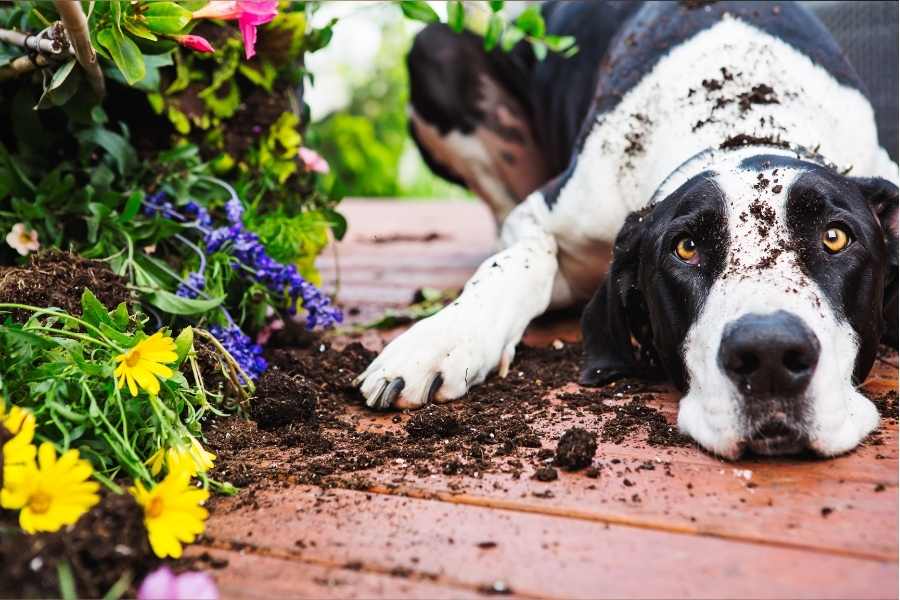
Dogs vigorously follow deer as the main pest in flower gardens. At least the deer damage stops at ground level; deer are not seen digging moon craters in the garden.
In addition to digging and gnawing on plants, dogs aggravate the damage by urinating and defecating on flowers and around plants. This can result in emotions ranging from the mild dismay of replacing a few tattered petunias to the breakup that comes from the discovery of a very slow-growing climbing hydrangea chewed to the heart.
Yes, we love our dogs, but should that be done at the expense of a beautiful flowery landscape?
To properly address the problem of keeping dogs out of flower gardens, you must first understand why dogs are drawn to gardens. This is more than just nervous paws or a bored dog.
What Makes Your Flower Garden Irresistible to Dogs
Flower gardens attract dogs like a magnet from other unspoiled parts of the landscape for a variety of reasons. First, there are the sights and smells of you, dear owner, working the land. If you're spending that much time in there, leaving its comforting scent behind, then this must be a great place to sit and work on that chew toy.
Second, there is the matter of that wonderful loose floor that you have had so much trouble fixing. Not only is it extremely easy to dig, but it is also filled with tasty compost and partially decomposed compost. Delicious!
Creating a cool hiding place to lie down and dig up interesting critters like moles and worms are also fun activities that go along with digging. Finally, the flowering plants themselves are interesting for dogs. With their higher senses, the different smells and textures of the plants are like an ever-changing salad buffet, beckoning the dogs to savor and chew.
Effective Ways to Keep Dogs Out
Chemical Deterrents
Many gardeners use dog repellants as their first line of defense, as it is convenient and inexpensive to pick up a box or bottle of something from the garden center shelf.
Many of these products have strong aromatics that are irritating but not harmful to pets, such as citrus or peppermint oils. The effectiveness can vary widely, depending on the sensitivity of your dog. One downside is the need to reapply frequently, especially in the rainy season. Look for products embedded in gel crystals, which slowly release an unpleasant odor and can withstand periods of rain.
A quick home spray can help a garden transition, such as at the beginning of the growing season when new, tender, and germinating seeds are most vulnerable to damage.
A daily spray with low-acid vinegar or bitter apple product repels dogs but does not harm plants or animals. Or you can boost your vinegar game by using horticultural vinegar (20% acetic acid) to kill weeds and discourage dogs at the same time. Take care to protect ornamental plants from overspray, as this vinegar is designed to kill plants indiscriminately.
Noise Deterrents
An ultrasound-repellent system for dogs may be an option if you have problems with neighborhood dogs invading your flower beds. Ultrasonic sounds combined with LED lights on some models are designed to scare dogs and avoid large areas.
The downside to this method is that it will scare away all animals, including squirrels and birds that you would like to see in your yard. Ultrasonic impediments also tend to break down after a few seasons.

Physical Deterrents
If good fences make good neighbors, they make good dogs too. However, it is not always practical or affordable to erect an effective fence around flower beds, especially for larger dogs.
An electric fence, either above or below ground, is sometimes a more convincing exclusion device for stubborn dogs. These fences are very humane and generate a static discharge that will not hurt you but will be unpleasant enough to teach you that the flowerbed is not your playground.
An underground fence system in conjunction with a receiver collar offers gardeners a correction alternative that is neither unsightly nor dangerous for children.
The flags you place around the edge of the garden show the dogs where the no-go zone is, and a static correction reinforces the message to keep them out of flower beds.
Training and Distraction
Although this requires a lot of dedication, training your dog to avoid a certain part of the landscape, combined with supervision and enrichment with suitable toys and games, produces some of the most satisfying results.
Add training with positive reinforcement methods to other impediments and you will increase your chances of success.
Final Thoughts
While dogs are beloved companions, their natural curiosity and energy can wreak havoc on carefully maintained flower gardens.
Understanding why dogs are drawn to these areas is the first step in mitigating the damage. From the enticing scents and loose soil to the irresistible plants, flower gardens provide a sensory playground for them.
However, with a combination of chemical, noise, and physical deterrents, as well as dedicated training, you can protect your garden without compromising your relationship with your furry friend. It's all about balance—keeping your garden beautiful while ensuring your dog stays out of it.
Enjoy This Video Tutorial

Source: Garden Buildings Direct
Did you find this post Useful or Inspiring? Save THIS PIN to your GARDENING Board on Pinterest! 😊
Once again, thank you for visiting our website!
We hope you've enjoyed exploring the content we've created for you.
Give yourself the chance to learn, get inspired, and have even more fun, keep browsing...
More Gardening Tips 👇🏼👇🏼