
- Urbaki Gardening
- Planting Flowers
- How to Plant Aubrieta Step by Step [Spring Garden Guide]
How to Plant Aubrieta Step by Step [Spring Garden Guide]

Emily Brooks
30/03/2020 · Updated on: 04/02/2026

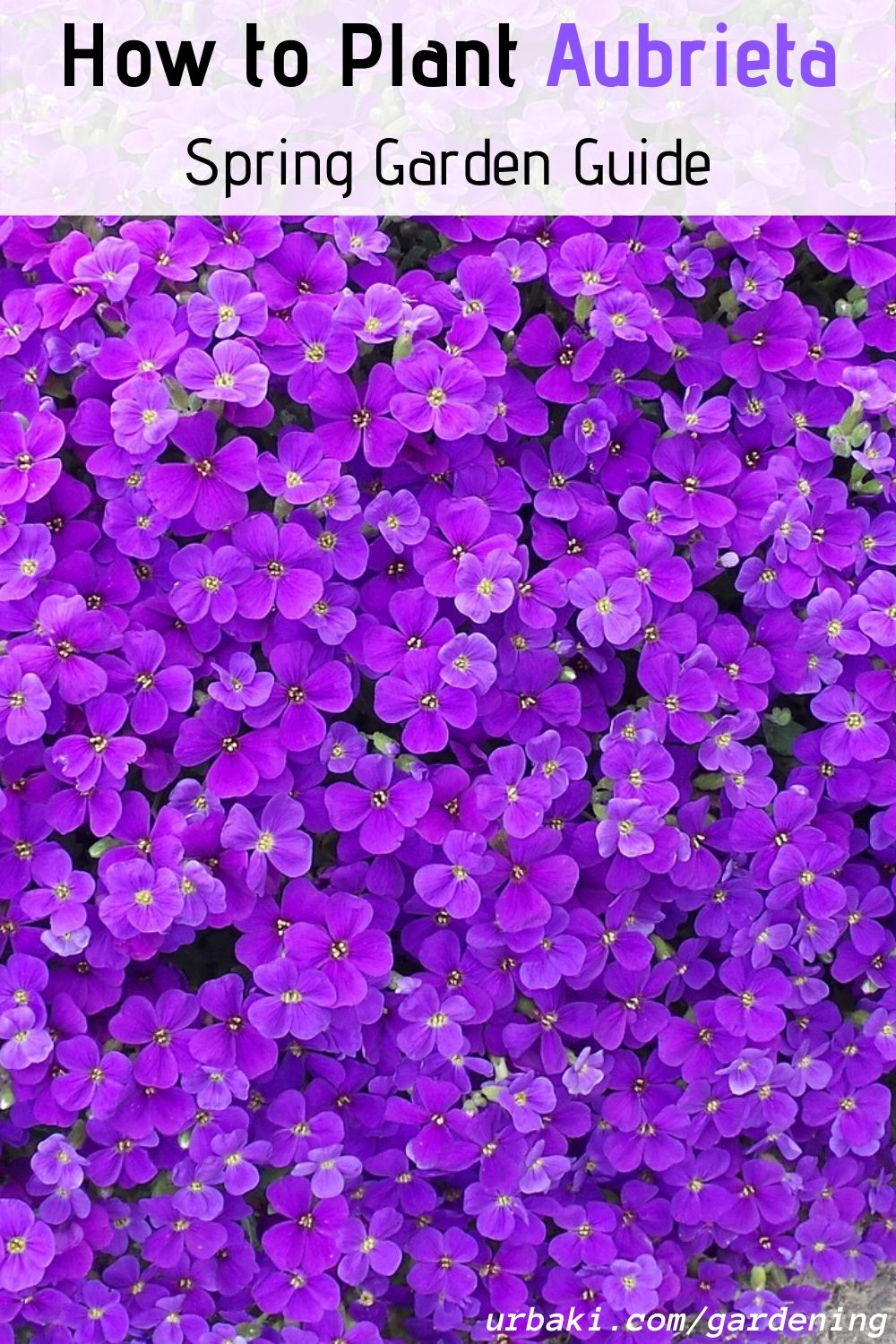
With its carpet of purple, pink, or blue flowers, Aubrieta is a reliable spring perennial that brings instant color to walls, borders, and containers.
It’s easy to grow, low-maintenance, and perfect for adding life to tricky spots in the garden.
In this guide, we’ll explain how to plant this cute flower step by step, along with simple care tips to keep it blooming beautifully year after year.
Plant Profile
Aubrieta (Aubrieta deltoidea), also known as rock cress, is a low-growing evergreen perennial that works beautifully as ground cover.
It usually grows about 4 to 9 inches tall and spreads up to 2 feet wide, forming a soft, colorful carpet when in bloom.
These plants thrive in full sun and prefer well-drained, neutral to alkaline soils. They’re particularly well suited to rocky spots, walls, and gravel gardens, where many other flowers struggle.
Once established, Aubrieta is fairly drought-tolerant, making it a practical choice for low-maintenance landscapes.
Flowering happens mainly in spring (April to May), though trimming back after the first flush often encourages lighter blooms later in the season. Thanks to their hardiness (generally USDA zones 4–9), they’re reliable performers in many climates.
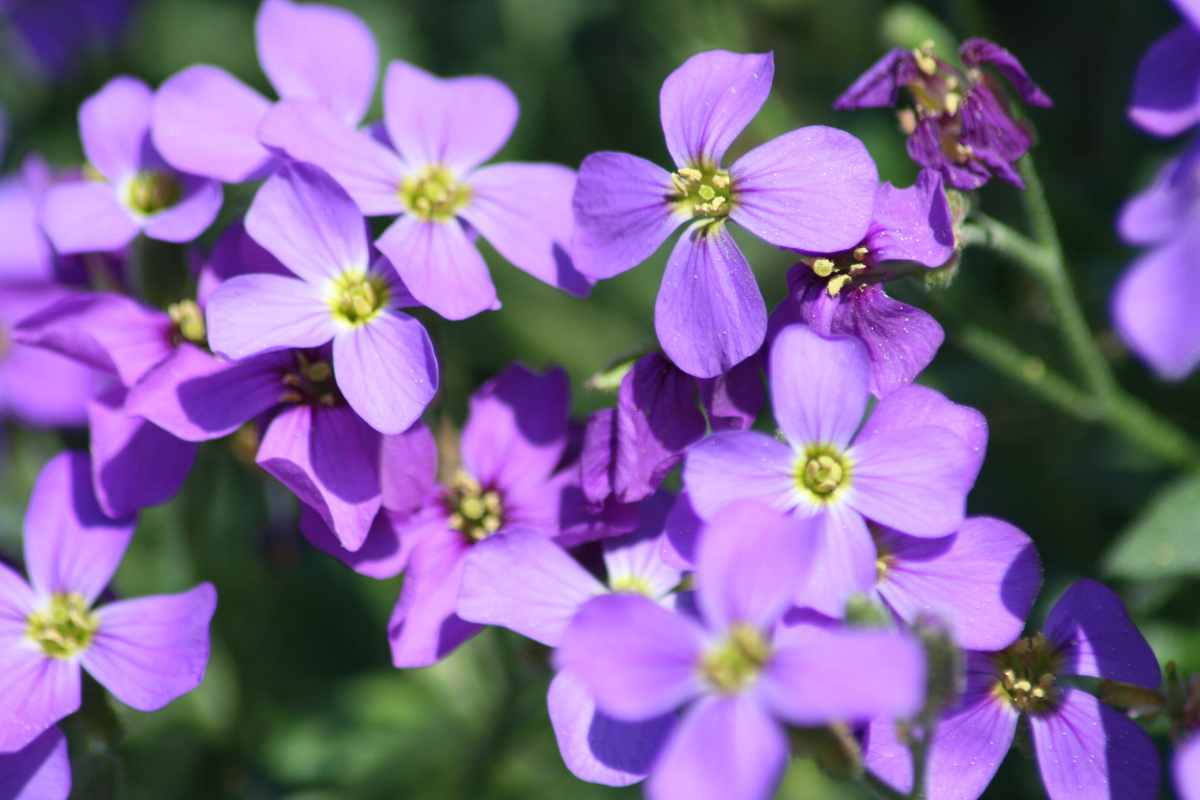
Popular Varieties of Aubrieta
‘Royal Blue’ – Covered in deep violet-blue blooms, great for rock walls.
‘Dr. Mules’ – Vigorous growth with rich purple flowers.
‘Whitewell Gem’ – Produces bright magenta flowers and dense foliage.
‘Argenteovariegata’ – Eye-catching variegated leaves edged in cream with purple blooms.
‘Red Cascade’ – Offers striking reddish-pink flowers for warmer tones.
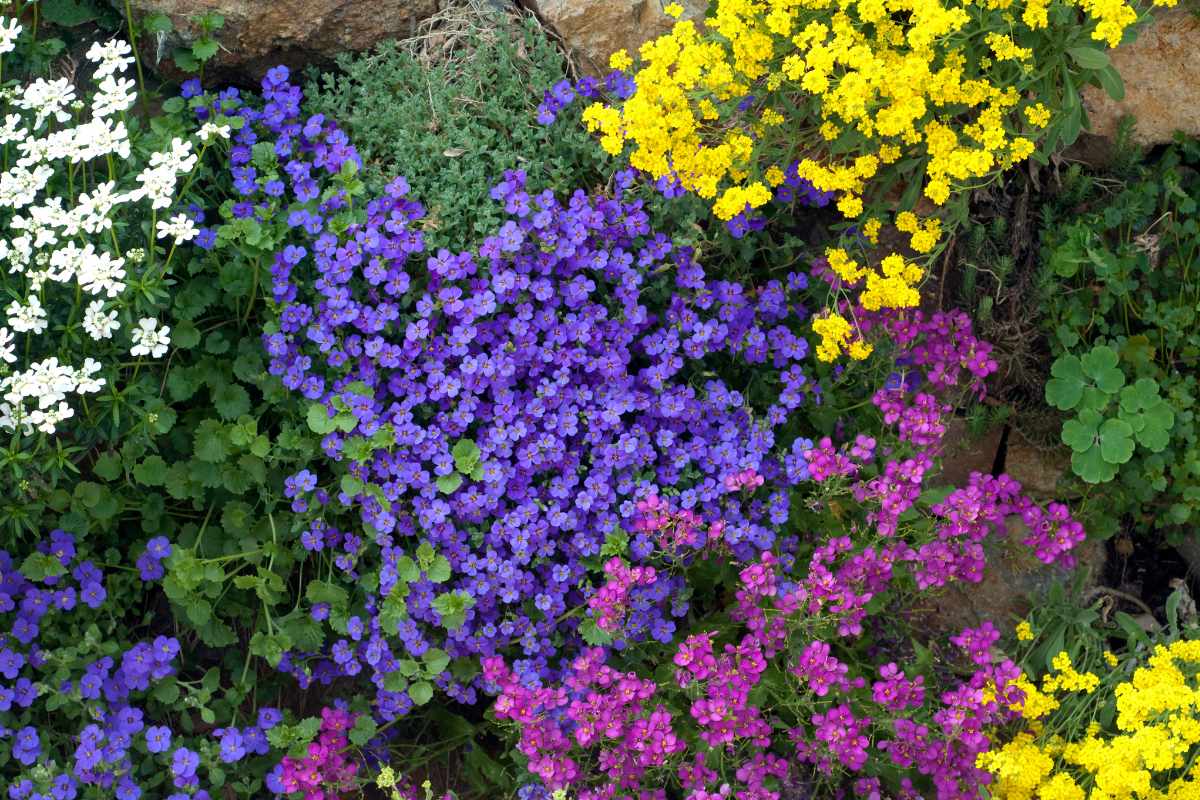
Choosing the Right Spot
Aubrieta does best in full sun, which helps it produce the most flowers. It can grow in partial shade, but the bloom will be lighter.
Since it’s a plant adapted to rocky areas, it prefers well-drained soil and will struggle if the ground stays wet for long periods.
A slightly alkaline soil (with a bit of lime or gravel mixed in) is ideal.
Preparing the Soil
Before planting, loosen the soil and remove any weeds. If your soil is heavy or tends to hold water, improve drainage by mixing in coarse sand, gravel, or compost.
Aubrieta doesn’t need rich soil, so avoid over-fertilizing.
The goal is to create a light, free-draining mix that mimics its natural alpine habitat.
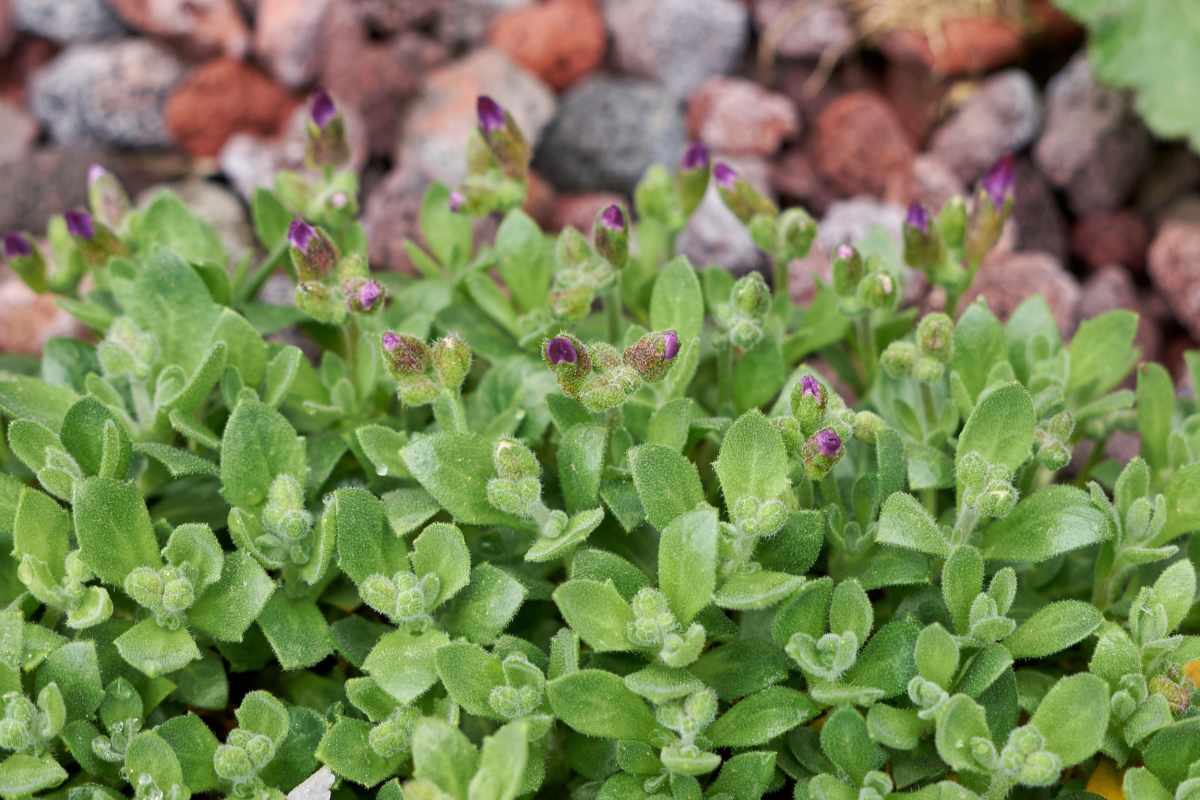
Planting Aubrieta
Spacing: Place plants about 12–18 inches (30–45 cm) apart so they have room to spread and form a dense mat.
Depth: Plant at the same depth they were growing in their nursery pots.
Watering: After planting, water thoroughly to help roots settle. Keep the soil slightly moist until the plants are established, then water less often, as Aubrieta becomes drought-tolerant.
Caring for Aubrieta
Watering: Once established, Aubrieta is low-maintenance and doesn’t need much water. Just avoid letting the soil stay soggy, especially in winter.
Pruning: After flowering in spring, trim the plants back by about half. This keeps them compact and often encourages a second round of blooms later in the season.
Feeding: A light application of balanced fertilizer in spring is enough. Too much fertilizer can reduce flowers and make the plant leggy.
Pests and Diseases: Aubrieta is generally trouble-free but can sometimes attract aphids or flea beetles. Keeping good airflow around the plants helps prevent issues like mildew or leaf spots.

Propagating Aubrieta
Aubrieta can be propagated in a few different ways:
Seeds: Sow on the surface, since they need light to germinate. Start indoors before the last frost or sow directly outdoors in spring.
Cuttings: Take softwood cuttings after the main flowering season for reliable results.
Division: Though possible, dividing Aubrieta is less effective than cuttings. If you try it, autumn is the best time.
Aubrieta in Containers
Aubrieta looks just as good spilling from containers and troughs as it does in the garden.
Use a well-draining potting mix with added grit or perlite, and choose a pot with drainage holes.
Place the container in a sunny spot and water moderately, letting the soil dry slightly between waterings.

Blooming Season
Aubrieta usually flowers in April and May, covering itself in a dense blanket of blooms. In cooler climates, the flowering period can stretch into early summer.
With a trim after flowering, many gardeners enjoy a lighter second flush later in the season.
If you’re looking for an easy way to bring long-lasting color to walls, rock gardens, or pots, this is a fantastic choice.
With the right location, simple planting steps, and a quick prune after flowering, this cheerful perennial will return year after year, adding a burst of spring charm to your garden.
Enjoy the Video Tutorial
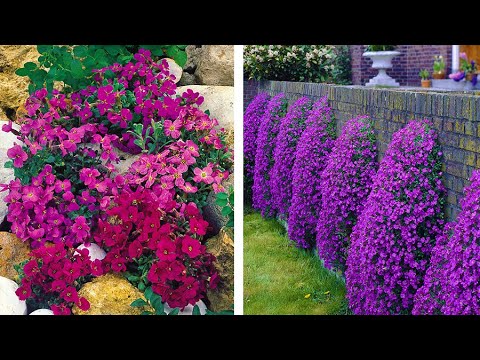
Source: J. Parker's
Did you find this post useful or inspiring? Save THIS PIN to your Gardening Board on Pinterest!😊
Emily Brooks
I’m Emily, a lifelong nature lover with dirt on my boots and a passion for all things green. I don’t claim to be a botanist; I’m just an enthusiast who believes that every backyard—no matter how small—can become a sanctuary. After years of trial and error (and more than a few wilted ferns), I’m sharing my honest journey of growing flowers and veggies. Let's learn from the seasons and grow something beautiful together!
More Gardening Tips 👇🏼👇🏼