
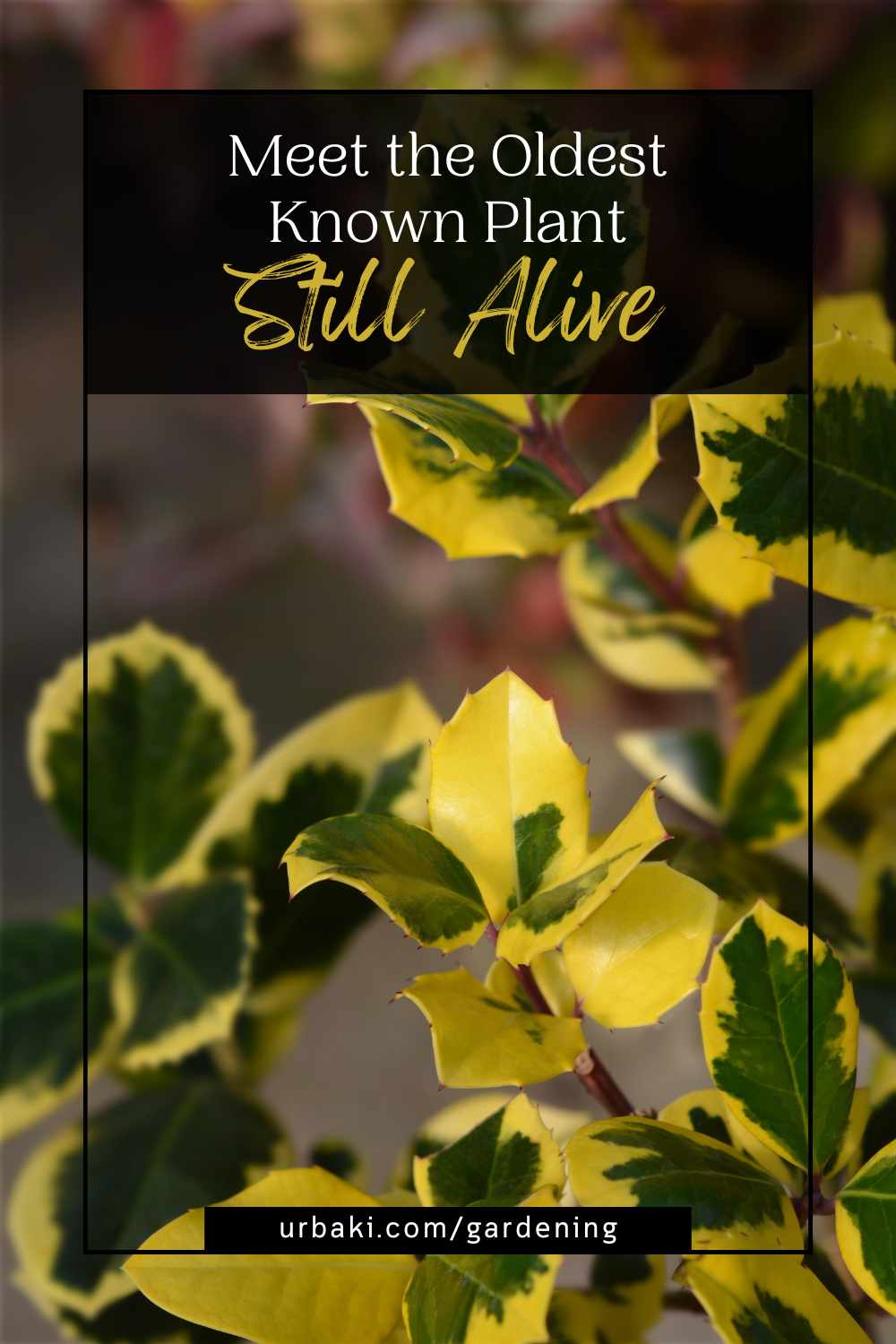
Meet the Oldest Known Plant Still Alive

When we think of ancient life, towering dinosaurs or prehistoric seas often come to mind. But nestled quietly in remote corners of the world are living green beings that have witnessed the rise and fall of civilizations, survived ice ages, and adapted to changes over millennia.
The title of the oldest known plant still alive belongs to some truly remarkable specimens—plants that aren’t just old in terms of decades or centuries, but that have persisted for thousands of years, thriving in silence as time flows around them.
Discovering Earth’s Green Elders
Among the most impressive is a humble-looking clonal plant called King’s Holly (Lomatia tasmanica), found in a hidden part of Tasmania. While the individual leaves and stems you see today are not thousands of years old, the plant’s genetic lineage has been dated back to an astonishing 43,000 years.
It reproduces only through cloning, meaning each new shoot is genetically identical to the original ancestor. This living fossil is a silent testament to endurance, evolution, and survival.
But King’s Holly isn’t the only long-lived botanical marvel. In California’s White Mountains stands Methuselah, a Great Basin bristlecone pine (Pinus longaeva) believed to be over 4,800 years old. Unlike clonal colonies, Methuselah is a single, individual tree—still alive, growing slowly, and adapting to the harsh alpine climate that has helped preserve it.
What Allows These Plants to Endure?
The longevity of ancient plants is tied closely to their environment and biological design. Bristlecone pines, for instance, grow in high-altitude, nutrient-poor soils where few pests and diseases thrive.
Their wood is dense and resin-filled, making it resistant to decay. These trees grow slowly, often just a few inches each year, but this slow pace contributes to their resilience over centuries.
Clonal plants like King’s Holly or Pando, the massive aspen colony in Utah, rely on a different survival strategy. Pando looks like a forest of individual trees, but it’s one organism with a shared root system, stretching over 100 acres.
It’s estimated to be at least 14,000 years old, though some experts believe it could be twice that age. If one trunk dies, new ones sprout from the same root base, allowing the organism to persist even as parts of it age and perish.
The Role of Ancient Plants in Our Ecosystems
These ancient living organisms aren’t just biological curiosities—they play vital roles in their environments. Pando’s root system stabilizes the soil and supports an entire web of life, including insects, birds, and mammals.
Bristlecone pines anchor fragile alpine ecosystems, providing shelter and shade. Even smaller clonal plants like creosote bushes in North America or seagrasses in the Mediterranean create microhabitats for countless species.
Studying these long-lived plants also offers clues about climate change, adaptation, and ecological balance. Their ability to survive for millennia can help researchers understand what makes certain ecosystems more resilient than others.
Fragility Beneath the Surface
Despite their longevity, these ancient plants are not immune to threats. Human activity, invasive species, and shifts in climate can damage or destroy organisms that have taken thousands of years to grow. King’s Holly exists only in cultivation now; it no longer grows naturally in the wild due to habitat destruction.
Pando, although massive, is facing a decline due to overgrazing and a lack of new growth. Even Methuselah is kept secret—its location is undisclosed to protect it from vandalism or unintentional harm.
This highlights the importance of conservation efforts, especially for species that can't recover quickly. While these plants have outlasted empires and epochs, their future depends on the choices we make today.
A Living Link to Earth’s Past
There’s something profoundly humbling about walking among trees or plants that have been alive since before the pyramids were built or that carry the genetic memory of the Ice Age.
They remind us that nature works on a scale of time that far exceeds our own, and that resilience often comes from patience, adaptation, and quiet strength.
The world’s oldest plants aren’t famous for their beauty or speed of growth—they are celebrated for their endurance, their connection to the ancient Earth, and their role in sustaining life across generations.
They are living monuments to survival, worthy of admiration and protection.
Did you find this post useful or inspiring? Save THIS PIN to your GARDENING Board on Pinterest!
More Gardening Tips 👇🏼👇🏼