
What Is Slime Mold: Slime Mold Facts And Control In The Garden

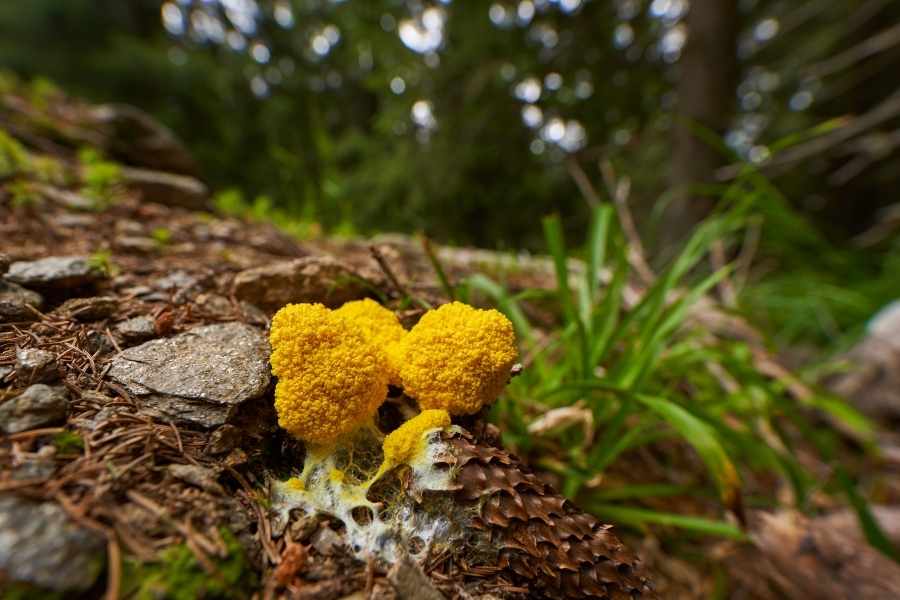
That frothy, frothy thing in your garden that resembles the contents of a dog's stomach is mold. What is slime mold? Good question, since it is not actually a mold or a fungus. It is also not a plant, and yet it is not an animal.
Slimy mushrooms are in a class of their own and there are over 700 varieties. They are common in hot and humid places, but the actual appearance varies from area to area.
Viscous fungi do not harm the environment or your plants, so there is no real control of slimy fungi. Although ugly, the body may actually be helping your plants by consuming pathogens and bacteria that can harm them.
What is slime mold?
The slime mold organism reproduces and survives as a fungus. It can also move to a point. These facts may lead you to believe that it is a fungus or an animal, but this is not the case.
The body gets moisture from the air and nutrients where it grows, but it is not a plant either. Silty fungi belong to the genus Fuligo and are primitive single-celled organisms with spore reproduction.
One of the most interesting facts about slime mold is its apparent separation from any known classification of plants or animals.
Facts about slime mold
Slimy mushrooms vary in color, but the most frequently spotted variety is orange to yellow and resembles a dog's vomit.
They can grow 60 cm in diameter and occur in moist, decaying vegetation. You will usually find slimy molds in garden mulch or thick grass clippings.
The organism feeds on vegetation and grows in a state called Plasmodium. This plasmodia persists as long as conditions are humid and then turns into spores when the body dries up.
The result leaves a dry, crunchy residue on its host.
Slimy molds are not dangerous, but on lawns, large, persistent molds can turn grass yellow by reducing sunlight to leaves. The grass recovers after the mold turns into a spore.

Get rid of slime mold
There is no doubt that mold is not attractive. Anything that looks like vomit in the garden is an uncomfortable sight. However, since slimy molds on the roof of the garden or other areas are not harmful, they do not need to be removed.
For this reason, controlling slime mold with chemicals is more troublesome than rewarding. Few chemicals can permanently kill the body, and toxic applications can even be harmful to other life forms around the mold.
Slimy fungi thrive where conditions are humid, so the easiest way to get rid of them is to let the area dry out. Collect slimy mushrooms on the roof of the garden to expose the organism to dry air.
You can also just scrape off the material, but it will probably come back. Some molds have been known to return to the same place, year after year.
We hope you enjoy watching this video about What Is Slime Mold
Source: OklahomaGardening

Once again, thank you for visiting our website!
We hope you've enjoyed exploring the content we've created for you.
Give yourself the chance to learn, get inspired, and have even more fun, keep browsing...
More Gardening Tips 👇🏼👇🏼