
The Essentials of Building a Natural Shelter

In the wild, one of the most crucial survival skills is knowing how to protect yourself from the elements.
Whether you’re on a wilderness adventure, faced with an unexpected emergency, or simply exploring the art of primitive living, Building a Natural Shelter can be a lifesaving skill.
Being able to build a secure, weather-resistant, and comfortable shelter using only what you find in nature shows just how clever and adaptable people can be.

Building a Natural Shelter: The Basics
Building a Natural Shelter requires a solid understanding of your environment and the materials available to you. The first step is to assess your surroundings and identify the most suitable location for your shelter.
Location is everything when it comes to building a shelter that will protect you from the elements. Look for areas that are naturally sheltered from the wind, such as the leeward side of a hill or near a dense thicket of trees.
Avoid low-lying areas where cold air and water can accumulate, as well as spots under dead or precariously leaning trees.
Once you’ve found the ideal location, the next step is to consider the type of shelter you’ll build. The design of your shelter will largely depend on the materials you have at hand and the climate you’re in.
Whether you opt for a debris hut, lean-to, or A-frame, each shelter type has its own advantages and is suited to different conditions.
Materials for Building a Natural Shelter
The key to Building a Natural Shelter is using the materials that nature provides. Leaves, branches, bark, and even snow can all be utilized to construct a sturdy and effective shelter.
The choice of materials will depend on what’s available in your environment and the specific needs of your shelter.
For example, if you’re in a forested area, dead branches and leaves are invaluable resources. They can be used to create a framework for your shelter, as well as for insulation to keep you warm.
Large, flexible branches are ideal for creating the structure of your shelter, while smaller sticks and leaves can be layered to provide insulation and protection from the wind and rain.
In colder climates, snow can be an excellent insulator. Snow shelters, such as an igloo or a quinzhee, are particularly effective at trapping heat and keeping the interior warm. However, building with snow requires careful construction to ensure the structure is stable and safe.

Types of Natural Shelters
There are several types of shelters that you can build using natural materials, each suited to different environments and circumstances.
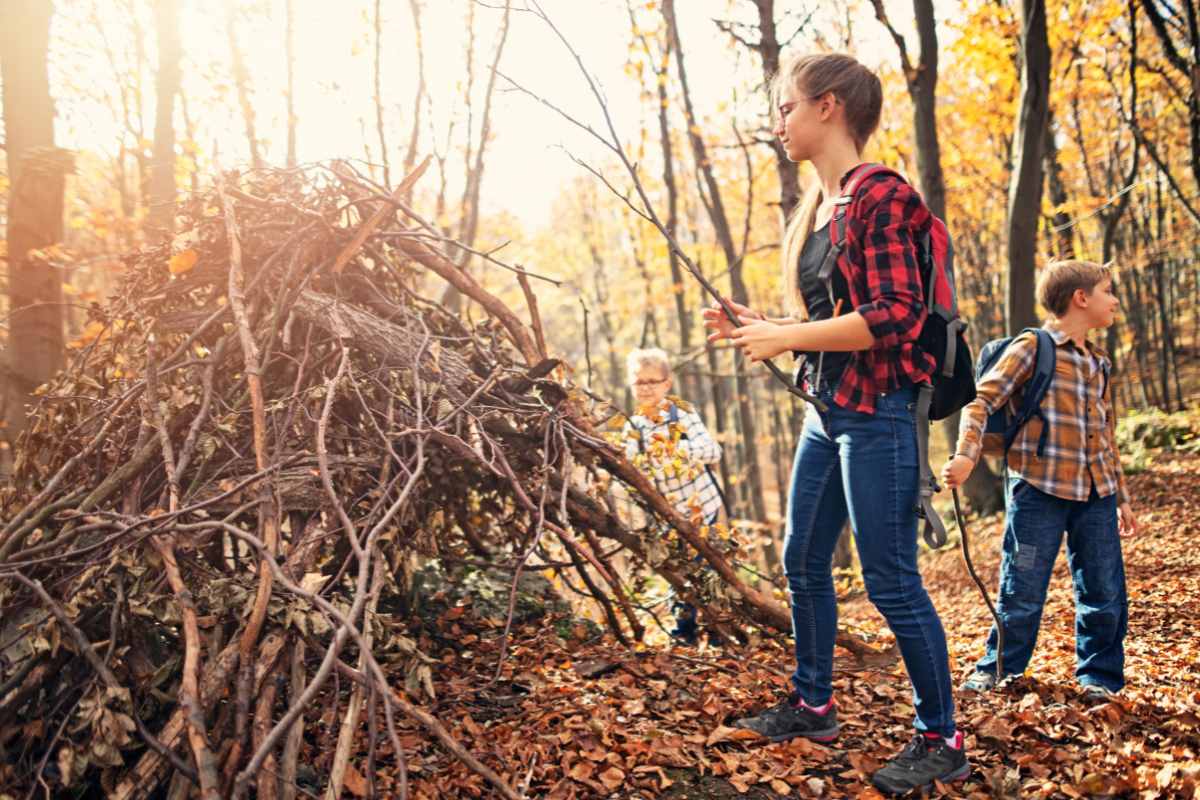
- The Debris Hut: This is one of the simplest and most effective natural shelters. It’s essentially a small, A-frame structure that you cover with debris such as leaves, pine needles, and branches. The debris provides excellent insulation, keeping you warm even in cold conditions. The key to a successful debris hut is ensuring that the debris is thick enough to trap your body heat and protect you from the wind.
- The Lean-To: A lean-to is a basic shelter that can be built quickly using a large branch as the main support, with smaller branches leaned against it at an angle. The structure is then covered with leaves, bark, or other debris. Lean-tos are great for short-term shelters or for use in milder weather, but they may not provide as much warmth or protection in extreme conditions.
- The A-Frame Shelter: Similar to a debris hut but larger, the A-frame shelter is more spacious and can accommodate more than one person. It’s built by creating two support beams in the shape of an “A” and then covering the structure with branches, leaves, and other debris. This shelter is ideal for longer stays in the wild, as it offers more space and comfort.
- The Tarp Shelter: If you have a tarp or poncho, you can use it to create a simple and effective shelter. By securing the tarp between two trees or poles, you can create a roof that will protect you from rain and wind. While not entirely natural, the tarp shelter is a practical option that can be enhanced with natural materials for added insulation.
- Snow Shelters: In snowy environments, you can use snow to build shelters like igloos or quinzhees. These shelters are excellent at retaining heat and can be quite comfortable if constructed properly. However, they require a lot of effort and time to build, so they’re best suited for situations where you expect to stay in one place for an extended period.
Insulation and Comfort
One of the most critical aspects of Building a Natural Shelter is insulation. Proper insulation will keep you warm by trapping your body heat inside the shelter and preventing cold air from entering.
Leaves, grass, and pine needles are some of the best natural insulators you can find. These materials can be layered on the ground to create a comfortable sleeping area, as well as on the roof and walls of your shelter to keep the warmth in.
Comfort is another important consideration. While survival is the primary goal, being able to rest and recuperate is essential in a survival situation.
Make sure to create a sleeping area that is as comfortable as possible. This might involve using layers of soft leaves or moss as bedding, or crafting a raised platform to keep you off the cold, damp ground.
Weatherproofing Your Shelter
To ensure your shelter provides adequate protection from the elements, weatherproofing is essential. Start by ensuring that the roof of your shelter is steep enough to allow rain and snow to slide off.
A flat roof will collect water and snow, which can cause the structure to collapse or become waterlogged.
Sealing the gaps in your shelter is another crucial step. Small openings can let in cold air and rain, reducing the effectiveness of your shelter.
Use smaller sticks, leaves, and mud to fill in any gaps in the walls or roof. In snowy conditions, you can pack snow around the base of your shelter to create a tight seal against the wind.
Fire and Ventilation
If you plan to have a fire inside or near your shelter, ventilation is crucial. Without proper airflow, smoke can build up inside your shelter, creating a dangerous situation.
Ensure there is a small opening at the top of your shelter to allow smoke to escape while still keeping the interior warm.
In addition to ventilation, the placement of your fire is important. If you’re using an open fire, build it close enough to your shelter to benefit from the warmth, but far enough away to prevent accidental fires.
Reflective walls made of stones or logs can be placed behind the fire to direct heat back into your shelter, making it more efficient.
Safety Considerations
Safety is a top priority when Building a Natural Shelter. Always be aware of the potential hazards in your environment. Falling branches, unstable ground, and dangerous wildlife are all factors to consider when choosing your shelter location.
Additionally, ensure that your shelter is structurally sound before spending the night. A poorly constructed shelter can collapse, causing injury or leaving you exposed to the elements.
When working with fire, be cautious and always keep a close eye on the flames. A fire that’s too close to your shelter or not properly contained can quickly become a serious danger.

The Benefits of Building a Natural Shelter
Building a Natural Shelter offers more than just physical protection. It also provides a sense of security and accomplishment.
The process of creating a shelter with your own hands, using only the materials available in nature, can be incredibly empowering. It’s a skill that connects you to the earth and hones your ability to adapt and survive in challenging situations.
Moreover, this skill can be a profound learning experience. It teaches resourcefulness, patience, and problem-solving, all of which are invaluable in survival situations.
Whether you’re camping, hiking, or preparing for an emergency, knowing how to build a natural shelter gives you the confidence to face the unknown with resilience.
The Art and Science of Building a Natural Shelter
Building a Natural Shelter is both an art and a science. It requires knowledge of your environment, an understanding of the materials at your disposal, and the ability to think critically about how to best use those resources.
Whether you’re facing a survival situation or simply want to deepen your connection to nature, the ability to build a shelter is a fundamental skill that can enhance your outdoor experiences.
By mastering the essentials of Building a Natural Shelter, you equip yourself with the tools needed to thrive in the wild. It’s a skill that not only ensures your safety but also enriches your appreciation for the natural world.
So the next time you find yourself in the wilderness, take the time to practice this ancient art—because in the end, knowing how to build a shelter can mean the difference between mere survival and true self-reliance.
Did you find this post useful or inspiring? Save THIS PIN for later in your Outdoor Board on Pinterest! 😊


Explore these outdoor tips too