
Winter Wildlife Watching: 8 Tips for Spotting Animals in the Snow
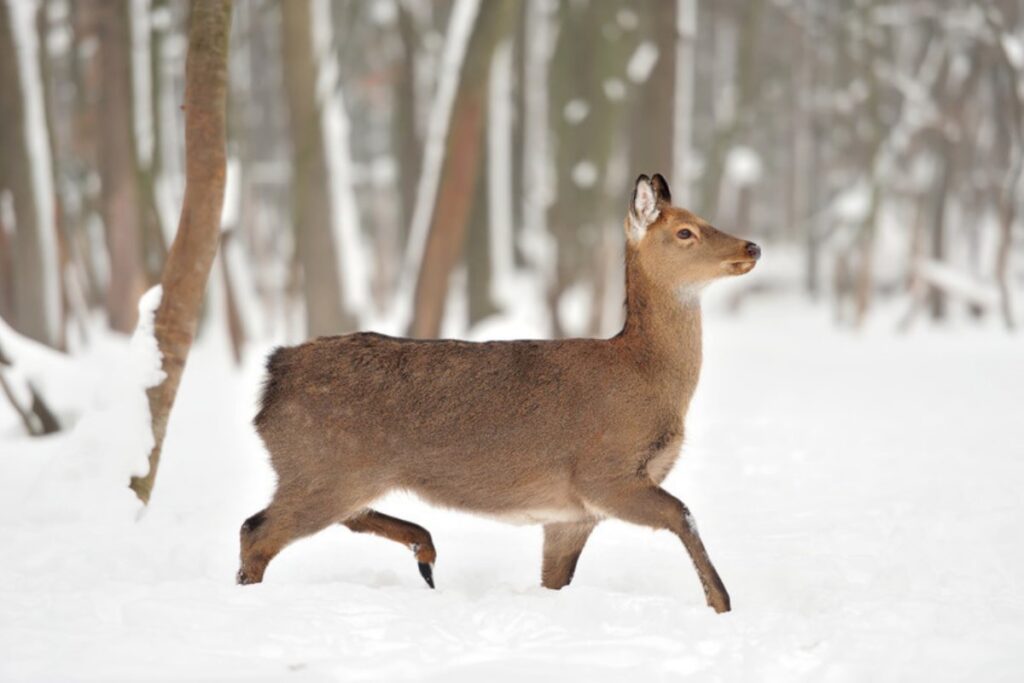
Winter is one of the best times of year to watch wildlife. The leaves are gone, so you can see deep into the woods. Fresh snow records every animal that crosses it. And many birds and mammals stay active through the cold months, searching for food in plain view.
These tips will help you find more animals on your next winter walk, while giving them the space they need to make it to spring.
1. Go Out at Dawn and Dusk
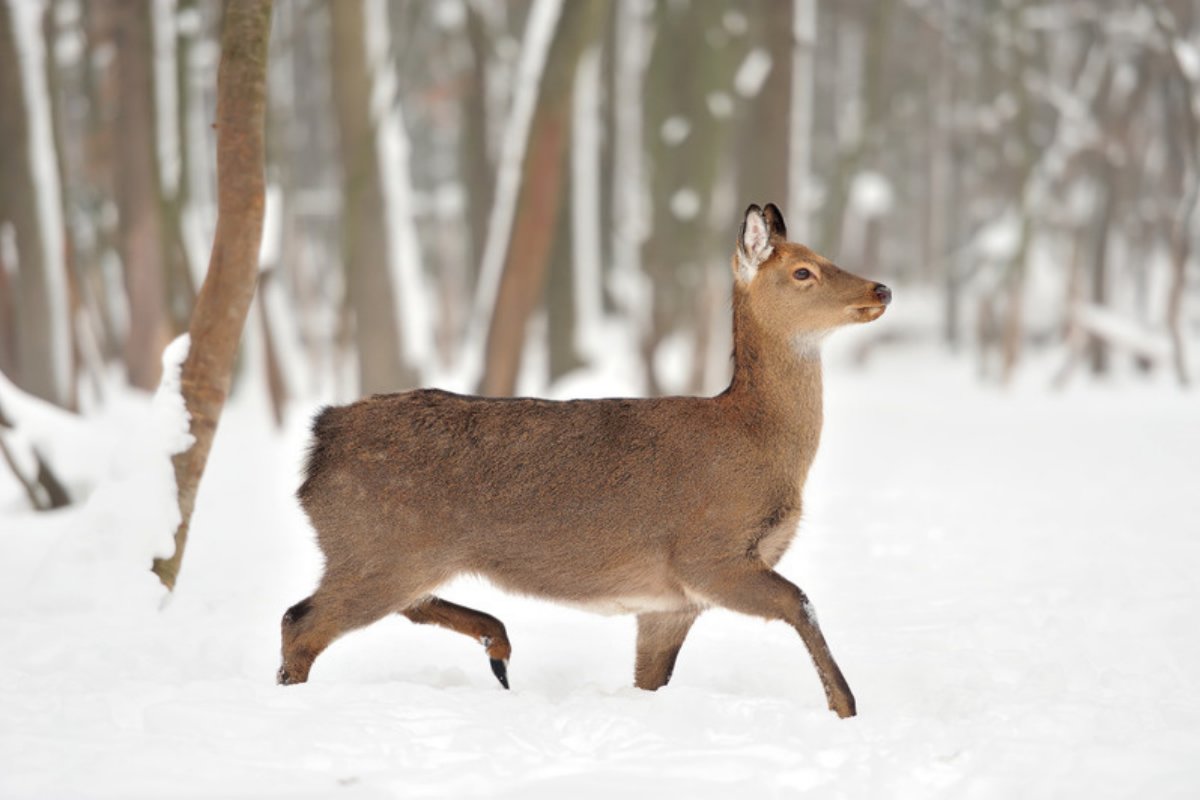
Timing matters more than location. Deer and red foxes are easiest to spot in the first and last hours of daylight, when they move between resting spots and feeding areas. On a cold, clear morning you may see a fox hunting voles in a snowy field, or a group of deer stepping out of the tree line to browse.
Winter does give you an advantage over summer: because animals need to eat more to stay warm, many of them are active through the middle of the day as well. A sunny afternoon after a storm can be very productive, since animals come out to feed once the weather calms down.
Plan your outing so you arrive before sunrise or stay until the light fades. Bring a headlamp for the walk back and check sunset times before you leave, since winter days are short.
2. Read the Snow: Tracks and Trails
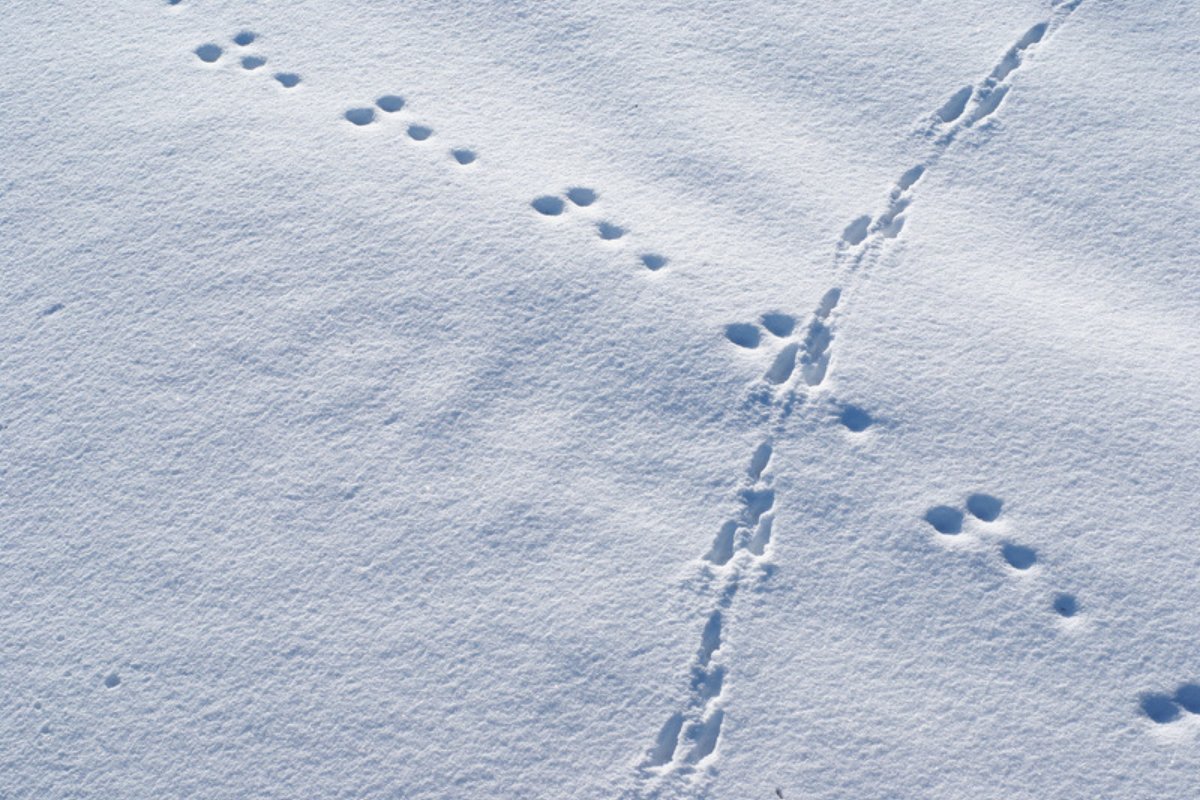
Even when you don't see a single animal, the snow tells you who has been there. A day or two after fresh snowfall is the best time to look. Tracks are sharp, and you can follow a trail to see where an animal fed, rested or crossed a stream.
Start with the basics. Deer leave split, heart-shaped hoof prints. Foxes walk in an almost perfectly straight line, one print in front of the other. Rabbits and hares leave a group of four prints, with the two long hind feet landing ahead of the smaller front feet. Near rivers, look for the long slide marks that otters make as they belly-slide across the snow.
Take a photo of a track with your glove or a coin next to it for scale, and look it up when you get home. Over a few outings you'll start to recognize the regular visitors in your area.
3. Look Near Water
Open water is a magnet in winter. Rivers, springs and the unfrozen edges of lakes are places where animals can drink and find food when everything else is locked under ice.
Watch for ducks such as hooded mergansers, which gather on open water in winter, and for bald eagles perched in tall trees along rivers and lakes. Otters, mink and herons also hunt along the edges. Scan the shoreline slowly and check the far bank before you walk closer.
Stay off frozen lakes and rivers unless you know the ice has been checked and is safe. The best views are usually from the shore anyway.
4. Find a High Spot and Stay Still
Most animals notice movement long before they notice you. A small rise, a bridge or a bench above a meadow gives you a wide view and lets you watch without walking into the middle of the action.
Once you're in place, stay quiet and keep still for at least 15 to 20 minutes. Talk in whispers, put your phone on silent and avoid bright, flapping clothing. Animals that disappeared when you arrived often come back once things settle down.
If you're hiking with kids, turn it into a game: who can stay silent the longest, or who can spot the first bird. Short sits work better than long ones for little ones.
5. Let Binoculars Do the Walking
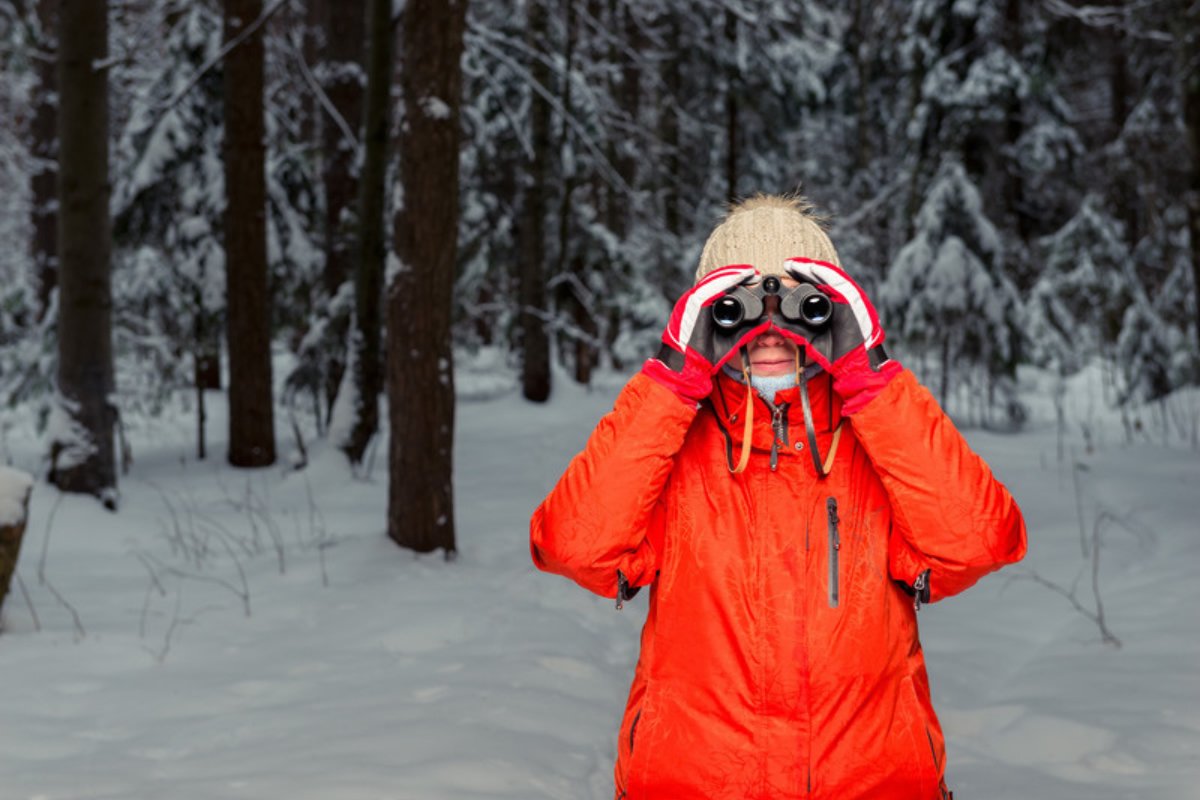
A good pair of binoculars is the most useful piece of gear for winter wildlife watching. It lets you see feathers, faces and behavior without getting close enough to scare anything away. An 8x42 pair is a common, easy-to-hold choice for beginners. A camera with a zoom lens works the same way.
Cold weather can make gear hard to use. Keep binoculars inside your jacket so the lenses don't fog when you lift them, and carry spare batteries for your camera in an inside pocket, since cold drains them quickly.
6. Dress for Standing Still
Wildlife watching is different from hiking. You walk to a spot, then you stand or sit without moving for a long time, which is when you get cold fastest.
Wear layers you can add once you stop: a base layer that pulls moisture away from your skin, a warm middle layer such as fleece or wool, and a windproof outer shell. Pack an extra insulated jacket to put on when you sit down. A warm hat, insulated waterproof boots and a small foam pad to sit on make a big difference. A thermos with a hot drink helps too.
Choose clothes in muted colors like brown, gray or green. Swishy fabrics are noisier than you think in a quiet winter forest.
7. Start in Your Own Backyard
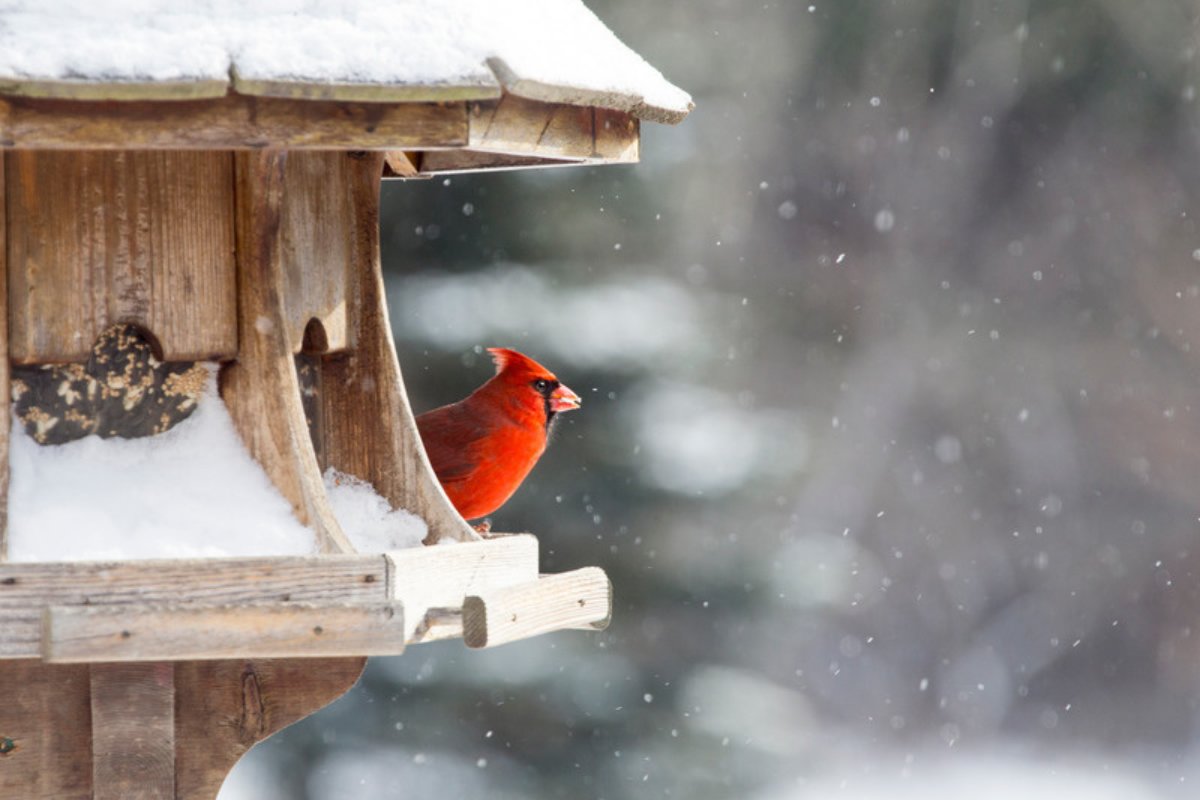
You don't need a national park to see winter wildlife. Birds such as cardinals, chickadees, juncos and woodpeckers visit backyards and local parks all winter long, and they are easy to watch from a window.
Keep a simple notebook of what you see and when. You'll notice patterns, like which birds arrive first in the morning or which ones show up only after a snowfall. It's a great way to practice your identification skills before heading out on the trail.
If you keep a feeder, clean it regularly and place it either very close to a window or well away from it, which helps reduce window collisions.
8. Join a Winter Bird Count
If you want a reason to get outside over the holidays, join the Audubon Christmas Bird Count. Local counts take place every year between December 14 and January 5, and the tradition goes back to Christmas Day, 1900.
Volunteers join a group assigned to an area, or count birds at a backyard feeder, and record every bird they see or hear during the day. Beginners are welcome, and going out with experienced birders is one of the fastest ways to learn. Check the Audubon website for a count near you.
It's a fun family tradition, and your sightings add to more than a century of data that scientists use to track bird populations.
Winter Wildlife Safety and Common Mistakes
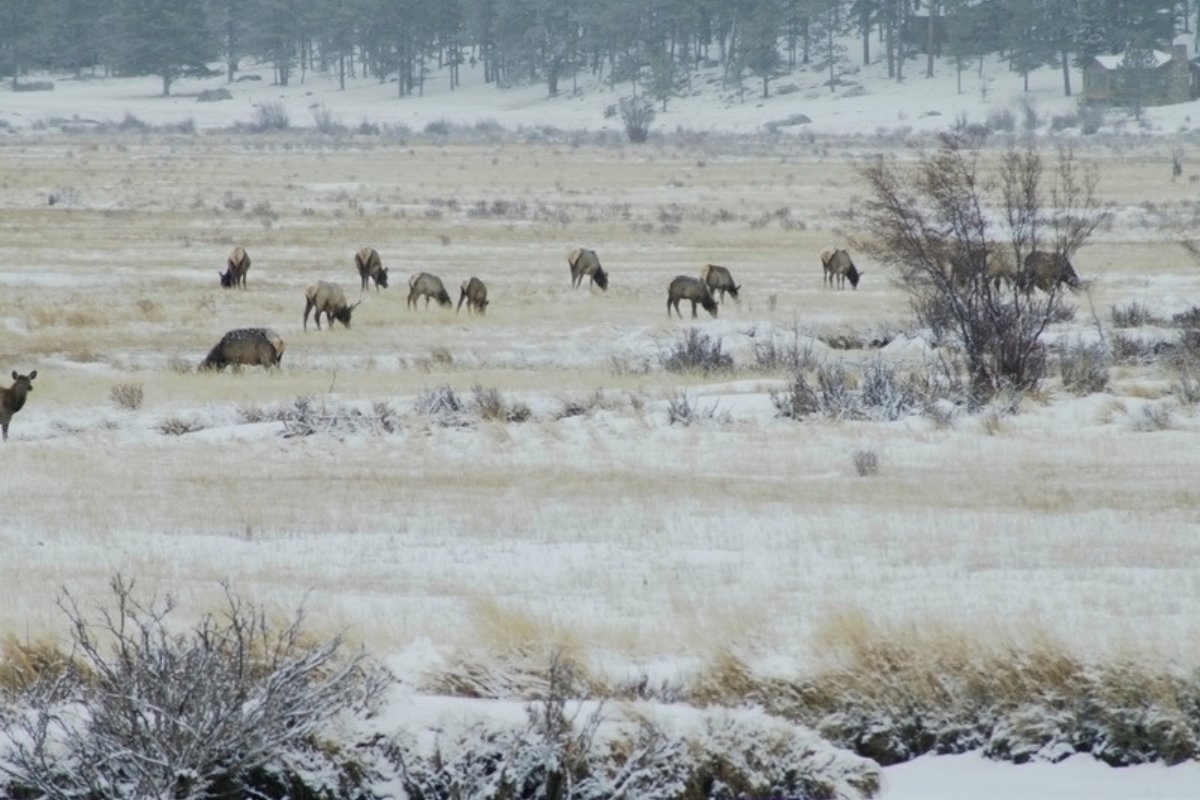
Winter is the hardest season for wildlife. Snow buries food, cold temperatures burn calories and deep snow makes every step more tiring. Deer, elk, moose and bighorn sheep survive by using as little energy as possible. Each time an animal runs from a person, it uses up fat reserves it needs to get through the winter. Keep these rules in mind:
- Keep your distance. The National Park Service says most parks require you to stay at least 25 to 50 yards from most animals and 100 yards from predators like bears and wolves. Check the rules for the park you're visiting.
- If an animal reacts to you, you're too close. If it stops feeding, stares at you or moves away, back off slowly.
- Never feed wildlife. Don't leave food or crumbs out, and store snacks where animals can't reach them.
- Keep dogs on a leash. The NPS recommends a 6-foot leash in wildlife areas. A chasing dog can exhaust an animal in deep snow.
- Respect winter closures. Some parks close areas in winter to protect wildlife. Stay on marked trails and follow posted signs.
- Drive slowly and pull completely off the road into designated areas when you stop to look at animals.
Look after yourself, too. Tell someone where you're going, carry a headlamp and extra layers, and turn back if the weather changes.
Frequently Asked Questions
What animals can you see in winter?
It depends on where you live, but deer, foxes, rabbits, squirrels, otters, ducks, bald eagles and many backyard birds stay active all winter. In some national parks you can also see elk, bison, moose and bighorn sheep.
What is the best time of day to see wildlife in winter?
Dawn and dusk are usually best, especially for deer and foxes. In winter many animals also feed during the day, so calm, sunny hours after a storm can be very good.
How close can you get to wild animals?
Not very close. Most national parks require at least 25 to 50 yards from most animals and 100 yards from bears and wolves. Use binoculars or a zoom lens for a closer look.
More Outdoor Ideas
- A Guide to Understanding Animal Tracks and Signs in the Wilderness
- The Essentials of Bird Watching: Equipment, Locations, and Identification Tips
- What Are the Best Practices for Responsible Wildlife Watching?
- Snowshoeing for Beginners: 8 Tips for Your First Trail
Pack your binoculars, check the sunrise time and head out after the next snowfall. The tracks will show you where to look.

Explore these outdoor tips too