
3 Essential Tips For Permaculture Gardening (With Links)


Permaculture gardening is more than a planting method—it’s a mindset that blends design, ecology, and everyday practicality to create living spaces that feed you and regenerate the land.
If you’re starting from scratch or refining a mature plot, the right principles will help you move from guesswork to an efficient garden layout, a truly self sustaining garden, and ultimately an abundant garden that thrives with less input over time.
Below, you’ll find three focused tips—each with a deep-dive link—to help you design smarter, avoid common mistakes, and choose practical actions you can implement this season.
Tip 1: Start With Regenerative Design (Not Just Plant Lists)
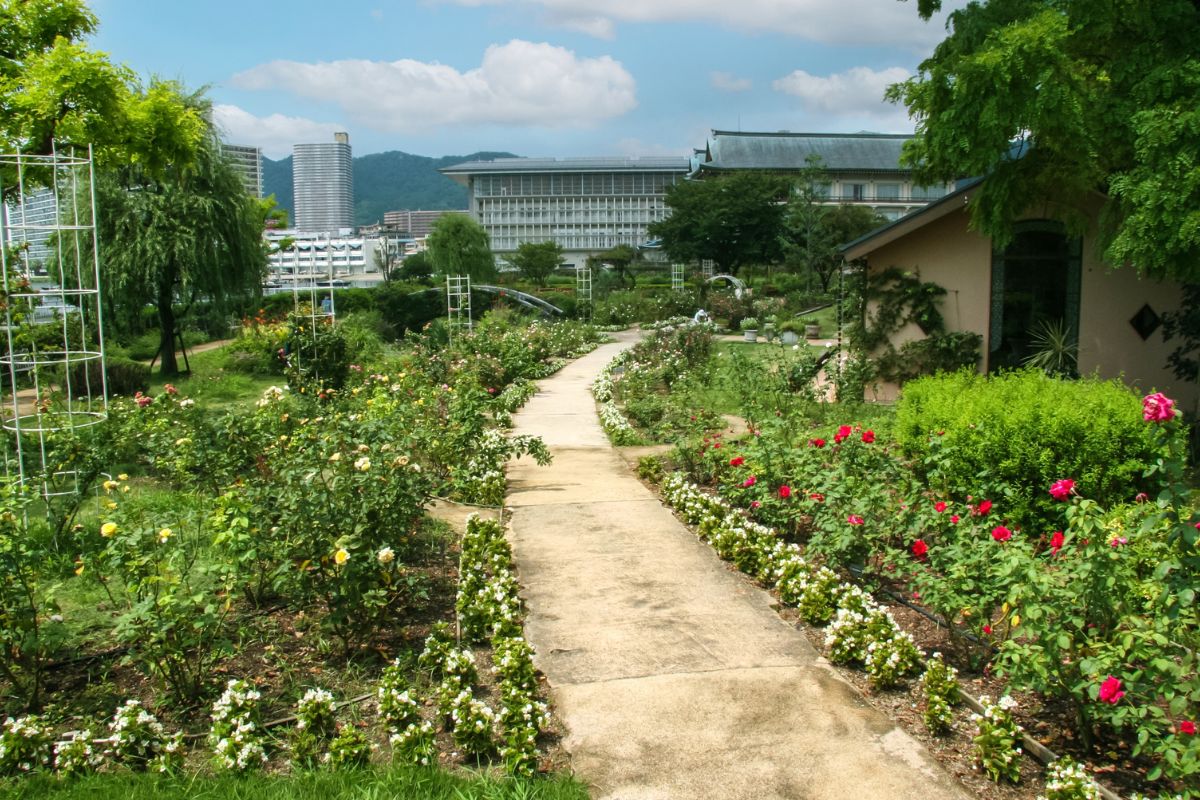 New growers often jump straight to “what should I plant?” before asking the more important question: “how should the space work?”
Begin with Permaculture Garden Design principles so each element supports another—water feeds soil, soil feeds plants, and plants shade and protect the system.
This is the essence of Permaculture Design: a landscape planned so flows of energy, water, and nutrients circulate rather than leak away.
Use a simple site analysis to map sun angles, wind, slopes, and water paths. From there, sketch a Permaculture Design Layout that minimizes walking distance to frequently used beds and maximizes passive irrigation.
Good design up front prevents expensive rework and accelerates the path to an abundant garden.
Ready to translate principles into action? Explore this step-by-step primer on setting up your first system: Starting Your Own Permaculture Garden.
It shows how to move from ideas to a functional plan, including soil preparation and bed positioning for a truly efficient garden layout.
As you iterate, zoom out again and refine the map—this iterative loop is the heart of Permaculture Layout thinking.
You’re not chasing a perfect blueprint; you’re building a feedback-friendly system that adjusts with the seasons and your household needs.
Tip 2: Design For Functions First—Then Choose Methods
 The fastest way to get stuck is to confuse generic “gardening” with systems design. Traditional planting can be productive, but permaculture prioritizes functions—water harvesting, nutrient cycling, habitat creation—before selecting techniques.
Understanding the difference between gardening and permaculture helps you craft a Permaculture Farm Plan or backyard strategy that endures.
List the functions you need—year-round vegetables, pollinator support, composting, greywater reuse, shade, windbreaks—and choose elements that “stack functions.”
For example, a fruit tree offers food, shade, leaf mulch, and habitat; a hedge slows wind and traps moisture. When each component earns its place, you end up with a naturally Self Sustaining Garden.
From your function map, develop Permaculture Design Plans tailored to your context. For a patio or balcony, lean into Urban Permaculture—container guilds, trellised climbers for vertical yield, worm bins to cycle kitchen scraps.
For a small suburban plot, convert lawn edges into perennial beds and place herbs near the door for quick harvests.
If you manage a larger site, document a Permaculture Design Layout Small Farm that puts high-maintenance crops near the house (Zone 1), orchards and chickens farther out (Zones 2–3), and woodlots or wild areas on the edges (Zones 4–5).
This “zones and sectors” lens keeps labor in check while boosting resilience.
Tip 3: Take Action With Small, High-Leverage Projects
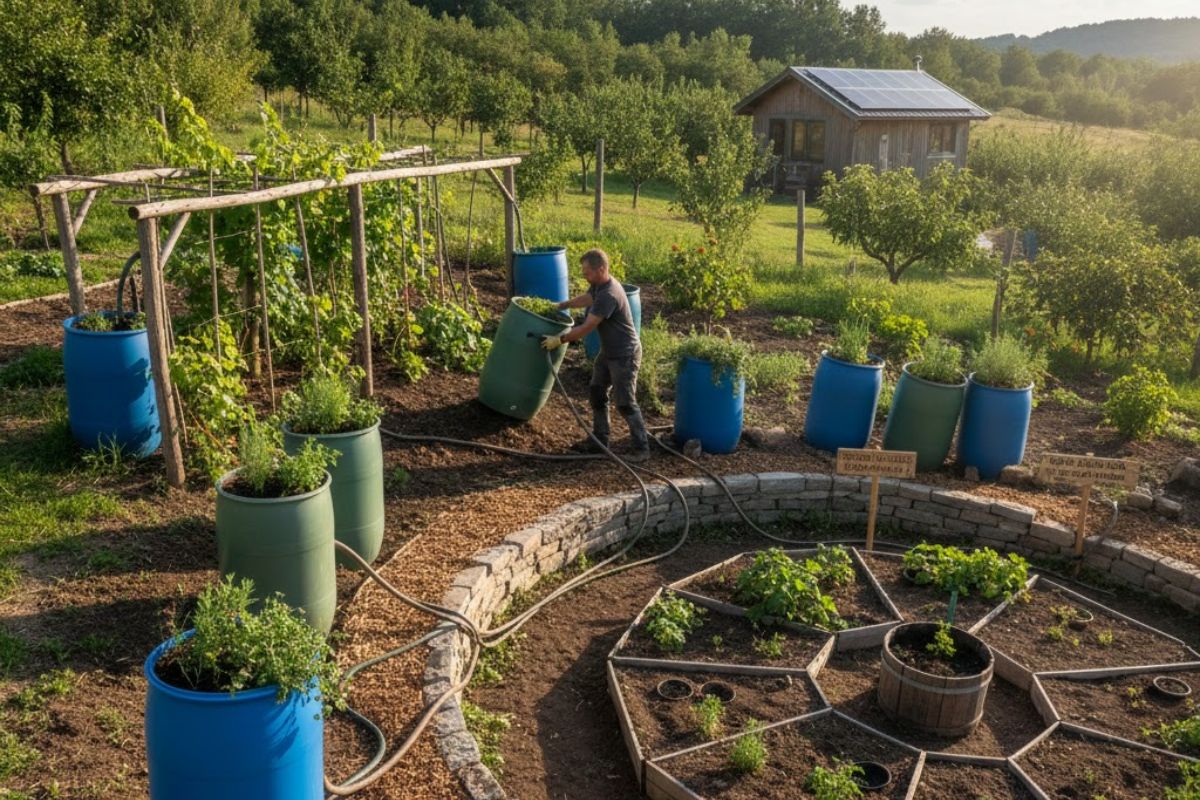 Analysis is vital—but momentum comes from action. Start with one or two Permaculture Projects that produce visible benefits quickly. That might be a mini swale to capture roof runoff, a compost system, or a herb spiral near the kitchen.
Each quick win builds confidence and informs the next iteration of your Permaculture Garden Design Layout.
Not sure which projects fit your space? Get inspiration here: 10 Permaculture Projects For Your Backyard.
These ideas range from simple soil-building to water-wise landscaping and are perfect for Backyard Permaculture paths where time and budget are limited.
As you experiment, keep a lightweight journal linking each project to a function (e.g., “compost bin → nutrient cycling”).
Over several months you’ll notice a shift toward a truly self sustaining garden, where routine chores shrink and yields grow more predictable.
Finally, revisit your maps twice a year. Tweak bed shapes, add mulches, or reposition rain barrels to strengthen your Permaculture Layout. A sequence of small, well-placed actions beats a single grand overhaul every time.
Applying These Tips To Different Contexts
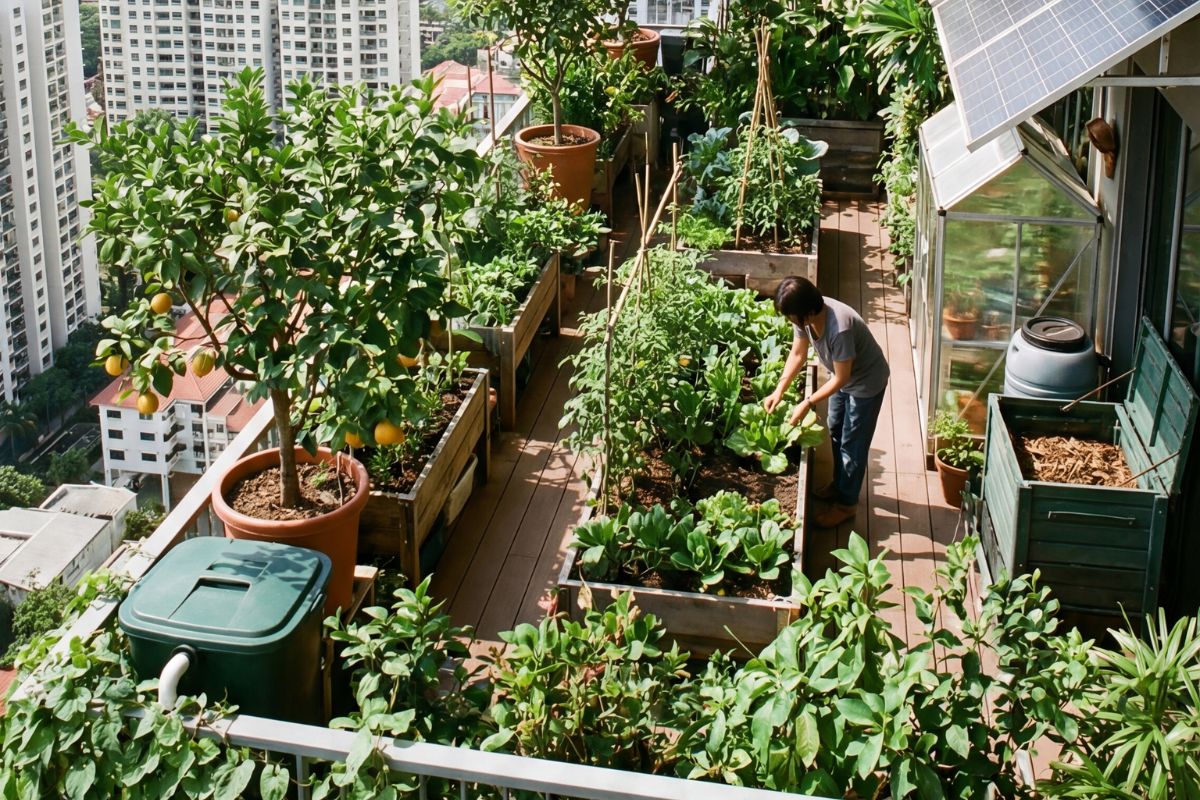 Whether you tend a balcony, a townhouse yard, or a few rural acres, the same framework applies: observe, design, test, refine.
In dense neighborhoods, Urban Permaculture tools—vertical gardening, community composting, and shared tool libraries—unlock impressive yields in compact spaces while reducing waste.
On quarter-acre lots, combine perennial guilds with annual beds to balance stability and variety. Aim for an efficient garden layout that clusters high-use elements near the door: herbs, salad greens, water catchment, and a potting bench.
This layout shortens maintenance loops and nudges you to harvest more frequently.
For rural homesteads, draft a phased Permaculture Farm Plan that prioritizes water security first—swales, ponds, keyline-informed beds—then soil, then perennials.
Build paths and access routes early to prevent compaction. Over time, the result is an abundant garden that also provides habitat and climate buffers.
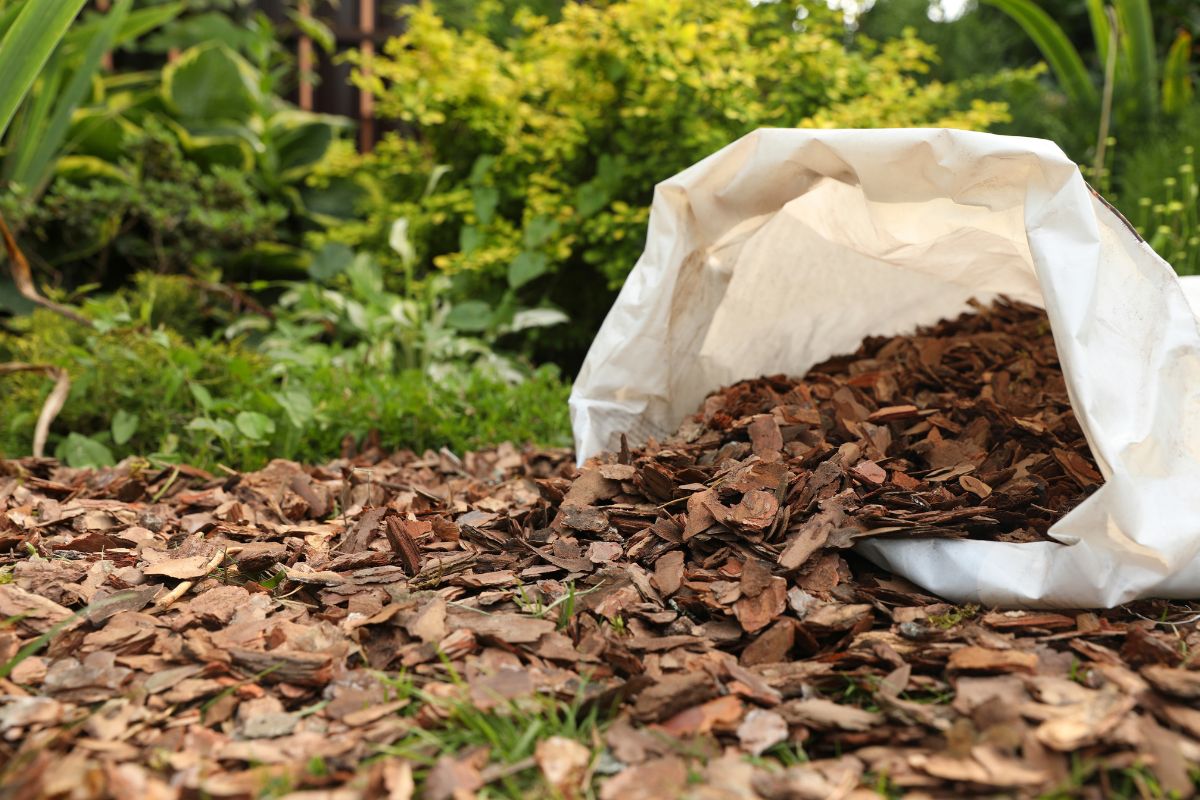
In all cases, anchor your choices in Sustainable Garden Ideas: mulch to protect soil life, diversify plantings for resilience, reduce bare soil, and cycle nutrients locally.
These practices protect your time and budget while increasing ecological value.
From Inspiration To A Working Plan
 Here’s a simple way to move forward this month. First, write down three outcomes you want (e.g., “fresh salad greens year-round,” “less watering,” “more pollinators”). Second, sketch a quick Permaculture Design Layout placing beds,
paths, and water features to serve those outcomes. Third, choose one starter project (mulch, compost, rain barrel) and schedule it for this weekend.
As you add pieces, your design evolves toward a cohesive whole. Keep your eyes on relationships: where does water flow, how does wind move, which plants support each other?.
This systems lens is why learning How To Become A Permaculture Designer—even informally—pays off. It trains you to see patterns and make decisions that reduce waste while increasing yield.
If you like structured learning, break your site into manageable zones and tackle one zone per season. Document your choices so the next round of Permaculture Design Plans builds on real-world feedback.
The habit of reflection turns every season into a design studio.
Above all, remember that Permaculture Gardening is iterative. There’s no final, perfect map—only a living system that gets smarter as you observe, adjust, and keep the energy loops tight.
More Gardening Tips 👇🏼👇🏼