
How to Create a Cascade Bonsai Tree (Kengai Style)


A cascade bonsai tree, or Kengai, captures the beauty of trees growing down mountain cliffs—gracefully bending under nature’s pressure.
This classic bonsai style represents resilience and balance between strength and flexibility.
If you’d like to create your own cascade bonsai, follow this simple step-by-step guide covering everything from materials to maintenance.
Materials You’ll Need
Before you start shaping your bonsai, make sure you have these essential tools and supplies:
A young, healthy bonsai tree (Juniper, Pine, Ficus, or Chinese Elm works best)
Bonsai wire (aluminum or copper, 1–3 mm)
Wire cutters and pliers
Bonsai pruning shears
Raffia (to protect the trunk during bending)
Cascade-style bonsai pot (tall and narrow)
Well-draining bonsai soil mix
Optional: moss or small rocks for decoration
Step-by-Step Tutorial: How to Create a Cascade Bonsai Tree
Step 1: Study the Tree

Observe your bonsai’s natural growth pattern.
Notice where the trunk bends and how branches develop.
This will help you decide the direction of your cascade.
Step 2: Clean and Prune
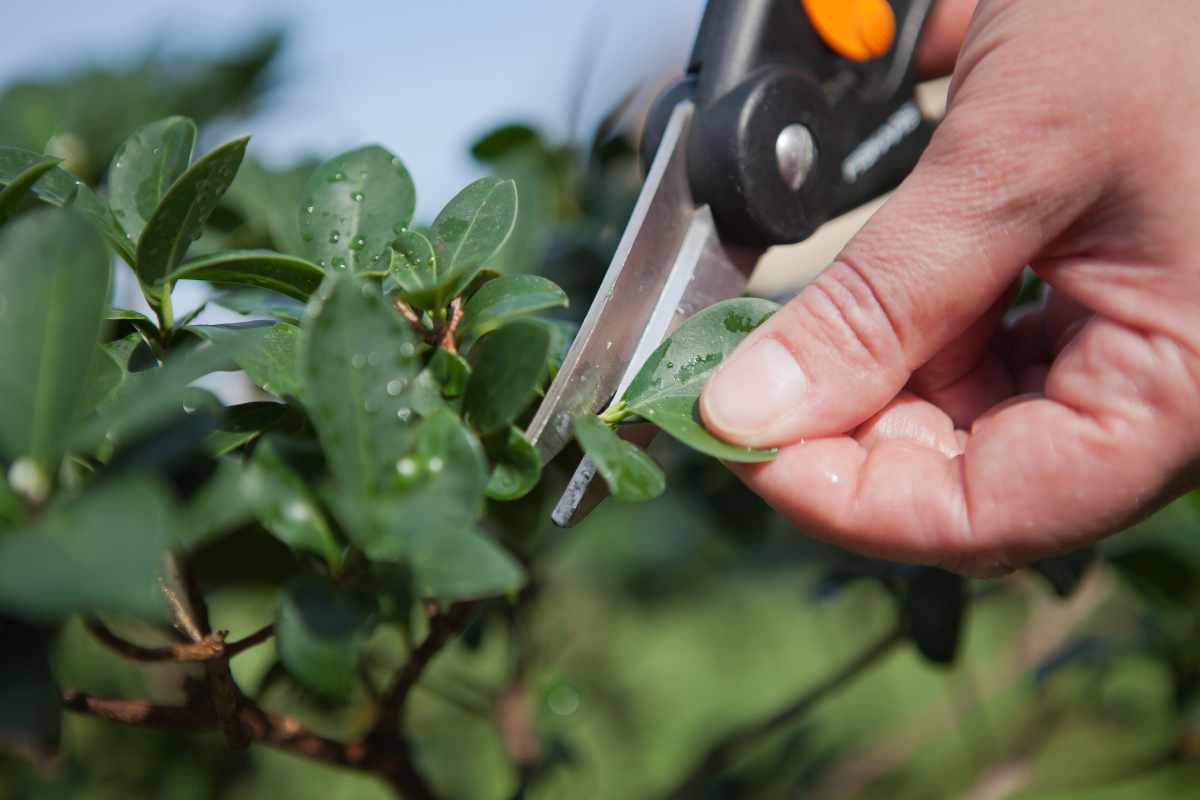
Remove any dead leaves, crossing branches, or unwanted shoots.
Focus on defining a clear main trunk and keeping foliage dense near the top for balance.
Cut back heavy branches that distract from the downward line.
Leave side branches to help create volume later.
Step 3: Wrap and Wire

To avoid breaking the trunk during shaping:
Wrap raffia around the trunk for protection.
Apply bonsai wire from the base upward in a smooth spiral.
Secure each branch that you plan to bend.
Make sure the wire is snug but not tight—it should support the bend without cutting into the bark.
Step 4: Create the Cascade Curve

Now the artistic part begins!
Gently bend the trunk downward, below the rim of the pot, forming a natural curve.
Use additional wires to fix branches flowing in the same direction.
Keep the top compact and slightly tilted forward.
Step 5: Potting and Positioning
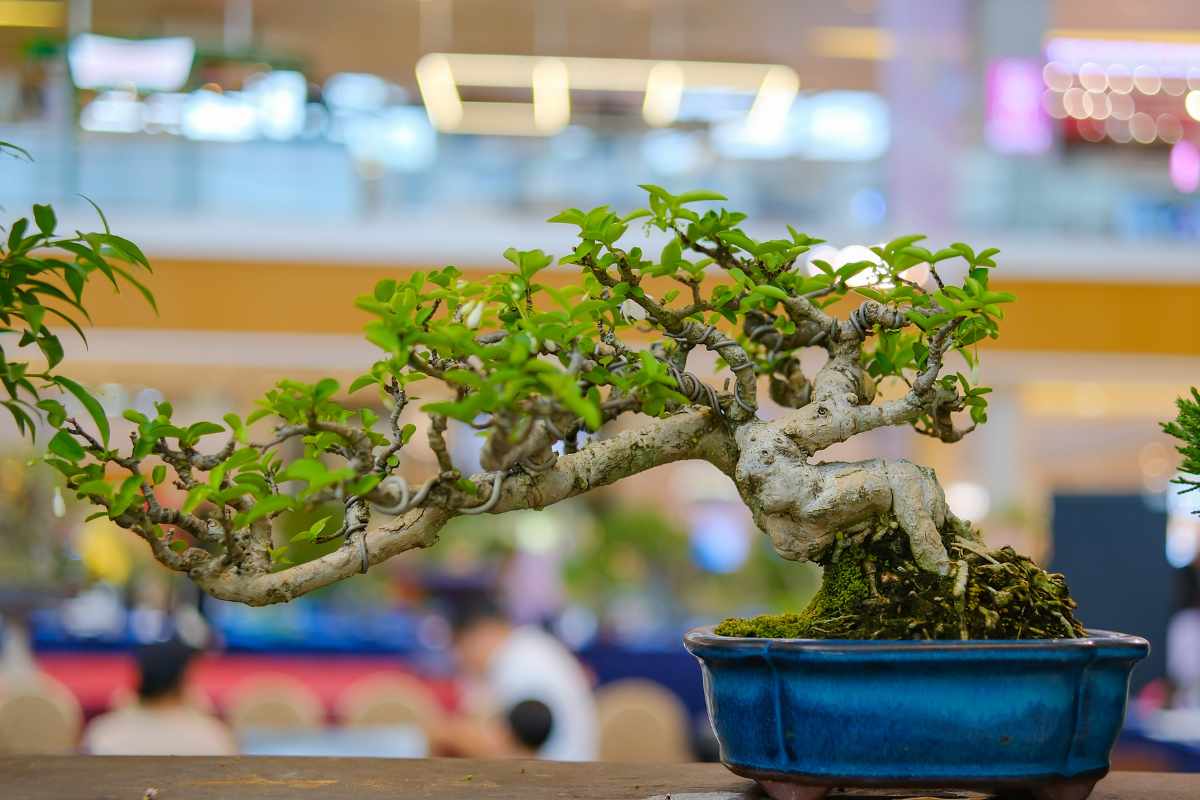
Use a tall, narrow cascade pot to enhance the downward motion of your design.
Plant the tree off-center to give the illusion of movement.
Secure it with a wire through the drainage holes.
Add bonsai soil gradually, pressing lightly around the roots.
Finish with moss or small stones for stability and aesthetics.
Step 6: Watering and Recovery
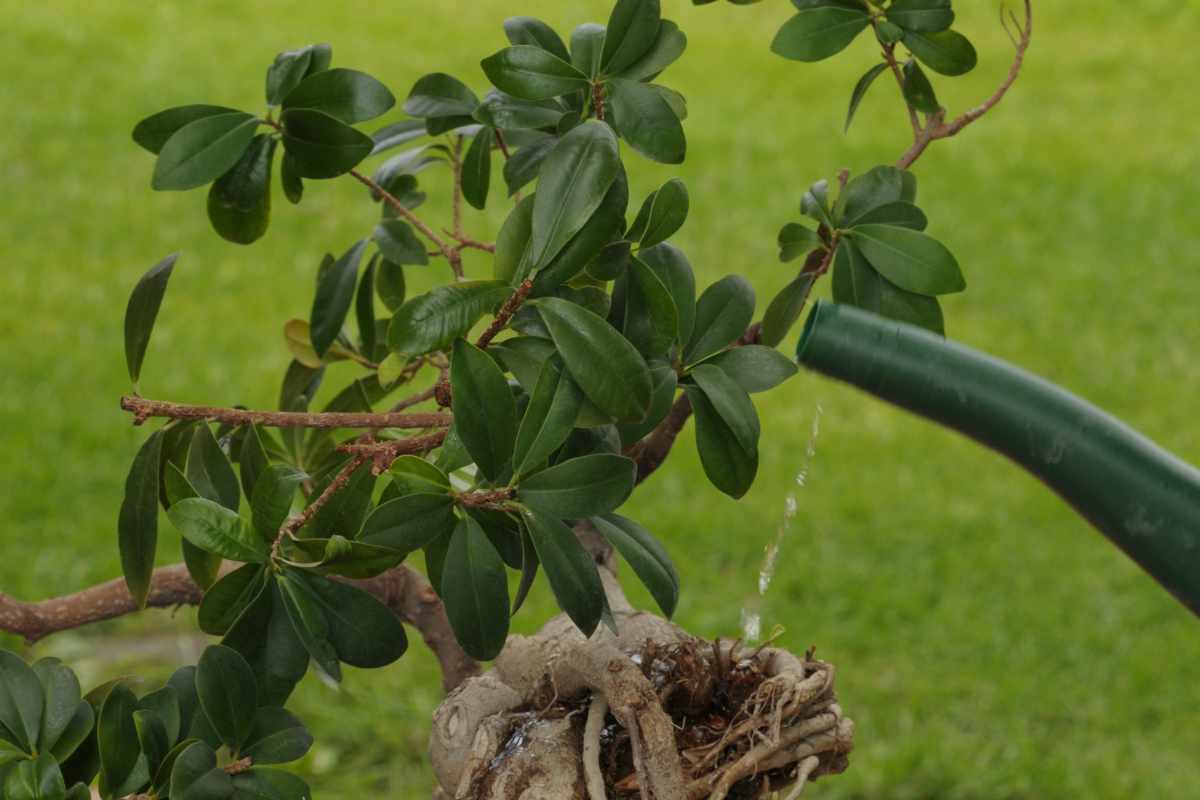
After wiring and shaping:
Keep the soil slightly moist (not soaked).
Place the bonsai in bright, indirect light for a few weeks.
Check wire tension regularly to avoid bark marks.
Once recovered, resume normal watering and light feeding with bonsai fertilizer.
Extra Tips for a Healthy Cascade Bonsai

Be patient: The cascade shape takes time to refine. Small adjustments are better than one big bend.
Use young trees: Younger wood is more flexible and less likely to crack.
Prune often: Regular trimming keeps the silhouette neat and balanced.
Rewire carefully: Remove old wire once branches set and rewire only if needed.
Choose the right pot: A tall pot is key for emphasizing the waterfall effect.
Final Thoughts
Creating a cascade bonsai tree blends patience, precision, and creativity.
Each curve tells a story of strength and survival, echoing nature’s elegance on a miniature scale.
With time, care, and steady hands, your bonsai will transform into a living waterfall—a graceful reminder that beauty often flows downward.
Enjoy This Video Tutorial

Source: We are The Bonsai Supply
Don’t forget to Subscribe to our Newsletter to receive amazing tips and tricks about Gardening and the FREE Ebook Green Living Strategies!
Did you find this post Useful or Inspiring? Save THIS PIN to your GARDENING Board on Pinterest! 😊

Once again, thank you for visiting our website!
We hope you've enjoyed exploring the content we've created for you.
Give yourself the chance to learn, get inspired, and have even more fun, keep browsing...
More Gardening Tips 👇🏼👇🏼