
Easy Guide for Growing Marigold Flowers

Marigolds are cheerful, compact annuals, with flower shapes that can resemble daisies, coreopsis, and even carnations. Although it is native to Mexico, you can grow marigold plants almost anywhere. They are widely adaptable and very low maintenance.
They also grow quickly and can be sown directly after the last spring frost for a bright blooming summer. For many people, marigold flowers (Tagetes) are among the first flowers they remember growing.
These bright flowers are often used as Mother's Day gifts and school growing projects. Even now, you can grow marigold flowers in your own garden. Let's see how to grow marigolds.
Unlock the Secrets of Beautiful Blooms – Find Top Books on Flowers Today!


Types of marigolds
There are several species and divisions of marigolds. Most are of modest stature, but there is a great variety between the different types.
You can find short bed marigolds that grow only 4 to 6 inches tall and taller varieties that can reach 18 inches and are excellent cut flowers. The three most commonly grown types are African, French, and single marigolds.
African - These marigold flowers tend to be tall.
French - They tend to be dwarf varieties.
Triploid - These marigolds are a hybrid between African and French and are multi-colored.
Single - They have long stems and look like daisies.
Some people also refer to calendulas as pot marigolds, but they are not related to the flowers that most people know as marigolds.

How to grow marigolds
Marigolds require little maintenance once established and are remarkably pest-free. In fact, they are often used to keep pests at bay.
Marigolds can bloom almost non-stop and will continue throughout the summer until frost. To achieve this uninterrupted flowering, keep your marigolds headless.
- Light
For the healthiest flowers and plants, plant your marigolds in full sun.
- Soil
Wonders are not picky. Any good garden soil (and a little water during dry spells) should keep them happy, as long as the soil isn't too acidic.
Keep the soil pH above 6.0. They also don't need soil that is particularly rich in organic matter and that seems to grow best in leaner soils.
- Water
When planting your marigold seeds or plants, make sure they are getting water regularly. Do not leave them on dry ground for more than a few days.
If it is very hot and sunny, water them every day. After a few weeks to establish a good root system, they will be more drought-tolerant, but will still flower better if watered weekly.
- Temperature and humidity
Marigolds are some of the few garden flowers that are true annuals. Gardeners in all planting areas should replant them every year.
They tolerate a wide range of temperatures but can acquire powdery mildew in humid or humid summers. Planting in full sun and providing room for airflow will alleviate this problem.
- Fertilizer
Your marigolds won't need any supplemental fertilizer unless your soil is extremely poor. The best thing you can do to keep them in bloom is to detonate them regularly.
Growing from seed
Wonders are very easy to start from seed. Its large, easy-to-handle seeds are often used with children in school projects. You can plant seeds indoors 6 to 8 weeks before the last frost date, but it's not worth it.
Marigolds germinate quickly outdoors when sown directly, and because plants don't really start growing until the weather warms up, straight-seeded plants have time to catch up with plants that started indoors.
Of course, you can find seedlings in almost every nursery, so you don't need to start from seed if you really want to start your flower garden.
We Hope You Enjoy this Video
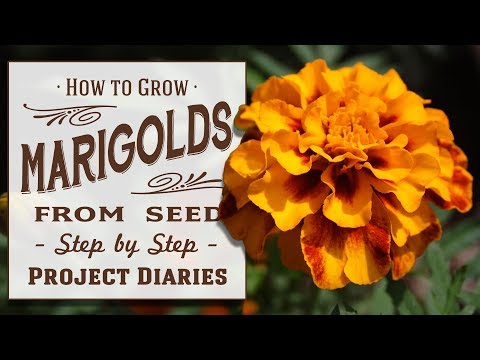
Source: Project Diaries
Did you find this post Useful or Inspiring? Save THIS PIN to your GARDENING Board on Pinterest! 

Last update on 2025-12-30 / Affiliate links / Images from Amazon Product Advertising API

More Gardening Tips 👇🏼👇🏼