
Cozy Knit House Slippers: Free Pattern and Video Tutorial

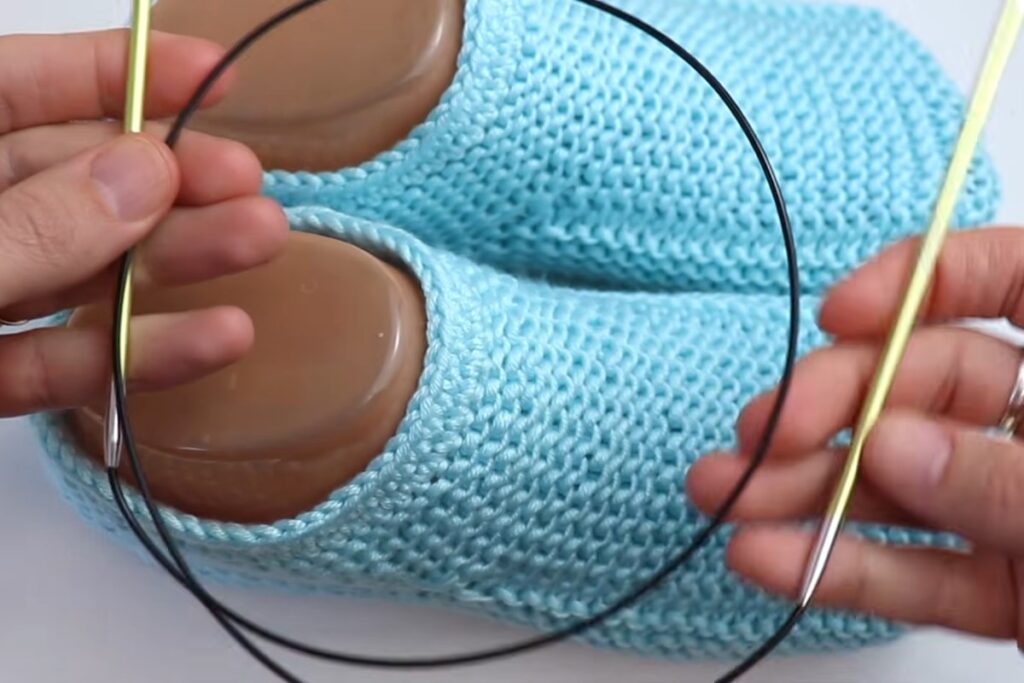
Cozy knit house slippers are a quick, practical project: these low-cut slippers are worked flat in garter stitch on 3.5 mm needles with about 70 g of medium-weight yarn, then shaped at the sole and heel and finished with a simple crochet edge. Crazy Hands Knitting & Crochet shares the free written pattern on the designer's website and a full video tutorial of about 37 minutes.
The slippers start with a garter stitch band, then the centre stitches are worked on their own to form the instep over the top of the foot. Stitches are picked up along both sides, the sole is closed by working the side stitches together with the centre panel, and the heel is shaped with decreases and sewn closed. Two rounds of single crochet around the opening give the slipper a neat, firm edge.
Because the whole slipper is garter stitch, the fabric is thick, squishy and warm underfoot, which makes it a good pick for chilly floors and for handmade gifts. If you are putting together a list of quick presents, these sit nicely next to the projects in our knitted Christmas gift ideas.
Cozy Knit House Slippers at a Glance
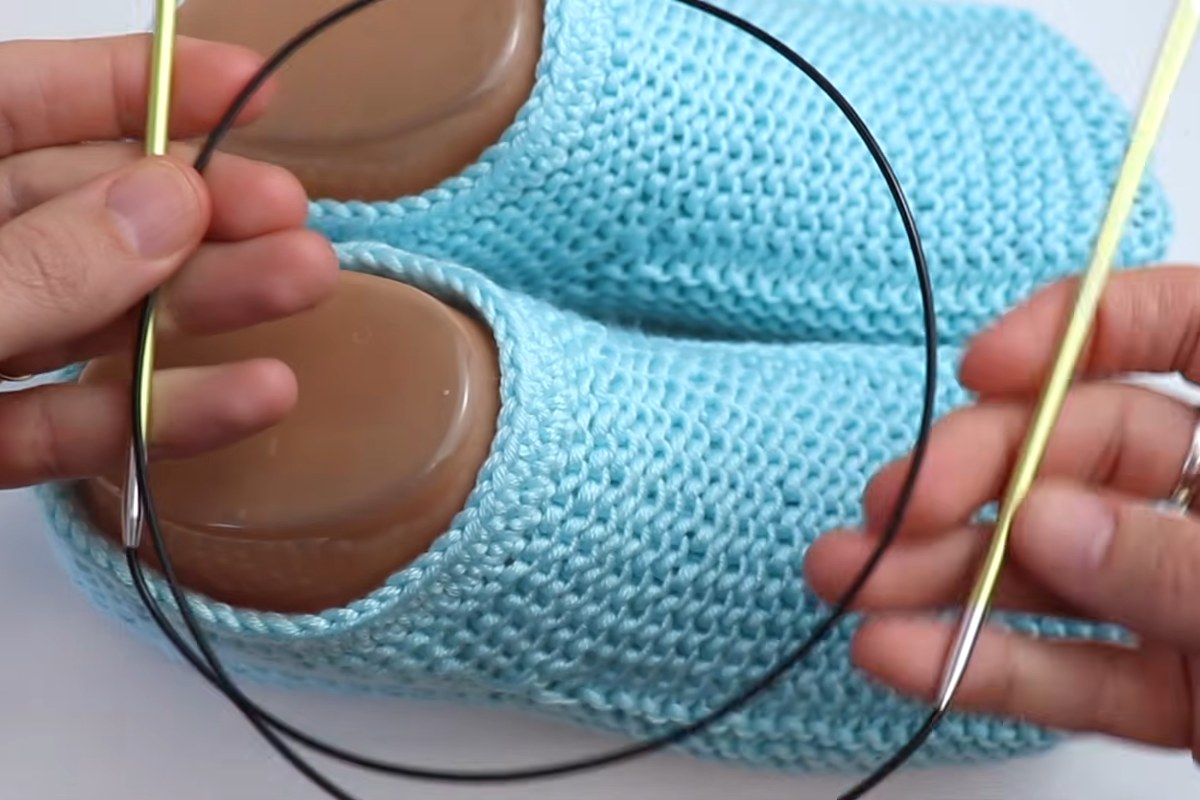
- Designer: Crazy Hands Knitting & Crochet
- Size: women's US 6.5-7.5 (foot length 23.5-24.5 cm)
- Yarn: about 70 g of medium-weight (category 4) yarn; the sample uses a 100% acrylic super soft yarn
- Needles: 3.5 mm (US 4) circular or straight needles, plus a 3 mm crochet hook for the edging
- Gauge: 17 stitches = 4 in (10 cm) in stockinette
- Construction: knitted flat in garter stitch, heel seamed, crochet edge around the opening
- Video length: about 37 minutes
What You'll Need
- About 70 g of soft medium-weight yarn for the pair
- 3.5 mm (US 4) knitting needles, circular or straight
- 3 mm crochet hook
- Stitch markers
- Yarn needle for the heel seam and the ends
A circular needle is handy here even though the slipper is knitted flat: once the side stitches are picked up the row becomes quite long, and the cable holds them comfortably while you work.
How the Slippers Are Made
1. The garter stitch band
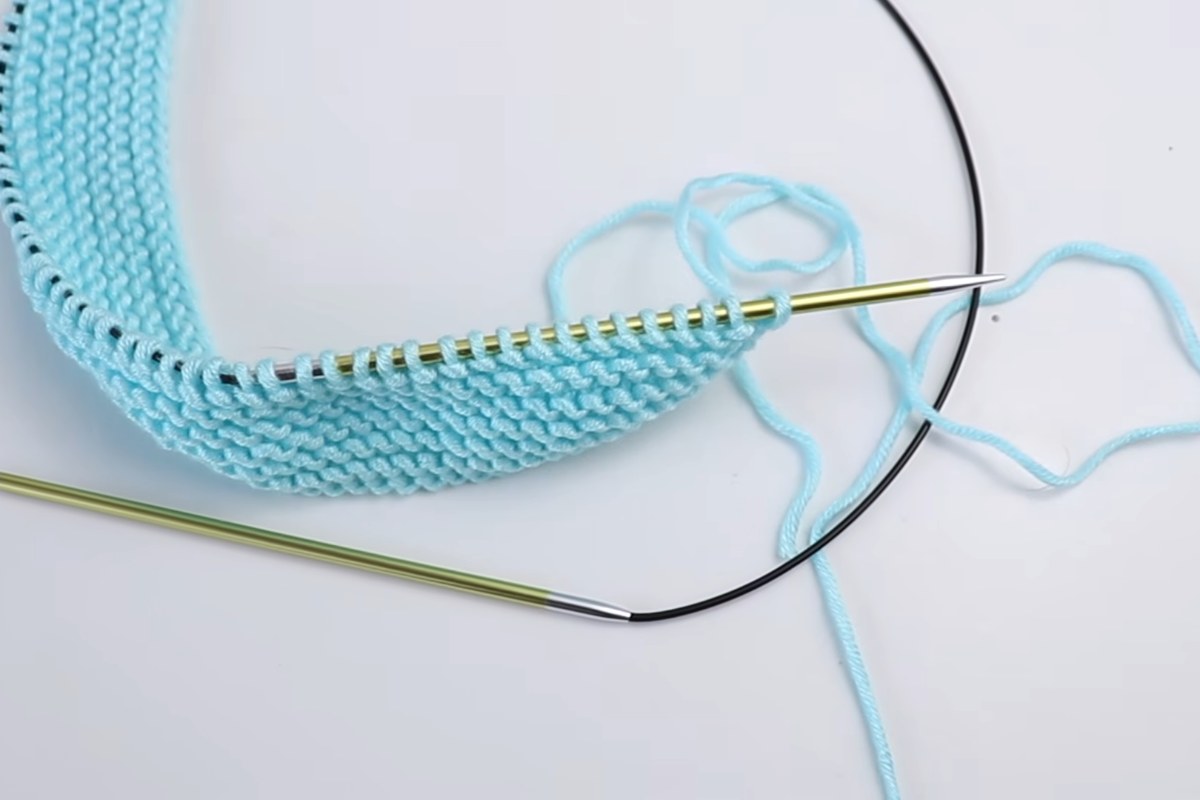
You cast on and knit a short band in garter stitch with slipped selvage stitches. The slipped edges keep the sides tidy, which matters later when you pick up stitches and sew the heel.
2. The instep
Markers divide the stitches into three sections. Only the centre section is worked for the instep, back and forth, until it is long enough to reach the middle of your big toenail. This is the part to try on as you go, because it is the easiest place to adjust the length of the slipper for your own foot.
3. The sides
Stitches are picked up along both edges of the instep panel and joined with the side sections, so the whole slipper is on the needle again. A few more garter rows build the sides that wrap around the foot.
4. The sole and heel
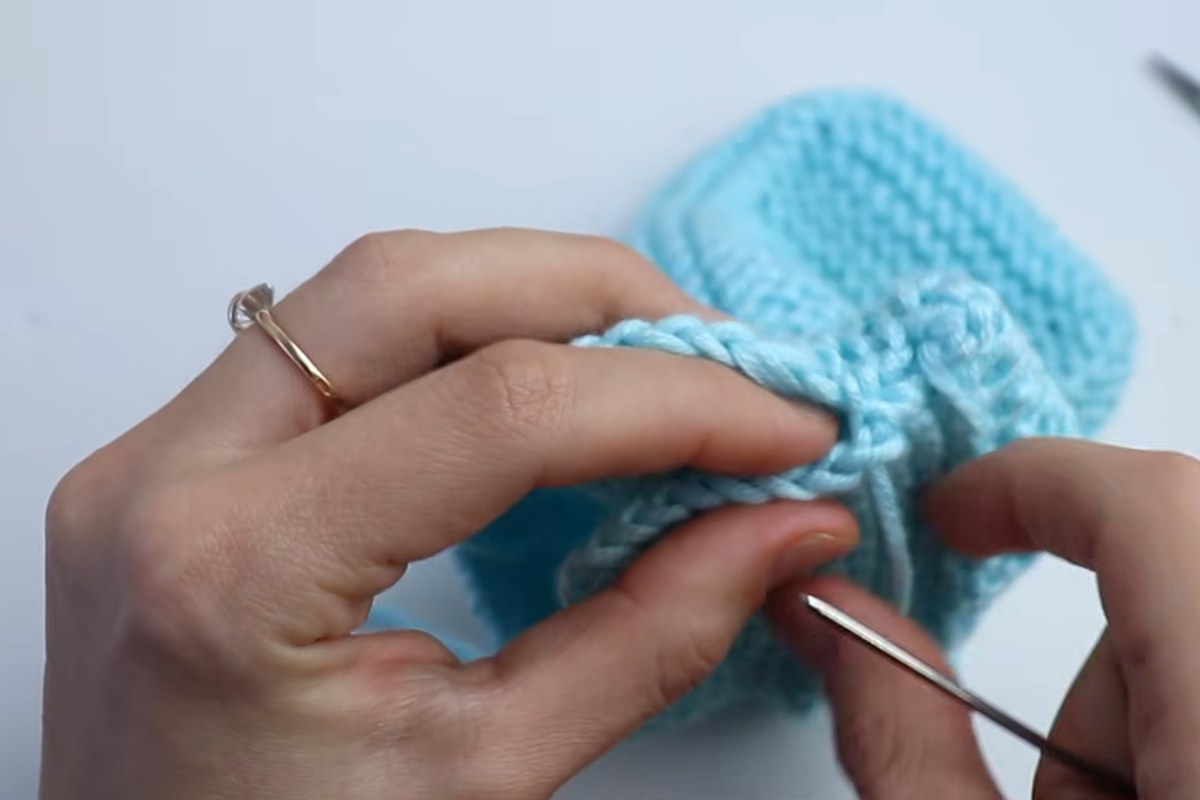
The sole is closed without any seam: on every row the centre panel takes in one stitch from each side, so the side stitches are gradually used up underneath the foot. The heel is then shaped with further decreases until only a few stitches remain. A long yarn tail is used to sew the back of the heel closed, working through the slipped selvage stitches on each side.
5. The crochet edging
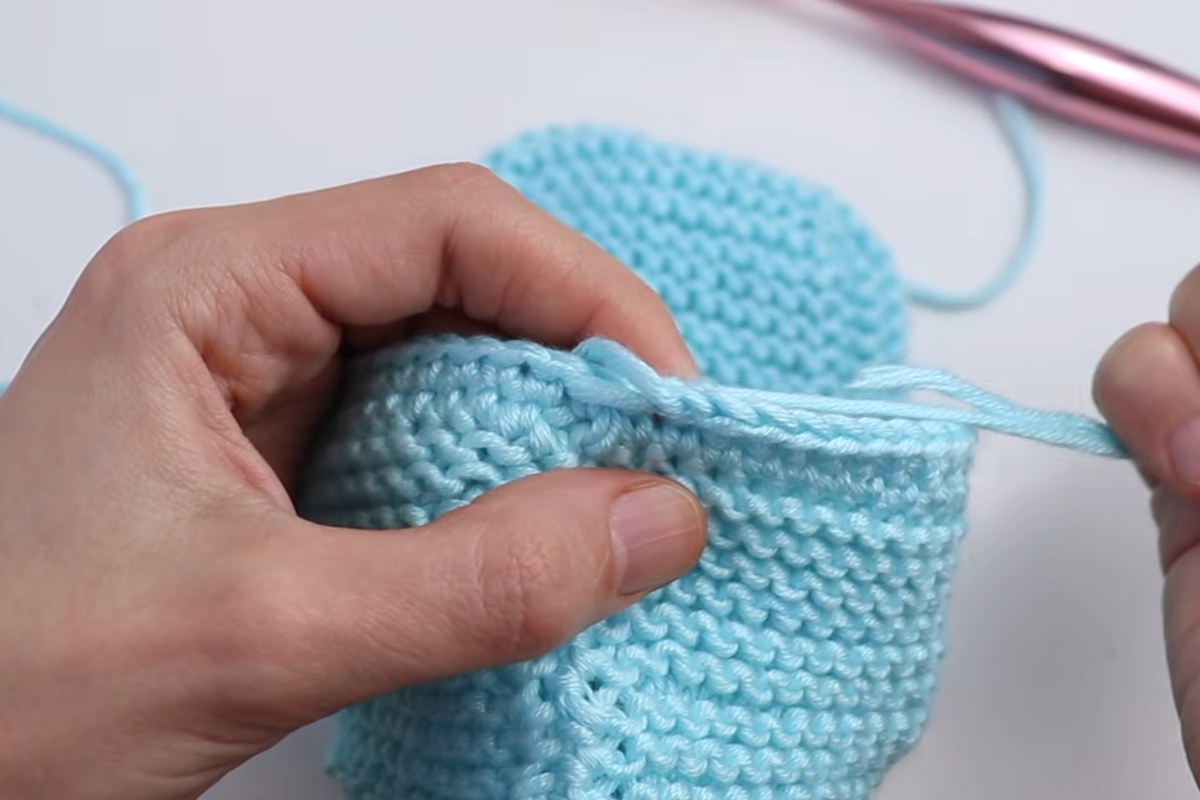
To finish, two rounds of single crochet go around the ankle opening with the 3 mm hook. The edge stops the opening from stretching and gives the low-cut slipper a clean outline. Weave in the ends and knit the second slipper the same way.
Tips for Better Slippers
- Measure the instep on your foot. The pattern gives a row count, but the real guide is the centre of the big toenail, so slip the piece on and check before you pick up the side stitches.
- Keep the selvage stitches consistent. Neat slipped edges make picking up stitches and sewing the heel much easier.
- Use the second end of the ball. When you start the instep you need a new strand; pulling the inner end of the ball saves cutting and joining yarn.
- Check your gauge. If you use a different yarn, knit a small swatch first so the slippers come out at the stated size.
- Make them non-slip if needed. Garter stitch can be slippery on hard floors, so a non-slip sole treatment is worth thinking about for children or older family members.
Looking for something to go with them? Our easy sock knitting pattern and these easy cozy knitted slippers are two more warm projects for winter evenings.
Images and patterns courtesy of Crazy Hands Knitting & Crochet
Enjoy the Video Tutorial

Source: Crazy Hands Knitting & Crochet on YouTube
Frequently Asked Questions
What size are these knit house slippers?
The pattern is written for women's US sizes 6.5-7.5, a foot length of about 23.5-24.5 cm. Because the instep is worked until it reaches the centre of the big toenail, you can fine-tune the length to the person who will wear them.
Are the slippers knitted in the round?
No. Everything is knitted flat in garter stitch. The sole closes as you work and only the back of the heel is sewn, then a crochet edge is added around the opening.
How much yarn do I need?
The designer used about 70 g of medium-weight acrylic yarn for the sample pair in this size. If you change yarn or make the slippers longer, allow a little extra.
More from Crazy Hands Knitting & Crochet
- Knit Hat-Hood with Ties: Free Pattern and Video Tutorial
- How to Knit Lace Booties for Newborn Babies
- 7 Knitted Christmas Gift Ideas (Free Video Tutorials)
You may also like