
Boost Your Parkour Skills: Proven Techniques for Mastery

Parkour is not just a sport; it’s a way of life. The art of moving through urban environments with speed, efficiency, and creativity requires not only physical strength but also mental fortitude.
Whether you’re a beginner or an experienced traceur, there’s always room to improve and refine your Parkour skills.
In this article, we’ll explore proven techniques that can help you master the art of Parkour and take your abilities to the next level.
Mastering the Fundamentals of Parkour
To truly excel in Parkour, it's essential to build a strong foundation by mastering the basics.
Parkour is about more than just flashy flips and daring jumps; it’s about control, precision, and understanding your body's capabilities. Here’s how you can start mastering the fundamentals:
Strength and Conditioning
Before you can tackle advanced Parkour moves, you need to ensure that your body is prepared for the physical demands of the sport.
Strength and conditioning are critical components of any successful Parkour training regimen. Focus on building strength in your core, legs, and upper body.
Exercises like pull-ups, push-ups, squats, and planks are excellent for developing the muscles you’ll rely on during Parkour movements.
Flexibility and Mobility
Flexibility is just as important as strength when it comes to Parkour. A flexible body can better absorb impacts and maintain balance, which is crucial for executing precise movements.
Incorporate daily stretching routines that focus on your hips, hamstrings, calves, and shoulders. Additionally, work on improving your mobility through dynamic stretches and movements that mimic Parkour techniques.
Balance and Coordination
Balance and coordination are key skills every traceur needs to build. They help you move along narrow ledges, land smoothly, and flow from one movement to the next.
Practice balance exercises such as standing on one leg, walking on a balance beam, or doing yoga poses like the tree pose. Over time, these exercises will enhance your overall stability and body control.
Parkour Techniques for Beginners
If you’re new to Parkour, start by learning the fundamental techniques. These are the building blocks that will allow you to progress safely and confidently.
Here are some essential Parkour techniques for beginners:
The Roll
One of the most important techniques in Parkour is the roll. This move allows you to absorb impact after a jump or fall, reducing the risk of injury.
To perform a roll, start by landing on the balls of your feet with your knees slightly bent. Tuck your head to one side and roll diagonally across your back, from one shoulder to the opposite hip.
Practice this movement on soft surfaces until it becomes second nature.

Precision Jumps
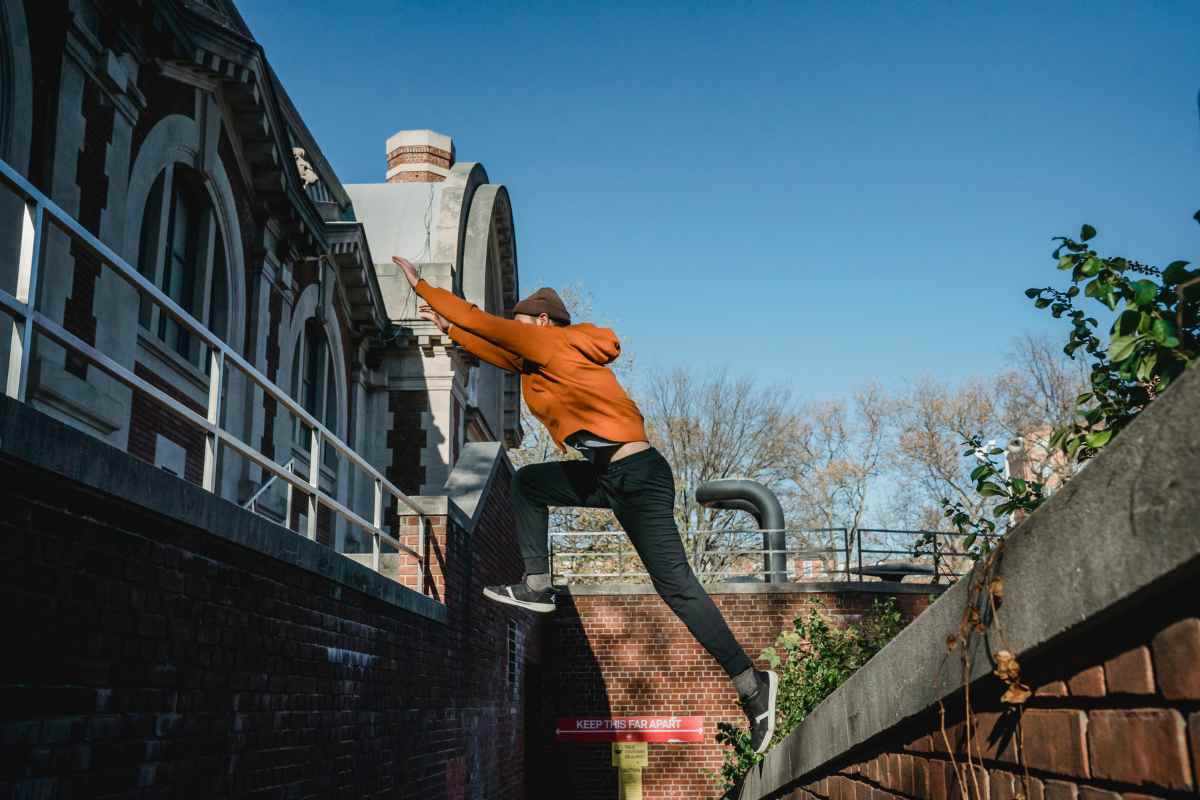
Precision jumps are another core technique in Parkour. These jumps require you to leap from one point to another with accuracy and control.
Begin by practicing small jumps between two objects, focusing on sticking the landing without losing balance. As you gain confidence, increase the distance and height of your jumps.
Vaults
Vaulting is a technique used to clear obstacles quickly and efficiently. There are several types of vaults, including the speed vault, kong vault, and lazy vault.
Start with the speed vault, which involves placing one hand on an obstacle and swinging your legs over it. As you progress, experiment with other vaulting techniques to expand your repertoire.
Advanced Parkour Techniques
Once you’ve mastered the basics, it’s time to move on to more advanced Parkour techniques.
These moves require greater strength, coordination, and confidence, but they can take your Parkour skills to the next level.
Wall Runs
The wall run is a classic Parkour move that involves running up a vertical surface. To perform a wall run, approach the wall at a moderate speed and jump off one foot.
As you make contact with the wall, drive your opposite foot up and push off with your hands to gain height. This move is often used to scale walls or reach higher platforms.
Tic-Tacs
Tic-Tacs is another advanced Parkour technique that involves using a wall or other vertical surface to change direction mid-air.
To execute a tic-tac, approach the wall at an angle and plant one foot against it. Push off the wall to change direction and continue your movement. This technique is particularly useful for navigating tight spaces or avoiding obstacles.
Cat Leaps
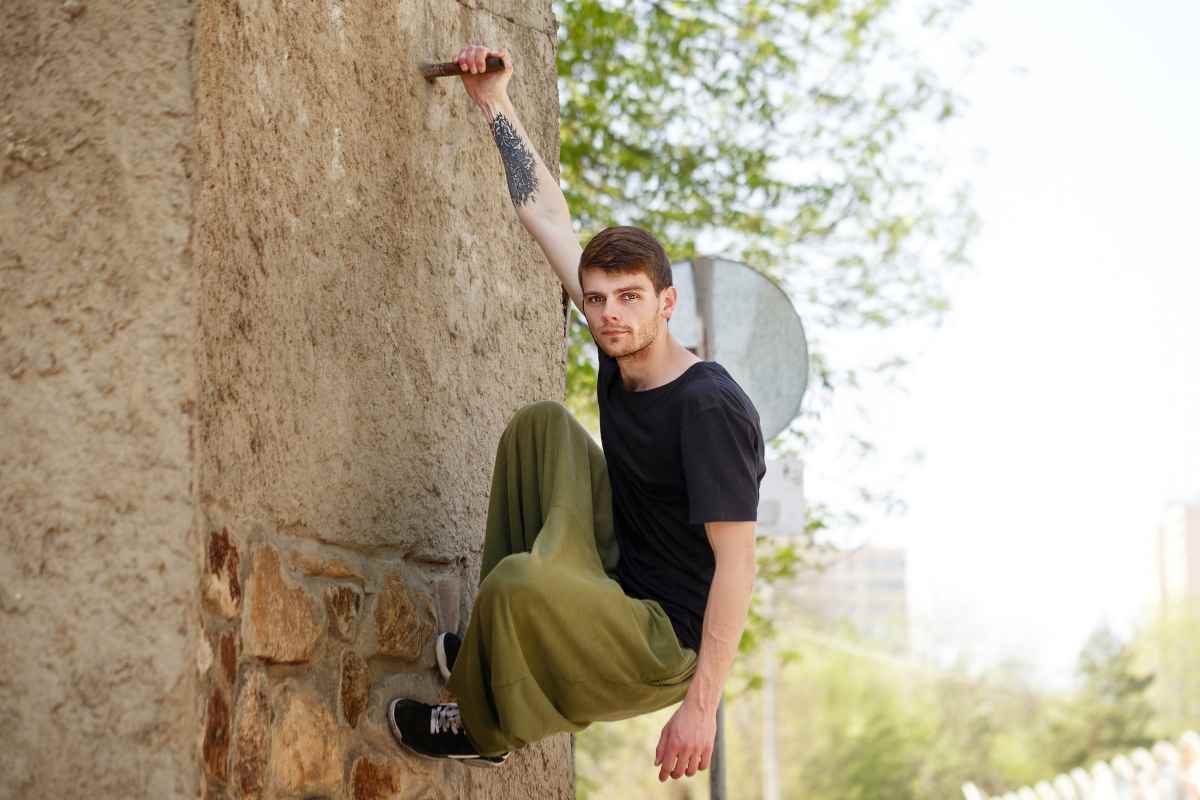
Cat leaps are a versatile Parkour technique that involves jumping from one surface to another and catching yourself with your hands and feet.
This move is often used to transition between buildings or ledges. To perform a cat leap, jump toward the target surface and extend your arms to grab the edge.
Simultaneously, bring your feet up to the wall or ledge for support. Practice this move with caution, starting on lower surfaces before attempting higher jumps.
Mental Training in Parkour
While physical training is crucial, Parkour also requires mental discipline. Overcoming fear, staying focused, and maintaining a positive mindset are essential for success in Parkour.
Overcoming Fear
Fear is a natural part of Parkour, especially when attempting new or challenging moves. However, it’s important to manage your fear so it doesn’t hold you back.
Start by breaking down complex movements into smaller, manageable steps. Gradually build your confidence by practicing in safe environments before taking on riskier challenges.
Visualization and controlled breathing can also help calm your nerves before attempting a difficult move.
Focus and Awareness
Parkour demands intense focus and awareness of your surroundings. To improve your focus, practice mindfulness techniques such as meditation or deep breathing exercises.
Additionally, develop your situational awareness by constantly scanning your environment and anticipating potential obstacles.
This will allow you to react quickly and make split-second decisions during your Parkour runs.
Positive Mindset
Maintaining a positive mindset is key to progressing in Parkour. Embrace a growth mindset by viewing challenges and failures as opportunities for learning and improvement.
Surround yourself with supportive peers and mentors who encourage you to push your limits.
Remember that progress in Parkour takes time. Celebrate your wins, no matter how small, and stay motivated to keep training.
Safety Tips for Parkour Practice
Safety should always be a top priority in Parkour. Here are some essential safety tips to keep in mind:
Warm-Up and Cool Down
Always start your Parkour sessions with a proper warm-up to prepare your body for physical activity. A good warm-up should include dynamic stretches, light cardio, and mobility exercises.
After your training, take the time to cool down with static stretches and deep breathing to relax your muscles and prevent injuries.
Use Proper Equipment
While Parkour can be practiced with minimal equipment, wearing the right gear can enhance your performance and reduce the risk of injury.
Invest in a good pair of Parkour shoes that provide grip, support, and cushioning. Consider wearing gloves to protect your hands during vaults and climbs, and always train in comfortable, breathable clothing.
Train with a Partner
Training with a partner can increase your safety and provide valuable feedback. A partner can spot you during difficult moves, offer guidance, and help you stay motivated.
If you’re practicing in an unfamiliar environment, having a partner can also enhance your awareness of potential hazards.
Embrace the Journey to Parkour Mastery
Parkour is a dynamic and challenging discipline that requires dedication, perseverance, and continuous learning.
By mastering the fundamentals, progressing to advanced techniques, and maintaining a strong mental focus, you can significantly improve your Parkour skills.
Remember to prioritize safety, stay patient, and enjoy the process of pushing your physical and mental limits. With consistent practice, you’ll be well on your way to becoming a Parkour master.
Did you find this post useful or inspiring? Save THIS PIN for later in your Outdoor Board on Pinterest! 😊


Explore these outdoor tips too