
3 EASY STEPS How to Prepare Your Garden Soil for Planting Vegetables


Preparing your garden soil for planting vegetables is the foundation of a healthy and productive garden.
Good soil provides the nutrients, structure, and drainage your plants need to grow strong and give you an abundant harvest.
If your soil is poor, compacted, or unbalanced, your vegetables will struggle no matter how much care you give them.
The good news is that with just three simple steps, you can transform your soil into a fertile environment ready for planting.
Let’s dive into the process.
Step 1: Clear the Garden Bed

The first step is to remove all weeds, debris, and old plant material from your garden bed.
This prevents pests and diseases from carrying over into your new crops.
Use a garden fork or hoe to loosen the soil and make it easier to pull out roots completely.
Don’t forget to:
Eliminate large rocks and sticks that can interfere with root growth.
Check for compacted areas and break them up to improve aeration.
Dispose of diseased plants away from your compost pile to avoid contamination.
Tip: Covering the cleaned soil with a tarp for a few weeks before planting can help smother weed seeds naturally.
Step 2: Improve Soil Quality

Healthy soil is alive with microorganisms, organic matter, and good structure.
To achieve this, add plenty of organic matter such as compost, well-rotted manure, or leaf mold.
Spread a layer of 2–3 inches and mix it into the top 6–8 inches of soil. This boosts fertility, water retention, and overall soil health.
If your soil is:
Clay-heavy: Add sand and organic matter to improve drainage and prevent waterlogging.
Sandy: Enrich with compost and peat moss to help retain moisture and nutrients.
Nutrient-poor: Supplement with balanced organic fertilizers (N-P-K) according to your plants’ needs.
Tip: For long-term improvement, rotate crops each season and use cover crops (like clover or rye) to naturally enrich the soil.
Step 3: Test and Adjust Soil pH

Most vegetables thrive in soil with a pH between 6.0 and 7.0.
Testing your soil ensures your plants can absorb nutrients effectively.
You can use a simple home pH kit or send a sample to a local agricultural extension office for more detailed results.
Depending on your soil test:
If the pH is too low (acidic), Add garden lime to raise it.
If the pH is too high (alkaline): Work in elemental sulfur or peat moss to lower it.
Make sure to apply amendments gradually and re-test the soil after a few weeks. Adjusting pH is a process, not a one-time fix.
Tip: Some vegetables have different preferences — potatoes grow better in slightly acidic soil (5.5–6.0), while spinach and cabbage prefer a neutral range (6.5–7.0).
Ready to Plant Your Veggie Seedlings
Once the soil is prepared, you’ll have a healthy and nutrient-rich foundation ready for your vegetable seedlings.
Preparing your garden soil properly not only leads to better yields but also helps plants establish strong roots and grow more vigorously.
Watch the full video tutorial by CaliKim29 Garden & Home DIY to learn more about the process, and start planting your spring garden as soon as the weather warms up!
Enjoy This Video Tutorial
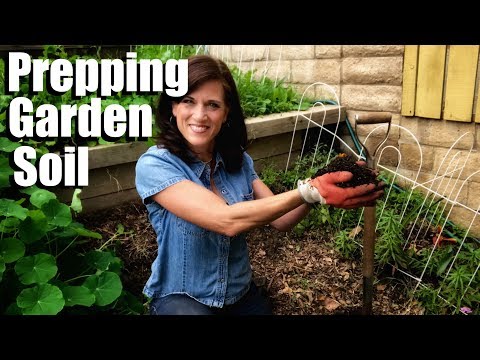
Source: CaliKim Garden & Home
Don’t forget to Subscribe to our Newsletter to receive amazing tips and tricks about Gardening and the FREE Ebook Green Living Strategies!
Did you find this post Useful or Inspiring? Save THIS PIN to your GARDENING Board on Pinterest! 😊

Once again, thank you for visiting our website!
We hope you've enjoyed exploring the content we've created for you.
Give yourself the chance to learn, get inspired, and have even more fun, keep browsing...
More Gardening Tips 👇🏼👇🏼