
3 Major Problems With Tree Roots in Gardens


Tree root problems typically fall into two main categories, each presenting unique challenges.
On one hand, the roots themselves may suffer from issues like girdling, rot, inadequate moisture, or infestations by pests or diseases, all of which can compromise the health and stability of the tree.
On the other hand, roots can create problems in their surrounding environment, such as lifting sidewalks, infiltrating plumbing systems, or disrupting nearby structures.
These dual aspects of tree root issues require careful assessment to address both the health of the tree and the impact on its surroundings.
Common Problems Caused by Roots
To understand the impact that tree roots can have, it is important to note that a tree's roots extend two to three times the crown radius. In dry conditions, they can spread up to five times as long.
For example, a tree with a crown of 3.6 meters, which is equivalent to a radius of six meters, the roots can extend 18 to 30 meters from the trunk.
Also, most roots are closer to what they need to survive (water, oxygen, and nutrients) and this is naturally close to the surface. That is why most tree roots are found between the first 45 to 60 centimeters of the ground.
Damage to Underground Pipes
Although the roots of the trees can break the pipes, the most common event is that the pipes break on their own due to age or other physical deficiencies, whereby the roots of the trees grow in the pipes and lead to the blocks of pipes.
Sewer pipes are particularly susceptible to these types of problems. The trees that most damage the sewers are poplars, birches, elms, maples, poplars, oaks, bananas, willows, and fig trees.
To prevent this from happening, practice safe sewer garden design:
- Find out where the pipes are on your property and avoid planting them near them. Plant trees as far away from pipes as possible.
- Choose trees that cause fewer problems, such as amur maples, Japanese maples, flowering dogwood, or apple trees.
Damage to Pavement and Sidewalks
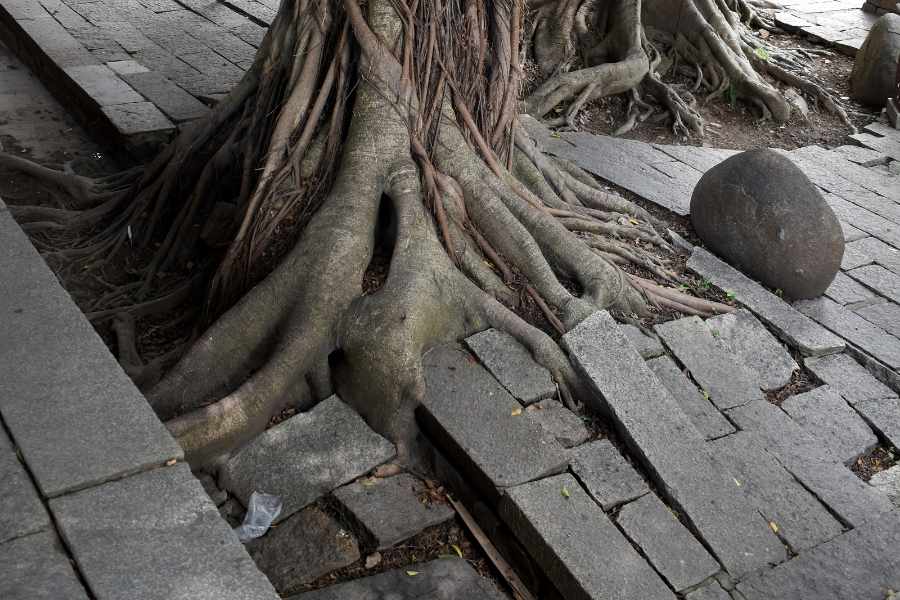
Tree roots can grow near and under sidewalks and sidewalks. If the roots are close to the surface, they can lift the soil, which not only causes damage but also creates the risk of tripping.
When this happens, the choice is usually between saving the tree by removing the pavement from the tree's roots or cutting the intrusive roots of the tree and risking killing it to save the soil or walkway.
Some ways to avoid this include:
- Plant smaller trees and keep a minimum distance of one meter between the tree and the ground. A general rule of thumb is to plant trees with a mature height of fewer than 30 feet, at least four feet away from the curb, and trees with a mature height of 50 feet not less than five or six feet from the curb. Stay away from trees that exceed that size.
- Install mechanical barriers along the tree side of the floor to prevent roots from growing underneath. The barriers, which can be made of plastic or geotextile fabric, force the roots to penetrate deeper into the soil, so that they cannot lift the pavement. Place the barrier 12 inches deep in the ground and draw an imaginary line from the tree trunk to the sidewalk and then place the barrier 1.5 to 1.8 meters along the sidewalk in any direction.
Surface Roots as Hazards
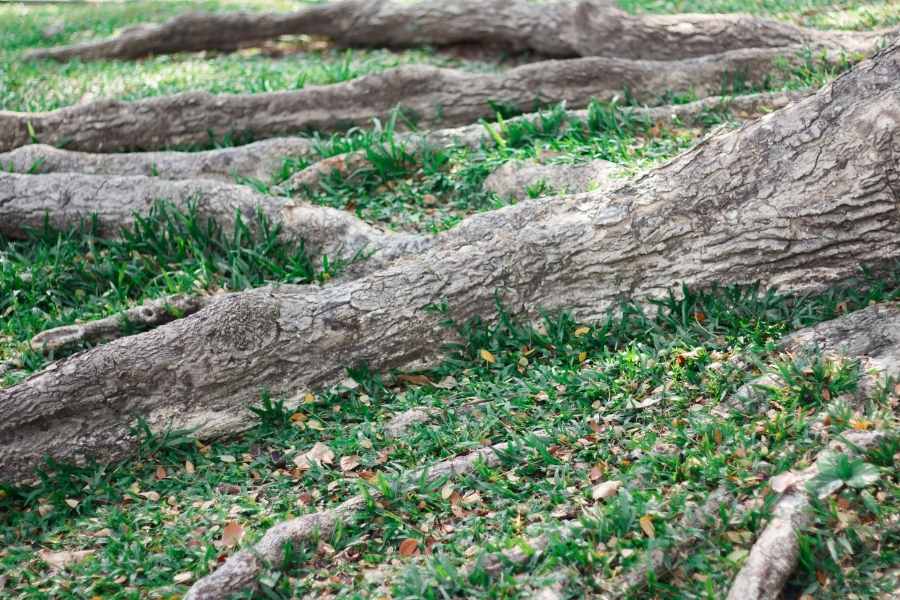
If you have a maple growing in your garden, its large, strong roots sticking out of the surface can be a familiar sight. This generally occurs on a slope where soil erosion leads to root exposure. And after a hot winter, it can get worse, as the freeze-thaw cycle causes the ice to rise.
These shallow roots are not only ugly but also dangerous. And they can be a real headache when mowing the lawn. Because they are so exposed, the roots are also prone to injury.
Trimming these roots would likely kill the tree and simply covering the area with more soil is also not an option, as normal soil will starve the thin roots near the surface of oxygen and can damage the tree. Instead, cover the area under the tree with wooden straw or mature loose soil.
Mulch has several benefits. Mulch lets in enough oxygen and at the same time insulate the soil, reducing the effect of ice. Replacing the lawn with mulch makes mowing unnecessary, and the tree and lawn will no longer compete for water and nutrients, making it conducive to tree health.
Do Tree Roots Damage Foundations?
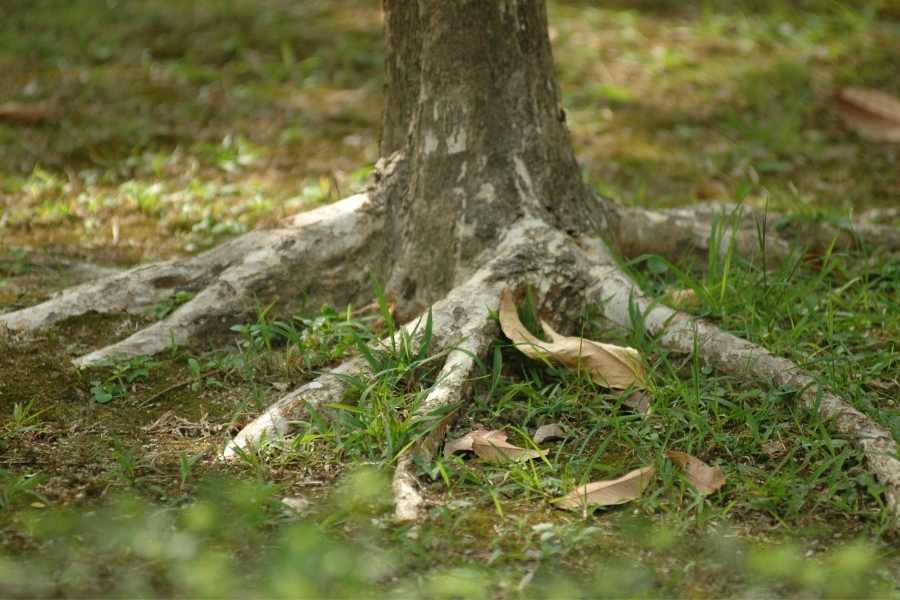
Not necessarily. Trees planted too close to a base can cause several problems, but not always due to roots. The soil around the foundation is usually very dry, especially if the area is covered by a roof overhang. Meanwhile, tree roots grow toward moisture, so they generally expand in the opposite direction, away from the base.
If there are cracks in the foundation caused by other circumstances, such as soil pressure or shrinkage, the roots of smaller trees can penetrate these cracks, but they generally will not create more structural damage than already exists.
Any problems caused by tree roots should not prevent you from planting trees, even if your garden is small.
Enjoy The Video Tutorial
Source: backyardfarmer
Don’t forget to Subscribe to our Newsletter to receive amazing tips and tricks about Gardening and the FREE Ebook Green Living Strategies!
Did you find this post Useful or Inspiring? Save THIS PIN to your GARDENING Board on Pinterest! 😊

Once again, thank you for visiting our website!
We hope you've enjoyed exploring the content we've created for you.
Give yourself the chance to learn, get inspired, and have even more fun, keep browsing...
More Gardening Tips 👇🏼👇🏼