
Care Guide for the English Oak Tree


The English oak (Quercus robur) is a towering tree best known for being part of the forests and landscapes of England. It is a large species that is more commonly found in public settings such as parks, although it can certainly be grown in larger home gardens if there is space.
This species of oak can live for hundreds of years. There are also columnar varieties available so you can look like English oak in a much narrower space.
Oak trees are classified into different groups within the genus. Quercus robur is considered part of the white oaks. This slow-growing oak is also considered the type species, making it the best example of the oak genus. It is best to plant an acorn between mid-fall and early spring; the acorn will germinate in four to six weeks. An English oak grows about a foot per year.
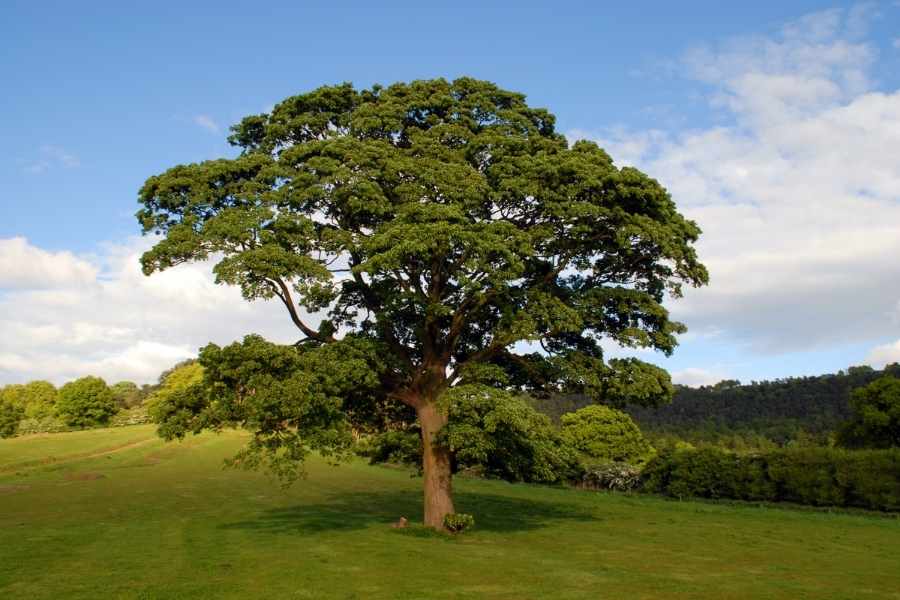
English oak care
As with other oak species, English oak is not easy to transplant as they form a long taproot. The best option is to start an acorn at the planting site. The varieties are propagated by grafting to ensure that their distinctive characteristics remain true.
English oak does not grow very fast and usually does not need much pruning, if any, as it naturally creates a nice shape over the years. Proper maintenance should include removing any parts of the tree that have died, damaged, or diseased to help maintain the tree's health.
The adult size of most trees will be 12 to 60 feet tall and wide, although in nature it can be over 30 feet tall. In its early years, it has a pyramidal shape. In time, it will be round. The leaves can turn brown in fall and cannot fall until winter.
Light
English oak grows best in full light, although it can tolerate some shade.
Soil
Quercus robur is able to tolerate a range of soil pH, from acidic to alkaline. For optimal growth, find a place with soil that remains moist but provides good drainage.
Water
English oaks prefer occasional watering. However, they can tolerate a relatively mild drought.
Temperature and humidity
This tree is not sensitive to temperature or humidity, although it is best suited for zones 5 to 8. The tree can grow in sheltered locations in zone 4, although frost can be damaging or even deadly.
Common diseases
This oak species are known to be resistant to sudden oak death at this time. The biggest problem English oak faces is the unattractive presence of powdery mildew.
Anthracnose can also be a problem in wet conditions, causing leaf drops. Regular fertilization will help fight cancer diseases. Some possible illnesses that don't need treatment include root rot, blisters, and leaf spots.
We hope you enjoy this video about the English oak tree:
Source: Wholesome Day
Did you find this post Useful or Inspiring? Save THIS PIN to your GARDENING Board on Pinterest! 

Once again, thank you for visiting our website!
We hope you've enjoyed exploring the content we've created for you.
Give yourself the chance to learn, get inspired, and have even more fun, keep browsing...
More Gardening Tips 👇🏼👇🏼