
DIY Mini Zen Garden Terrarium: How to Make One Step by Step


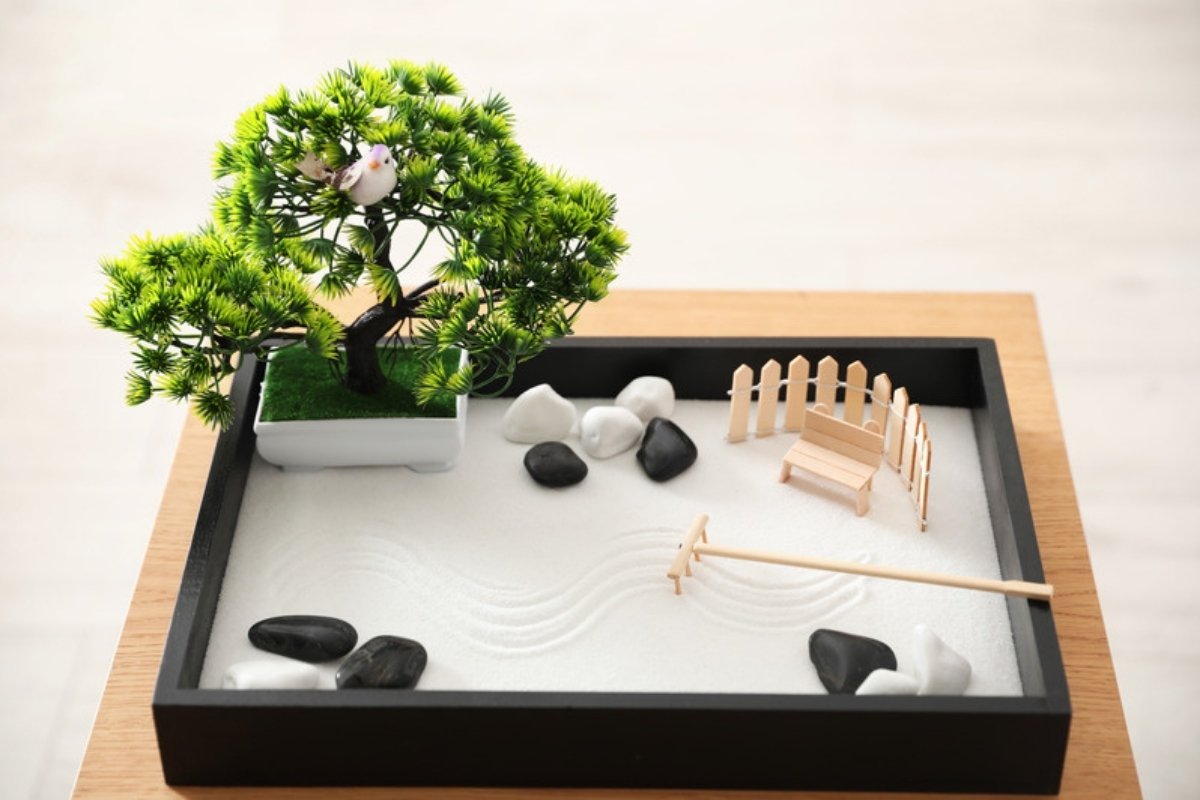
Zen gardens, also called Japanese rock gardens, are built from raked sand or gravel, carefully placed stones and very few plants. They are meant to be looked at slowly, and that calm feeling is exactly what makes a tabletop version so appealing.
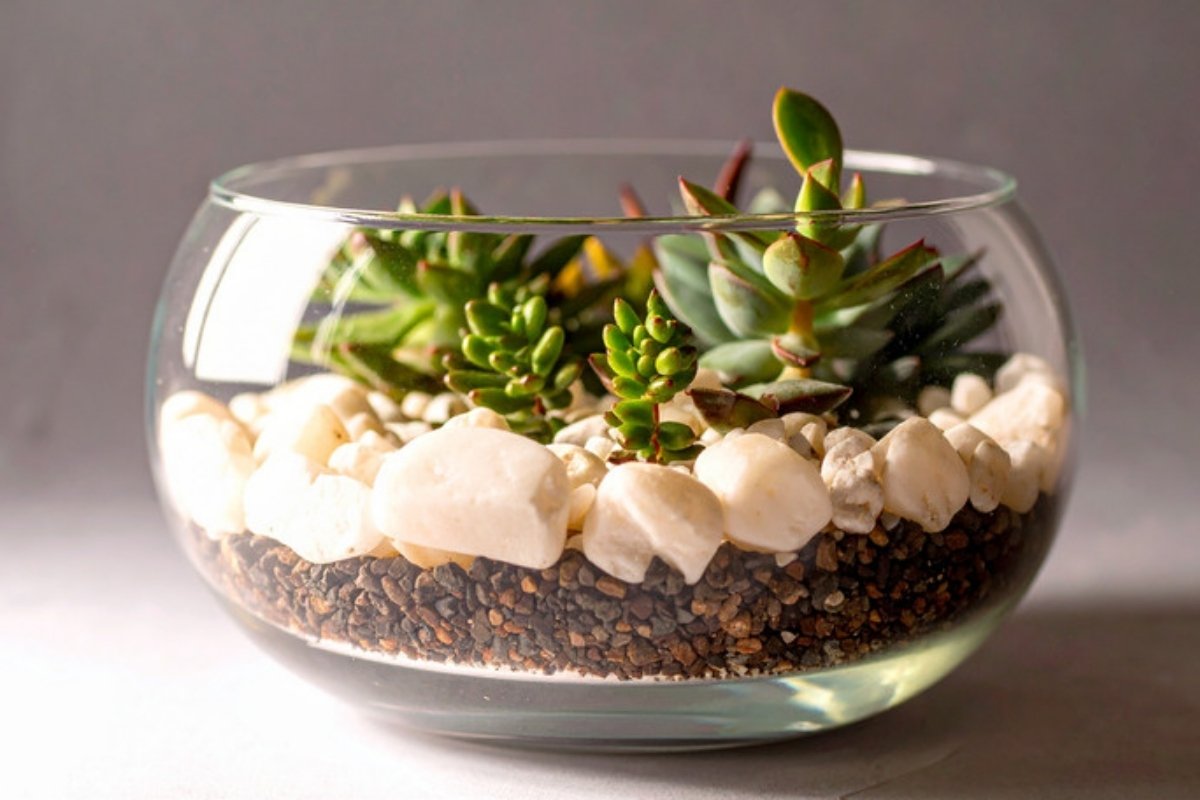
A mini zen garden terrarium brings those ideas into a glass container you can keep on a desk or a shelf. You get the raked sand and stones of a dry garden plus a few living plants, and the whole project fits in an afternoon.
A Little Background on Zen Gardens
In Japan these gardens are called karesansui, which translates as "dry landscape." The style developed during the late Kamakura period (1185–1333) and many famous examples sit inside Zen temples, such as Ryoan-ji in Kyoto. They were designed for contemplation, and caring for the garden was part of a monk's daily practice.
Two ideas are worth borrowing for a miniature version:
- Suggestion instead of decoration. Raked lines in the gravel and groups of rocks are used to evoke water, space and movement, rather than to show them literally.
- The beauty of empty space. The Japanese principle yohaku-no-bi treats blank space as part of the design. In a small terrarium, leaving open areas of sand matters as much as what you add.
What You Need
- A clear glass container with a wide opening (a fishbowl, glass bowl or open geometric terrarium)
- Pea-sized gravel or small pebbles for the bottom layer
- Fine sand, ideally white or pale, for the zen area
- Cactus potting mix
- Two or three small succulents
- A few smooth stones of different sizes
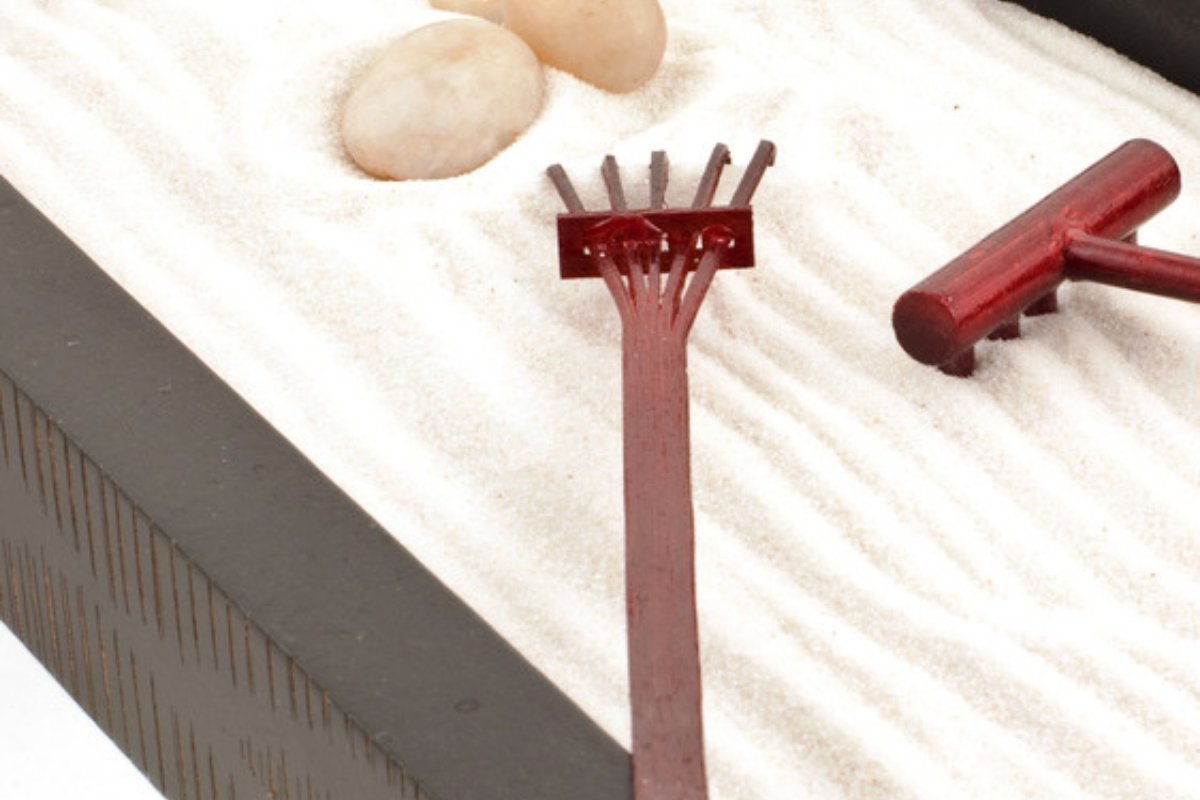
- A small rake, a fork or a toothpick to draw lines in the sand
- Optional accents: a tiny bridge, lantern or figurine
Why an Open Container Works Best
Succulents and cacti are the usual choice for a zen-style terrarium because they stay small and fit the dry look. They need an open container. A lidded or narrow-necked jar traps moisture and humidity, which suits ferns and other tropical plants, but succulents and cacti will rot in it. A wide opening lets air move and keeps the sand and soil from staying damp.
Good small succulents to try include echeveria, jade plant, burro's tail and young aloe vera.
How to Make a Mini Zen Garden Terrarium
- Clean the container. Wash it with hot soapy water and dry it well so you start with clear glass.
- Add drainage. Spread ½ to 1 inch of gravel across the bottom. Since there is no drainage hole, this layer keeps the roots from sitting in water.
- Add the growing layer. On one side of the container, add cactus mix deep enough for the succulent roots. It drains fast and holds little water.
- Plant. Take the succulents out of their nursery pots, loosen the roots gently and set them in the cactus mix. Keep the tallest plant toward the back or the center.
- Create the zen area. Fill the open side with a smooth layer of fine sand. A thin layer of sand over the soil around the plants also ties the two areas together.
- Place the stones. Set a few stones in small groups rather than in a straight line, and leave plenty of empty sand around them.
- Rake your pattern. Use the rake or a toothpick to draw straight lines for calm water, or circles around the stones like ripples. You can smooth the sand and redraw the pattern whenever you like.
Light and Watering
Put the terrarium in bright, indirect light. Morning sun from an east-facing window is ideal. Avoid hot afternoon sun right against the glass, because heat builds up inside the container and can scorch the plants.
Water very little. With no drainage hole, extra water has nowhere to go and will rot the roots. Water only when the soil is nearly dry, which for most open succulent terrariums is about every 2 to 3 weeks. Use a spoon or a small bottle to water at the base of each plant and keep the sand area dry so the raked lines hold their shape.
If the plants start to look pale and need a boost, use a water-soluble houseplant fertilizer at a quarter of the normal strength, and only occasionally.
In this video, SerpaDesign turns a simple coaster decoration into a mini zen garden with three small "worlds," using rustic handmade details. It is a good reference for the layout and for how much empty space to leave.
Watch: DIY Mini Zen Garden Terrarium
Source: SerpaDesign
Quick Guide
- Container: Open glass with a wide mouth
- Layers: Gravel, then cactus mix for the plants and fine sand for the zen area
- Plants: Small succulents or cacti
- Light: Bright, indirect; morning sun is fine
- Water: Sparingly, only when the soil is nearly dry
Frequently Asked Questions
Can I put a lid on a succulent zen terrarium?
No. A closed container keeps the air humid and the soil wet, and succulents and cacti will rot. Keep the terrarium open, or choose ferns and other moisture-loving plants if you want a closed one.
Do I need activated charcoal?
It is not essential for an open succulent terrarium. A thin layer of horticultural charcoal is mainly recommended for closed terrariums, where it helps prevent a sour smell.
More Gardening Ideas
- 5 Creative Succulent Terrariums: Ideas for Decor
- Is Activated Charcoal Safe for Plants?
- Gardening for Apartment Dwellers Without Balconies
Did you find this post Useful or Inspiring? Save THIS PIN to your GARDENING Board on Pinterest!

More Gardening Tips 👇🏼👇🏼