
Everything You Need to Know to Grow Fennel


Hello, how are you today? Welcome to our blog About Gardening. We hope you are very well and looking forward to a new post or Gardening Tutorial.
Today we want to share with you a special post:
How to Grow Fennel
Fennel (Foeniculum vulgare) can be classified as a herb or vegetable and can be used in various ways in cooking. It is also a popular plant with herbalists and has been used for thousands of years as a natural remedy, most commonly for digestive problems.
It has a wonderful fennel flavor that works well in both savory and sweet recipes. The bulbs are commonly baked, broiled, or added raw to salads, and the feathered leaves can be added to salads and soups for a more delicate flavor.
There are two types of fennel that you may want to grow in your garden, depending on how you plan to use it. "Florence fennel" (Foeniculum vulgare var Azoricum) is used more like a vegetable and is grown for its bulbous stem. Fennel does not produce many bulbs and is generally grown for its foliage and used as a herb.
Fennel is sometimes grown as an informal ornamental plant, such as in meadow plantings or in-country house gardens, where the yellowish-green foliage and tall stature are attractive. It is also a good choice for butterfly gardens, as swallowtail caterpillars use it as a food source and place to pupate.
Fennel is usually planted in spring, either from seed or early in the nursery. The bulbous types produce edible bulbs about 80 days after planting the seeds. In warmer climates, gardeners can grow two crops a year, one planted in the spring for mid-summer and one for the late-fall harvest. The plant is usually a perennial in warmer climates, but northern gardeners should grow it annually.
| Botanical Name | Foeniculum vulgare |
| Common Name | Fennel, common fennel, sweet fennel |
| Plant Type | Perennial herb, usually grown as annual |
| Size | 4–6 feet tall; 18-36 inches wide |
| Sun Exposure | Full sun |
| Soil Type | Rich, moist, well-drained soil |
| Soil pH | 5.5–6.8 (acidic) |
| Hardiness Zones | 4–9 (USDA) |
| Native Area | Mediterranean |
| Toxicity | Non-toxic |
How to Plant Fennel
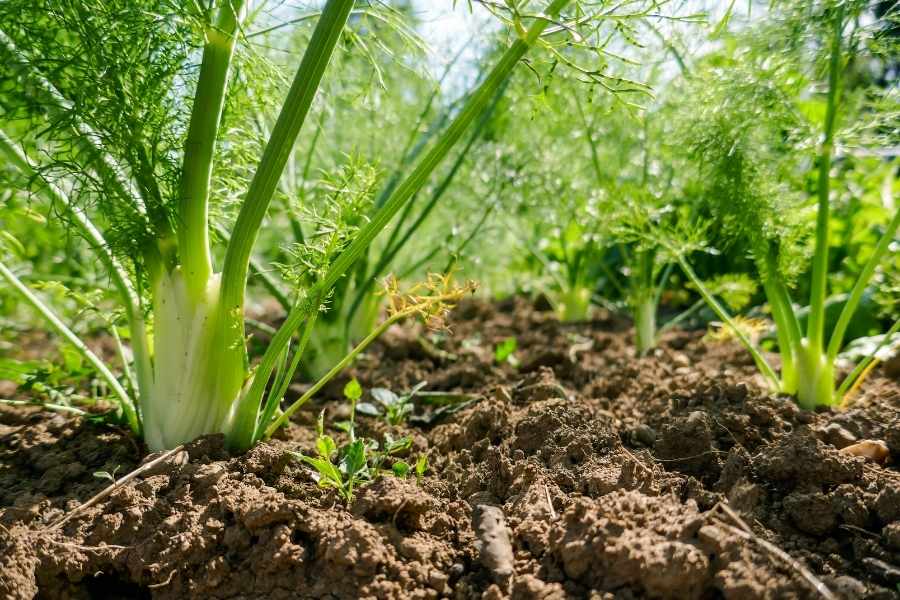
Although it is a perennial, fennel should be grown annually if winter temperatures in your area regularly drop below 15 degrees Fahrenheit. Even in warmer climates, gardeners generally prefer to grow it annually. Easy to grow, fennel should be planted in full sun, in fertile, well-drained soil.
Plant after all danger of frost has passed, with plants 6 to 12 inches apart. Fennel should not be planted in the same area as dill or coriander because the plants can easily pollinate; seed production will be reduced. Fennel easily sows on its own, so if you plant it once, you'll likely see fennel sprout in your garden every spring.
Fennel can grow up to 5 meters tall, depending on the variety you are growing. Be sure to factor in its eventual size at planting time so you don't overshadow the rest of your veggies. Also, it can inhibit the growth of tomatoes and beans, so avoid planting them near any of these crops.
Fennel Care
Light
This plant prefers full sunlight. Shady conditions will make it long and flexible. A minimum of six hours of sun is required.
Soil
Plant the fennel in moist, fertile, well-drained soil. It prefers acidic soils (pH 5.5 to 6.8). Bonding the soil with plenty of old compost is standard practice.
Water
Water deeply and regularly, but don't overwater or the plants will rot. A routine of providing 1 inch of water per week, combining rain and irrigation, is ideal.
Temperature and humidity
Fennel does well in all weather conditions throughout its hardiness range, zones 4 to 9, and is a perennial in zone 6 and south. It can be sensitive to cold and should be grown annually in areas with cold winters.
Fertilizer
Fennel does not require feeding during the growing season, but the plants do enjoy a layer of compost around the base every few months.

Fennel Varieties
Florence fennel (Foeniculum vulgare var. Azoricum) is the type to grow if you want to harvest the bulbous stems to use as a vegetable. The leaves and seeds of this variety are also edible, so it has three uses in one plant. There are several cultivars of this variety:
- 'Solaris' produces large semi-flat bulbs that are resistant to bolting.
- 'Zefa fino' is ready for harvest in 80 days, bolt resistant, and very large.
- 'Orion' is ready to harvest in 80 days and has large, thick, rounded bulbs with a crisp texture.
Fennel (Foeniculum vulgare) is the type of plant that will be used strictly as an herb. There are two common varieties:
- Green (Foeniculum vulgare 'Dulce')
- Red (Foeniculum vulgare 'Rubrum')
Harvesting Fennel
You can harvest fennel leaves as needed for fresh use, and frequent harvesting will maintain the plant's performance. The seeds can be harvested when they are ripe, in late summer or early fall.
The easiest way to harvest fennel seeds is to shake the seed heads on a sheet or canvas to collect the seeds. Allow the seeds to dry well before storing them in a cool, dark place.
Bulb-type fennel (Florence) can be harvested as soon as the base of the stem swells. Remove plants as needed and harvest leftover plants at the end of the season, before the first fall frost.
How to Grow Fennel From Seed
You can plant fennel seeds in your garden around the date of the last spring frost. The seeds should be planted 6 to 12 inches apart and 1/4 to 1/2 inch deep, and will germinate in 8 to 12 days.
You can also sow the seeds indoors, under the light, about four weeks before the last frost date, then harden them and transplant them into your garden.
How to Grow Fennel in Pots
You can easily grow fennel in containers, and that might be a good idea, as the plant has a way of self-seeding and naturalizing a little too quickly. Just be sure to plant in containers that are at least 10 inches deep.
Propagating Fennel
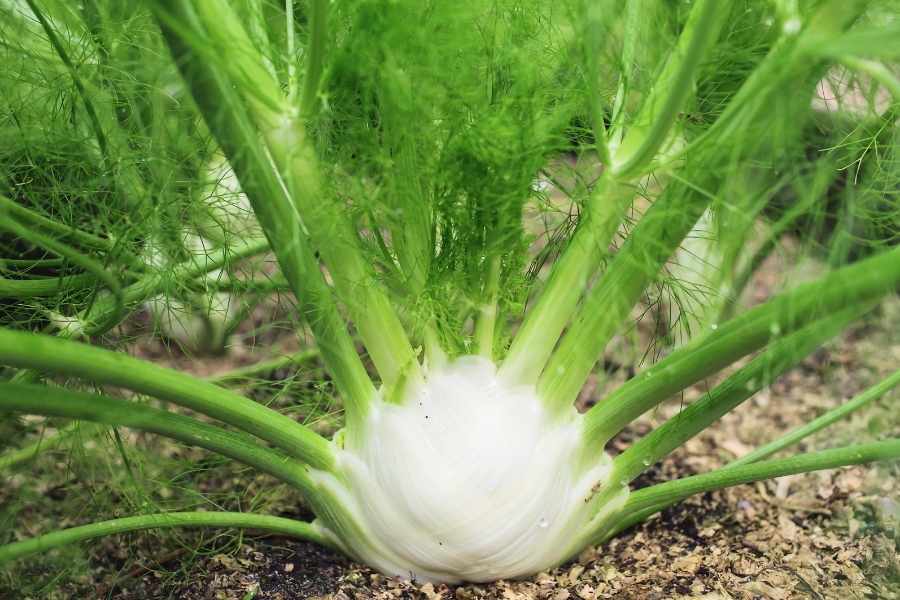
Fennel has a long taproot and therefore does not divide easily. The best method is to propagate it by seed. The seed heads can be harvested, dried, and planted in the garden the following spring.
Common Pests and Diseases
Fennel rarely suffers from serious problems, although caterpillars can eat on top of plants. The best way to deal with them is simply by removing them manually. Most of the time, parsley worm caterpillars are found, evolving into black swallowtail butterflies known as good pollinators.
So you can choose to ignore these green caterpillars with black and yellow stripes. Aphids can sometimes be a problem, which can be treated by spraying water to dislodge them. Avoid using any type of pesticides or oils on edible herbs.
Enjoy This Video Tutorial About Growing fennel from seed
Source: Hanna Sjoberg Allotment4Life
Did you find this post Useful or Inspiring? Save THIS PIN to your GARDENING Board on Pinterest! 😊

Once again, thank you for visiting our website!
We hope you've enjoyed exploring the content we've created for you.
Give yourself the chance to learn, get inspired, and have even more fun, keep browsing...
More Gardening Tips 👇🏼👇🏼