
How to Control Codling Moth on Apple Trees Naturally


Codling moth is the insect behind the classic "wormy apple." Its larvae tunnel into apples, pears and walnuts, leaving a hole packed with brown, crumbly frass. In a home garden, the most reliable way to control it without harsh sprays is to combine three habits: remove infested and fallen fruit every week, thin the crop, and protect individual fruits with bags while they are still small. Pheromone traps and low-toxicity sprays can help with timing.
Below you will find how to recognize codling moth, when it strikes, and the control methods that university extension services recommend for backyard trees.
How to Identify Codling Moth
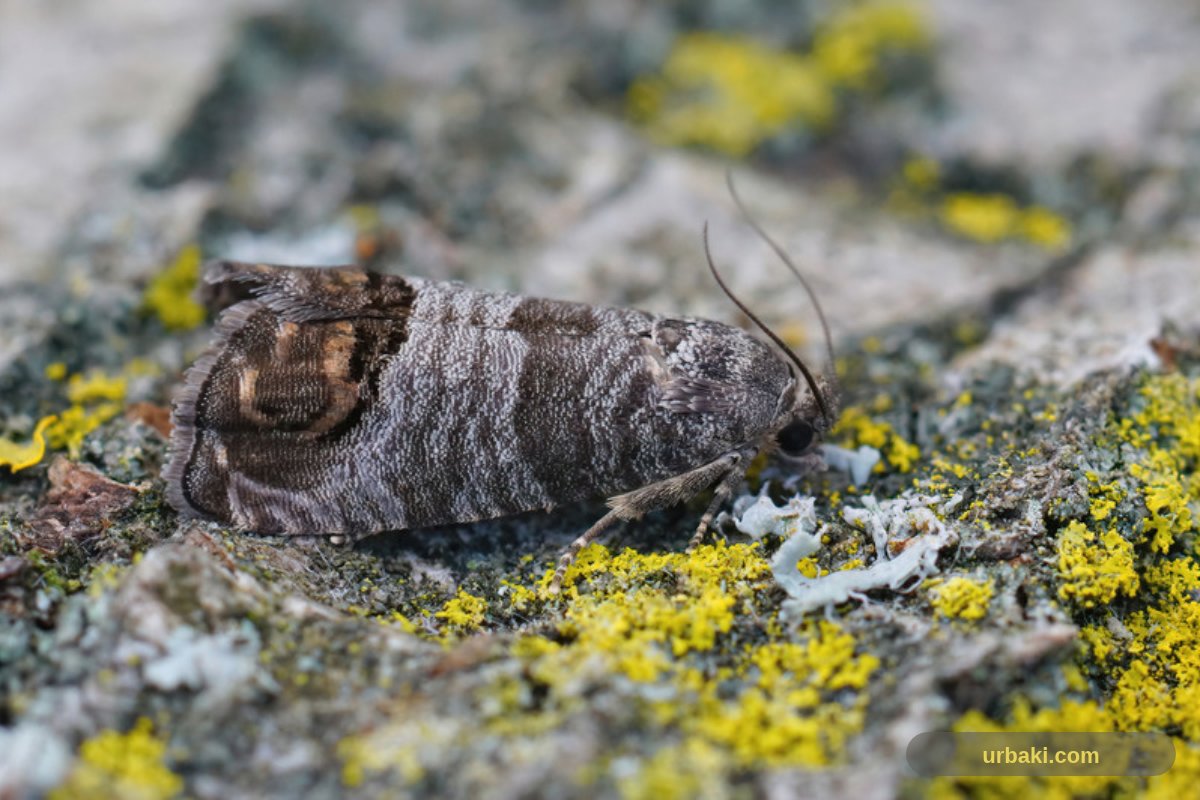
This is the most serious pest of apple trees, and it also attacks pears and English walnuts. The adult is a small moth, about 1/2 to 3/4 inch long, with mottled gray wings and a dark coppery band near the wingtips. Moths fly only for a few hours around sunset, so most gardeners never see them. Not every moth in the garden is a problem, as we explain in are moths bad for your garden, but this one is.
The larvae are white to light pink with a dark brown head. You usually notice them by the damage they leave behind.
Signs of Codling Moth Damage
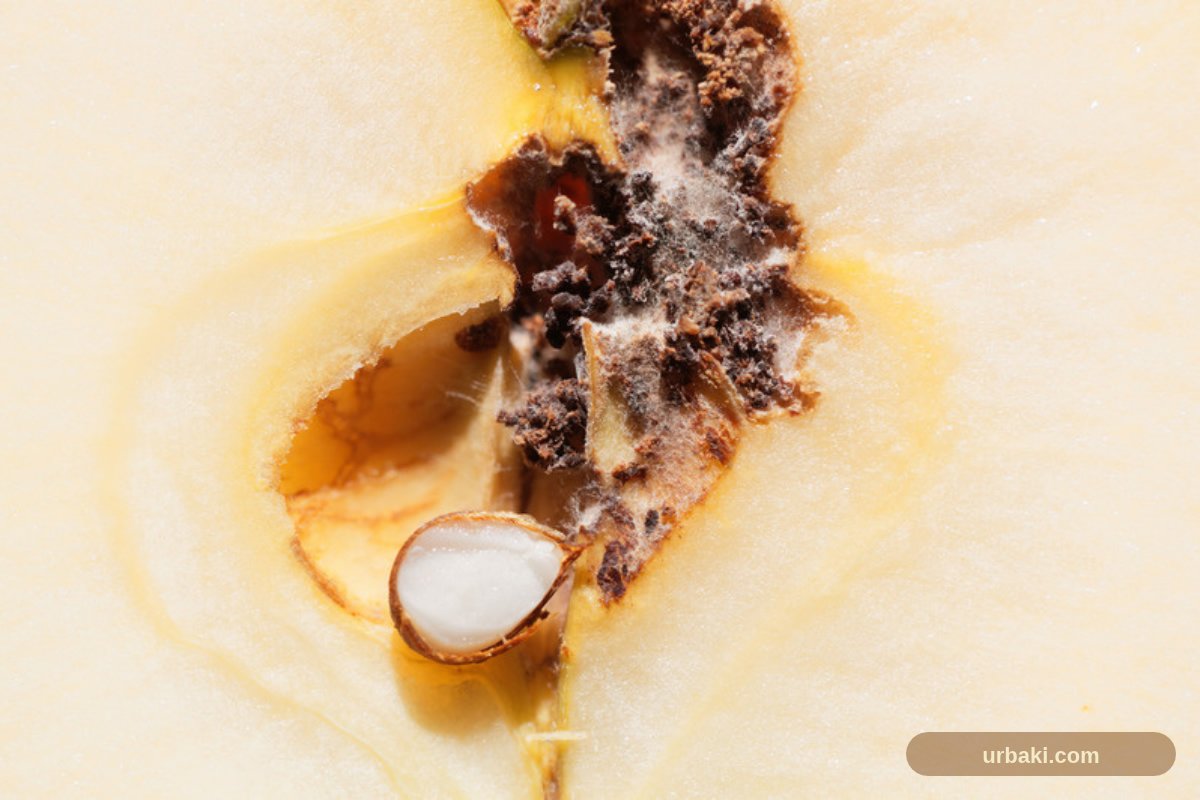
- "Stings": tiny mounds of reddish-brown frass, about 1/16 inch across, on the skin of young fruit. Scrape the frass away and you will find the entry hole.
- Deep tunnels: inside, the larva bores toward the core and feeds on the seeds, leaving a tunnel full of excrement.
- Early fruit drop: infested fruit often falls before it ripens.
According to UC IPM, untreated trees can lose 20 to 90% of their fruit, and late-ripening varieties tend to be hit harder.
Life Cycle: Why Timing Matters
Codling moth spends the winter as a full-grown larva in a silky cocoon under loose bark or in debris at the base of the tree. Adults emerge in spring, around the time apples bloom. Each female lays 30 to 70 tiny eggs on fruit, leaves or spurs, and the newly hatched larvae bore straight into the fruit, feed for about three weeks, then leave to pupate. Depending on the climate there are two to four generations a year, so protection needs to start soon after bloom and continue through summer.
Organic Ways to Control Codling Moth
1. Remove Infested and Fallen Fruit
Sanitation is the first step. Starting a few weeks after bloom, check the fruit every week or two and remove any with frass-filled holes before the larvae leave. Pick up dropped fruit promptly too, especially in late spring and early summer, because larvae keep feeding inside it. Destroy this fruit; do not compost it.
2. Thin the Fruit
Thinning clusters to one fruit removes many infested apples, helps the remaining fruit grow larger, and makes bagging easier. Keeping the tree pruned to a height you can reach makes every other step simpler; if you are planting new trees, our guide to planting bare-root fruit trees is a good start.
3. Bag Individual Fruits
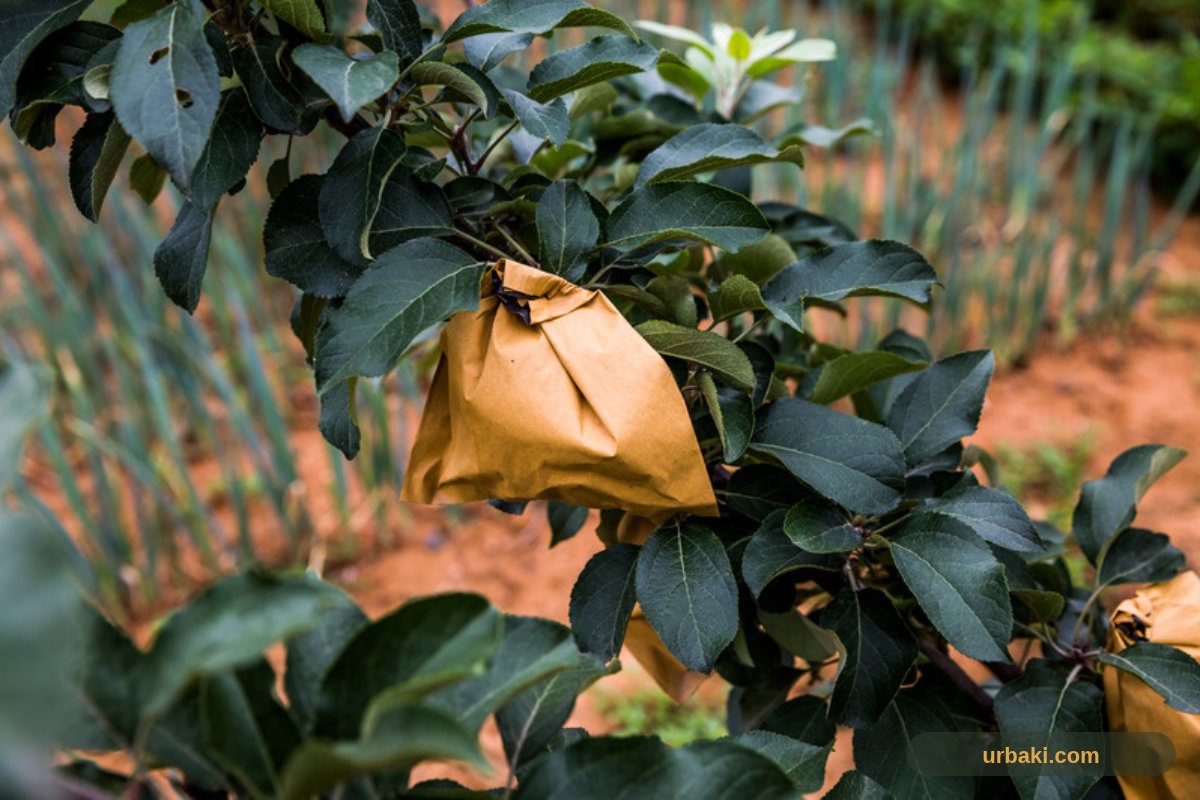
UC IPM calls bagging the only non-chemical method effective enough to use on its own when moth numbers are high. Bag the fruit when it is about 1/2 to 1 inch across, roughly four to six weeks after bloom. A simple method is to cut a 2-inch slit in the bottom fold of a paper lunch bag, slip the fruit through, and staple the bag shut around the stem. Remove the bags one to two weeks before harvest so red varieties can color up. It is time-consuming, but very effective on small trees.
4. Use Pheromone Traps for Timing
Pheromone traps attract male moths. In a backyard they do not catch enough moths to control the pest, but they tell you when the flight has started, which is the signal to bag fruit or begin sprays. Hang one high in the canopy around bloom and check it every few days.
5. Low-Toxicity Sprays
If you need to spray, the codling moth granulosis virus affects only codling moth larvae and is harmless to people, pets and other insects. It must be applied weekly during egg hatch. Spinosad is another lower-toxicity option, though it is harder on beneficial insects. UC IPM found that Bt and pyrethrins were not effective against this pest. Never spray during bloom, and always follow the label.
Codling Moth Control at a Glance
- Hosts: apples, pears, English walnuts
- Overwinters: as larvae in cocoons under bark and in debris
- Generations: two to four per year
- Best non-chemical control: sanitation plus bagging
- Traps: for monitoring and timing, not control
Watch: Keeping the Worms Away Organically
In this video, GrowOrganic Peaceful Valley explains how to keep codling moth worms out of your apples with organic methods.
Source: GrowOrganic Peaceful Valley
Frequently Asked Questions
Are apples with codling moth damage safe to eat?
Yes. The larva does not make the fruit poisonous. Cut away the tunnel and the damaged area around the core and use the rest, preferably soon, because damaged fruit does not store well.
Do cardboard trunk bands work?
Some extension services suggest corrugated cardboard bands to trap larvae looking for a place to pupate, but they must be removed and destroyed regularly. UC IPM no longer recommends them for home gardens because they catch only a small share of larvae and can increase the population if left in place.
More Gardening Ideas
- 5 Fascinating Things You Didn't Know About Ladybugs
- Are Moths Bad for your Garden?
- How to Plant Bare-Root Fruit Trees: A Step-by-Step Winter Guide
Did you find this post Useful or Inspiring? Save THIS PIN to your GARDENING Board on Pinterest!

More Gardening Tips 👇🏼👇🏼